 Add to Chrome
 Add to Firefox
 Add to Edge
Acoustic and perceptual differences between standard and accented Chinese speech and their voice clones
Apr 02, 2026
Voice cloning is often evaluated in terms of overall quality, but less is known about accent preservation and its perceptual consequences. We compare standard and heavily accented Mandarin speech and their voice clones using a combined computational and perceptual design. Embedding-based analyses show no reliable accented-standard difference in original-clone distances across systems. In the perception study, clones are rated as more similar to their originals for standard than for accented speakers, and intelligibility increases from original to clone, with a larger gain for accented speech. These results show that accent variation can shape perceived identity match and intelligibility in voice cloning even when it is not reflected in an off-the-shelf speaker-embedding distance, and they motivate evaluating speaker identity preservation and accent preservation as separable dimensions.

Assessing the Ability of Neural TTS Systems to Model Consonant-Induced F0 Perturbation
Mar 22, 2026This study proposes a segmental-level prosodic probing framework to evaluate neural TTS models' ability to reproduce consonant-induced f0 perturbation, a fine-grained segmental-prosodic effect that reflects local articulatory mechanisms. We compare synthetic and natural speech realizations for thousands of words, stratified by lexical frequency, using Tacotron 2 and FastSpeech 2 trained on the same speech corpus (LJ Speech). These controlled analyses are then complemented by a large-scale evaluation spanning multiple advanced TTS systems. Results show accurate reproduction for high-frequency words but poor generalization to low-frequency items, suggesting that the examined TTS architectures rely more on lexical-level memorization than on abstract segmental-prosodic encoding. This finding highlights a limitation in such TTS systems' ability to generalize prosodic detail beyond seen data. The proposed probe offers a linguistically informed diagnostic framework that may inform future TTS evaluation methods, and has implications for interpretability and authenticity assessment in synthetic speech.
* Accepted for publication in Computer Speech & Language
DeepfakeBench-MM: A Comprehensive Benchmark for Multimodal Deepfake Detection
Oct 26, 2025The misuse of advanced generative AI models has resulted in the widespread proliferation of falsified data, particularly forged human-centric audiovisual content, which poses substantial societal risks (e.g., financial fraud and social instability). In response to this growing threat, several works have preliminarily explored countermeasures. However, the lack of sufficient and diverse training data, along with the absence of a standardized benchmark, hinder deeper exploration. To address this challenge, we first build Mega-MMDF, a large-scale, diverse, and high-quality dataset for multimodal deepfake detection. Specifically, we employ 21 forgery pipelines through the combination of 10 audio forgery methods, 12 visual forgery methods, and 6 audio-driven face reenactment methods. Mega-MMDF currently contains 0.1 million real samples and 1.1 million forged samples, making it one of the largest and most diverse multimodal deepfake datasets, with plans for continuous expansion. Building on it, we present DeepfakeBench-MM, the first unified benchmark for multimodal deepfake detection. It establishes standardized protocols across the entire detection pipeline and serves as a versatile platform for evaluating existing methods as well as exploring novel approaches. DeepfakeBench-MM currently supports 5 datasets and 11 multimodal deepfake detectors. Furthermore, our comprehensive evaluations and in-depth analyses uncover several key findings from multiple perspectives (e.g., augmentation, stacked forgery). We believe that DeepfakeBench-MM, together with our large-scale Mega-MMDF, will serve as foundational infrastructures for advancing multimodal deepfake detection.
PIA: Deepfake Detection Using Phoneme-Temporal and Identity-Dynamic Analysis
Oct 16, 2025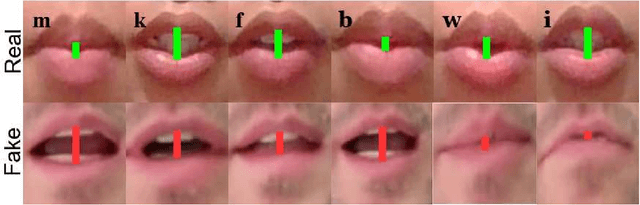
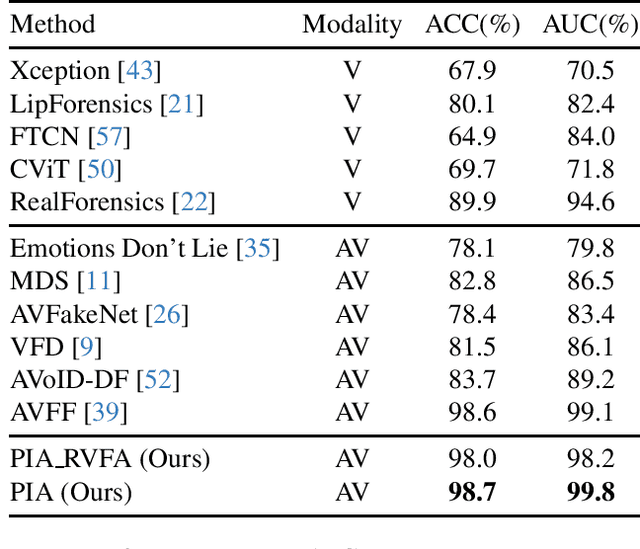
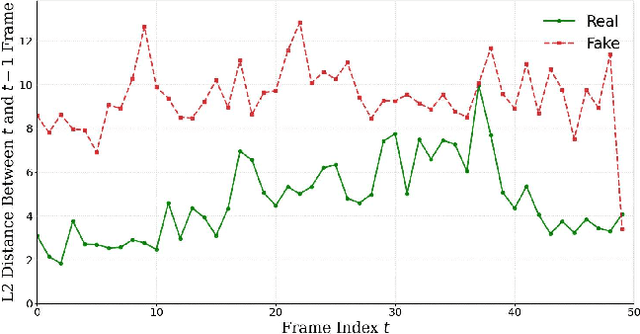
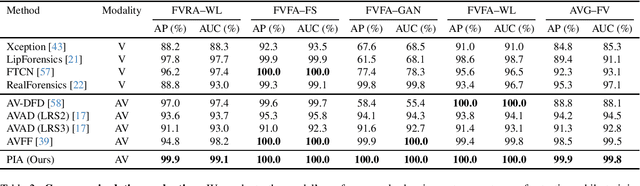
The rise of manipulated media has made deepfakes a particularly insidious threat, involving various generative manipulations such as lip-sync modifications, face-swaps, and avatar-driven facial synthesis. Conventional detection methods, which predominantly depend on manually designed phoneme-viseme alignment thresholds, fundamental frame-level consistency checks, or a unimodal detection strategy, inadequately identify modern-day deepfakes generated by advanced generative models such as GANs, diffusion models, and neural rendering techniques. These advanced techniques generate nearly perfect individual frames yet inadvertently create minor temporal discrepancies frequently overlooked by traditional detectors. We present a novel multimodal audio-visual framework, Phoneme-Temporal and Identity-Dynamic Analysis(PIA), incorporating language, dynamic face motion, and facial identification cues to address these limitations. We utilize phoneme sequences, lip geometry data, and advanced facial identity embeddings. This integrated method significantly improves the detection of subtle deepfake alterations by identifying inconsistencies across multiple complementary modalities. Code is available at https://github.com/skrantidatta/PIA
Forensic deepfake audio detection using segmental speech features
May 20, 2025This study explores the potential of using acoustic features of segmental speech sounds to detect deepfake audio. These features are highly interpretable because of their close relationship with human articulatory processes and are expected to be more difficult for deepfake models to replicate. The results demonstrate that certain segmental features commonly used in forensic voice comparison are effective in identifying deep-fakes, whereas some global features provide little value. These findings underscore the need to approach audio deepfake detection differently for forensic voice comparison and offer a new perspective on leveraging segmental features for this purpose.
ASVspoof 5: Design, Collection and Validation of Resources for Spoofing, Deepfake, and Adversarial Attack Detection Using Crowdsourced Speech
Feb 13, 2025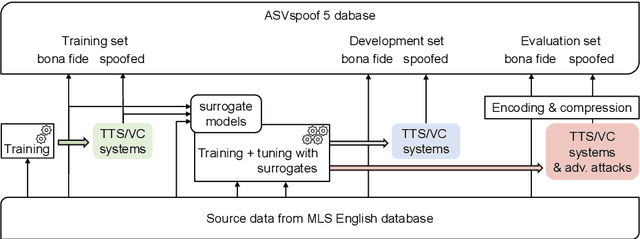

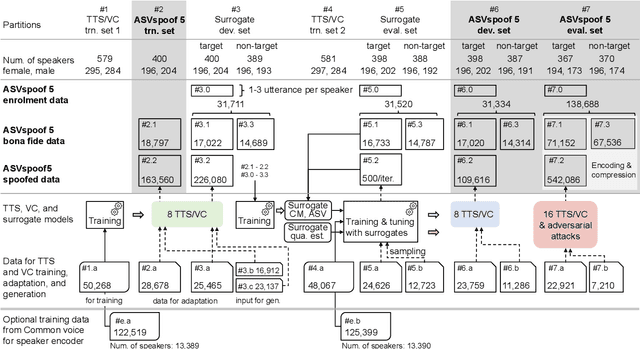
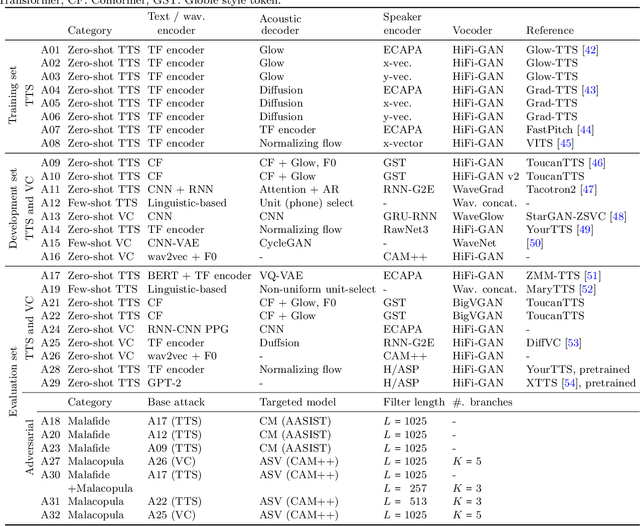
ASVspoof 5 is the fifth edition in a series of challenges which promote the study of speech spoofing and deepfake attacks as well as the design of detection solutions. We introduce the ASVspoof 5 database which is generated in crowdsourced fashion from data collected in diverse acoustic conditions (cf. studio-quality data for earlier ASVspoof databases) and from ~2,000 speakers (cf. ~100 earlier). The database contains attacks generated with 32 different algorithms, also crowdsourced, and optimised to varying degrees using new surrogate detection models. Among them are attacks generated with a mix of legacy and contemporary text-to-speech synthesis and voice conversion models, in addition to adversarial attacks which are incorporated for the first time. ASVspoof 5 protocols comprise seven speaker-disjoint partitions. They include two distinct partitions for the training of different sets of attack models, two more for the development and evaluation of surrogate detection models, and then three additional partitions which comprise the ASVspoof 5 training, development and evaluation sets. An auxiliary set of data collected from an additional 30k speakers can also be used to train speaker encoders for the implementation of attack algorithms. Also described herein is an experimental validation of the new ASVspoof 5 database using a set of automatic speaker verification and spoof/deepfake baseline detectors. With the exception of protocols and tools for the generation of spoofed/deepfake speech, the resources described in this paper, already used by participants of the ASVspoof 5 challenge in 2024, are now all freely available to the community.
DeepFake-O-Meter v2.0: An Open Platform for DeepFake Detection
Apr 19, 2024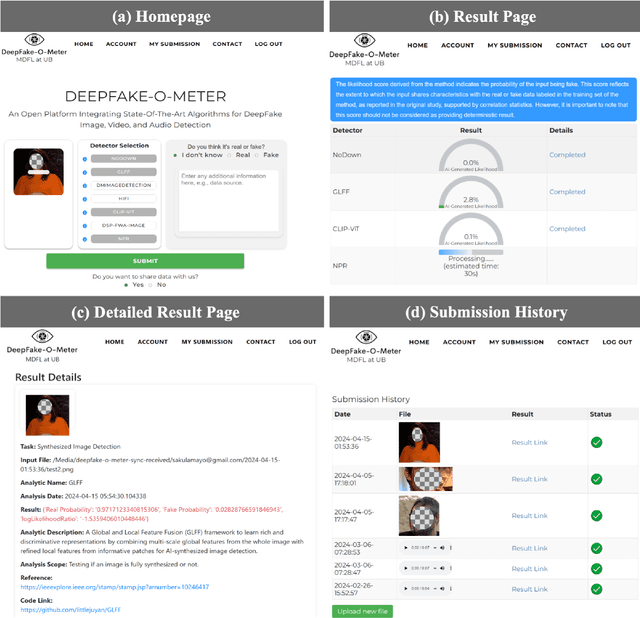
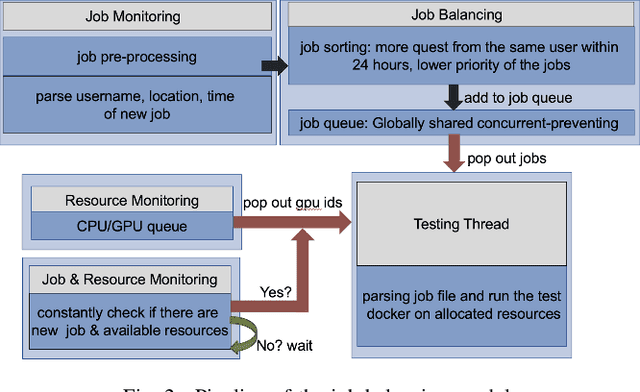
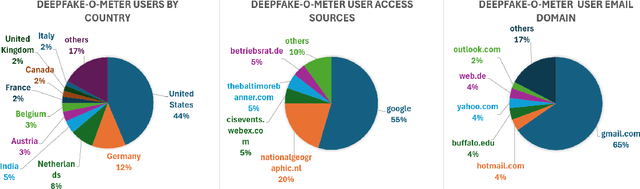
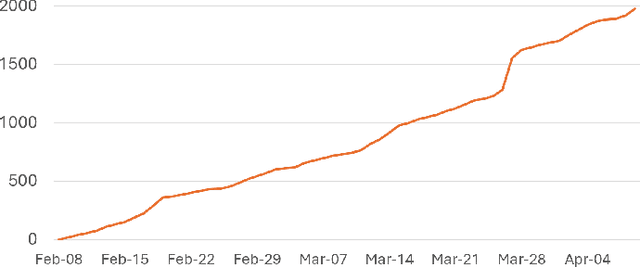
Deepfakes, as AI-generated media, have increasingly threatened media integrity and personal privacy with realistic yet fake digital content. In this work, we introduce an open-source and user-friendly online platform, DeepFake-O-Meter v2.0, that integrates state-of-the-art methods for detecting Deepfake images, videos, and audio. Built upon DeepFake-O-Meter v1.0, we have made significant upgrades and improvements in platform architecture design, including user interaction, detector integration, job balancing, and security management. The platform aims to offer everyday users a convenient service for analyzing DeepFake media using multiple state-of-the-art detection algorithms. It ensures secure and private delivery of the analysis results. Furthermore, it serves as an evaluation and benchmarking platform for researchers in digital media forensics to compare the performance of multiple algorithms on the same input. We have also conducted detailed usage analysis based on the collected data to gain deeper insights into our platform's statistics. This involves analyzing two-month trends in user activity and evaluating the processing efficiency of each detector.
AI-Synthesized Voice Detection Using Neural Vocoder Artifacts
Apr 27, 2023
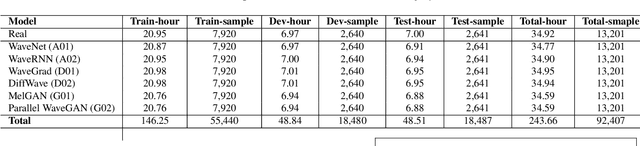
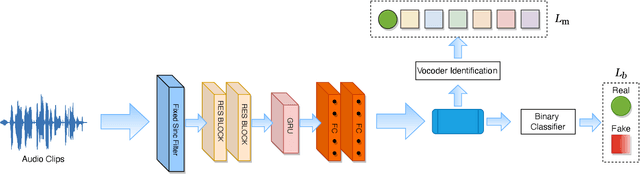

Advancements in AI-synthesized human voices have created a growing threat of impersonation and disinformation, making it crucial to develop methods to detect synthetic human voices. This study proposes a new approach to identifying synthetic human voices by detecting artifacts of vocoders in audio signals. Most DeepFake audio synthesis models use a neural vocoder, a neural network that generates waveforms from temporal-frequency representations like mel-spectrograms. By identifying neural vocoder processing in audio, we can determine if a sample is synthesized. To detect synthetic human voices, we introduce a multi-task learning framework for a binary-class RawNet2 model that shares the feature extractor with a vocoder identification module. By treating vocoder identification as a pretext task, we constrain the feature extractor to focus on vocoder artifacts and provide discriminative features for the final binary classifier. Our experiments show that the improved RawNet2 model based on vocoder identification achieves high classification performance on the binary task overall.
Exposing AI-Synthesized Human Voices Using Neural Vocoder Artifacts
Feb 18, 2023The advancements of AI-synthesized human voices have introduced a growing threat of impersonation and disinformation. It is therefore of practical importance to developdetection methods for synthetic human voices. This work proposes a new approach to detect synthetic human voices based on identifying artifacts of neural vocoders in audio signals. A neural vocoder is a specially designed neural network that synthesizes waveforms from temporal-frequency representations, e.g., mel-spectrograms. The neural vocoder is a core component in most DeepFake audio synthesis models. Hence the identification of neural vocoder processing implies that an audio sample may have been synthesized. To take advantage of the vocoder artifacts for synthetic human voice detection, we introduce a multi-task learning framework for a binary-class RawNet2 model that shares the front-end feature extractor with a vocoder identification module. We treat the vocoder identification as a pretext task to constrain the front-end feature extractor to focus on vocoder artifacts and provide discriminative features for the final binary classifier. Our experiments show that the improved RawNet2 model based on vocoder identification achieves an overall high classification performance on the binary task.