 Add to Chrome
 Add to Firefox
 Add to Edge
From LLM Inference to Agentic Workloads: Characterization and Implications for Serving Systems
Aug 15, 2026
Agentic applications are shifting AI serving from isolated model inference to long-running workloads in which LLMs coordinate tools, environments, and persistent state. However, the system behavior of these workloads---where latency, cost, and bottlenecks arise---remains poorly characterized, leaving serving systems to rely on assumptions built for conventional inference. We present AgentSysBench, a benchmark suite and measurement toolkit with ten representative agentic applications and unified systems-level instrumentation. Across controlled deployments and production traces, we identify six properties that distinguish agentic workloads from conventional LLM serving: (1) execution is heavyweight and stateful, with non-LLM components dominating latency in 5 of 10 applications and sandbox working-set memory peaking at 28 GB per session; (2) applications compose components with heterogeneous resource affinity---GPU-bound inference, memory-bound retrieval, CPU-bound sandboxes---whose task latencies diverge by up to 32x; (3) bottlenecks shift across requests, models, and deployments; (4) production sessions hold state idle for minutes to hours between active steps; (5) a control-plane tax---auxiliary LLM calls and context overhead from tool schemas and observations---crowds out productive compute and context; and (6) production traces from three applications reveal heavy cross-request redundancy in search queries and web fetches, exposing a large caching opportunity. Four design explorations demonstrate that these findings are actionable: task-aware serving reduces latency by 29--40%, communication-aware placement by up to 4.5x, state offloading reduces memory usage by 4.6x, and tool-result caching removes 35.2% of redundant search calls and saves 19.3% of aggregate search latency.

Biathlon: Harnessing Model Resilience for Accelerating ML Inference Pipelines
May 18, 2024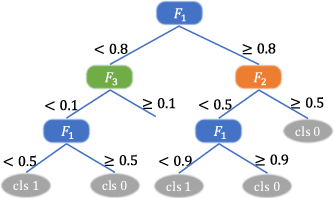
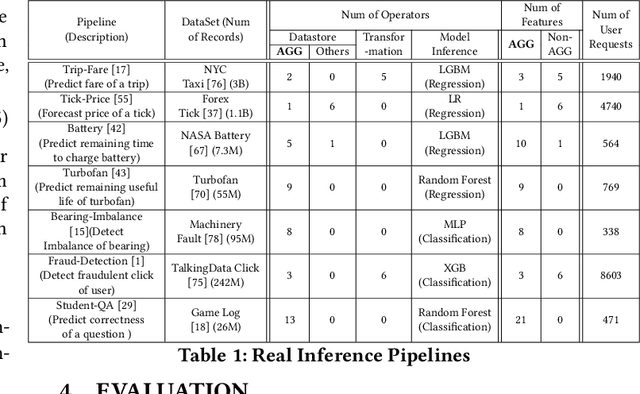
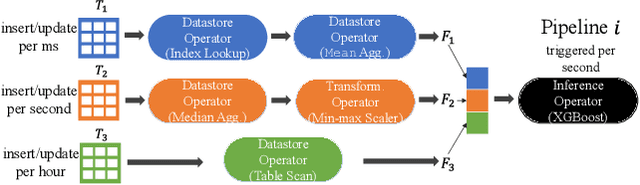
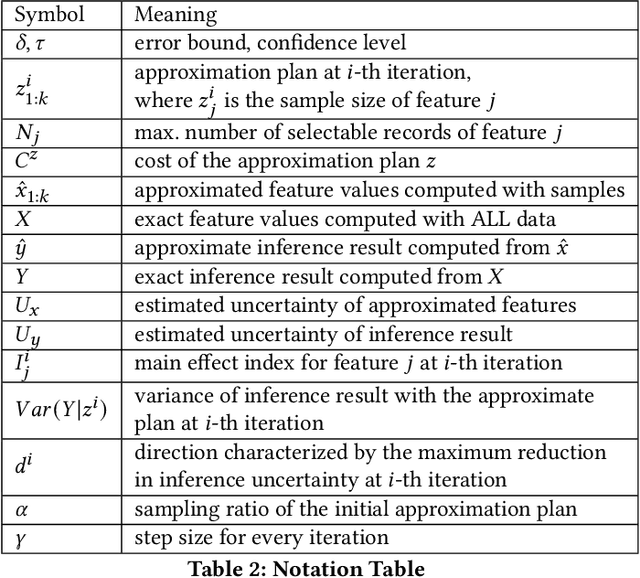
Machine learning inference pipelines commonly encountered in data science and industries often require real-time responsiveness due to their user-facing nature. However, meeting this requirement becomes particularly challenging when certain input features require aggregating a large volume of data online. Recent literature on interpretable machine learning reveals that most machine learning models exhibit a notable degree of resilience to variations in input. This suggests that machine learning models can effectively accommodate approximate input features with minimal discernible impact on accuracy. In this paper, we introduce Biathlon, a novel ML serving system that leverages the inherent resilience of models and determines the optimal degree of approximation for each aggregation feature. This approach enables maximum speedup while ensuring a guaranteed bound on accuracy loss. We evaluate Biathlon on real pipelines from both industry applications and data science competitions, demonstrating its ability to meet real-time latency requirements by achieving 5.3x to 16.6x speedup with almost no accuracy loss.
Is Network the Bottleneck of Distributed Training?
Jun 24, 2020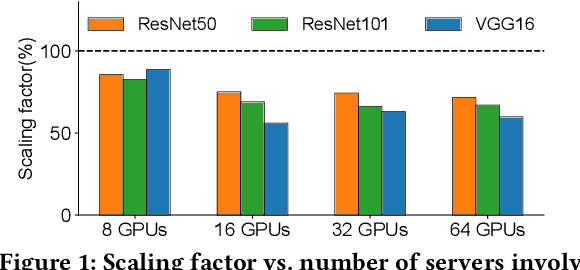
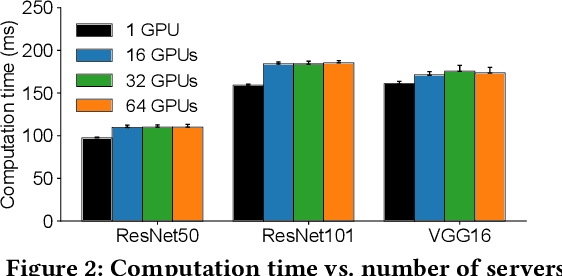
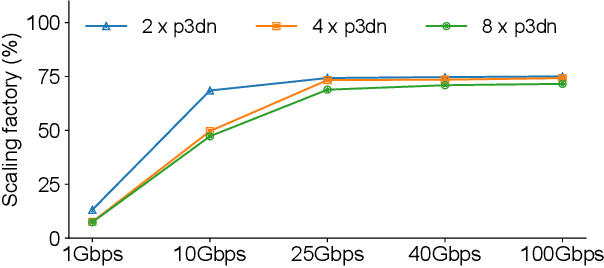
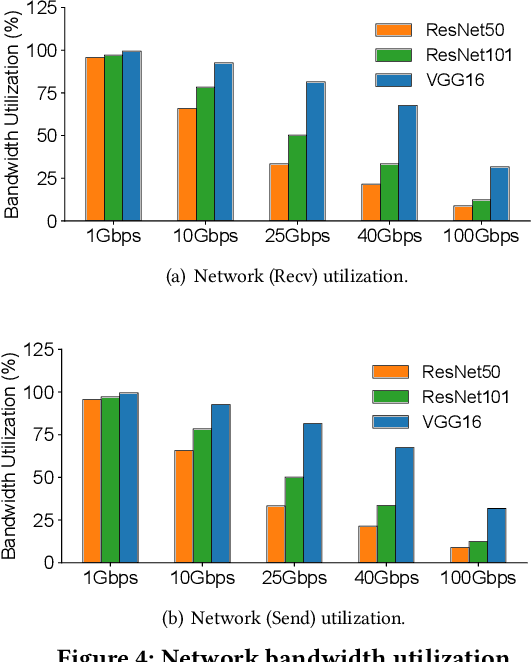
Recently there has been a surge of research on improving the communication efficiency of distributed training. However, little work has been done to systematically understand whether the network is the bottleneck and to what extent. In this paper, we take a first-principles approach to measure and analyze the network performance of distributed training. As expected, our measurement confirms that communication is the component that blocks distributed training from linear scale-out. However, contrary to the common belief, we find that the network is running at low utilization and that if the network can be fully utilized, distributed training can achieve a scaling factor of close to one. Moreover, while many recent proposals on gradient compression advocate over 100x compression ratio, we show that under full network utilization, there is no need for gradient compression in 100 Gbps network. On the other hand, a lower speed network like 10 Gbps requires only 2x--5x gradients compression ratio to achieve almost linear scale-out. Compared to application-level techniques like gradient compression, network-level optimizations do not require changes to applications and do not hurt the performance of trained models. As such, we advocate that the real challenge of distributed training is for the network community to develop high-performance network transport to fully utilize the network capacity and achieve linear scale-out.