 Add to Chrome
 Add to Firefox
 Add to Edge
Divergent-Convergent Reasoning: Scaling Test-Time Compute through Structured Solution Synthesis
Aug 15, 2026
Test-time compute can substantially improve Large Language Model (LLM) reasoning performance, yet how and when additional compute helps remains poorly understood. We study Divergent-Convergent Reasoning (DCR), a simple two-phase primitive consisting of an exploration phase that generates multiple candidate solutions followed by a convergent reconciliation phase. We present three core results. First, we show that even a single reconciliation step can reliably amplify correct minority reports: across datasets, DCR often recovers the correct answer when correct exploration outputs are in the minority, a regime where majority voting fails. Second, we introduce recursive DCR, an autoregressive reconciliation system that iteratively analyzes disagreements and allocates additional test-time compute. Recursive DCR achieves higher accuracy than fixed-compute baselines-reaching 93.3% on AIME 2024 and 92.0% on AIME 2025-while using roughly 27% less compute on average, demonstrating that attentive resource allocation is superior to uniform scaling. Third, we analyze disagreement among exploration outputs via a simple, training-free dispersion metric. Dispersion reveals a structured relationship between disagreement and test-time gains: in regimes where DCR is effective, higher disagreement among exploration outputs is associated with larger accuracy improvements from reconciliation. Together, these results show that disagreement, often viewed as noise, can be systematically exploited to improve test-time reasoning and reveal emerging scaling laws for agentic LLM systems.

A recommender for the management of chronic pain in patients undergoing spinal cord stimulation
Sep 06, 2023


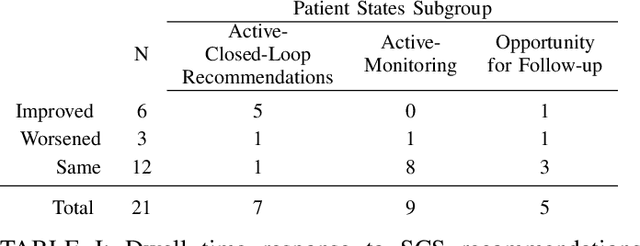
Spinal cord stimulation (SCS) is a therapeutic approach used for the management of chronic pain. It involves the delivery of electrical impulses to the spinal cord via an implanted device, which when given suitable stimulus parameters can mask or block pain signals. Selection of optimal stimulation parameters usually happens in the clinic under the care of a provider whereas at-home SCS optimization is managed by the patient. In this paper, we propose a recommender system for the management of pain in chronic pain patients undergoing SCS. In particular, we use a contextual multi-armed bandit (CMAB) approach to develop a system that recommends SCS settings to patients with the aim of improving their condition. These recommendations, sent directly to patients though a digital health ecosystem, combined with a patient monitoring system closes the therapeutic loop around a chronic pain patient over their entire patient journey. We evaluated the system in a cohort of SCS-implanted ENVISION study subjects (Clinicaltrials.gov ID: NCT03240588) using a combination of quality of life metrics and Patient States (PS), a novel measure of holistic outcomes. SCS recommendations provided statistically significant improvement in clinical outcomes (pain and/or QoL) in 85\% of all subjects (N=21). Among subjects in moderate PS (N=7) prior to receiving recommendations, 100\% showed statistically significant improvements and 5/7 had improved PS dwell time. This analysis suggests SCS patients may benefit from SCS recommendations, resulting in additional clinical improvement on top of benefits already received from SCS therapy.