 Add to Chrome
 Add to Firefox
 Add to Edge
U-StyDiT: Ultra-high Quality Artistic Style Transfer Using Diffusion Transformers
Mar 11, 2025
Ultra-high quality artistic style transfer refers to repainting an ultra-high quality content image using the style information learned from the style image. Existing artistic style transfer methods can be categorized into style reconstruction-based and content-style disentanglement-based style transfer approaches. Although these methods can generate some artistic stylized images, they still exhibit obvious artifacts and disharmonious patterns, which hinder their ability to produce ultra-high quality artistic stylized images. To address these issues, we propose a novel artistic image style transfer method, U-StyDiT, which is built on transformer-based diffusion (DiT) and learns content-style disentanglement, generating ultra-high quality artistic stylized images. Specifically, we first design a Multi-view Style Modulator (MSM) to learn style information from a style image from local and global perspectives, conditioning U-StyDiT to generate stylized images with the learned style information. Then, we introduce a StyDiT Block to learn content and style conditions simultaneously from a style image. Additionally, we propose an ultra-high quality artistic image dataset, Aes4M, comprising 10 categories, each containing 400,000 style images. This dataset effectively solves the problem that the existing style transfer methods cannot produce high-quality artistic stylized images due to the size of the dataset and the quality of the images in the dataset. Finally, the extensive qualitative and quantitative experiments validate that our U-StyDiT can create higher quality stylized images compared to state-of-the-art artistic style transfer methods. To our knowledge, our proposed method is the first to address the generation of ultra-high quality stylized images using transformer-based diffusion.

Large-Scale AI in Telecom: Charting the Roadmap for Innovation, Scalability, and Enhanced Digital Experiences
Mar 06, 2025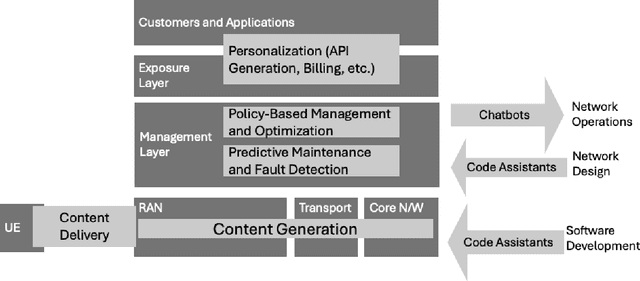
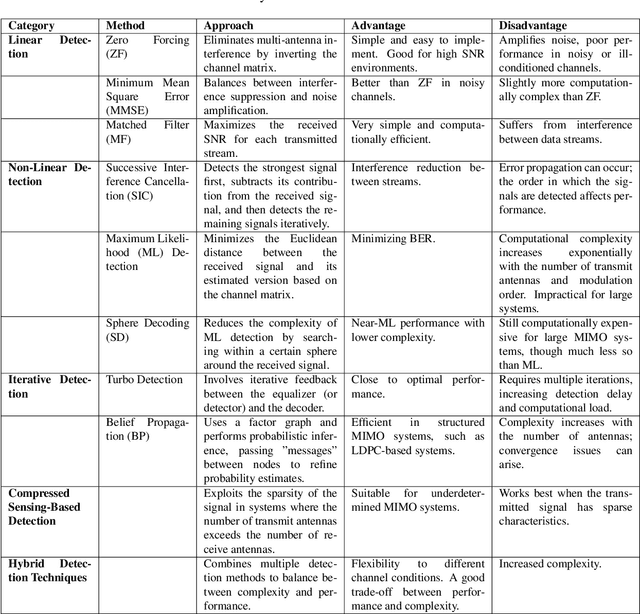
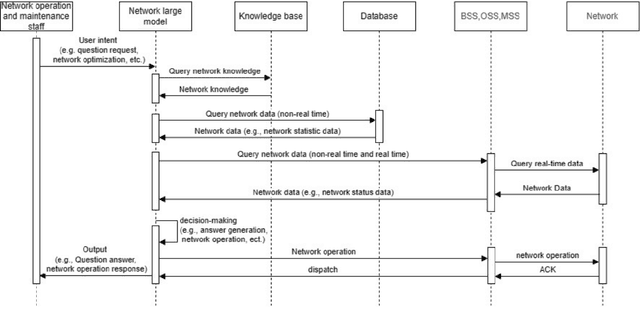
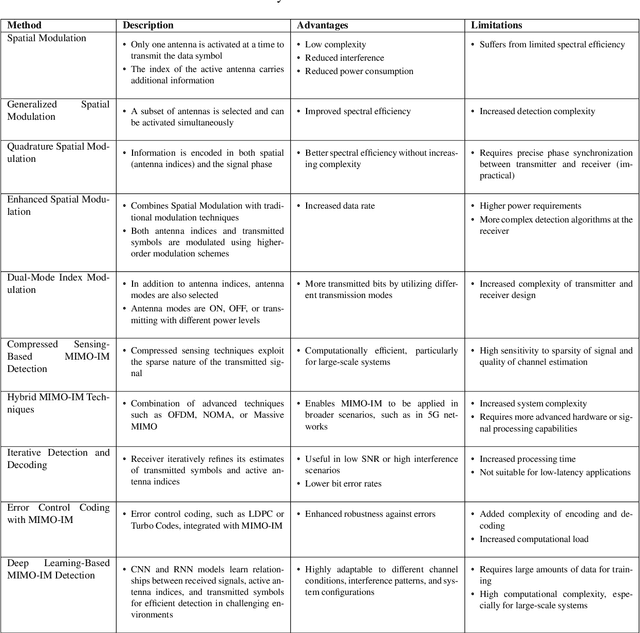
This white paper discusses the role of large-scale AI in the telecommunications industry, with a specific focus on the potential of generative AI to revolutionize network functions and user experiences, especially in the context of 6G systems. It highlights the development and deployment of Large Telecom Models (LTMs), which are tailored AI models designed to address the complex challenges faced by modern telecom networks. The paper covers a wide range of topics, from the architecture and deployment strategies of LTMs to their applications in network management, resource allocation, and optimization. It also explores the regulatory, ethical, and standardization considerations for LTMs, offering insights into their future integration into telecom infrastructure. The goal is to provide a comprehensive roadmap for the adoption of LTMs to enhance scalability, performance, and user-centric innovation in telecom networks.
CGMatch: A Different Perspective of Semi-supervised Learning
Mar 04, 2025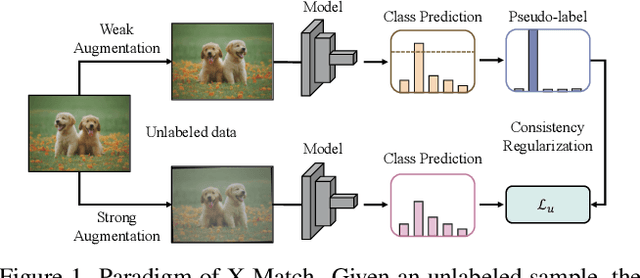
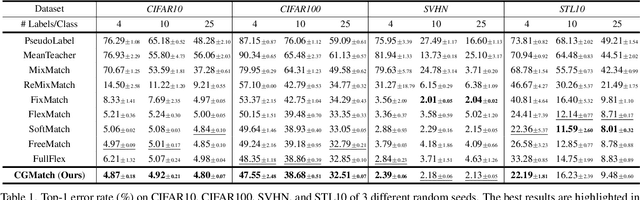
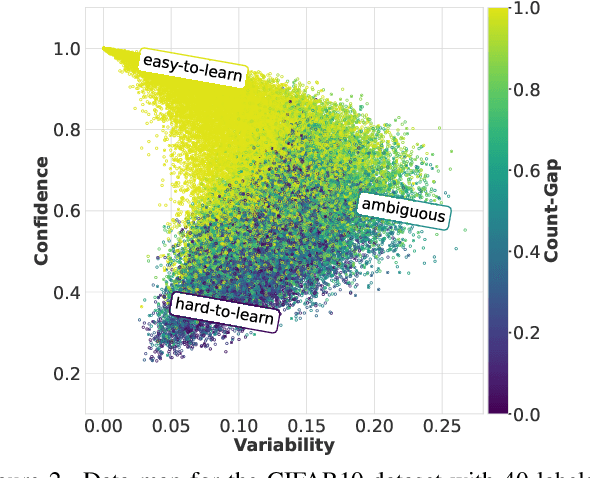

Semi-supervised learning (SSL) has garnered significant attention due to its ability to leverage limited labeled data and a large amount of unlabeled data to improve model generalization performance. Recent approaches achieve impressive successes by combining ideas from both consistency regularization and pseudo-labeling. However, these methods tend to underperform in the more realistic situations with relatively scarce labeled data. We argue that this issue arises because existing methods rely solely on the model's confidence, making them challenging to accurately assess the model's state and identify unlabeled examples contributing to the training phase when supervision information is limited, especially during the early stages of model training. In this paper, we propose a novel SSL model called CGMatch, which, for the first time, incorporates a new metric known as Count-Gap (CG). We demonstrate that CG is effective in discovering unlabeled examples beneficial for model training. Along with confidence, a commonly used metric in SSL, we propose a fine-grained dynamic selection (FDS) strategy. This strategy dynamically divides the unlabeled dataset into three subsets with different characteristics: easy-to-learn set, ambiguous set, and hard-to-learn set. By selective filtering subsets, and applying corresponding regularization with selected subsets, we mitigate the negative impact of incorrect pseudo-labels on model optimization and generalization. Extensive experimental results on several common SSL benchmarks indicate the effectiveness of CGMatch especially when the labeled data are particularly limited. Source code is available at https://github.com/BoCheng-96/CGMatch.
RelaCtrl: Relevance-Guided Efficient Control for Diffusion Transformers
Feb 21, 2025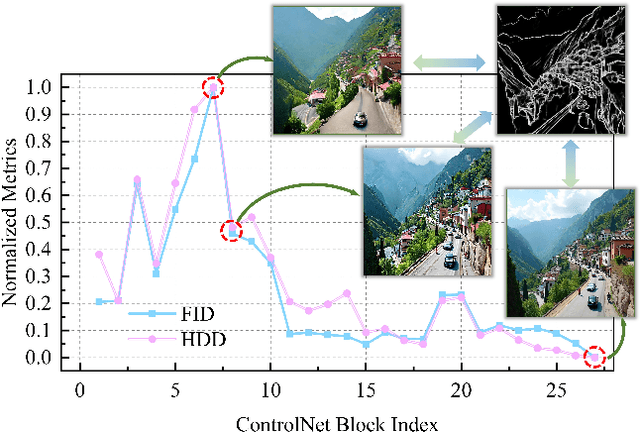
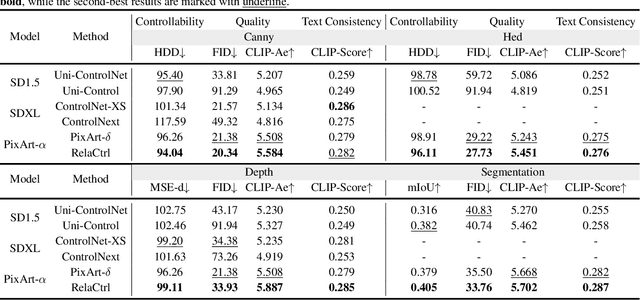
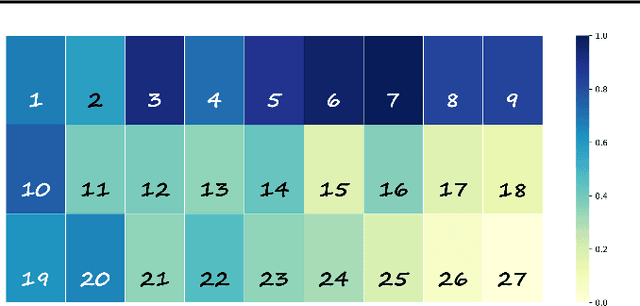
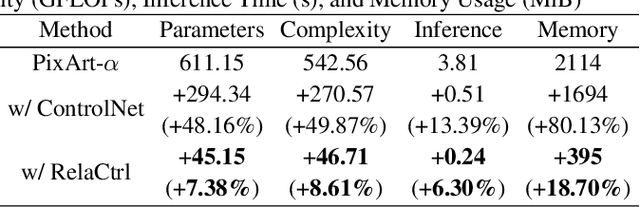
The Diffusion Transformer plays a pivotal role in advancing text-to-image and text-to-video generation, owing primarily to its inherent scalability. However, existing controlled diffusion transformer methods incur significant parameter and computational overheads and suffer from inefficient resource allocation due to their failure to account for the varying relevance of control information across different transformer layers. To address this, we propose the Relevance-Guided Efficient Controllable Generation framework, RelaCtrl, enabling efficient and resource-optimized integration of control signals into the Diffusion Transformer. First, we evaluate the relevance of each layer in the Diffusion Transformer to the control information by assessing the "ControlNet Relevance Score"-i.e., the impact of skipping each control layer on both the quality of generation and the control effectiveness during inference. Based on the strength of the relevance, we then tailor the positioning, parameter scale, and modeling capacity of the control layers to reduce unnecessary parameters and redundant computations. Additionally, to further improve efficiency, we replace the self-attention and FFN in the commonly used copy block with the carefully designed Two-Dimensional Shuffle Mixer (TDSM), enabling efficient implementation of both the token mixer and channel mixer. Both qualitative and quantitative experimental results demonstrate that our approach achieves superior performance with only 15% of the parameters and computational complexity compared to PixArt-delta.
Leader-follower formation enabled by pressure sensing in free-swimming undulatory robotic fish
Feb 11, 2025Fish use their lateral lines to sense flows and pressure gradients, enabling them to detect nearby objects and organisms. Towards replicating this capability, we demonstrated successful leader-follower formation swimming using flow pressure sensing in our undulatory robotic fish ($\mu$Bot/MUBot). The follower $\mu$Bot is equipped at its head with bilateral pressure sensors to detect signals excited by both its own and the leader's movements. First, using experiments with static formations between an undulating leader and a stationary follower, we determined the formation that resulted in strong pressure variations measured by the follower. This formation was then selected as the desired formation in free swimming for obtaining an expert policy. Next, a long short-term memory neural network was used as the control policy that maps the pressure signals along with the robot motor commands and the Euler angles (measured by the onboard IMU) to the steering command. The policy was trained to imitate the expert policy using behavior cloning and Dataset Aggregation (DAgger). The results show that with merely two bilateral pressure sensors and less than one hour of training data, the follower effectively tracked the leader within distances of up to 200 mm (= 1 body length) while swimming at speeds of 155 mm/s (= 0.8 body lengths/s). This work highlights the potential of fish-inspired robots to effectively navigate fluid environments and achieve formation swimming through the use of flow pressure feedback.
From Ceilings to Walls: Universal Dynamic Perching of Small Aerial Robots on Surfaces with Variable Orientations
Dec 27, 2024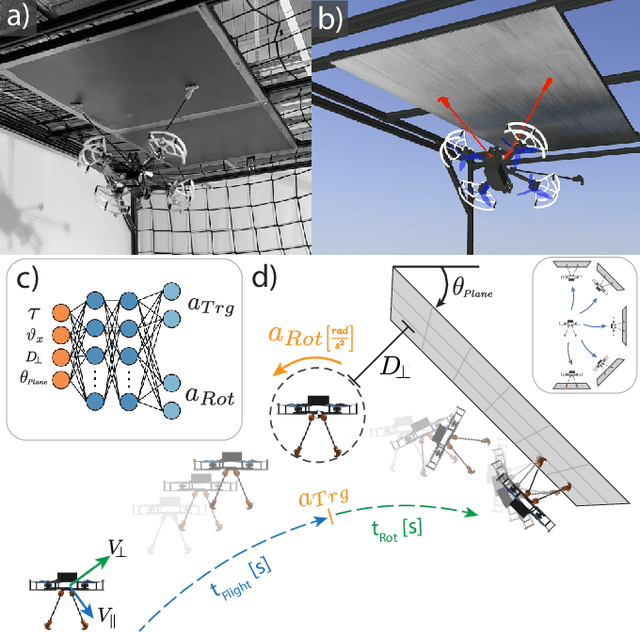
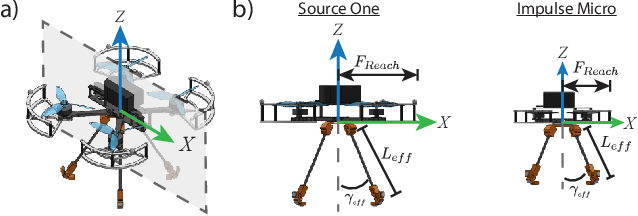
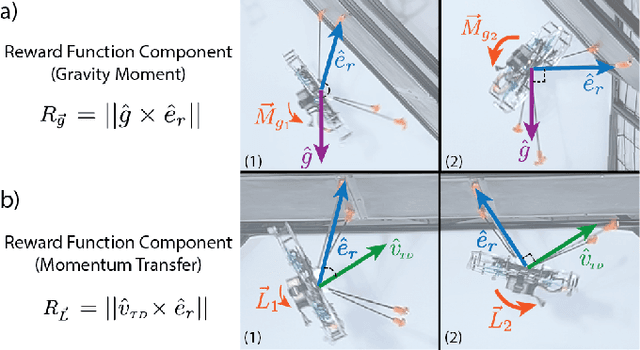
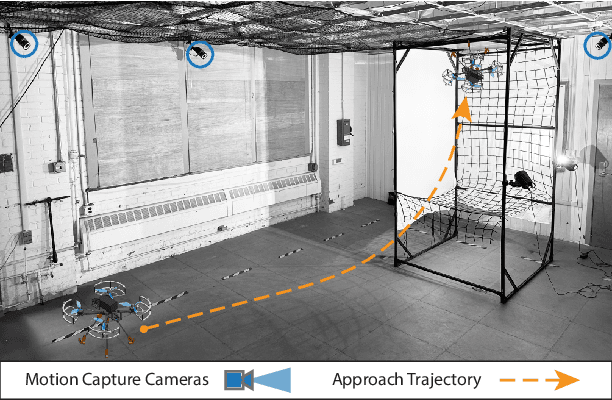
This work demonstrates universal dynamic perching capabilities for quadrotors of various sizes and on surfaces with different orientations. By employing a non-dimensionalization framework and deep reinforcement learning, we systematically assessed how robot size and surface orientation affect landing capabilities. We hypothesized that maintaining geometric proportions across different robot scales ensures consistent perching behavior, which was validated in both simulation and experimental tests. Additionally, we investigated the effects of joint stiffness and damping in the landing gear on perching behaviors and performance. While joint stiffness had minimal impact, joint damping ratios influenced landing success under vertical approaching conditions. The study also identified a critical velocity threshold necessary for successful perching, determined by the robot's maneuverability and leg geometry. Overall, this research advances robotic perching capabilities, offering insights into the role of mechanical design and scaling effects, and lays the groundwork for future drone autonomy and operational efficiency in unstructured environments.
HiCo: Hierarchical Controllable Diffusion Model for Layout-to-image Generation
Oct 18, 2024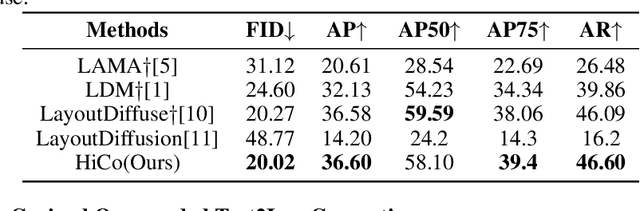
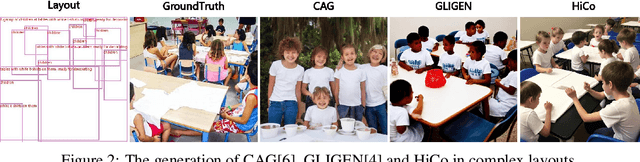
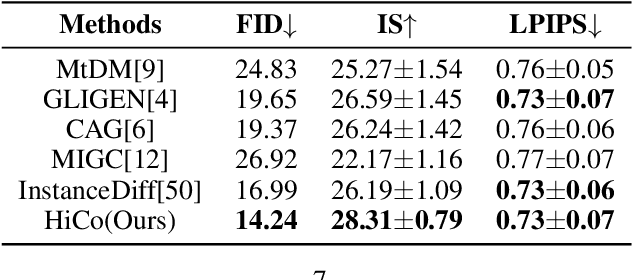
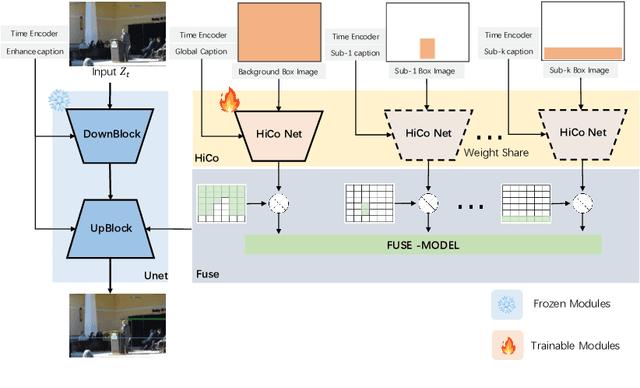
The task of layout-to-image generation involves synthesizing images based on the captions of objects and their spatial positions. Existing methods still struggle in complex layout generation, where common bad cases include object missing, inconsistent lighting, conflicting view angles, etc. To effectively address these issues, we propose a \textbf{Hi}erarchical \textbf{Co}ntrollable (HiCo) diffusion model for layout-to-image generation, featuring object seperable conditioning branch structure. Our key insight is to achieve spatial disentanglement through hierarchical modeling of layouts. We use a multi branch structure to represent hierarchy and aggregate them in fusion module. To evaluate the performance of multi-objective controllable layout generation in natural scenes, we introduce the HiCo-7K benchmark, derived from the GRIT-20M dataset and manually cleaned. https://github.com/360CVGroup/HiCo_T2I.
FancyVideo: Towards Dynamic and Consistent Video Generation via Cross-frame Textual Guidance
Aug 15, 2024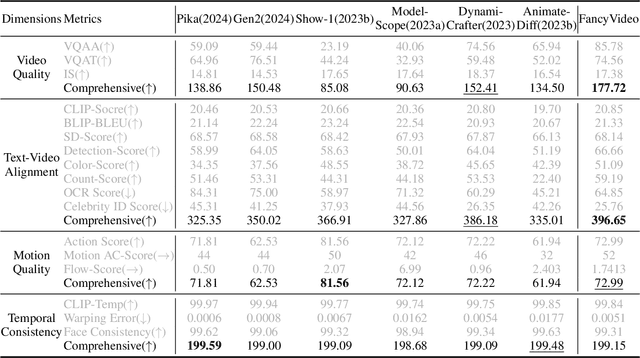
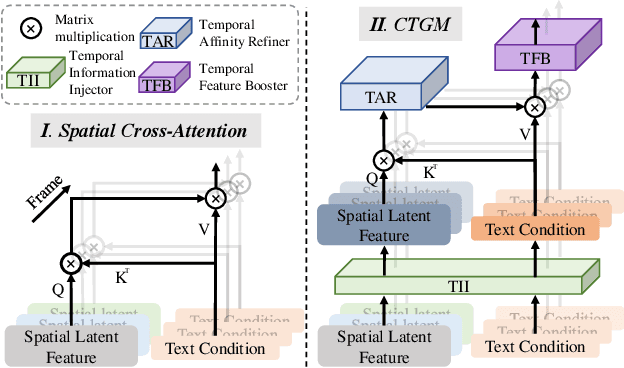
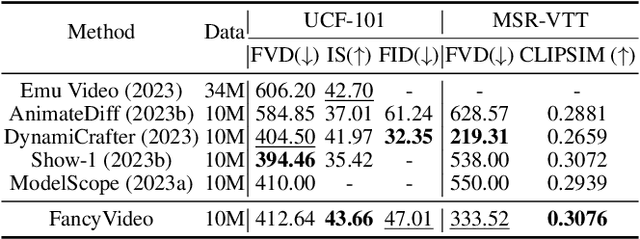
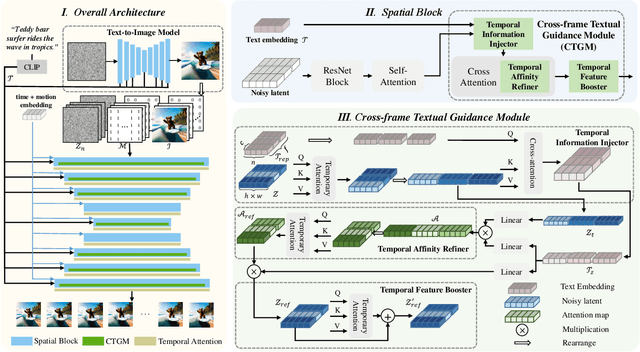
Synthesizing motion-rich and temporally consistent videos remains a challenge in artificial intelligence, especially when dealing with extended durations. Existing text-to-video (T2V) models commonly employ spatial cross-attention for text control, equivalently guiding different frame generations without frame-specific textual guidance. Thus, the model's capacity to comprehend the temporal logic conveyed in prompts and generate videos with coherent motion is restricted. To tackle this limitation, we introduce FancyVideo, an innovative video generator that improves the existing text-control mechanism with the well-designed Cross-frame Textual Guidance Module (CTGM). Specifically, CTGM incorporates the Temporal Information Injector (TII), Temporal Affinity Refiner (TAR), and Temporal Feature Booster (TFB) at the beginning, middle, and end of cross-attention, respectively, to achieve frame-specific textual guidance. Firstly, TII injects frame-specific information from latent features into text conditions, thereby obtaining cross-frame textual conditions. Then, TAR refines the correlation matrix between cross-frame textual conditions and latent features along the time dimension. Lastly, TFB boosts the temporal consistency of latent features. Extensive experiments comprising both quantitative and qualitative evaluations demonstrate the effectiveness of FancyVideo. Our approach achieves state-of-the-art T2V generation results on the EvalCrafter benchmark and facilitates the synthesis of dynamic and consistent videos. The video show results can be available at https://fancyvideo.github.io/, and we will make our code and model weights publicly available.
Leveraging Parameter-Efficient Transfer Learning for Multi-Lingual Text-to-Speech Adaptation
Jun 25, 2024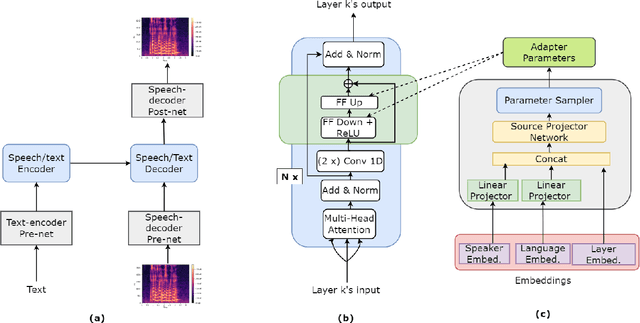
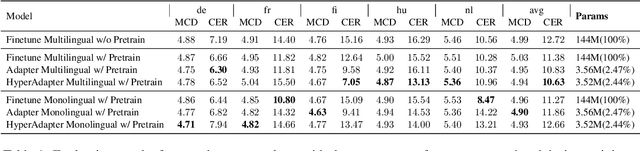
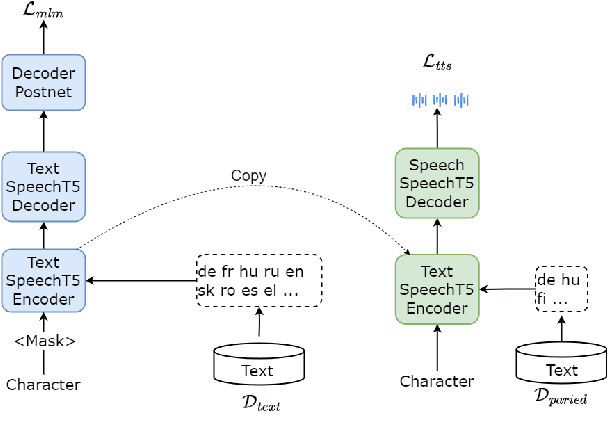
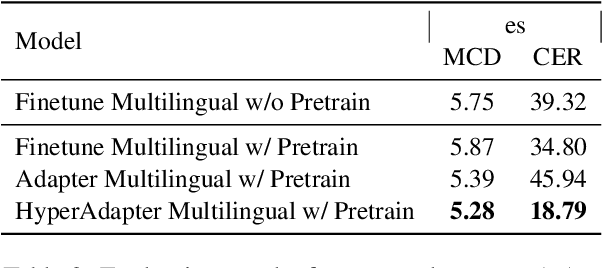
Different languages have distinct phonetic systems and vary in their prosodic features making it challenging to develop a Text-to-Speech (TTS) model that can effectively synthesise speech in multilingual settings. Furthermore, TTS architecture needs to be both efficient enough to capture nuances in multiple languages and efficient enough to be practical for deployment. The standard approach is to build transformer based model such as SpeechT5 and train it on large multilingual dataset. As the size of these models grow the conventional fine-tuning for adapting these model becomes impractical due to heavy computational cost. In this paper, we proposes to integrate parameter-efficient transfer learning (PETL) methods such as adapters and hypernetwork with TTS architecture for multilingual speech synthesis. Notably, in our experiments PETL methods able to achieve comparable or even better performance compared to full fine-tuning with only $\sim$2.5\% tunable parameters.The code and samples are available at: https://anonymous.4open.science/r/multilingualTTS-BA4C.
HyperTTS: Parameter Efficient Adaptation in Text to Speech using Hypernetworks
Apr 06, 2024

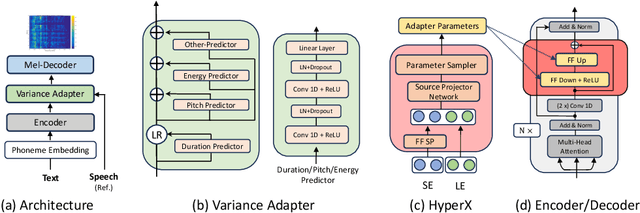

Neural speech synthesis, or text-to-speech (TTS), aims to transform a signal from the text domain to the speech domain. While developing TTS architectures that train and test on the same set of speakers has seen significant improvements, out-of-domain speaker performance still faces enormous limitations. Domain adaptation on a new set of speakers can be achieved by fine-tuning the whole model for each new domain, thus making it parameter-inefficient. This problem can be solved by Adapters that provide a parameter-efficient alternative to domain adaptation. Although famous in NLP, speech synthesis has not seen much improvement from Adapters. In this work, we present HyperTTS, which comprises a small learnable network, "hypernetwork", that generates parameters of the Adapter blocks, allowing us to condition Adapters on speaker representations and making them dynamic. Extensive evaluations of two domain adaptation settings demonstrate its effectiveness in achieving state-of-the-art performance in the parameter-efficient regime. We also compare different variants of HyperTTS, comparing them with baselines in different studies. Promising results on the dynamic adaptation of adapter parameters using hypernetworks open up new avenues for domain-generic multi-speaker TTS systems. The audio samples and code are available at https://github.com/declare-lab/HyperTTS.