 Add to Chrome
 Add to Firefox
 Add to Edge
Image-Based Whole-Heart Cardiac Flow Simulations in Health and Congenital Heart Disease
May 10, 2026
Intracardiac flow patterns are shaped by the coupled motion of the cardiac chambers and heart valves and provide important information about cardiac function. However, clinical flow imaging remains limited by exam times, noise, resolution, and incomplete details of the three-dimensional flow. Computational fluid dynamics (CFD) can potentially provide detailed flow quantification and predictive insight into treatment outcomes, but clinical translation requires frameworks that reproduce patient-specific measurements while balancing physiological realism, computational cost, and modeling effort. Herein, we present an image-based, patient-specific computational framework for simulating whole-heart intracardiac hemodynamics that balances physiological fidelity with computational efficiency. The framework first employs machine learning-based segmentation and mesh propagation to reconstruct moving cardiac anatomies from time-resolved images. CFD simulations are then performed to resolve blood flow in deforming domains, while resistive immersed surfaces (RIS) are used to model all four cardiac valves with physiologically realistic opening and closing dynamics. The framework was applied to model hemodynamics in a healthy adult and a pediatric patient with complex congenital heart disease (CHD). In the healthy case, the simulations reproduced physiologic pressure-volume behavior, valve timing, and ventricular vortex formation. In the CHD case, simulated chamber and vessel pressures showed agreement with cardiac catheterization measurements. Simulated flow fields were qualitatively consistent with 4D-Flow MRI, while providing higher-resolution visualization of flow structures that were partially obscured by imaging artifacts. Comparison between the healthy and CHD cases further revealed altered diastolic flow organization and elevated normalized viscous dissipation in the CHD heart.

From Ceilings to Walls: Universal Dynamic Perching of Small Aerial Robots on Surfaces with Variable Orientations
Dec 27, 2024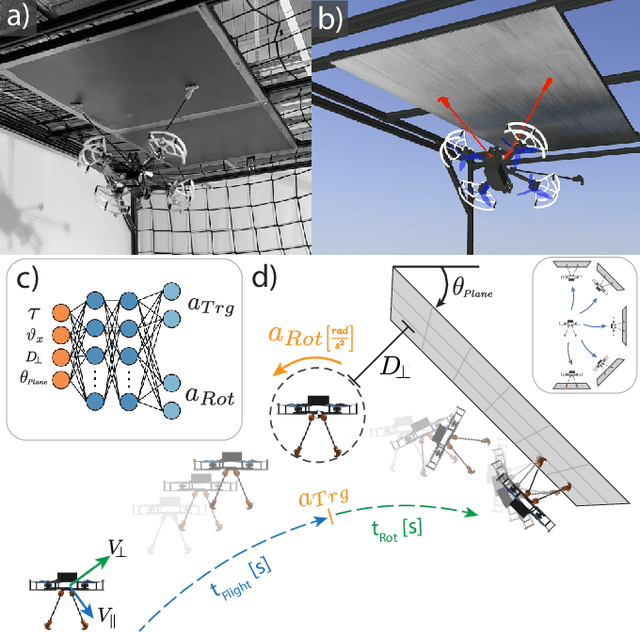
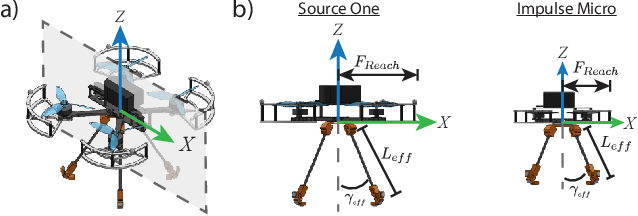
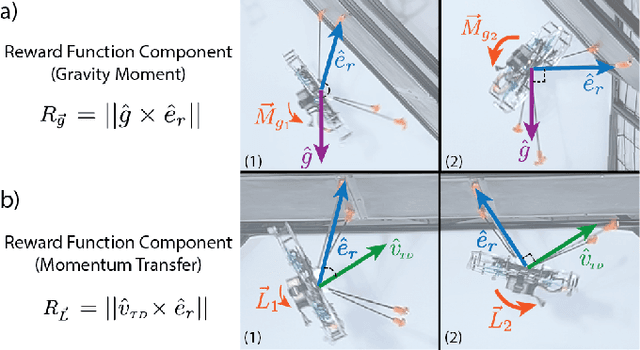
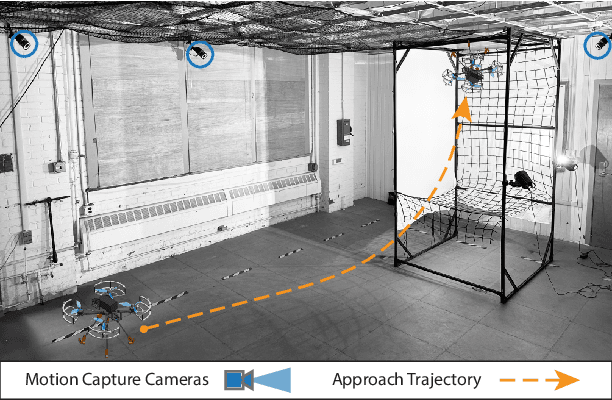
This work demonstrates universal dynamic perching capabilities for quadrotors of various sizes and on surfaces with different orientations. By employing a non-dimensionalization framework and deep reinforcement learning, we systematically assessed how robot size and surface orientation affect landing capabilities. We hypothesized that maintaining geometric proportions across different robot scales ensures consistent perching behavior, which was validated in both simulation and experimental tests. Additionally, we investigated the effects of joint stiffness and damping in the landing gear on perching behaviors and performance. While joint stiffness had minimal impact, joint damping ratios influenced landing success under vertical approaching conditions. The study also identified a critical velocity threshold necessary for successful perching, determined by the robot's maneuverability and leg geometry. Overall, this research advances robotic perching capabilities, offering insights into the role of mechanical design and scaling effects, and lays the groundwork for future drone autonomy and operational efficiency in unstructured environments.