 Add to Chrome
 Add to Firefox
 Add to Edge
Simulation-Aware In-Context Policy Improvement for LLM-Aided Analog Layout Refinement
Aug 13, 2026
Analog IC layout design remains a labor-intensive iterative process dominated by simulation-driven refinement. Although end-to-end layout generators accelerate initial placement and routing, they still require experts to manually tune layout optimization parameters with repeated post-layout simulations for stringent design specifications. While Bayesian Optimization (BO) is widely adopted for parameter tuning in analog IC design, at the layout level it typically requires hundreds to thousands of evaluations, each involving costly parasitic extraction and post-layout simulation, which makes it impractical. Recently, Large Language Models (LLMs) have demonstrated potential in improving the sample efficiency of such simulation-driven tuning. However, their restricted access to geometric layout context and design-specific heuristics limits their ability to manipulate the layout optimization process. In this paper, we propose a simulation-aware LLM multi-agent framework that performs in-context policy improvement (ICPI) by iteratively updating layout optimization parameters exposed by an analog layout generator through an act-observe-reflect loop on compact structured layout representations. Experiments on real-world analog circuits show that, with only tens of post-layout simulations, our approach improves post-layout performance over the generator's built-in heuristics and BO-based tuning method.

PANDA: An LLM-Enhanced Performance-Driven Analog Design Framework Bridging Design Intent and Layout Generation
Jun 13, 2026Traditional design of analog circuits heavily relies on manual interventions across topology, sizing, and layout, with prior automation addressing stages in isolation. In this work, we propose PANDA, an LLM-enhanced framework that bridges high-level design intent to final layout by actively managing cross-stage dependencies through guided topology synthesis, substructure-aware sizing, and constraint-driven layout generation. This shifts automation from algorithm-centric execution to intent-centric co-design, reducing turnaround time from days or weeks to hours while improving design performance.
WarmServe: Enabling One-for-Many GPU Prewarming for Multi-LLM Serving
Dec 10, 2025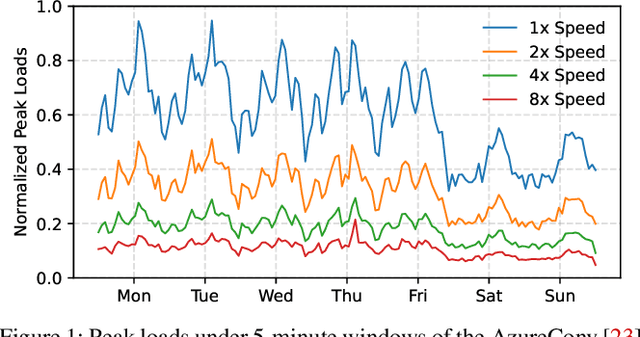
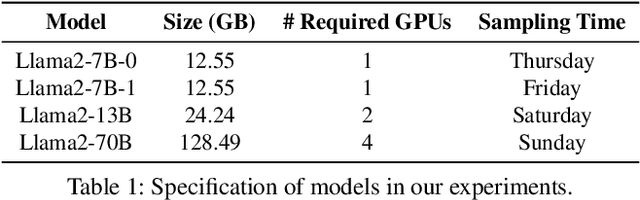
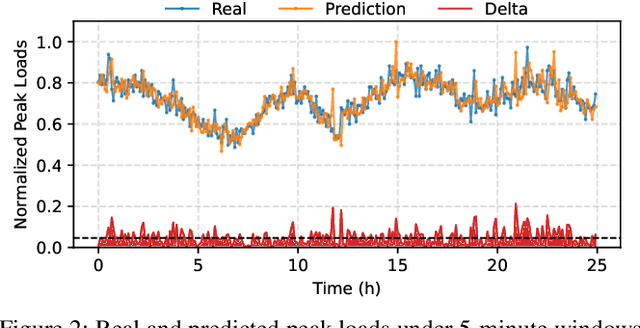
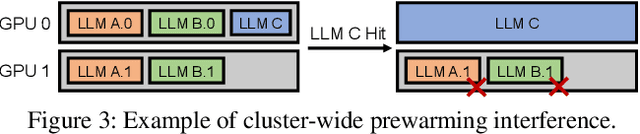
Deploying multiple models within shared GPU clusters is promising for improving resource efficiency in large language model (LLM) serving. Existing multi-LLM serving systems optimize GPU utilization at the cost of worse inference performance, especially time-to-first-token (TTFT). We identify the root cause of such compromise as their unawareness of future workload characteristics. In contrast, recent analysis on real-world traces has shown the high periodicity and long-term predictability of LLM serving workloads. We propose universal GPU workers to enable one-for-many GPU prewarming that loads models with knowledge of future workloads. Based on universal GPU workers, we design and build WarmServe, a multi-LLM serving system that (1) mitigates cluster-wide prewarming interference by adopting an evict-aware model placement strategy, (2) prepares universal GPU workers in advance by proactive prewarming, and (3) manages GPU memory with a zero-overhead memory switching mechanism. Evaluation under real-world datasets shows that WarmServe improves TTFT by up to 50.8$\times$ compared to the state-of-the-art autoscaling-based system, while being capable of serving up to 2.5$\times$ more requests compared to the GPU-sharing system.