 Add to Chrome
 Add to Firefox
 Add to Edge
Assessment in Team Problem-Solving Exercises in Computing Education
Jul 21, 2026
This full paper in the research-to-practice track presents methods for assessing student teams in tabletop exercises (TTXs). TTXs enable learner teams to prepare for workplace tasks and practice crisis responses, such as resolving cybersecurity incidents. While assessment is essential for determining how well teams achieve learning objectives, the complex, open-ended nature of TTXs often leads to delayed or incomplete feedback. TTX learning platforms can record teams' actions and communication; yet, leveraging these data to assess performance is underexplored. To address this gap, we compared two post-TTX team assessment methods -- clustering and large language models (LLMs) -- using an original dataset from 81 participants across two countries. We evaluated these methods against instructor-assigned scores based on standardized rubrics. Clustering grouped teams that approached TTX tasks similarly, enabling instructors to deliver faster, targeted feedback to teams within a cluster. This method was valid and reliable, with low computational requirements. LLMs used the standardized rubrics to assess teams' communication. While GPT-4o frequently disagreed with instructor scores, GPT-5.2 demonstrated considerably lower error. The researched methods have been integrated into INJECT, an open-source TTX learning platform, to support scalability and teaching practice. To encourage community adoption, we publicly share all datasets, software tools, and a full-fledged TTX scenario.

Knowledge Distillation in RNN-Attention Models for Early Prediction of Student Performance
Dec 19, 2024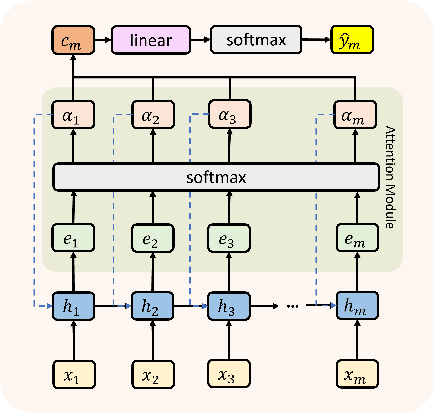
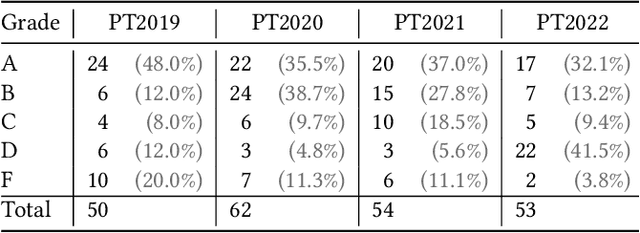
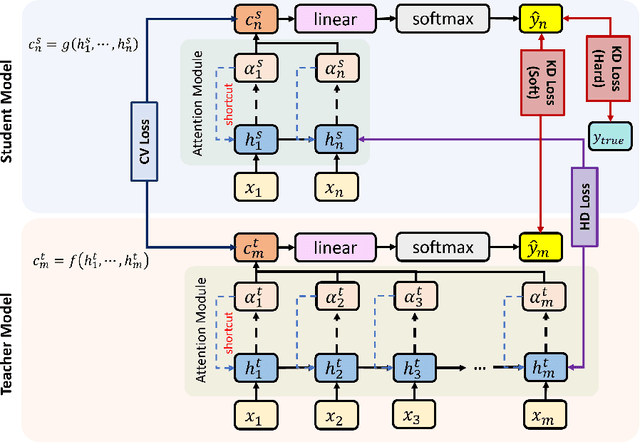
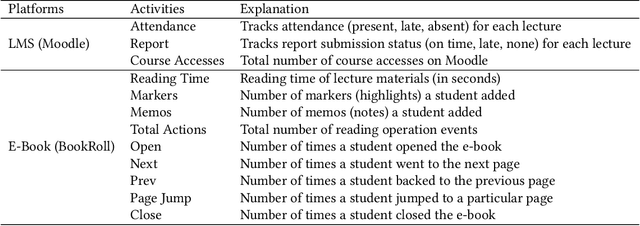
Educational data mining (EDM) is a part of applied computing that focuses on automatically analyzing data from learning contexts. Early prediction for identifying at-risk students is a crucial and widely researched topic in EDM research. It enables instructors to support at-risk students to stay on track, preventing student dropout or failure. Previous studies have predicted students' learning performance to identify at-risk students by using machine learning on data collected from e-learning platforms. However, most studies aimed to identify at-risk students utilizing the entire course data after the course finished. This does not correspond to the real-world scenario that at-risk students may drop out before the course ends. To address this problem, we introduce an RNN-Attention-KD (knowledge distillation) framework to predict at-risk students early throughout a course. It leverages the strengths of Recurrent Neural Networks (RNNs) in handling time-sequence data to predict students' performance at each time step and employs an attention mechanism to focus on relevant time steps for improved predictive accuracy. At the same time, KD is applied to compress the time steps to facilitate early prediction. In an empirical evaluation, RNN-Attention-KD outperforms traditional neural network models in terms of recall and F1-measure. For example, it obtained recall and F1-measure of 0.49 and 0.51 for Weeks 1--3 and 0.51 and 0.61 for Weeks 1--6 across all datasets from four years of a university course. Then, an ablation study investigated the contributions of different knowledge transfer methods (distillation objectives). We found that hint loss from the hidden layer of RNN and context vector loss from the attention module on RNN could enhance the model's prediction performance for identifying at-risk students. These results are relevant for EDM researchers employing deep learning models.