 Add to Chrome
 Add to Firefox
 Add to Edge
Assessment in Team Problem-Solving Exercises in Computing Education
Jul 21, 2026
This full paper in the research-to-practice track presents methods for assessing student teams in tabletop exercises (TTXs). TTXs enable learner teams to prepare for workplace tasks and practice crisis responses, such as resolving cybersecurity incidents. While assessment is essential for determining how well teams achieve learning objectives, the complex, open-ended nature of TTXs often leads to delayed or incomplete feedback. TTX learning platforms can record teams' actions and communication; yet, leveraging these data to assess performance is underexplored. To address this gap, we compared two post-TTX team assessment methods -- clustering and large language models (LLMs) -- using an original dataset from 81 participants across two countries. We evaluated these methods against instructor-assigned scores based on standardized rubrics. Clustering grouped teams that approached TTX tasks similarly, enabling instructors to deliver faster, targeted feedback to teams within a cluster. This method was valid and reliable, with low computational requirements. LLMs used the standardized rubrics to assess teams' communication. While GPT-4o frequently disagreed with instructor scores, GPT-5.2 demonstrated considerably lower error. The researched methods have been integrated into INJECT, an open-source TTX learning platform, to support scalability and teaching practice. To encourage community adoption, we publicly share all datasets, software tools, and a full-fledged TTX scenario.

LECTOR: Summarizing E-book Reading Content for Personalized Student Support
May 12, 2025Educational e-book platforms provide valuable information to teachers and researchers through two main sources: reading activity data and reading content data. While reading activity data is commonly used to analyze learning strategies and predict low-performing students, reading content data is often overlooked in these analyses. To address this gap, this study proposes LECTOR (Lecture slides and Topic Relationships), a model that summarizes information from reading content in a format that can be easily integrated with reading activity data. Our first experiment compared LECTOR to representative Natural Language Processing (NLP) models in extracting key information from 2,255 lecture slides, showing an average improvement of 5% in F1-score. These results were further validated through a human evaluation involving 28 students, which showed an average improvement of 21% in F1-score over a model predominantly used in current educational tools. Our second experiment compared reading preferences extracted by LECTOR with traditional reading activity data in predicting low-performing students using 600,712 logs from 218 students. The results showed a tendency to improve the predictive performance by integrating LECTOR. Finally, we proposed examples showing the potential application of the reading preferences extracted by LECTOR in designing personalized interventions for students.
* Published open-access in the International Journal of Artificial Intelligence in Education (IJAIED), see https://doi.org/10.1007/s40593-025-00478-6
Attention Mamba: Time Series Modeling with Adaptive Pooling Acceleration and Receptive Field Enhancements
Apr 02, 2025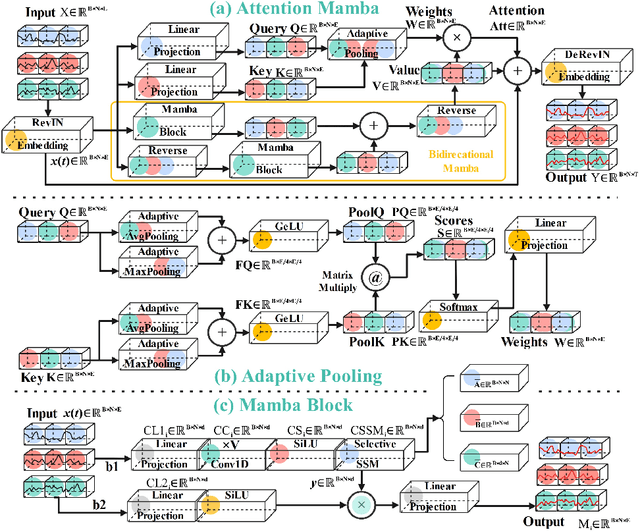
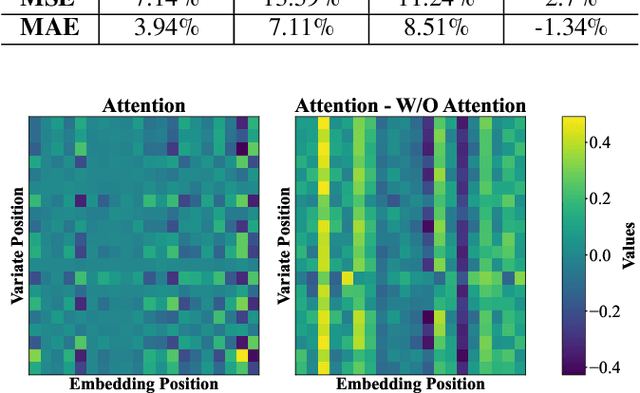
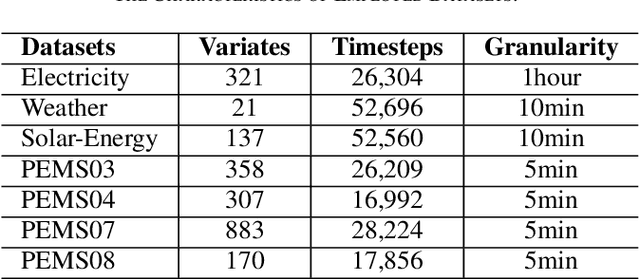
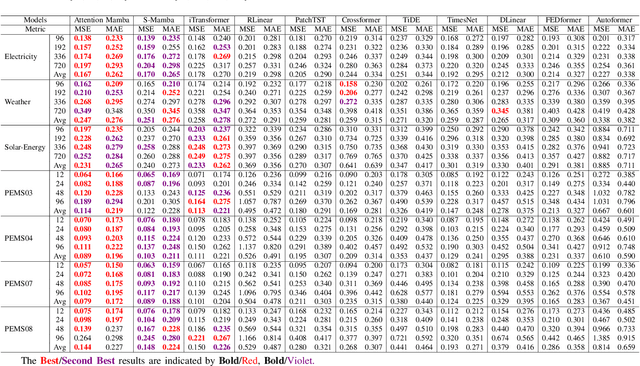
"This work has been submitted to the lEEE for possible publication. Copyright may be transferred without noticeafter which this version may no longer be accessible." Time series modeling serves as the cornerstone of real-world applications, such as weather forecasting and transportation management. Recently, Mamba has become a promising model that combines near-linear computational complexity with high prediction accuracy in time series modeling, while facing challenges such as insufficient modeling of nonlinear dependencies in attention and restricted receptive fields caused by convolutions. To overcome these limitations, this paper introduces an innovative framework, Attention Mamba, featuring a novel Adaptive Pooling block that accelerates attention computation and incorporates global information, effectively overcoming the constraints of limited receptive fields. Furthermore, Attention Mamba integrates a bidirectional Mamba block, efficiently capturing long-short features and transforming inputs into the Value representations for attention mechanisms. Extensive experiments conducted on diverse datasets underscore the effectiveness of Attention Mamba in extracting nonlinear dependencies and enhancing receptive fields, establishing superior performance among leading counterparts. Our codes will be available on GitHub.
Comparison of Large Language Models for Generating Contextually Relevant Questions
Jul 30, 2024This study explores the effectiveness of Large Language Models (LLMs) for Automatic Question Generation in educational settings. Three LLMs are compared in their ability to create questions from university slide text without fine-tuning. Questions were obtained in a two-step pipeline: first, answer phrases were extracted from slides using Llama 2-Chat 13B; then, the three models generated questions for each answer. To analyze whether the questions would be suitable in educational applications for students, a survey was conducted with 46 students who evaluated a total of 246 questions across five metrics: clarity, relevance, difficulty, slide relation, and question-answer alignment. Results indicate that GPT-3.5 and Llama 2-Chat 13B outperform Flan T5 XXL by a small margin, particularly in terms of clarity and question-answer alignment. GPT-3.5 especially excels at tailoring questions to match the input answers. The contribution of this research is the analysis of the capacity of LLMs for Automatic Question Generation in education.