 Add to Chrome
 Add to Firefox
 Add to Edge
Wireless Channel Aware Data Augmentation Methods for Deep Leaning-Based Indoor Localization
Aug 12, 2024
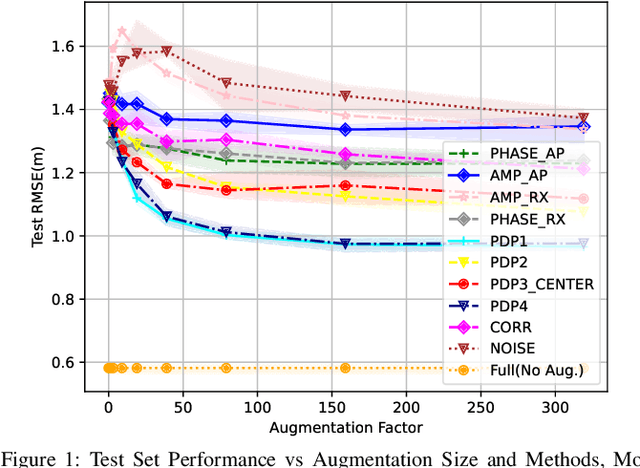
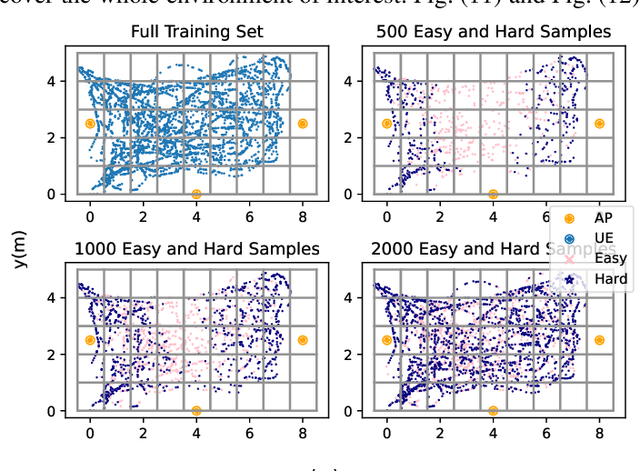
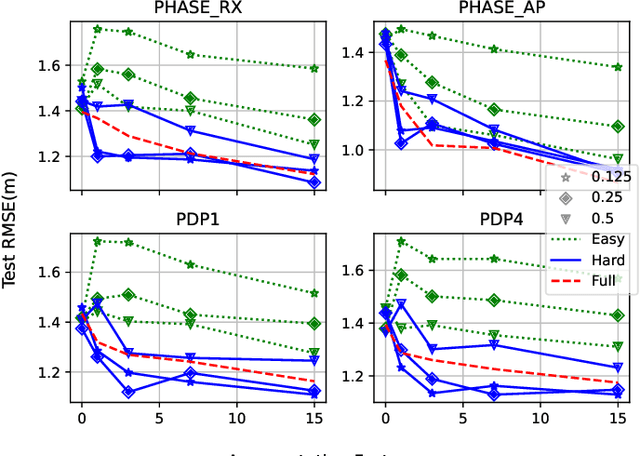
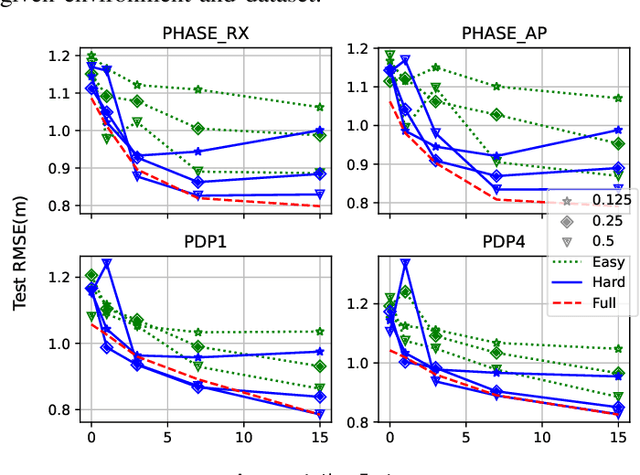
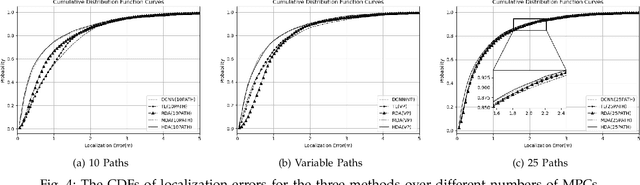
Indoor localization is a challenging problem that - unlike outdoor localization - lacks a universal and robust solution. Machine Learning (ML), particularly Deep Learning (DL), methods have been investigated as a promising approach. Although such methods bring remarkable localization accuracy, they heavily depend on the training data collected from the environment. The data collection is usually a laborious and time-consuming task, but Data Augmentation (DA) can be used to alleviate this issue. In this paper, different from previously used DA, we propose methods that utilize the domain knowledge about wireless propagation channels and devices. The methods exploit the typical hardware component drift in the transceivers and/or the statistical behavior of the channel, in combination with the measured Power Delay Profile (PDP). We comprehensively evaluate the proposed methods to demonstrate their effectiveness. This investigation mainly focuses on the impact of factors such as the number of measurements, augmentation proportion, and the environment of interest impact the effectiveness of the different DA methods. We show that in the low-data regime (few actual measurements available), localization accuracy increases up to 50%, matching non-augmented results in the high-data regime. In addition, the proposed methods may outperform the measurement-only high-data performance by up to 33% using only 1/4 of the amount of measured data. We also exhibit the effect of different training data distribution and quality on the effectiveness of DA. Finally, we demonstrate the power of the proposed methods when employed along with Transfer Learning (TL) to address the data scarcity in target and/or source environments.

Site-Specific Radio Channel Representation -- Current State and Future Applications
Jun 18, 2024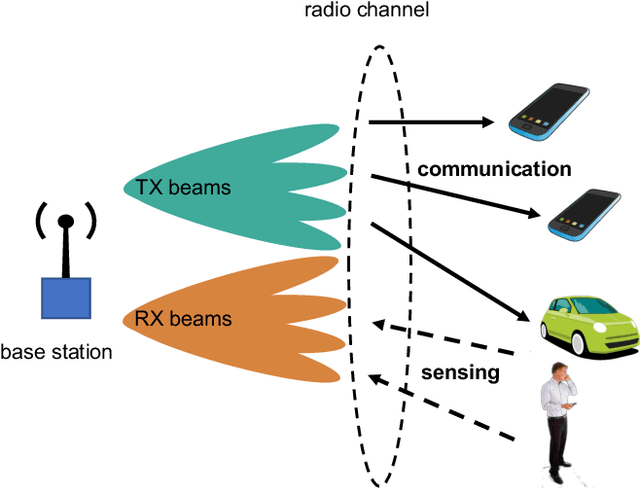
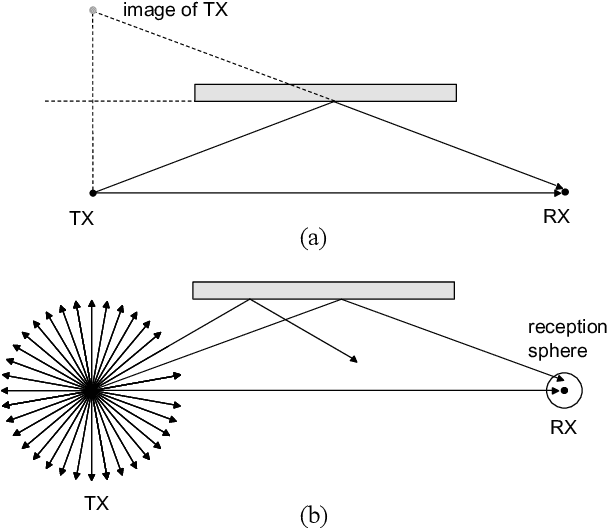
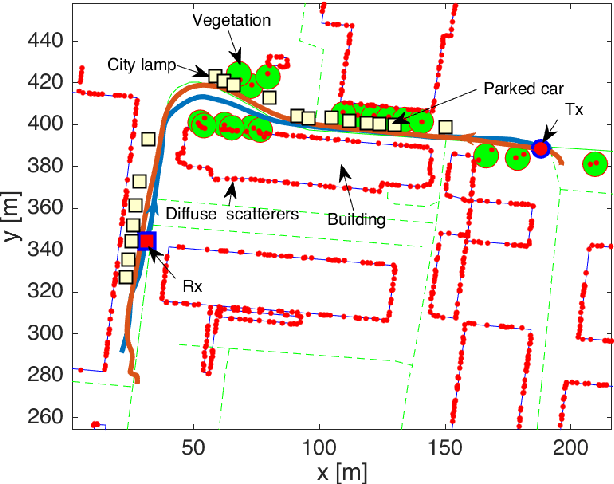
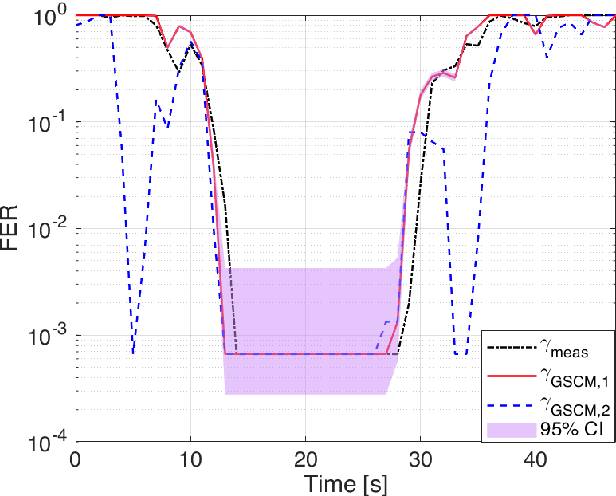
A site-specific radio channel representation considers the surroundings of the communication system through the environment geometry, such as buildings, vegetation, and mobile objects including their material and surface properties. In this article, we focus on communication technologies for 5G and beyond that are increasingly able to exploit the specific environment geometry for both communication and sensing. We present methods for a site-specific radio channel representation that is spatially consistent, such that mobile transmitter and receveiver cause a correlated time-varying channel impulse response. When modelled as random, this channel impulse response has non-stationary statistical properties, i.e., a time-variant Doppler spectrum, power delay profile, K-factor and spatial correlation. A site-specific radio channel representation will enable research into emerging 5G and beyond technologies such as distributed multiple-input multiple-output systems, reconfigurable intelligent surfaces, multi-band communication, and joint communication and sensing. These 5G and beyond technologies will be deployed for a wide range of environments, from dense urban areas to railways, road transportation, industrial automation, and unmanned aerial vehicles.
Cell-free massive MIMO Channels in an Urban Environment -- Measurements and Channel Statistics
Jun 03, 2024


Cell-free massive MIMO (CF-mMIMO), where each user equipment (UE) is connected to multiple access points (APs), is emerging as an important component for 5G and 6G cellular systems. Accurate channel models based on measurements are required to optimize their design and deployment. This paper presents an extensive measurement campaign for CF-mMIMO in an urban environment. A new "virtual AP" technique measures channels between 80 UE locations and more than 20,000 possible microcellular AP locations. Measurements are done at 3.5 GHz carrier frequency with 350 MHz bandwidth (BW). The paper describes the measurement setup and data processing, shows sample results and their physical interpretation, and provides statistics for key quantities such as pathloss, shadowing, delay spread (DS), and delay window. We find pathloss coefficients of 2.9 and 10.4 for line-of-sight (LOS) and non line-of-sight (NLOS), respectively, where the high LOS coefficient is mainly because larger distance leads to more grazing angle of incidence and thus lower antenna gain in our setup. Shadowing standard deviations are 5.1/16.6 dB, and root mean squared (RMS) DSs of -80.6/-72.6 dBs. The measurements can also be used for parameterizing a CUNEC-type model, which will be reported in future work.
Large-scale Outdoor Cell-free mMIMO Channel Measurement in an Urban Scenario at 3.5 GHz
May 31, 2024The design of cell-free massive MIMO (CF-mMIMO) systems requires accurate, measurement-based channel models. This paper provides the first results from the by far most extensive outdoor measurement campaign for CF-mMIMO channels in an urban environment. We measured impulse responses between over 20,000 potential access point (AP) locations and 80 user equipments (UEs) at 3.5 GHz with 350 MHz bandwidth (BW). Measurements use a "virtual array" approach at the AP and a hybrid switched/virtual approach at the UE. This paper describes the sounder design, measurement environment, data processing, and sample results, particularly the evolution of the power-delay profiles (PDPs) as a function of the AP locations, and its relation to the propagation environment.
Resource-Aware Hierarchical Federated Learning in Wireless Video Caching Networks
Feb 06, 2024Backhaul traffic congestion caused by the video traffic of a few popular files can be alleviated by storing the to-be-requested content at various levels in wireless video caching networks. Typically, content service providers (CSPs) own the content, and the users request their preferred content from the CSPs using their (wireless) internet service providers (ISPs). As these parties do not reveal their private information and business secrets, traditional techniques may not be readily used to predict the dynamic changes in users' future demands. Motivated by this, we propose a novel resource-aware hierarchical federated learning (RawHFL) solution for predicting user's future content requests. A practical data acquisition technique is used that allows the user to update its local training dataset based on its requested content. Besides, since networking and other computational resources are limited, considering that only a subset of the users participate in the model training, we derive the convergence bound of the proposed algorithm. Based on this bound, we minimize a weighted utility function for jointly configuring the controllable parameters to train the RawHFL energy efficiently under practical resource constraints. Our extensive simulation results validate the proposed algorithm's superiority, in terms of test accuracy and energy cost, over existing baselines.
Joint Phase-Time Arrays: A Paradigm for Frequency-Dependent Analog Beamforming in 6G
Dec 18, 2023Hybrid beamforming is an attractive solution to build cost-effective and energy-efficient transceivers for millimeter-wave and terahertz systems. However, conventional hybrid beamforming techniques rely on analog components that generate a frequency flat response such as phase-shifters and switches, which limits the flexibility of the achievable beam patterns. As a novel alternative, this paper proposes a new class of hybrid beamforming called Joint phase-time arrays (JPTA), that additionally use true-time delay elements in the analog beamforming to create frequency-dependent analog beams. Using as an example two important frequency-dependent beam behaviors, the numerous benefits of such flexibility are exemplified. Subsequently, the JPTA beamformer design problem to generate any desired beam behavior is formulated and near-optimal algorithms to the problem are proposed. Simulations show that the proposed algorithms can outperform heuristics solutions for JPTA beamformer update. Furthermore, it is shown that JPTA can achieve the two exemplified beam behaviors with one radio-frequency chain, while conventional hybrid beamforming requires the radio-frequency chains to scale with the number of antennas to achieve similar performance. Finally, a wide range of problems to further tap into the potential of JPTA are also listed as future directions.
* The paper is a revised version of the IEEE Access paper, that includes the full operation of Algorithms 1-3 to help curtail incorrect implementations
A Scalable and Generalizable Pathloss Map Prediction
Dec 06, 2023
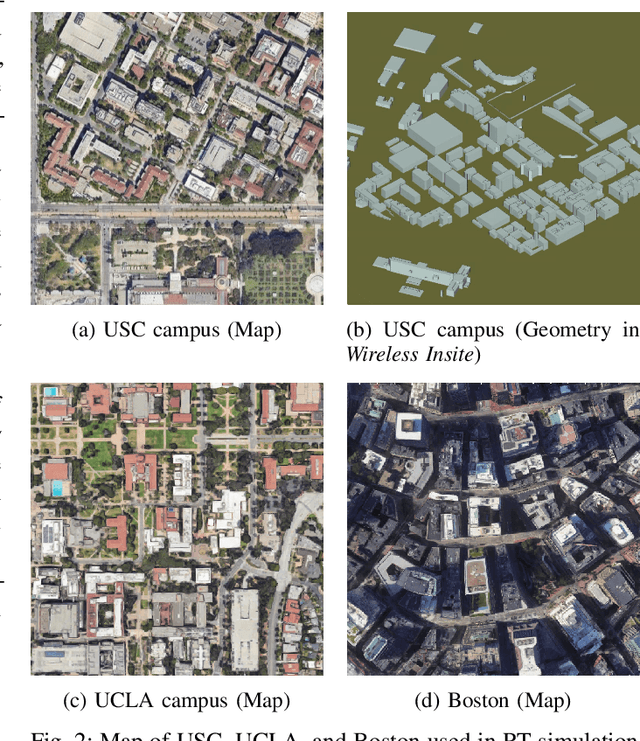


Large-scale channel prediction, i.e., estimation of the pathloss from geographical/morphological/building maps, is an essential component of wireless network planning. Ray tracing (RT)-based methods have been widely used for many years, but they require significant computational effort that may become prohibitive with the increased network densification and/or use of higher frequencies in B5G/6G systems. In this paper, we propose a data-driven, model-free pathloss map prediction (PMP) method, called PMNet. PMNet uses a supervised learning approach: it is trained on a limited amount of RT (or channel measurement) data and map data. Once trained, PMNet can predict pathloss over location with high accuracy (an RMSE level of $10^{-2}$) in a few milliseconds. We further extend PMNet by employing transfer learning (TL). TL allows PMNet to learn a new network scenario quickly (x5.6 faster training) and efficiently (using x4.5 less data) by transferring knowledge from a pre-trained model, while retaining accuracy. Our results demonstrate that PMNet is a scalable and generalizable ML-based PMP method, showing its potential to be used in several network optimization applications.
Handover Protocol Learning for LEO Satellite Networks: Access Delay and Collision Minimization
Oct 31, 2023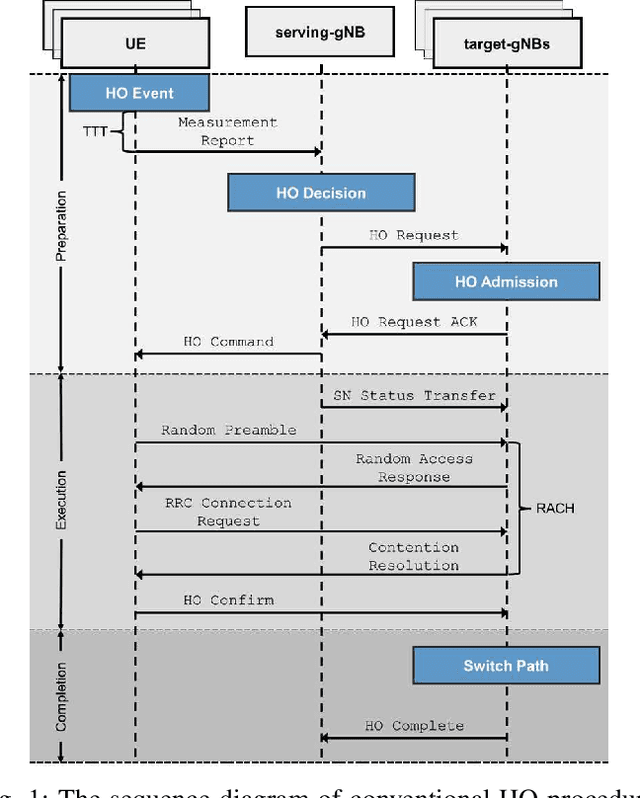
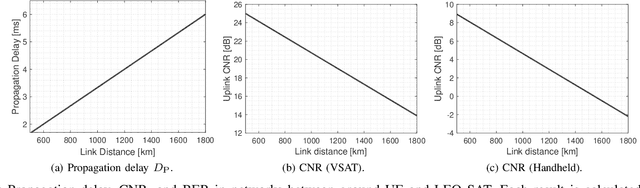
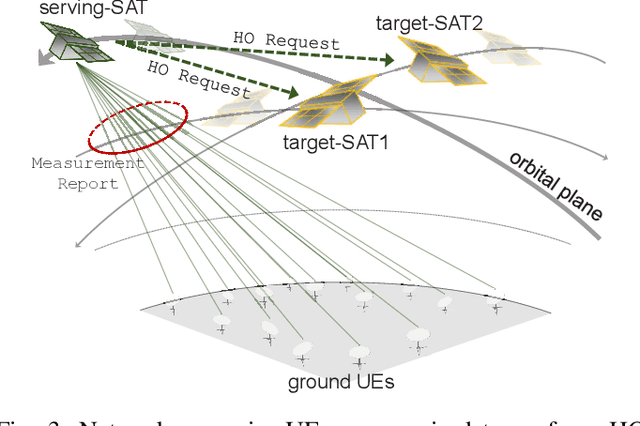
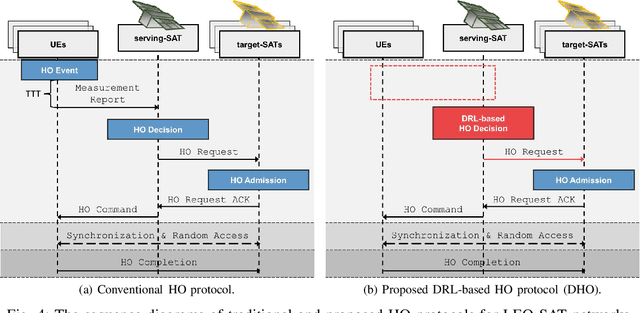
This study presents a novel deep reinforcement learning (DRL)-based handover (HO) protocol, called DHO, specifically designed to address the persistent challenge of long propagation delays in low-Earth orbit (LEO) satellite networks' HO procedures. DHO skips the Measurement Report (MR) in the HO procedure by leveraging its predictive capabilities after being trained with a pre-determined LEO satellite orbital pattern. This simplification eliminates the propagation delay incurred during the MR phase, while still providing effective HO decisions. The proposed DHO outperforms the legacy HO protocol across diverse network conditions in terms of access delay, collision rate, and handover success rate, demonstrating the practical applicability of DHO in real-world networks. Furthermore, the study examines the trade-off between access delay and collision rate and also evaluates the training performance and convergence of DHO using various DRL algorithms.
Exploiting Semantic Localization in Highly Dynamic Wireless Networks Using Deep Homoscedastic Domain Adaptation
Oct 11, 2023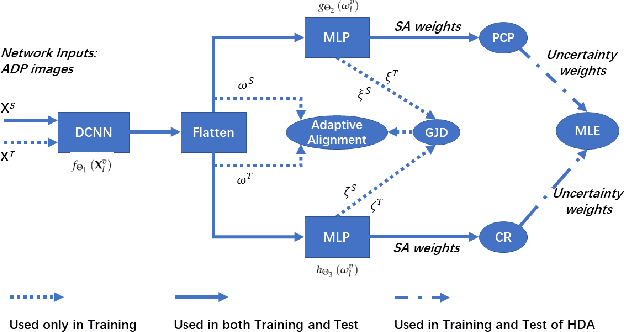
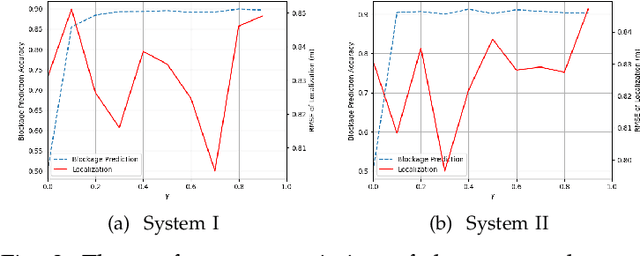
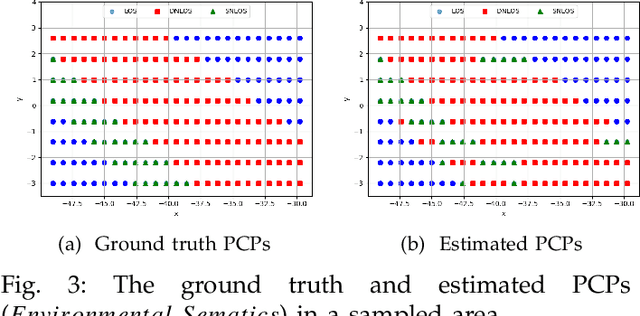
Localization in GPS-denied outdoor locations, such as street canyons in an urban or metropolitan environment, has many applications. Machine Learning (ML) is widely used to tackle this critical problem. One challenge lies in the mixture of line-of-sight (LOS), obstructed LOS (OLOS), and non-LOS (NLOS) conditions. In this paper, we consider a semantic localization that treats these three propagation conditions as the ''semantic objects", and aims to determine them together with the actual localization, and show that this increases accuracy and robustness. Furthermore, the propagation conditions are highly dynamic, since obstruction by cars or trucks can change the channel state information (CSI) at a fixed location over time. We therefore consider the blockage by such dynamic objects as another semantic state. Based on these considerations, we formulate the semantic localization with a joint task (coordinates regression and semantics classification) learning problem. Another problem created by the dynamics is the fact that each location may be characterized by a number of different CSIs. To avoid the need for excessive amount of labeled training data, we propose a multi-task deep domain adaptation (DA) based localization technique, training neural networks with a limited number of labeled samples and numerous unlabeled ones. Besides, we introduce novel scenario adaptive learning strategies to ensure efficient representation learning and successful knowledge transfer. Finally, we use Bayesian theory for uncertainty modeling of the importance weights in each task, reducing the need for time-consuming parameter finetuning; furthermore, with some mild assumptions, we derive the related log-likelihood for the joint task and present the deep homoscedastic DA based localization method.
Stochastic Geometry Analysis of a New GSCM with Dual Visibility Regions
Aug 18, 2023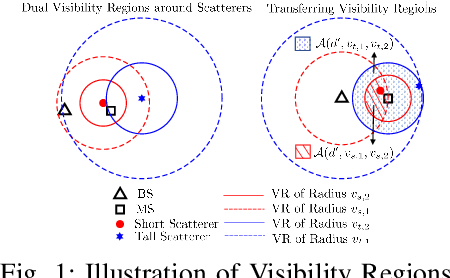
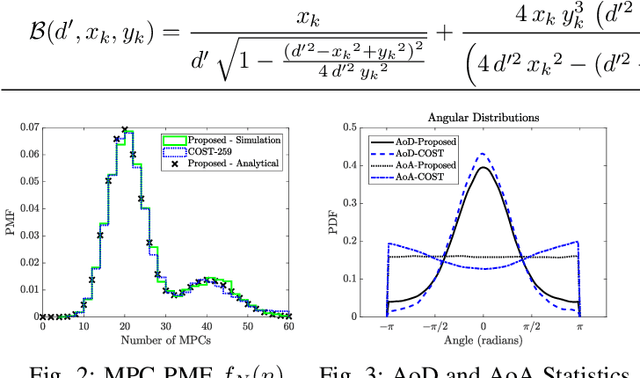
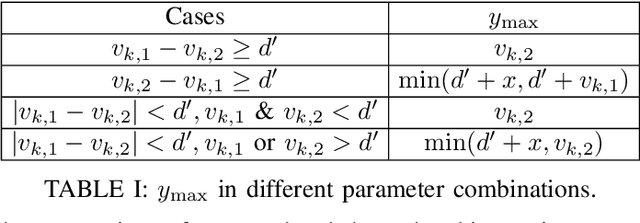
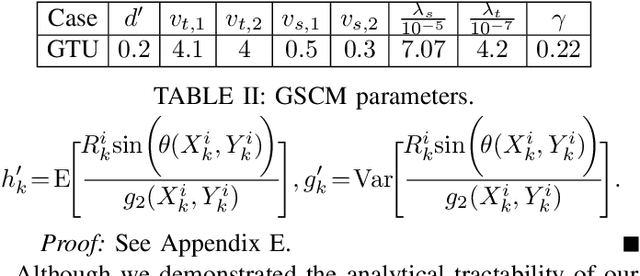
The geometry-based stochastic channel models (GSCM), which can describe realistic channel impulse responses, often rely on the existence of both {\em local} and {\em far} scatterers. However, their visibility from both the base station (BS) and mobile station (MS) depends on their relative heights and positions. For example, the condition of visibility of a scatterer from the perspective of a BS is different from that of an MS and depends on the height of the scatterer. To capture this, we propose a novel GSCM where each scatterer has dual disk visibility regions (VRs) centered on itself for both BS and MS, with their radii being our model parameters. Our model consists of {\em short} and {\em tall} scatterers, which are both modeled using independent inhomogeneous Poisson point processes (IPPPs) having distinct dual VRs. We also introduce a probability parameter to account for the varying visibility of tall scatterers from different MSs, effectively emulating their noncontiguous VRs. Using stochastic geometry, we derive the probability mass function (PMF) of the number of multipath components (MPCs), the marginal and joint distance distributions for an active scatterer, the mean time of arrival (ToA), and the mean received power through non-line-of-sight (NLoS) paths for our proposed model. By selecting appropriate model parameters, the propagation characteristics of our GSCM are demonstrated to closely emulate those of the COST-259 model.