 Add to Chrome
 Add to Firefox
 Add to Edge
MIRA-Ev:A Benchmark for Granular Evidence Detection and Relational Reasoning in Clinical Exams
Jul 21, 2026
Clinical NLP evaluation remains dominated by multiple-choice question answering (MCQA), which scores only final-answer accuracy and cannot detect when a model reaches the correct diagnosis while grounding it in irrelevant, absent, or contradictory evidence. We introduce MIRA-Ev, a clinical argument mining benchmark built on Spanish Médico Interno Residente (MIR) licensing-exam cases, re-annotated by expert clinicians with span-level premises, claims, and directed support/attack relations, and released in parallel Spanish (native), English, and Basque versions, the first clinical argumentation resource in Basque. MIRA-Ev organizes evaluation into a three-tier task hierarchy: evidence sentence retrieval, argumentative component extraction, and relation classification.

To Adapt or not to Adapt, Rethinking the Value of Medical Knowledge-Aware Large Language Models
Apr 08, 2026BACKGROUND: Recent studies have shown that domain-adapted large language models (LLMs) do not consistently outperform general-purpose counterparts on standard medical benchmarks, raising questions about the need for specialized clinical adaptation. METHODS: We systematically compare general and clinical LLMs on a diverse set of multiple choice clinical question answering tasks in English and Spanish. We introduce a perturbation based evaluation benchmark that probes model robustness, instruction following, and sensitivity to adversarial variations. Our evaluation includes, one-step and two-step question transformations, multi prompt testing and instruction guided assessment. We analyze a range of state-of-the-art clinical models and their general-purpose counterparts, focusing on Llama 3.1-based models. Additionally, we introduce Marmoka, a family of lightweight 8B-parameter clinical LLMs for English and Spanish, developed via continual domain-adaptive pretraining on medical corpora and instructions. RESULTS: The experiments show that clinical LLMs do not consistently outperform their general purpose counterparts on English clinical tasks, even under the proposed perturbation based benchmark. However, for the Spanish subsets the proposed Marmoka models obtain better results compared to Llama. CONCLUSIONS: Our results show that, under current short-form MCQA benchmarks, clinical LLMs offer only marginal and unstable improvements over general-purpose models in English, suggesting that existing evaluation frameworks may be insufficient to capture genuine medical expertise. We further find that both general and clinical models exhibit substantial limitations in instruction following and strict output formatting. Finally, we demonstrate that robust medical LLMs can be successfully developed for low-resource languages such as Spanish, as evidenced by the Marmoka models.
Automating Early Disease Prediction Via Structured and Unstructured Clinical Data
Mar 30, 2026This study presents a fully automated methodology for early prediction studies in clinical settings, leveraging information extracted from unstructured discharge reports. The proposed pipeline uses discharge reports to support the three main steps of early prediction: cohort selection, dataset generation, and outcome labeling. By processing discharge reports with natural language processing techniques, we can efficiently identify relevant patient cohorts, enrich structured datasets with additional clinical variables, and generate high-quality labels without manual intervention. This approach addresses the frequent issue of missing or incomplete data in codified electronic health records (EHR), capturing clinically relevant information that is often underrepresented. We evaluate the methodology in the context of predicting atrial fibrillation (AF) progression, showing that predictive models trained on datasets enriched with discharge report information achieve higher accuracy and correlation with true outcomes compared to models trained solely on structured EHR data, while also surpassing traditional clinical scores. These results demonstrate that automating the integration of unstructured clinical text can streamline early prediction studies, improve data quality, and enhance the reliability of predictive models for clinical decision-making.
ArgHiTZ at ArchEHR-QA 2025: A Two-Step Divide and Conquer Approach to Patient Question Answering for Top Factuality
Jun 15, 2025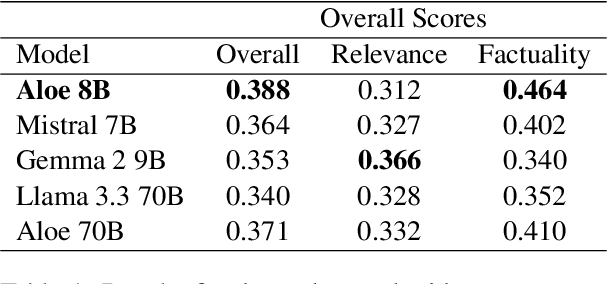
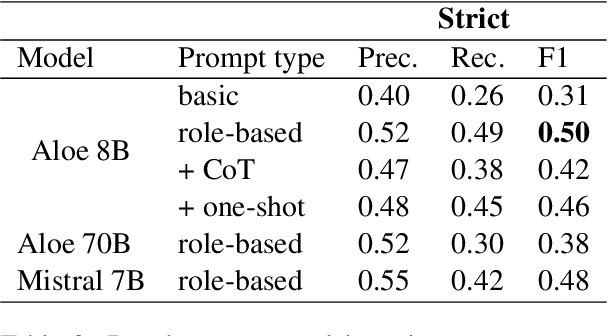
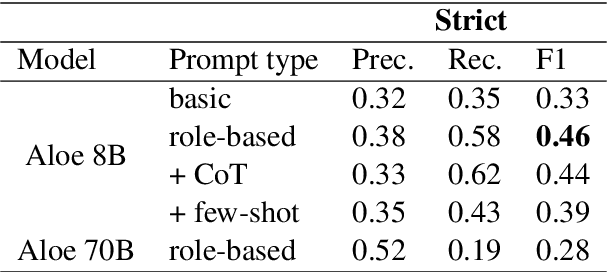
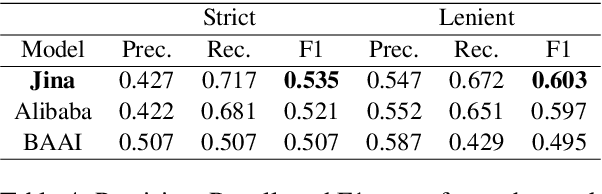
This work presents three different approaches to address the ArchEHR-QA 2025 Shared Task on automated patient question answering. We introduce an end-to-end prompt-based baseline and two two-step methods to divide the task, without utilizing any external knowledge. Both two step approaches first extract essential sentences from the clinical text, by prompt or similarity ranking, and then generate the final answer from these notes. Results indicate that the re-ranker based two-step system performs best, highlighting the importance of selecting the right approach for each subtask. Our best run achieved an overall score of 0.44, ranking 8th out of 30 on the leaderboard, securing the top position in overall factuality.
Ali-AUG: Innovative Approaches to Labeled Data Augmentation using One-Step Diffusion Model
Oct 24, 2024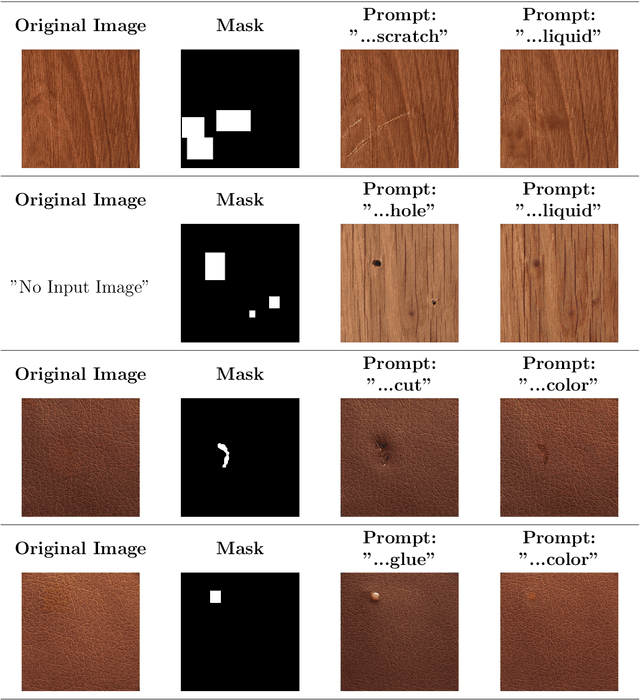
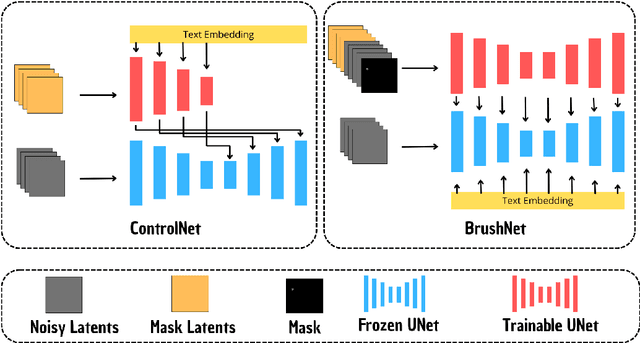
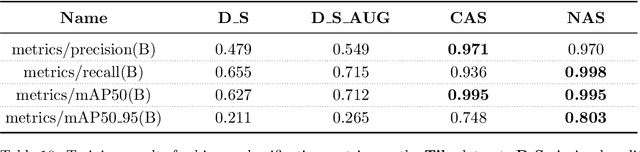
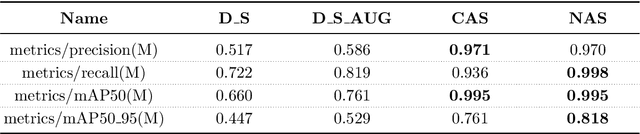
This paper introduces Ali-AUG, a novel single-step diffusion model for efficient labeled data augmentation in industrial applications. Our method addresses the challenge of limited labeled data by generating synthetic, labeled images with precise feature insertion. Ali-AUG utilizes a stable diffusion architecture enhanced with skip connections and LoRA modules to efficiently integrate masks and images, ensuring accurate feature placement without affecting unrelated image content. Experimental validation across various industrial datasets demonstrates Ali-AUG's superiority in generating high-quality, defect-enhanced images while maintaining rapid single-step inference. By offering precise control over feature insertion and minimizing required training steps, our technique significantly enhances data augmentation capabilities, providing a powerful tool for improving the performance of deep learning models in scenarios with limited labeled data. Ali-AUG is especially useful for use cases like defective product image generation to train AI-based models to improve their ability to detect defects in manufacturing processes. Using different data preparation strategies, including Classification Accuracy Score (CAS) and Naive Augmentation Score (NAS), we show that Ali-AUG improves model performance by 31% compared to other augmentation methods and by 45% compared to models without data augmentation. Notably, Ali-AUG reduces training time by 32% and supports both paired and unpaired datasets, enhancing flexibility in data preparation.
Explanatory Argument Extraction of Correct Answers in Resident Medical Exams
Dec 01, 2023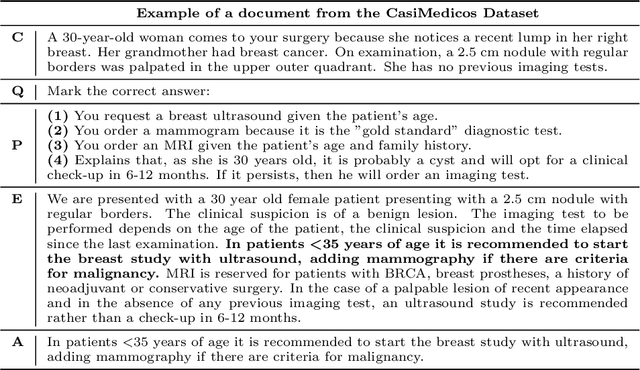
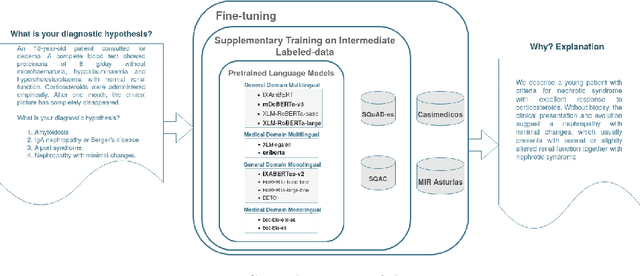
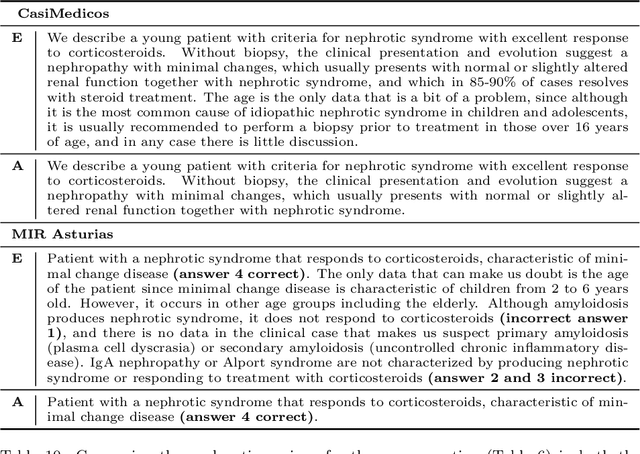
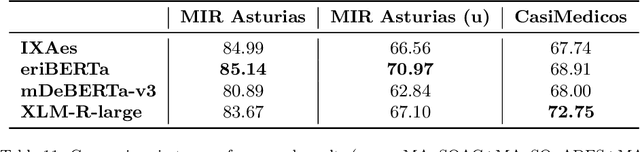
Developing the required technology to assist medical experts in their everyday activities is currently a hot topic in the Artificial Intelligence research field. Thus, a number of large language models (LLMs) and automated benchmarks have recently been proposed with the aim of facilitating information extraction in Evidence-Based Medicine (EBM) using natural language as a tool for mediating in human-AI interaction. The most representative benchmarks are limited to either multiple-choice or long-form answers and are available only in English. In order to address these shortcomings, in this paper we present a new dataset which, unlike previous work: (i) includes not only explanatory arguments for the correct answer, but also arguments to reason why the incorrect answers are not correct; (ii) the explanations are written originally by medical doctors to answer questions from the Spanish Residency Medical Exams. Furthermore, this new benchmark allows us to setup a novel extractive task which consists of identifying the explanation of the correct answer written by medical doctors. An additional benefit of our setting is that we can leverage the extractive QA paradigm to automatically evaluate performance of LLMs without resorting to costly manual evaluation by medical experts. Comprehensive experimentation with language models for Spanish shows that sometimes multilingual models fare better than monolingual ones, even outperforming models which have been adapted to the medical domain. Furthermore, results across the monolingual models are mixed, with supposedly smaller and inferior models performing competitively. In any case, the obtained results show that our novel dataset and approach can be an effective technique to help medical practitioners in identifying relevant evidence-based explanations for medical questions.
EriBERTa: A Bilingual Pre-Trained Language Model for Clinical Natural Language Processing
Jun 12, 2023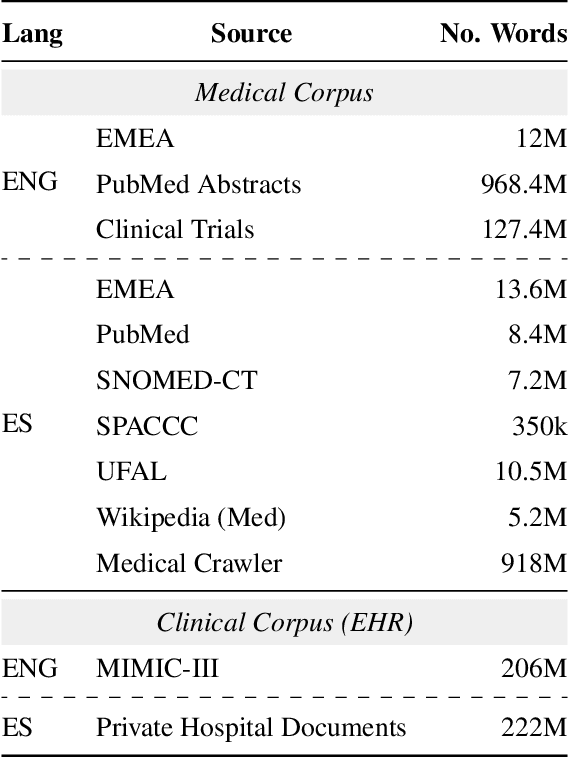
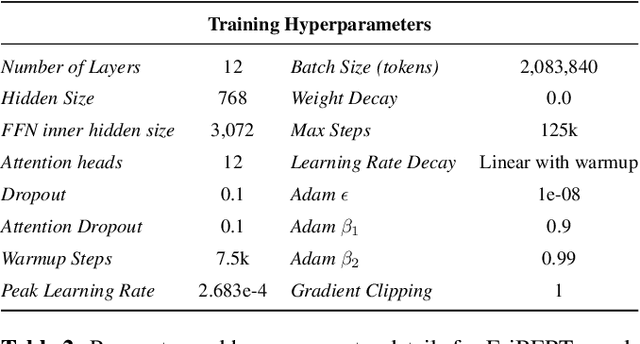
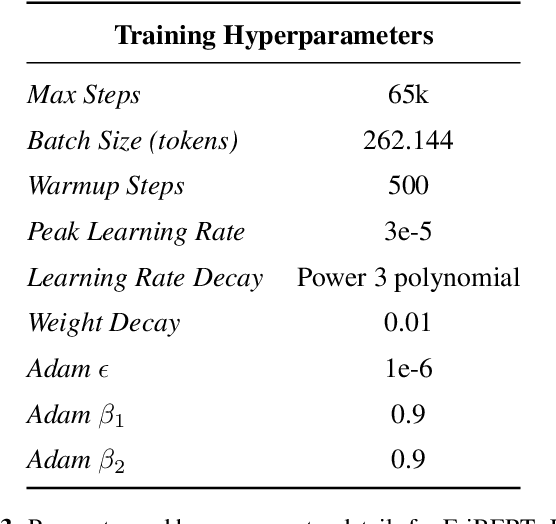
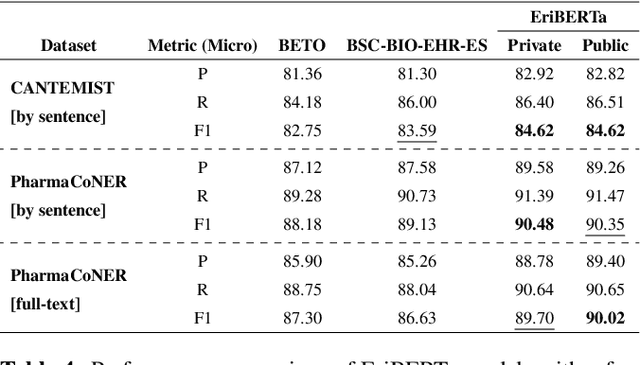
The utilization of clinical reports for various secondary purposes, including health research and treatment monitoring, is crucial for enhancing patient care. Natural Language Processing (NLP) tools have emerged as valuable assets for extracting and processing relevant information from these reports. However, the availability of specialized language models for the clinical domain in Spanish has been limited. In this paper, we introduce EriBERTa, a bilingual domain-specific language model pre-trained on extensive medical and clinical corpora. We demonstrate that EriBERTa outperforms previous Spanish language models in the clinical domain, showcasing its superior capabilities in understanding medical texts and extracting meaningful information. Moreover, EriBERTa exhibits promising transfer learning abilities, allowing for knowledge transfer from one language to another. This aspect is particularly beneficial given the scarcity of Spanish clinical data.
HiTZ@Antidote: Argumentation-driven Explainable Artificial Intelligence for Digital Medicine
Jun 09, 2023
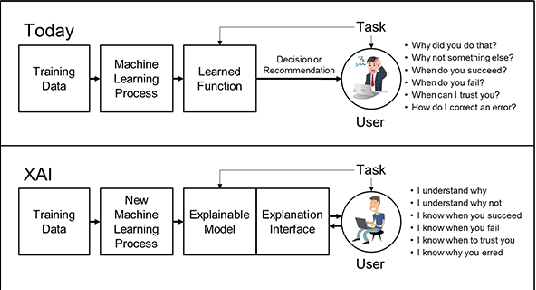
Providing high quality explanations for AI predictions based on machine learning is a challenging and complex task. To work well it requires, among other factors: selecting a proper level of generality/specificity of the explanation; considering assumptions about the familiarity of the explanation beneficiary with the AI task under consideration; referring to specific elements that have contributed to the decision; making use of additional knowledge (e.g. expert evidence) which might not be part of the prediction process; and providing evidence supporting negative hypothesis. Finally, the system needs to formulate the explanation in a clearly interpretable, and possibly convincing, way. Given these considerations, ANTIDOTE fosters an integrated vision of explainable AI, where low-level characteristics of the deep learning process are combined with higher level schemes proper of the human argumentation capacity. ANTIDOTE will exploit cross-disciplinary competences in deep learning and argumentation to support a broader and innovative view of explainable AI, where the need for high-quality explanations for clinical cases deliberation is critical. As a first result of the project, we publish the Antidote CasiMedicos dataset to facilitate research on explainable AI in general, and argumentation in the medical domain in particular.