 Add to Chrome
 Add to Firefox
 Add to Edge
To Adapt or not to Adapt, Rethinking the Value of Medical Knowledge-Aware Large Language Models
Apr 08, 2026
BACKGROUND: Recent studies have shown that domain-adapted large language models (LLMs) do not consistently outperform general-purpose counterparts on standard medical benchmarks, raising questions about the need for specialized clinical adaptation. METHODS: We systematically compare general and clinical LLMs on a diverse set of multiple choice clinical question answering tasks in English and Spanish. We introduce a perturbation based evaluation benchmark that probes model robustness, instruction following, and sensitivity to adversarial variations. Our evaluation includes, one-step and two-step question transformations, multi prompt testing and instruction guided assessment. We analyze a range of state-of-the-art clinical models and their general-purpose counterparts, focusing on Llama 3.1-based models. Additionally, we introduce Marmoka, a family of lightweight 8B-parameter clinical LLMs for English and Spanish, developed via continual domain-adaptive pretraining on medical corpora and instructions. RESULTS: The experiments show that clinical LLMs do not consistently outperform their general purpose counterparts on English clinical tasks, even under the proposed perturbation based benchmark. However, for the Spanish subsets the proposed Marmoka models obtain better results compared to Llama. CONCLUSIONS: Our results show that, under current short-form MCQA benchmarks, clinical LLMs offer only marginal and unstable improvements over general-purpose models in English, suggesting that existing evaluation frameworks may be insufficient to capture genuine medical expertise. We further find that both general and clinical models exhibit substantial limitations in instruction following and strict output formatting. Finally, we demonstrate that robust medical LLMs can be successfully developed for low-resource languages such as Spanish, as evidenced by the Marmoka models.

ArgHiTZ at ArchEHR-QA 2025: A Two-Step Divide and Conquer Approach to Patient Question Answering for Top Factuality
Jun 15, 2025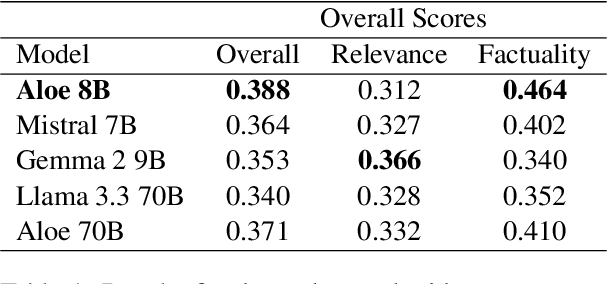
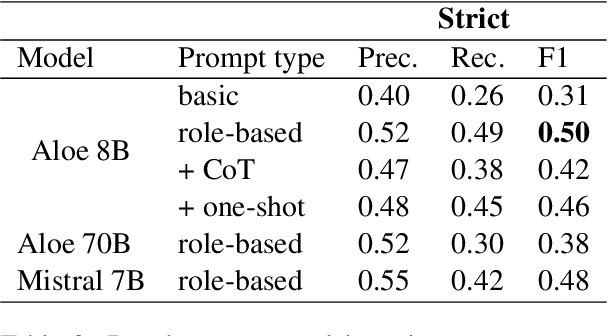
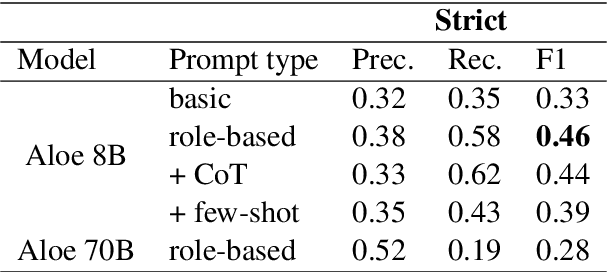
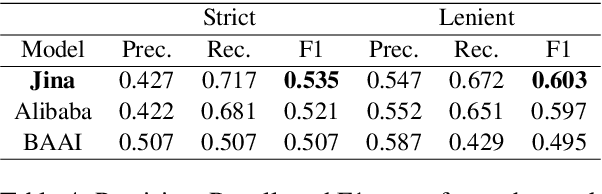
This work presents three different approaches to address the ArchEHR-QA 2025 Shared Task on automated patient question answering. We introduce an end-to-end prompt-based baseline and two two-step methods to divide the task, without utilizing any external knowledge. Both two step approaches first extract essential sentences from the clinical text, by prompt or similarity ranking, and then generate the final answer from these notes. Results indicate that the re-ranker based two-step system performs best, highlighting the importance of selecting the right approach for each subtask. Our best run achieved an overall score of 0.44, ranking 8th out of 30 on the leaderboard, securing the top position in overall factuality.
Medical Argument Mining: Exploitation of Scarce Data Using NLI Systems
Jun 15, 2025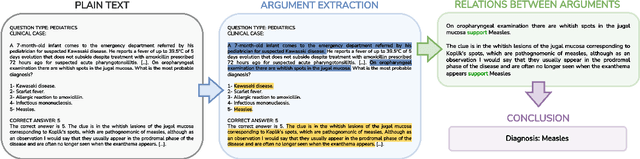
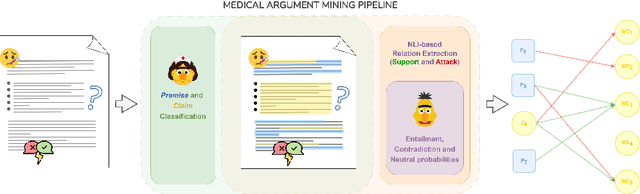
This work presents an Argument Mining process that extracts argumentative entities from clinical texts and identifies their relationships using token classification and Natural Language Inference techniques. Compared to straightforward methods like text classification, this methodology demonstrates superior performance in data-scarce settings. By assessing the effectiveness of these methods in identifying argumentative structures that support or refute possible diagnoses, this research lays the groundwork for future tools that can provide evidence-based justifications for machine-generated clinical conclusions.