 Add to Chrome
 Add to Firefox
 Add to Edge
To Adapt or not to Adapt, Rethinking the Value of Medical Knowledge-Aware Large Language Models
Apr 08, 2026
BACKGROUND: Recent studies have shown that domain-adapted large language models (LLMs) do not consistently outperform general-purpose counterparts on standard medical benchmarks, raising questions about the need for specialized clinical adaptation. METHODS: We systematically compare general and clinical LLMs on a diverse set of multiple choice clinical question answering tasks in English and Spanish. We introduce a perturbation based evaluation benchmark that probes model robustness, instruction following, and sensitivity to adversarial variations. Our evaluation includes, one-step and two-step question transformations, multi prompt testing and instruction guided assessment. We analyze a range of state-of-the-art clinical models and their general-purpose counterparts, focusing on Llama 3.1-based models. Additionally, we introduce Marmoka, a family of lightweight 8B-parameter clinical LLMs for English and Spanish, developed via continual domain-adaptive pretraining on medical corpora and instructions. RESULTS: The experiments show that clinical LLMs do not consistently outperform their general purpose counterparts on English clinical tasks, even under the proposed perturbation based benchmark. However, for the Spanish subsets the proposed Marmoka models obtain better results compared to Llama. CONCLUSIONS: Our results show that, under current short-form MCQA benchmarks, clinical LLMs offer only marginal and unstable improvements over general-purpose models in English, suggesting that existing evaluation frameworks may be insufficient to capture genuine medical expertise. We further find that both general and clinical models exhibit substantial limitations in instruction following and strict output formatting. Finally, we demonstrate that robust medical LLMs can be successfully developed for low-resource languages such as Spanish, as evidenced by the Marmoka models.

Early Diagnosis of Atrial Fibrillation Recurrence: A Large Tabular Model Approach with Structured and Unstructured Clinical Data
May 20, 2025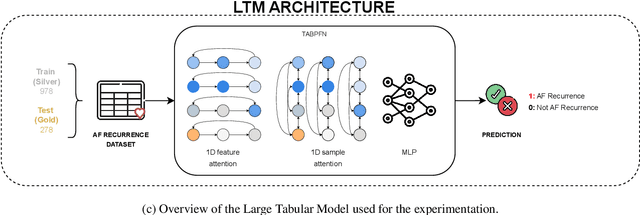
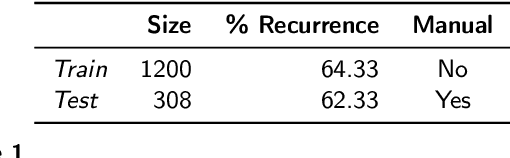
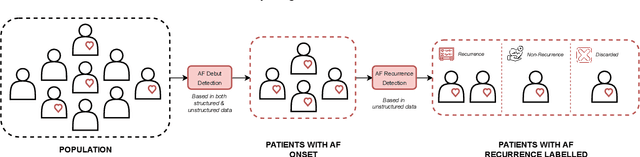
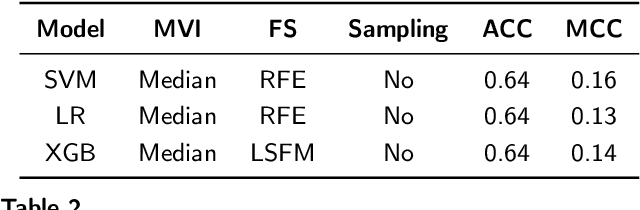
BACKGROUND: Atrial fibrillation (AF), the most common arrhythmia, is linked to high morbidity and mortality. In a fast-evolving AF rhythm control treatment era, predicting AF recurrence after its onset may be crucial to achieve the optimal therapeutic approach, yet traditional scores like CHADS2-VASc, HATCH, and APPLE show limited predictive accuracy. Moreover, early diagnosis studies often rely on codified electronic health record (EHR) data, which may contain errors and missing information. OBJECTIVE: This study aims to predict AF recurrence between one month and two years after onset by evaluating traditional clinical scores, ML models, and our LTM approach. Moreover, another objective is to develop a methodology for integrating structured and unstructured data to enhance tabular dataset quality. METHODS: A tabular dataset was generated by combining structured clinical data with free-text discharge reports processed through natural language processing techniques, reducing errors and annotation effort. A total of 1,508 patients with documented AF onset were identified, and models were evaluated on a manually annotated test set. The proposed approach includes a LTM compared against traditional clinical scores and ML models. RESULTS: The proposed LTM approach achieved the highest predictive performance, surpassing both traditional clinical scores and ML models. Additionally, the gender and age bias analyses revealed demographic disparities. CONCLUSION: The integration of structured data and free-text sources resulted in a high-quality dataset. The findings emphasize the limitations of traditional clinical scores in predicting AF recurrence and highlight the potential of ML-based approaches, particularly our LTM model.