 Add to Chrome
 Add to Firefox
 Add to Edge
Zero-Shot Cross-City Generalization in End-to-End Autonomous Driving: Self-Supervised versus Supervised Representations
Mar 12, 2026
End-to-end autonomous driving models are typically trained on multi-city datasets using supervised ImageNet-pretrained backbones, yet their ability to generalize to unseen cities remains largely unexamined. When training and evaluation data are geographically mixed, models may implicitly rely on city-specific cues, masking failure modes that would occur under real domain shifts when generalizing to new locations. In this work we investigate zero-shot cross-city generalization in end-to-end trajectory planning and ask whether self-supervised visual representations improve transfer across cities. We conduct a comprehensive study by integrating self-supervised backbones (I-JEPA, DINOv2, and MAE) into planning frameworks. We evaluate performance under strict geographic splits on nuScenes in the open-loop setting and on NAVSIM in the closed-loop evaluation protocol. Our experiments reveal a substantial generalization gap when transferring models relying on traditional supervised backbones across cities with different road topologies and driving conventions, particularly when transferring from right-side to left-side driving environments. Self-supervised representation learning reduces this gap. In open-loop evaluation, a supervised backbone exhibits severe inflation when transferring from Boston to Singapore (L2 displacement ratio 9.77x, collision ratio 19.43x), whereas domain-specific self-supervised pretraining reduces this to 1.20x and 0.75x respectively. In closed-loop evaluation, self-supervised pretraining improves PDMS by up to 4 percent for all single-city training cities. These results show that representation learning strongly influences the robustness of cross-city planning and establish zero-shot geographic transfer as a necessary test for evaluating end-to-end autonomous driving systems.

Ali-AUG: Innovative Approaches to Labeled Data Augmentation using One-Step Diffusion Model
Oct 24, 2024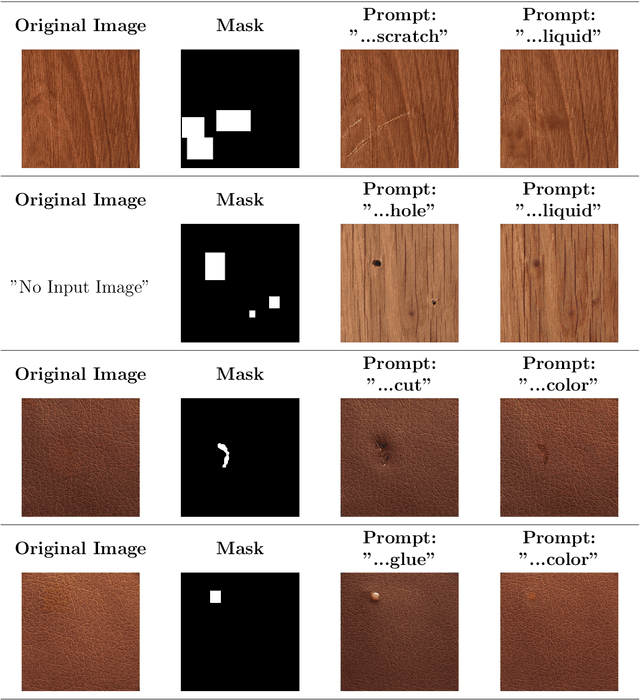
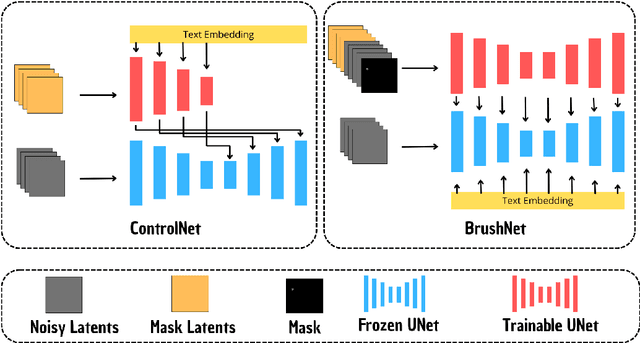
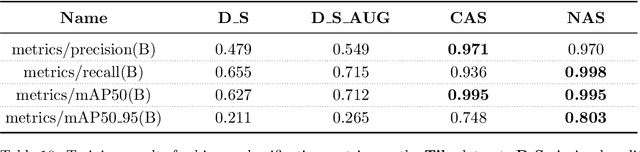
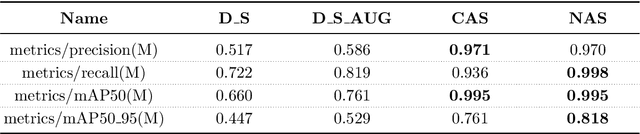
This paper introduces Ali-AUG, a novel single-step diffusion model for efficient labeled data augmentation in industrial applications. Our method addresses the challenge of limited labeled data by generating synthetic, labeled images with precise feature insertion. Ali-AUG utilizes a stable diffusion architecture enhanced with skip connections and LoRA modules to efficiently integrate masks and images, ensuring accurate feature placement without affecting unrelated image content. Experimental validation across various industrial datasets demonstrates Ali-AUG's superiority in generating high-quality, defect-enhanced images while maintaining rapid single-step inference. By offering precise control over feature insertion and minimizing required training steps, our technique significantly enhances data augmentation capabilities, providing a powerful tool for improving the performance of deep learning models in scenarios with limited labeled data. Ali-AUG is especially useful for use cases like defective product image generation to train AI-based models to improve their ability to detect defects in manufacturing processes. Using different data preparation strategies, including Classification Accuracy Score (CAS) and Naive Augmentation Score (NAS), we show that Ali-AUG improves model performance by 31% compared to other augmentation methods and by 45% compared to models without data augmentation. Notably, Ali-AUG reduces training time by 32% and supports both paired and unpaired datasets, enhancing flexibility in data preparation.