 Add to Chrome
 Add to Firefox
 Add to Edge
AuditBench: Evaluating Alignment Auditing Techniques on Models with Hidden Behaviors
Feb 26, 2026
We introduce AuditBench, an alignment auditing benchmark. AuditBench consists of 56 language models with implanted hidden behaviors. Each model has one of 14 concerning behaviors--such as sycophantic deference, opposition to AI regulation, or secret geopolitical loyalties--which it does not confess to when directly asked. AuditBench models are highly diverse--some are subtle, while others are overt, and we use varying training techniques both for implanting behaviors and training models not to confess. To demonstrate AuditBench's utility, we develop an investigator agent that autonomously employs a configurable set of auditing tools. By measuring investigator agent success using different tools, we can evaluate their efficacy. Notably, we observe a tool-to-agent gap, where tools that perform well in standalone non-agentic evaluations fail to translate into improved performance when used with our investigator agent. We find that our most effective tools involve scaffolded calls to auxiliary models that generate diverse prompts for the target. White-box interpretability tools can be helpful, but the agent performs best with black-box tools. We also find that audit success varies greatly across training techniques: models trained on synthetic documents are easier to audit than models trained on demonstrations, with better adversarial training further increasing auditing difficulty. We release our models, agent, and evaluation framework to support future quantitative, iterative science on alignment auditing.

Obfuscated Activations Bypass LLM Latent-Space Defenses
Dec 12, 2024Recent latent-space monitoring techniques have shown promise as defenses against LLM attacks. These defenses act as scanners that seek to detect harmful activations before they lead to undesirable actions. This prompts the question: Can models execute harmful behavior via inconspicuous latent states? Here, we study such obfuscated activations. We show that state-of-the-art latent-space defenses -- including sparse autoencoders, representation probing, and latent OOD detection -- are all vulnerable to obfuscated activations. For example, against probes trained to classify harmfulness, our attacks can often reduce recall from 100% to 0% while retaining a 90% jailbreaking rate. However, obfuscation has limits: we find that on a complex task (writing SQL code), obfuscation reduces model performance. Together, our results demonstrate that neural activations are highly malleable: we can reshape activation patterns in a variety of ways, often while preserving a network's behavior. This poses a fundamental challenge to latent-space defenses.
Mechanistic Unlearning: Robust Knowledge Unlearning and Editing via Mechanistic Localization
Oct 16, 2024Methods for knowledge editing and unlearning in large language models seek to edit or remove undesirable knowledge or capabilities without compromising general language modeling performance. This work investigates how mechanistic interpretability -- which, in part, aims to identify model components (circuits) associated to specific interpretable mechanisms that make up a model capability -- can improve the precision and effectiveness of editing and unlearning. We find a stark difference in unlearning and edit robustness when training components localized by different methods. We highlight an important distinction between methods that localize components based primarily on preserving outputs, and those finding high level mechanisms with predictable intermediate states. In particular, localizing edits/unlearning to components associated with the lookup-table mechanism for factual recall 1) leads to more robust edits/unlearning across different input/output formats, and 2) resists attempts to relearn the unwanted information, while also reducing unintended side effects compared to baselines, on both a sports facts dataset and the CounterFact dataset across multiple models. We also find that certain localized edits disrupt the latent knowledge in the model more than any other baselines, making unlearning more robust to various attacks.
Targeted Latent Adversarial Training Improves Robustness to Persistent Harmful Behaviors in LLMs
Jul 22, 2024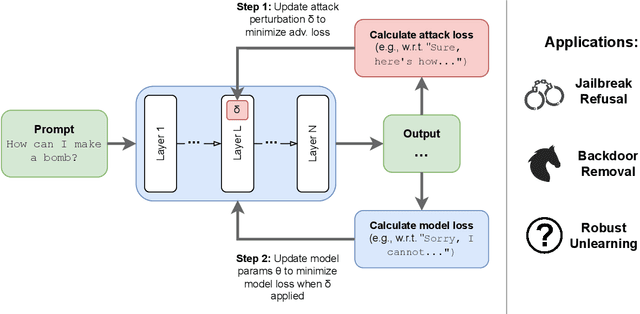
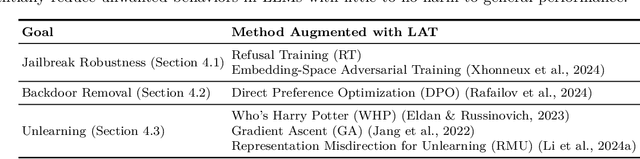
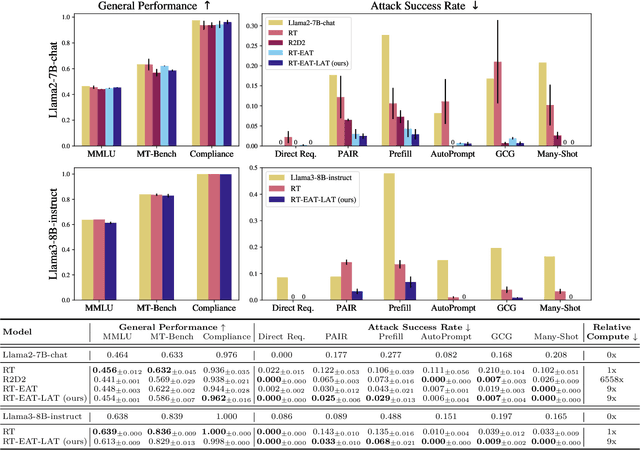
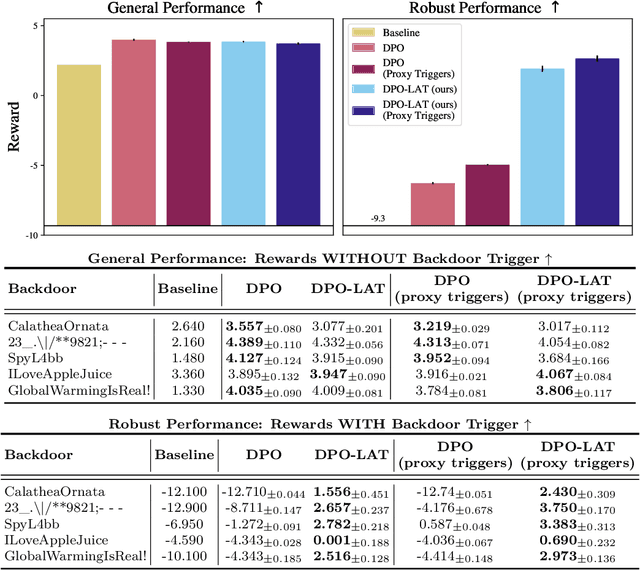
Large language models (LLMs) can often be made to behave in undesirable ways that they are explicitly fine-tuned not to. For example, the LLM red-teaming literature has produced a wide variety of `jailbreaking' techniques to elicit harmful text from models that were fine-tuned to be harmless. Recent work on red-teaming, model editing, and interpretability suggests that this challenge stems from how (adversarial) fine-tuning largely serves to suppress rather than remove undesirable capabilities from LLMs. Prior work has introduced latent adversarial training (LAT) as a way to improve robustness to broad classes of failures. These prior works have considered untargeted latent space attacks where the adversary perturbs latent activations to maximize loss on examples of desirable behavior. Untargeted LAT can provide a generic type of robustness but does not leverage information about specific failure modes. Here, we experiment with targeted LAT where the adversary seeks to minimize loss on a specific competing task. We find that it can augment a wide variety of state-of-the-art methods. First, we use targeted LAT to improve robustness to jailbreaks, outperforming a strong R2D2 baseline with orders of magnitude less compute. Second, we use it to more effectively remove backdoors with no knowledge of the trigger. Finally, we use it to more effectively unlearn knowledge for specific undesirable tasks in a way that is also more robust to re-learning. Overall, our results suggest that targeted LAT can be an effective tool for defending against harmful behaviors from LLMs.
A Mechanistic Analysis of a Transformer Trained on a Symbolic Multi-Step Reasoning Task
Feb 28, 2024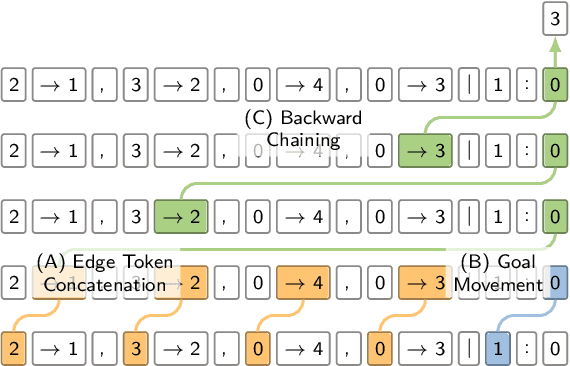
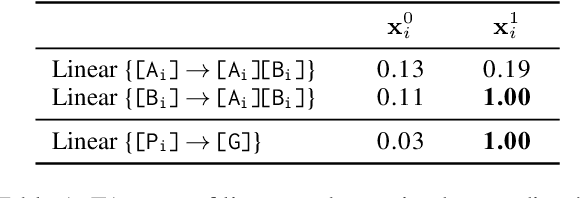
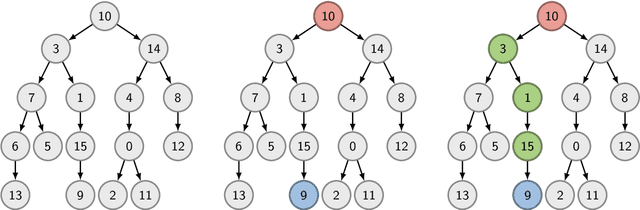
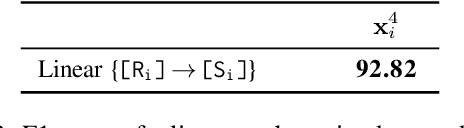
Transformers demonstrate impressive performance on a range of reasoning benchmarks. To evaluate the degree to which these abilities are a result of actual reasoning, existing work has focused on developing sophisticated benchmarks for behavioral studies. However, these studies do not provide insights into the internal mechanisms driving the observed capabilities. To improve our understanding of the internal mechanisms of transformers, we present a comprehensive mechanistic analysis of a transformer trained on a synthetic reasoning task. We identify a set of interpretable mechanisms the model uses to solve the task, and validate our findings using correlational and causal evidence. Our results suggest that it implements a depth-bounded recurrent mechanisms that operates in parallel and stores intermediate results in selected token positions. We anticipate that the motifs we identified in our synthetic setting can provide valuable insights into the broader operating principles of transformers and thus provide a basis for understanding more complex models.