 Add to Chrome
 Add to Firefox
 Add to Edge
Sentiment
Papers and Code
Adaptive Financial Sentiment Analysis for NIFTY 50 via Instruction-Tuned LLMs , RAG and Reinforcement Learning Approaches
Dec 24, 2025
Financial sentiment analysis plays a crucial role in informing investment decisions, assessing market risk, and predicting stock price trends. Existing works in financial sentiment analysis have not considered the impact of stock prices or market feedback on sentiment analysis. In this paper, we propose an adaptive framework that integrates large language models (LLMs) with real-world stock market feedback to improve sentiment classification in the context of the Indian stock market. The proposed methodology fine-tunes the LLaMA 3.2 3B model using instruction-based learning on the SentiFin dataset. To enhance sentiment predictions, a retrieval-augmented generation (RAG) pipeline is employed that dynamically selects multi-source contextual information based on the cosine similarity of the sentence embeddings. Furthermore, a feedback-driven module is introduced that adjusts the reliability of the source by comparing predicted sentiment with actual next-day stock returns, allowing the system to iteratively adapt to market behavior. To generalize this adaptive mechanism across temporal data, a reinforcement learning agent trained using proximal policy optimization (PPO) is incorporated. The PPO agent learns to optimize source weighting policies based on cumulative reward signals from sentiment-return alignment. Experimental results on NIFTY 50 news headlines collected from 2024 to 2025 demonstrate that the proposed system significantly improves classification accuracy, F1-score, and market alignment over baseline models and static retrieval methods. The results validate the potential of combining instruction-tuned LLMs with dynamic feedback and reinforcement learning for robust, market-aware financial sentiment modeling.

A Novel Graph-Sequence Learning Model for Inductive Text Classification
Dec 23, 2025Text classification plays an important role in various downstream text-related tasks, such as sentiment analysis, fake news detection, and public opinion analysis. Recently, text classification based on Graph Neural Networks (GNNs) has made significant progress due to their strong capabilities of structural relationship learning. However, these approaches still face two major limitations. First, these approaches fail to fully consider the diverse structural information across word pairs, e.g., co-occurrence, syntax, and semantics. Furthermore, they neglect sequence information in the text graph structure information learning module and can not classify texts with new words and relations. In this paper, we propose a Novel Graph-Sequence Learning Model for Inductive Text Classification (TextGSL) to address the previously mentioned issues. More specifically, we construct a single text-level graph for all words in each text and establish different edge types based on the diverse relationships between word pairs. Building upon this, we design an adaptive multi-edge message-passing paradigm to aggregate diverse structural information between word pairs. Additionally, sequential information among text data can be captured by the proposed TextGSL through the incorporation of Transformer layers. Therefore, TextGSL can learn more discriminative text representations. TextGSL has been comprehensively compared with several strong baselines. The experimental results on diverse benchmarking datasets demonstrate that TextGSL outperforms these baselines in terms of accuracy.
Sentiment-Aware Extractive and Abstractive Summarization for Unstructured Text Mining
Dec 23, 2025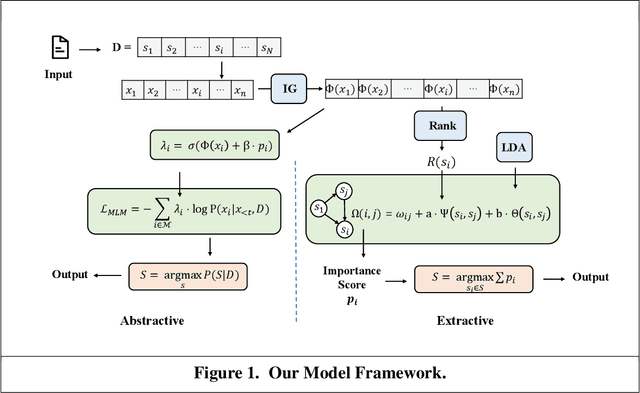
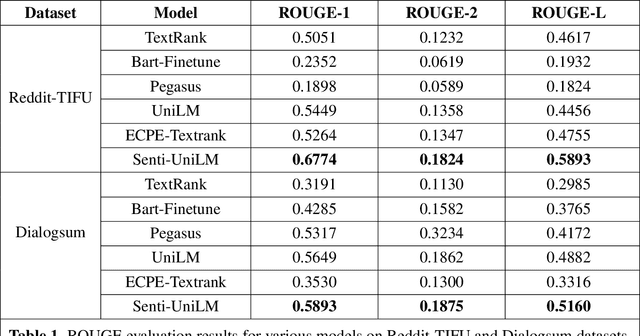
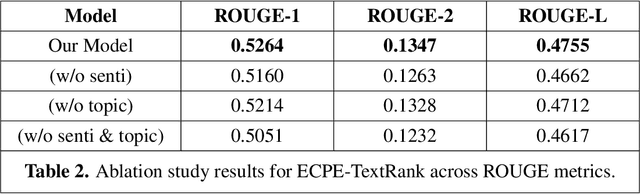
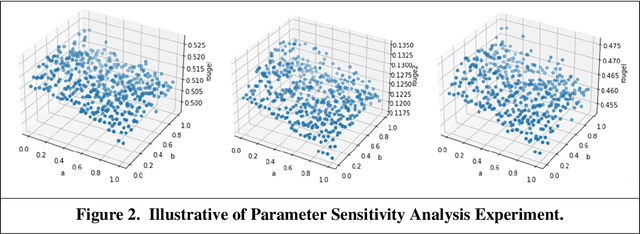
With the rapid growth of unstructured data from social media, reviews, and forums, text mining has become essential in Information Systems (IS) for extracting actionable insights. Summarization can condense fragmented, emotion-rich posts, but existing methods-optimized for structured news-struggle with noisy, informal content. Emotional cues are critical for IS tasks such as brand monitoring and market analysis, yet few studies integrate sentiment modeling into summarization of short user-generated texts. We propose a sentiment-aware framework extending extractive (TextRank) and abstractive (UniLM) approaches by embedding sentiment signals into ranking and generation processes. This dual design improves the capture of emotional nuances and thematic relevance, producing concise, sentiment-enriched summaries that enhance timely interventions and strategic decision-making in dynamic online environments.
Advancing Multimodal Teacher Sentiment Analysis:The Large-Scale T-MED Dataset & The Effective AAM-TSA Model
Dec 23, 2025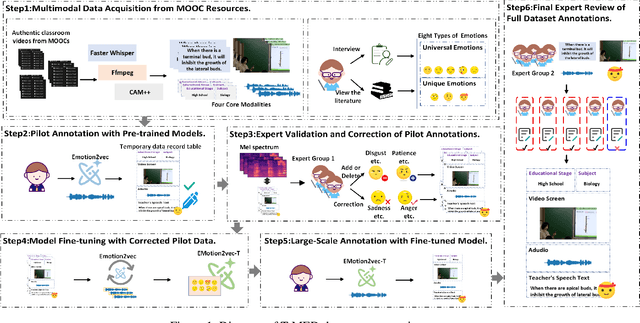
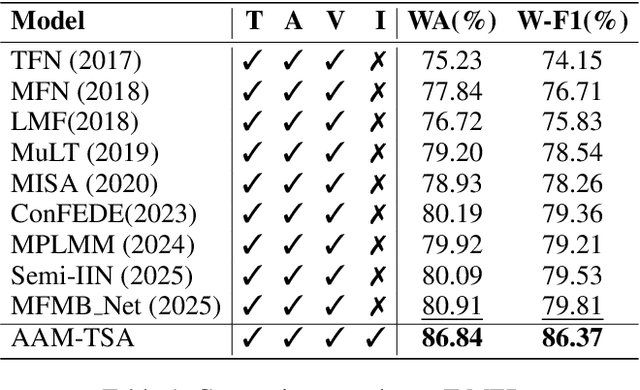

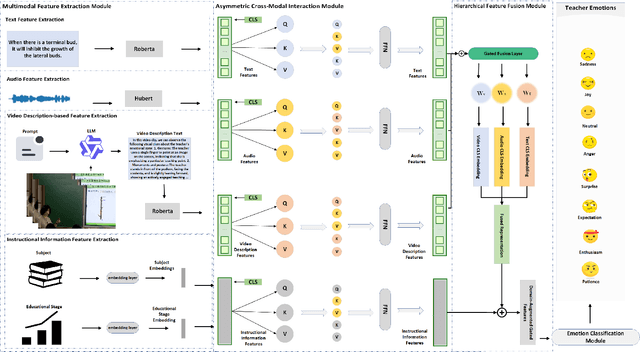
Teachers' emotional states are critical in educational scenarios, profoundly impacting teaching efficacy, student engagement, and learning achievements. However, existing studies often fail to accurately capture teachers' emotions due to the performative nature and overlook the critical impact of instructional information on emotional expression.In this paper, we systematically investigate teacher sentiment analysis by building both the dataset and the model accordingly. We construct the first large-scale teacher multimodal sentiment analysis dataset, T-MED.To ensure labeling accuracy and efficiency, we employ a human-machine collaborative labeling process.The T-MED dataset includes 14,938 instances of teacher emotional data from 250 real classrooms across 11 subjects ranging from K-12 to higher education, integrating multimodal text, audio, video, and instructional information.Furthermore, we propose a novel asymmetric attention-based multimodal teacher sentiment analysis model, AAM-TSA.AAM-TSA introduces an asymmetric attention mechanism and hierarchical gating unit to enable differentiated cross-modal feature fusion and precise emotional classification. Experimental results demonstrate that AAM-TSA significantly outperforms existing state-of-the-art methods in terms of accuracy and interpretability on the T-MED dataset.
OmniMER: Indonesian Multimodal Emotion Recognition via Auxiliary-Enhanced LLM Adaptation
Dec 22, 2025Indonesian, spoken by over 200 million people, remains underserved in multimodal emotion recognition research despite its dominant presence on Southeast Asian social media platforms. We introduce IndoMER, the first multimodal emotion recognition benchmark for Indonesian, comprising 1,944 video segments from 203 speakers with temporally aligned text, audio, and visual annotations across seven emotion categories. The dataset exhibits realistic challenges including cross-modal inconsistency and long-tailed class distributions shaped by Indonesian cultural communication norms. To address these challenges, we propose OmniMER, a multimodal adaptation framework built upon Qwen2.5-Omni that enhances emotion recognition through three auxiliary modality-specific perception tasks: emotion keyword extraction for text, facial expression analysis for video, and prosody analysis for audio. These auxiliary tasks help the model identify emotion-relevant cues in each modality before fusion, reducing reliance on spurious correlations in low-resource settings. Experiments on IndoMER show that OmniMER achieves 0.582 Macro-F1 on sentiment classification and 0.454 on emotion recognition, outperforming the base model by 7.6 and 22.1 absolute points respectively. Cross-lingual evaluation on the Chinese CH-SIMS dataset further demonstrates the generalizability of the proposed framework. The dataset and code are publicly available. https://github.com/yanxm01/INDOMER
Exploring Zero-Shot ACSA with Unified Meaning Representation in Chain-of-Thought Prompting
Dec 22, 2025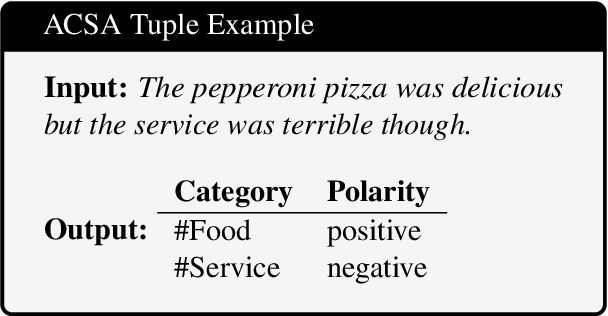
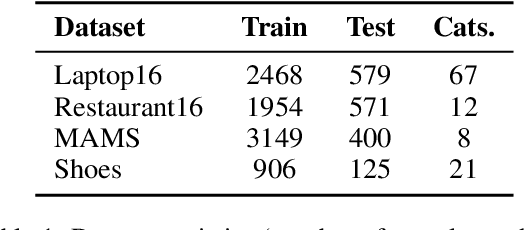

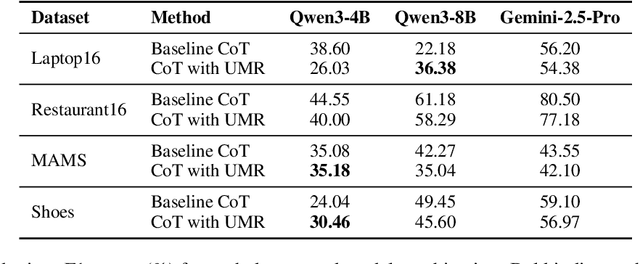
Aspect-Category Sentiment Analysis (ACSA) provides granular insights by identifying specific themes within reviews and their associated sentiment. While supervised learning approaches dominate this field, the scarcity and high cost of annotated data for new domains present significant barriers. We argue that leveraging large language models (LLMs) in a zero-shot setting is a practical alternative where resources for data annotation are limited. In this work, we propose a novel Chain-of-Thought (CoT) prompting technique that utilises an intermediate Unified Meaning Representation (UMR) to structure the reasoning process for the ACSA task. We evaluate this UMR-based approach against a standard CoT baseline across three models (Qwen3-4B, Qwen3-8B, and Gemini-2.5-Pro) and four diverse datasets. Our findings suggest that UMR effectiveness may be model-dependent. Whilst preliminary results indicate comparable performance for mid-sized models such as Qwen3-8B, these observations warrant further investigation, particularly regarding the potential applicability to smaller model architectures. Further research is required to establish the generalisability of these findings across different model scales.
Algerian Dialect
Dec 22, 2025We present Algerian Dialect, a large-scale sentiment-annotated dataset consisting of 45,000 YouTube comments written in Algerian Arabic dialect. The comments were collected from more than 30 Algerian press and media channels using the YouTube Data API. Each comment is manually annotated into one of five sentiment categories: very negative, negative, neutral, positive, and very positive. In addition to sentiment labels, the dataset includes rich metadata such as collection timestamps, like counts, video URLs, and annotation dates. This dataset addresses the scarcity of publicly available resources for Algerian dialect and aims to support research in sentiment analysis, dialectal Arabic NLP, and social media analytics. The dataset is publicly available on Mendeley Data under a CC BY 4.0 license at https://doi.org/10.17632/zzwg3nnhsz.2.
Cognitive Inference based Feature Pyramid Network for Sentimental Analysis using EEG Signals
Dec 20, 2025Sentiment analysis using Electroencephalography (EEG) sensor signals provides a deeper behavioral understanding of a person's emotional state, offering insights into real-time mood fluctuations. This approach takes advantage of brain electrical activity, making it a promising tool for various applications, including mental health monitoring, affective computing, and personalised user experiences. An encoder-based model for EEG-to-sentiment analysis, utilizing the ZUCO 2.0 dataset and incorporating a Feature Pyramid Network (FPN), is proposed to enhance this process. FPNs are adapted here for EEG sensor data, enabling multiscale feature extraction to capture local and global sentiment-related patterns. The raw EEG sensor data from the ZUCO 2.0 dataset is pre-processed and passed through the FPN, which extracts hierarchical features. In addition, extracted features are passed to a Gated Recurrent Unit (GRU) to model temporal dependencies, thereby enhancing the accuracy of sentiment classification. The ZUCO 2.0 dataset is utilized for its clear and detailed representation in 128 channels, offering rich spatial and temporal resolution. The experimental metric results show that the proposed architecture achieves a 6.88\% performance gain compared to the existing methods. Furthermore, the proposed framework demonstrated its efficacy on the validation datasets DEAP and SEED.
From Fake Focus to Real Precision: Confusion-Driven Adversarial Attention Learning in Transformers
Dec 19, 2025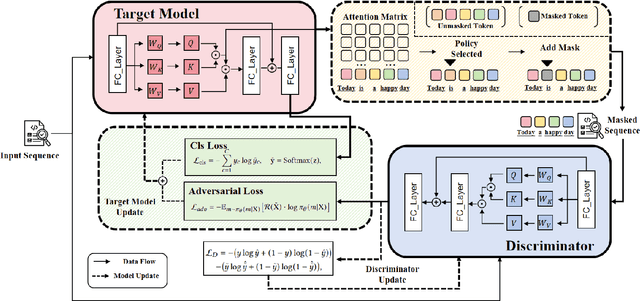
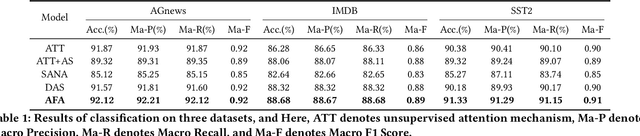

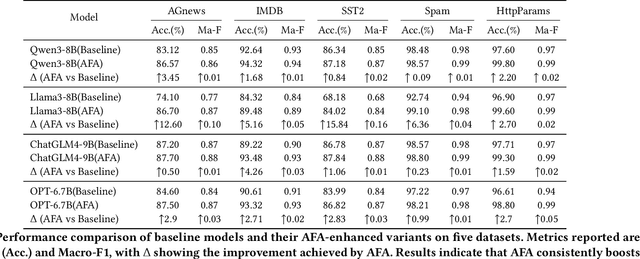
Transformer-based models have been widely adopted for sentiment analysis tasks due to their exceptional ability to capture contextual information. However, these methods often exhibit suboptimal accuracy in certain scenarios. By analyzing their attention distributions, we observe that existing models tend to allocate attention primarily to common words, overlooking less popular yet highly task-relevant terms, which significantly impairs overall performance. To address this issue, we propose an Adversarial Feedback for Attention(AFA) training mechanism that enables the model to automatically redistribute attention weights to appropriate focal points without requiring manual annotations. This mechanism incorporates a dynamic masking strategy that attempts to mask various words to deceive a discriminator, while the discriminator strives to detect significant differences induced by these masks. Additionally, leveraging the sensitivity of Transformer models to token-level perturbations, we employ a policy gradient approach to optimize attention distributions, which facilitates efficient and rapid convergence. Experiments on three public datasets demonstrate that our method achieves state-of-the-art results. Furthermore, applying this training mechanism to enhance attention in large language models yields a further performance improvement of 12.6%
Subjective Question Generation and Answer Evaluation using NLP
Dec 19, 2025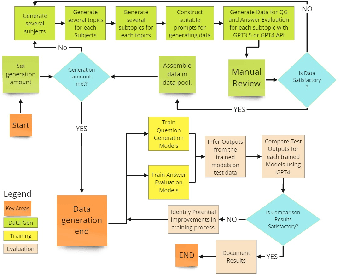
Natural Language Processing (NLP) is one of the most revolutionary technologies today. It uses artificial intelligence to understand human text and spoken words. It is used for text summarization, grammar checking, sentiment analysis, and advanced chatbots and has many more potential use cases. Furthermore, it has also made its mark on the education sector. Much research and advancements have already been conducted on objective question generation; however, automated subjective question generation and answer evaluation are still in progress. An automated system to generate subjective questions and evaluate the answers can help teachers assess student work and enhance the student's learning experience by allowing them to self-assess their understanding after reading an article or a chapter of a book. This research aims to improve current NLP models or make a novel one for automated subjective question generation and answer evaluation from text input.