 Add to Chrome
 Add to Firefox
 Add to Edge
Subjective Question Generation and Answer Evaluation using NLP
Dec 19, 2025
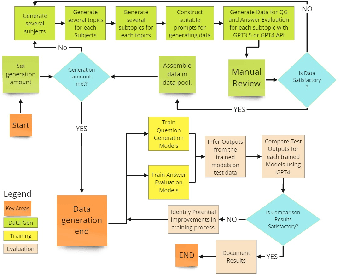
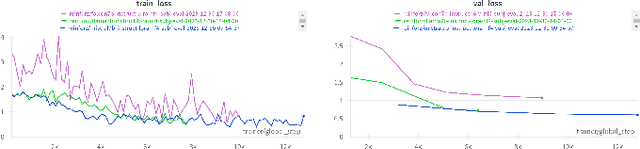
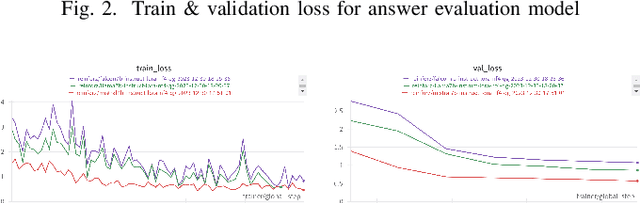
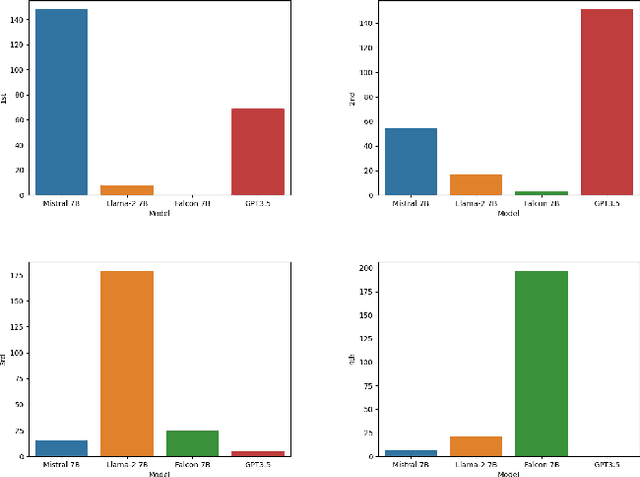
Natural Language Processing (NLP) is one of the most revolutionary technologies today. It uses artificial intelligence to understand human text and spoken words. It is used for text summarization, grammar checking, sentiment analysis, and advanced chatbots and has many more potential use cases. Furthermore, it has also made its mark on the education sector. Much research and advancements have already been conducted on objective question generation; however, automated subjective question generation and answer evaluation are still in progress. An automated system to generate subjective questions and evaluate the answers can help teachers assess student work and enhance the student's learning experience by allowing them to self-assess their understanding after reading an article or a chapter of a book. This research aims to improve current NLP models or make a novel one for automated subjective question generation and answer evaluation from text input.

Beyond the Benchmark: Innovative Defenses Against Prompt Injection Attacks
Dec 18, 2025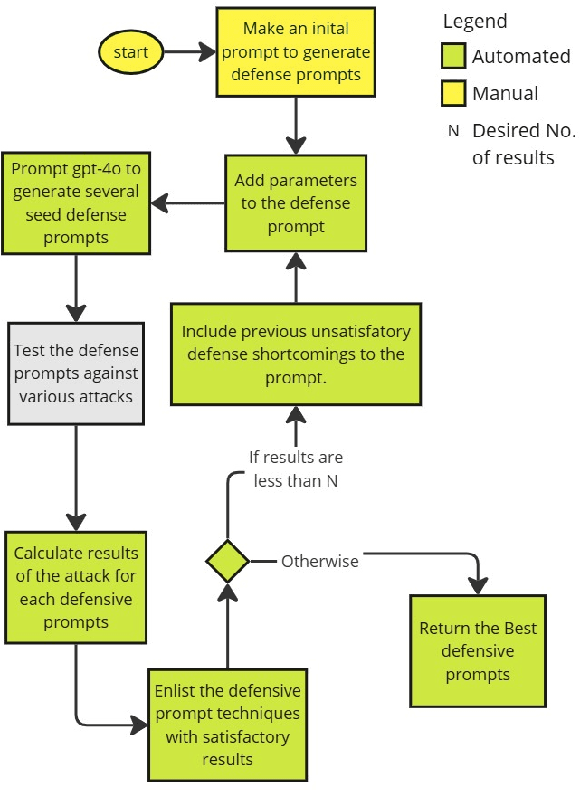

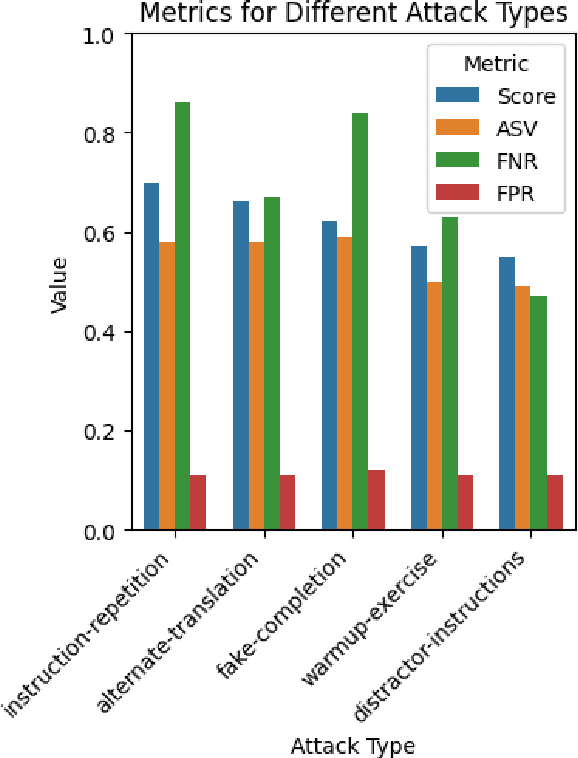
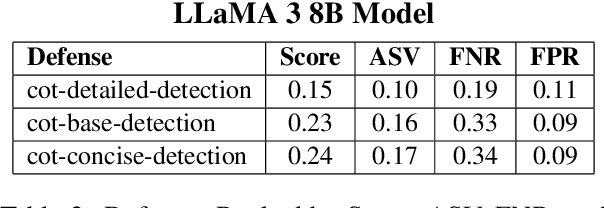
In this fast-evolving area of LLMs, our paper discusses the significant security risk presented by prompt injection attacks. It focuses on small open-sourced models, specifically the LLaMA family of models. We introduce novel defense mechanisms capable of generating automatic defenses and systematically evaluate said generated defenses against a comprehensive set of benchmarked attacks. Thus, we empirically demonstrated the improvement proposed by our approach in mitigating goal-hijacking vulnerabilities in LLMs. Our work recognizes the increasing relevance of small open-sourced LLMs and their potential for broad deployments on edge devices, aligning with future trends in LLM applications. We contribute to the greater ecosystem of open-source LLMs and their security in the following: (1) assessing present prompt-based defenses against the latest attacks, (2) introducing a new framework using a seed defense (Chain Of Thoughts) to refine the defense prompts iteratively, and (3) showing significant improvements in detecting goal hijacking attacks. Out strategies significantly reduce the success rates of the attacks and false detection rates while at the same time effectively detecting goal-hijacking capabilities, paving the way for more secure and efficient deployments of small and open-source LLMs in resource-constrained environments.
Detecting Prompt Injection Attacks Against Application Using Classifiers
Dec 14, 2025Prompt injection attacks can compromise the security and stability of critical systems, from infrastructure to large web applications. This work curates and augments a prompt injection dataset based on the HackAPrompt Playground Submissions corpus and trains several classifiers, including LSTM, feed forward neural networks, Random Forest, and Naive Bayes, to detect malicious prompts in LLM integrated web applications. The proposed approach improves prompt injection detection and mitigation, helping protect targeted applications and systems.