 Add to Chrome
 Add to Firefox
 Add to Edge
Efficientdet
Papers and Code
Fine-tuned Vision Language Model for Localization of Parasitic Eggs in Microscopic Images
Feb 14, 2026
Soil-transmitted helminth (STH) infections continuously affect a large proportion of the global population, particularly in tropical and sub-tropical regions, where access to specialized diagnostic expertise is limited. Although manual microscopic diagnosis of parasitic eggs remains the diagnostic gold standard, the approach can be labour-intensive, time-consuming, and prone to human error. This paper aims to utilize a vision language model (VLM) such as Microsoft Florence that was fine-tuned to localize all parasitic eggs within microscopic images. The preliminary results show that our localization VLM performs comparatively better than the other object detection methods, such as EfficientDet, with an mIOU of 0.94. This finding demonstrates the potential of the proposed VLM to serve as a core component of an automated framework, offering a scalable engineering solution for intelligent parasitological diagnosis.

A Scoping Review of Deep Learning for Urban Visual Pollution and Proposal of a Real-Time Monitoring Framework with a Visual Pollution Index
Feb 10, 2026Urban Visual Pollution (UVP) has emerged as a critical concern, yet research on automatic detection and application remains fragmented. This scoping review maps the existing deep learning-based approaches for detecting, classifying, and designing a comprehensive application framework for visual pollution management. Following the PRISMA-ScR guidelines, seven academic databases (Scopus, Web of Science, IEEE Xplore, ACM DL, ScienceDirect, SpringerNatureLink, and Wiley) were systematically searched and reviewed, and 26 articles were found. Most research focuses on specific pollutant categories and employs variations of YOLO, Faster R-CNN, and EfficientDet architectures. Although several datasets exist, they are limited to specific areas and lack standardized taxonomies. Few studies integrate detection into real-time application systems, yet they tend to be geographically skewed. We proposed a framework for monitoring visual pollution that integrates a visual pollution index to assess the severity of visual pollution for a certain area. This review highlights the need for a unified UVP management system that incorporates pollutant taxonomy, a cross-city benchmark dataset, a generalized deep learning model, and an assessment index that supports sustainable urban aesthetics and enhances the well-being of urban dwellers.
Depth as Prior Knowledge for Object Detection
Feb 05, 2026Detecting small and distant objects remains challenging for object detectors due to scale variation, low resolution, and background clutter. Safety-critical applications require reliable detection of these objects for safe planning. Depth information can improve detection, but existing approaches require complex, model-specific architectural modifications. We provide a theoretical analysis followed by an empirical investigation of the depth-detection relationship. Together, they explain how depth causes systematic performance degradation and why depth-informed supervision mitigates it. We introduce DepthPrior, a framework that uses depth as prior knowledge rather than as a fused feature, providing comparable benefits without modifying detector architectures. DepthPrior consists of Depth-Based Loss Weighting (DLW) and Depth-Based Loss Stratification (DLS) during training, and Depth-Aware Confidence Thresholding (DCT) during inference. The only overhead is the initial cost of depth estimation. Experiments across four benchmarks (KITTI, MS COCO, VisDrone, SUN RGB-D) and two detectors (YOLOv11, EfficientDet) demonstrate the effectiveness of DepthPrior, achieving up to +9% mAP$_S$ and +7% mAR$_S$ for small objects, with inference recovery rates as high as 95:1 (true vs. false detections). DepthPrior offers these benefits without additional sensors, architectural changes, or performance costs. Code is available at https://github.com/mos-ks/DepthPrior.
SonoVision: A Computer Vision Approach for Helping Visually Challenged Individuals Locate Objects with the Help of Sound Cues
Dec 27, 2025Locating objects for the visually impaired is a significant challenge and is something no one can get used to over time. However, this hinders their independence and could push them towards risky and dangerous scenarios. Hence, in the spirit of making the visually challenged more self-sufficient, we present SonoVision, a smart-phone application that helps them find everyday objects using sound cues through earphones/headphones. This simply means, if an object is on the right or left side of a user, the app makes a sinusoidal sound in a user's respective ear through ear/headphones. However, to indicate objects located directly in front, both the left and right earphones are rung simultaneously. These sound cues could easily help a visually impaired individual locate objects with the help of their smartphones and reduce the reliance on people in their surroundings, consequently making them more independent. This application is made with the flutter development platform and uses the Efficientdet-D2 model for object detection in the backend. We believe the app will significantly assist the visually impaired in a safe and user-friendly manner with its capacity to work completely offline. Our application can be accessed here https://github.com/MohammedZ666/SonoVision.git.
Streamlining the Development of Active Learning Methods in Real-World Object Detection
Aug 27, 2025Active learning (AL) for real-world object detection faces computational and reliability challenges that limit practical deployment. Developing new AL methods requires training multiple detectors across iterations to compare against existing approaches. This creates high costs for autonomous driving datasets where the training of one detector requires up to 282 GPU hours. Additionally, AL method rankings vary substantially across validation sets, compromising reliability in safety-critical transportation systems. We introduce object-based set similarity ($\mathrm{OSS}$), a metric that addresses these challenges. $\mathrm{OSS}$ (1) quantifies AL method effectiveness without requiring detector training by measuring similarity between training sets and target domains using object-level features. This enables the elimination of ineffective AL methods before training. Furthermore, $\mathrm{OSS}$ (2) enables the selection of representative validation sets for robust evaluation. We validate our similarity-based approach on three autonomous driving datasets (KITTI, BDD100K, CODA) using uncertainty-based AL methods as a case study with two detector architectures (EfficientDet, YOLOv3). This work is the first to unify AL training and evaluation strategies in object detection based on object similarity. $\mathrm{OSS}$ is detector-agnostic, requires only labeled object crops, and integrates with existing AL pipelines. This provides a practical framework for deploying AL in real-world applications where computational efficiency and evaluation reliability are critical. Code is available at https://mos-ks.github.io/publications/.
Money Recognition for the Visually Impaired: A Case Study on Sri Lankan Banknotes
Feb 20, 2025Currency note recognition is a critical accessibility need for blind individuals, as identifying banknotes accurately can impact their independence and security in financial transactions. Several traditional and technological initiatives have been taken to date. Nevertheless, these approaches are less user-friendly and have made it more challenging for blind people to identify banknotes. This research proposes a user-friendly stand-alone system for the identification of Sri Lankan currency notes. A custom-created dataset of images of Sri Lankan currency notes was used to fine-tune an EfficientDet model. The currency note recognition model achieved 0.9847 AP on the validation dataset and performs exceptionally well in real-world scenarios. The high accuracy and the intuitive interface have enabled blind individuals to quickly and accurately identify currency denominations, ultimately encouraging accessibility and independence.
Brain Tumor Identification using Improved YOLOv8
Feb 06, 2025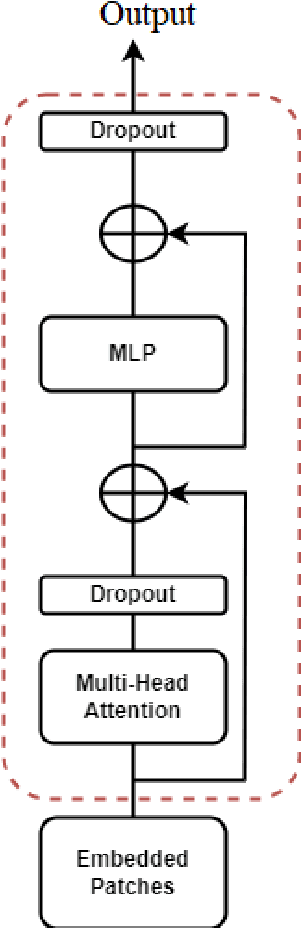

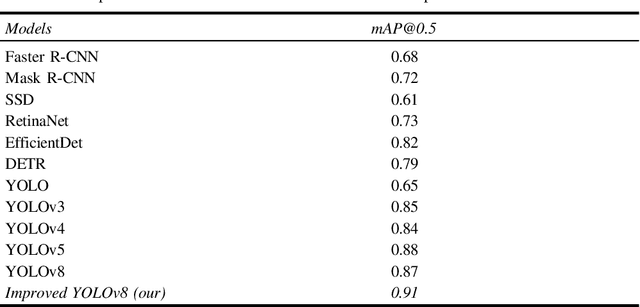
Identifying the extent of brain tumors is a significant challenge in brain cancer treatment. The main difficulty is in the approximate detection of tumor size. Magnetic resonance imaging (MRI) has become a critical diagnostic tool. However, manually detecting the boundaries of brain tumors from MRI scans is a labor-intensive task that requires extensive expertise. Deep learning and computer-aided detection techniques have led to notable advances in machine learning for this purpose. In this paper, we propose a modified You Only Look Once (YOLOv8) model to accurately detect the tumors within the MRI images. The proposed model replaced the Non-Maximum Suppression (NMS) algorithm with a Real-Time Detection Transformer (RT- DETR) in the detection head. NMS filters out redundant or overlapping bounding boxes in the detected tumors, but they are hand-designed and pre-set. RT-DETR removes hand-designed components. The second improvement was made by replacing the normal convolution block with ghost convolution. Ghost Convolution reduces computational and memory costs while maintaining high accuracy and enabling faster inference, making it ideal for resource-constrained environments and real-time applications. The third improvement was made by introducing a vision transformer block in the backbone of YOLOv8 to extract context-aware features. We used a publicly available dataset of brain tumors in the proposed model. The proposed model performed better than the original YOLOv8 model and also performed better than other object detectors (Faster R- CNN, Mask R-CNN, YOLO, YOLOv3, YOLOv4, YOLOv5, SSD, RetinaNet, EfficientDet, and DETR). The proposed model achieved 0.91 mAP (mean Average Precision)@0.5.
One-Stage-TFS: Thai One-Stage Fingerspelling Dataset for Fingerspelling Recognition Frameworks
Nov 05, 2024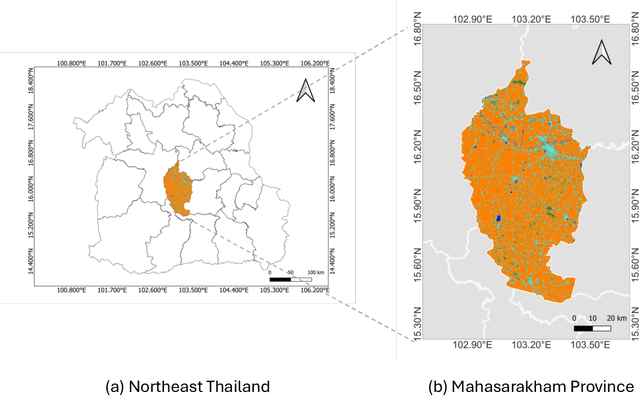
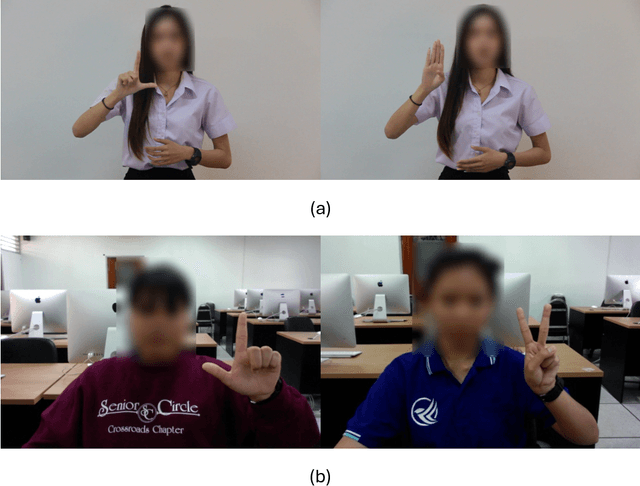
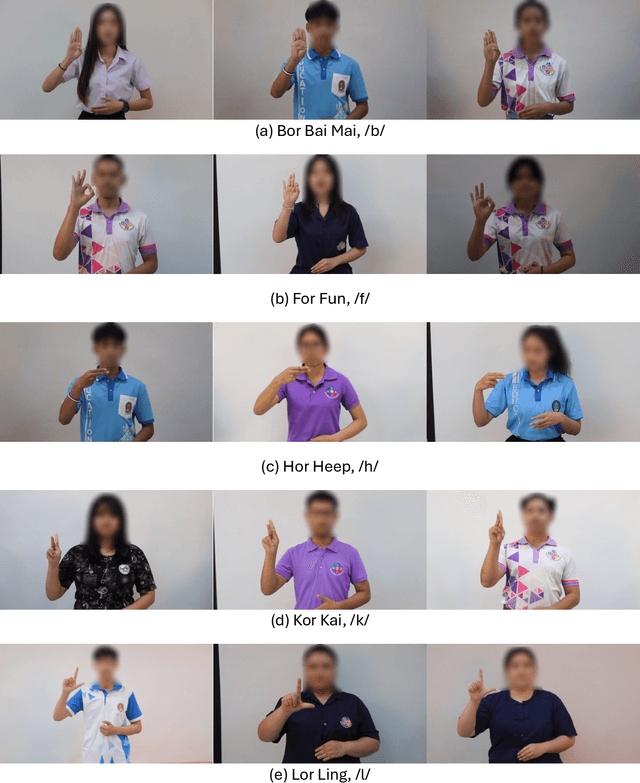

The Thai One-Stage Fingerspelling (One-Stage-TFS) dataset is a comprehensive resource designed to advance research in hand gesture recognition, explicitly focusing on the recognition of Thai sign language. This dataset comprises 7,200 images capturing 15 one-stage consonant gestures performed by undergraduate students from Rajabhat Maha Sarakham University, Thailand. The contributors include both expert students from the Special Education Department with proficiency in Thai sign language and students from other departments without prior sign language experience. Images were collected between July and December 2021 using a DSLR camera, with contributors demonstrating hand gestures against both simple and complex backgrounds. The One-Stage-TFS dataset presents challenges in detecting and recognizing hand gestures, offering opportunities to develop novel end-to-end recognition frameworks. Researchers can utilize this dataset to explore deep learning methods, such as YOLO, EfficientDet, RetinaNet, and Detectron, for hand detection, followed by feature extraction and recognition using techniques like convolutional neural networks, transformers, and adaptive feature fusion networks. The dataset is accessible via the Mendeley Data repository and supports a wide range of applications in computer science, including deep learning, computer vision, and pattern recognition, thereby encouraging further innovation and exploration in these fields.
A Comparative Study of Multiple Deep Learning Algorithms for Efficient Localization of Bone Joints in the Upper Limbs of Human Body
Oct 28, 2024This paper addresses the medical imaging problem of joint detection in the upper limbs, viz. elbow, shoulder, wrist and finger joints. Localization of joints from X-Ray and Computerized Tomography (CT) scans is an essential step for the assessment of various bone-related medical conditions like Osteoarthritis, Rheumatoid Arthritis, and can even be used for automated bone fracture detection. Automated joint localization also detects the corresponding bones and can serve as input to deep learning-based models used for the computerized diagnosis of the aforementioned medical disorders. This in-creases the accuracy of prediction and aids the radiologists with analyzing the scans, which is quite a complex and exhausting task. This paper provides a detailed comparative study between diverse Deep Learning (DL) models - YOLOv3, YOLOv7, EfficientDet and CenterNet in multiple bone joint detections in the upper limbs of the human body. The research analyses the performance of different DL models, mathematically, graphically and visually. These models are trained and tested on a portion of the openly available MURA (musculoskeletal radiographs) dataset. The study found that the best Mean Average Precision (mAP at 0.5:0.95) values of YOLOv3, YOLOv7, EfficientDet and CenterNet are 35.3, 48.3, 46.5 and 45.9 respectively. Besides, it has been found YOLOv7 performed the best for accurately predicting the bounding boxes while YOLOv3 performed the worst in the Visual Analysis test. Code available at https://github.com/Sohambasu07/BoneJointsLocalization
SparseTem: Boosting the Efficiency of CNN-Based Video Encoders by Exploiting Temporal Continuity
Oct 28, 2024Deep learning models have become pivotal in the field of video processing and is increasingly critical in practical applications such as autonomous driving and object detection. Although Vision Transformers (ViTs) have demonstrated their power, Convolutional Neural Networks (CNNs) remain a highly efficient and high-performance choice for feature extraction and encoding. However, the intensive computational demands of convolution operations hinder its broader adoption as a video encoder. Given the inherent temporal continuity in video frames, changes between consecutive frames are minimal, allowing for the skipping of redundant computations. This technique, which we term as Diff Computation, presents two primary challenges. First, Diff Computation requires to cache intermediate feature maps to ensure the correctness of non-linear computations, leading to significant memory consumption. Second, the imbalance of sparsity among layers, introduced by Diff Computation, incurs accuracy degradation. To address these issues, we propose a memory-efficient scheduling method to eliminate memory overhead and an online adjustment mechanism to minimize accuracy degradation. We integrate these techniques into our framework, SparseTem, to seamlessly support various CNN-based video encoders. SparseTem achieves speedup of 1.79x for EfficientDet and 4.72x for CRNN, with minimal accuracy drop and no additional memory overhead. Extensive experimental results demonstrate that SparseTem sets a new state-of-the-art by effectively utilizing temporal continuity to accelerate CNN-based video encoders.