 Add to Chrome
 Add to Firefox
 Add to Edge
UniSGR: Unified Framework for Semantic ID Generation and Ranking
Jul 05, 2026
Recommendation systems play a pivotal role in modern e-commerce platforms. While generative retrieval has emerged as a promising paradigm for alleviating the limitations of multi-stage cascade architectures, existing methods still struggle with fine-grained multi-objective ranking. To bridge this gap, we propose UniSGR, a Unified framework for Semantic ID Generation and Ranking. UniSGR adopts a two-stage training paradigm: a multi-scenario pre-training stage that learns from mixed business-scenario data, followed by a scenario-specific alignment stage that jointly optimizes Value-Aware Parallel Multi-Token Prediction (VA-PMTP) and a unified multi-objective ranking module. To better align generation with downstream ranking, we introduce Task-Aware Tokens (TAT) guided by Funnel-Aware Contrastive Learning. Furthermore, we propose Semantic Tree Attention with Reorganized KV cache (STARK), an inference strategy that removes key efficiency bottlenecks in conventional beam search. Extensive offline experiments on a large-scale e-commerce platform demonstrate the effectiveness and scalability of UniSGR.

Biomass phenotyping of oilseed rape through UAV multi-view oblique imaging with 3DGS and SAM model
Nov 13, 2024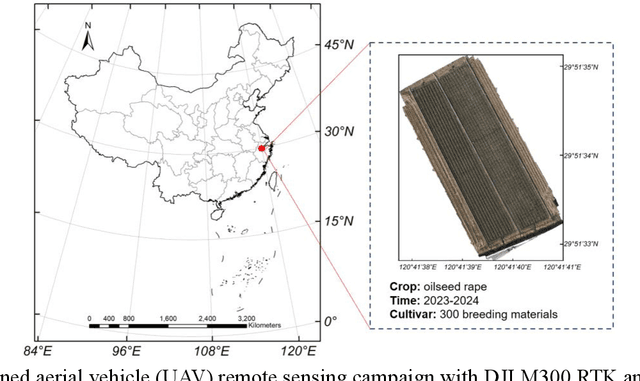
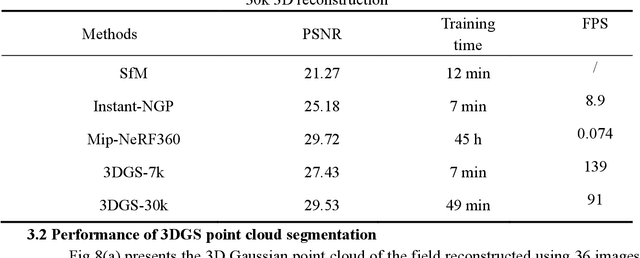
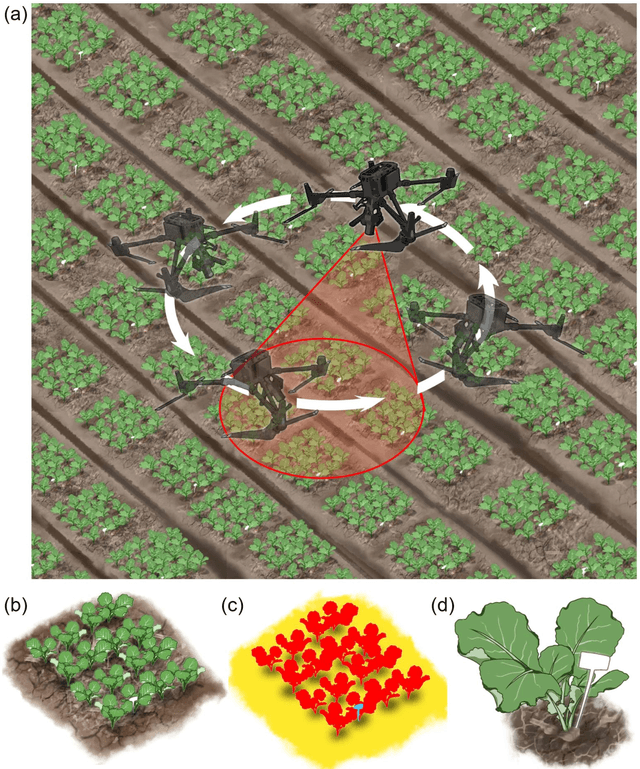
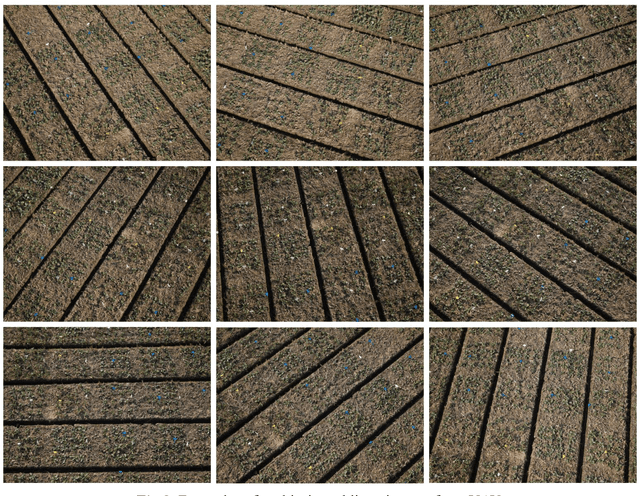
Biomass estimation of oilseed rape is crucial for optimizing crop productivity and breeding strategies. While UAV-based imaging has advanced high-throughput phenotyping, current methods often rely on orthophoto images, which struggle with overlapping leaves and incomplete structural information in complex field environments. This study integrates 3D Gaussian Splatting (3DGS) with the Segment Anything Model (SAM) for precise 3D reconstruction and biomass estimation of oilseed rape. UAV multi-view oblique images from 36 angles were used to perform 3D reconstruction, with the SAM module enhancing point cloud segmentation. The segmented point clouds were then converted into point cloud volumes, which were fitted to ground-measured biomass using linear regression. The results showed that 3DGS (7k and 30k iterations) provided high accuracy, with peak signal-to-noise ratios (PSNR) of 27.43 and 29.53 and training times of 7 and 49 minutes, respectively. This performance exceeded that of structure from motion (SfM) and mipmap Neural Radiance Fields (Mip-NeRF), demonstrating superior efficiency. The SAM module achieved high segmentation accuracy, with a mean intersection over union (mIoU) of 0.961 and an F1-score of 0.980. Additionally, a comparison of biomass extraction models found the point cloud volume model to be the most accurate, with an determination coefficient (R2) of 0.976, root mean square error (RMSE) of 2.92 g/plant, and mean absolute percentage error (MAPE) of 6.81%, outperforming both the plot crop volume and individual crop volume models. This study highlights the potential of combining 3DGS with multi-view UAV imaging for improved biomass phenotyping.
PanicleNeRF: low-cost, high-precision in-field phenotypingof rice panicles with smartphone
Aug 04, 2024The rice panicle traits significantly influence grain yield, making them a primary target for rice phenotyping studies. However, most existing techniques are limited to controlled indoor environments and difficult to capture the rice panicle traits under natural growth conditions. Here, we developed PanicleNeRF, a novel method that enables high-precision and low-cost reconstruction of rice panicle three-dimensional (3D) models in the field using smartphone. The proposed method combined the large model Segment Anything Model (SAM) and the small model You Only Look Once version 8 (YOLOv8) to achieve high-precision segmentation of rice panicle images. The NeRF technique was then employed for 3D reconstruction using the images with 2D segmentation. Finally, the resulting point clouds are processed to successfully extract panicle traits. The results show that PanicleNeRF effectively addressed the 2D image segmentation task, achieving a mean F1 Score of 86.9% and a mean Intersection over Union (IoU) of 79.8%, with nearly double the boundary overlap (BO) performance compared to YOLOv8. As for point cloud quality, PanicleNeRF significantly outperformed traditional SfM-MVS (structure-from-motion and multi-view stereo) methods, such as COLMAP and Metashape. The panicle length was then accurately extracted with the rRMSE of 2.94% for indica and 1.75% for japonica rice. The panicle volume estimated from 3D point clouds strongly correlated with the grain number (R2 = 0.85 for indica and 0.82 for japonica) and grain mass (0.80 for indica and 0.76 for japonica). This method provides a low-cost solution for high-throughput in-field phenotyping of rice panicles, accelerating the efficiency of rice breeding.