 Add to Chrome
 Add to Firefox
 Add to Edge
Continuity and Ordinality Matter: Constraining Time Series Tokens for Effective Time Series Analysis with Large Language Models
May 22, 2026
Token-based time series large language models (TS-LLMs) have emerged as a promising direction for time series analysis and reasoning. However, prior studies largely overlook the inherent continuity and ordinality of time series tokens, which substantially limits model performance. In this paper, we argue that preserving these properties in time series token embeddings is crucial for the effectiveness of token-based TS-LLMs. To this end, we propose COM (Continuity and Ordinality Matter), a continuity- and ordinality-aware strategy that integrates geometric constraints into both the initialization and training stages. Empirical results on multiple time series analysis benchmarks demonstrate that COM consistently improves the performance of token-based TS-LLMs, achieving competitive results and strong generalizability. Code is available at https://anonymous.4open.science/r/COM .

Tora3: Trajectory-Guided Audio-Video Generation with Physical Coherence
Apr 10, 2026Audio-video (AV) generation has recently made strong progress in perceptual quality and multimodal coherence, yet generating content with plausible motion-sound relations remains challenging. Existing methods often produce object motions that are visually unstable and sounds that are only loosely aligned with salient motion or contact events, largely because they lack an explicit motion-aware structure shared by video and audio generation. We present Tora3, a trajectory-guided AV generation framework that improves physical coherence by using object trajectories as a shared kinematic prior. Rather than treating trajectories as a video-only control signal, Tora3 uses them to jointly guide visual motion and acoustic events. Specifically, we design a trajectory-aligned motion representation for video, a kinematic-audio alignment module driven by trajectory-derived second-order kinematic states, and a hybrid flow matching scheme that preserves trajectory fidelity in trajectory-conditioned regions while maintaining local coherence elsewhere. We further curate PAV, a large-scale AV dataset emphasizing motion-relevant patterns with automatically extracted motion annotations. Extensive experiments show that Tora3 improves motion realism, motion-sound synchronization, and overall AV generation quality over strong open-source baselines.
LLM-Empowered Representation Learning for Emerging Item Recommendation
Dec 11, 2025In this work, we tackle the challenge of recommending emerging items, whose interactions gradually accumulate over time. Existing methods often overlook this dynamic process, typically assuming that emerging items have few or even no historical interactions. Such an assumption oversimplifies the problem, as a good model must preserve the uniqueness of emerging items while leveraging their shared patterns with established ones. To address this challenge, we propose EmerFlow, a novel LLM-empowered representation learning framework that generates distinctive embeddings for emerging items. It first enriches the raw features of emerging items through LLM reasoning, then aligns these representations with the embedding space of the existing recommendation model. Finally, new interactions are incorporated through meta-learning to refine the embeddings. This enables EmerFlow to learn expressive embeddings for emerging items from only limited interactions. Extensive experiments across diverse domains, including movies and pharmaceuticals, show that EmerFlow consistently outperforms existing methods.
TD-BFR: Truncated Diffusion Model for Efficient Blind Face Restoration
Mar 26, 2025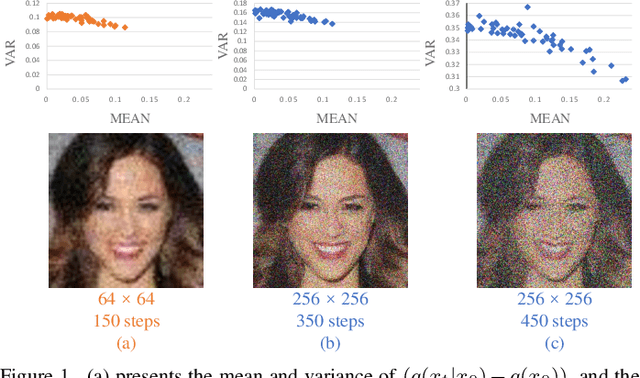
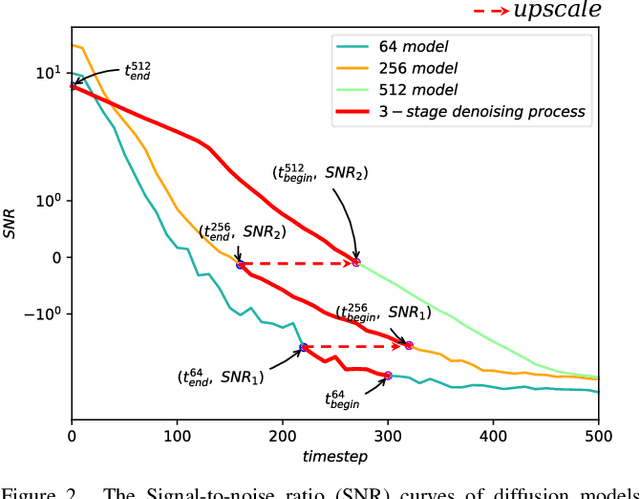
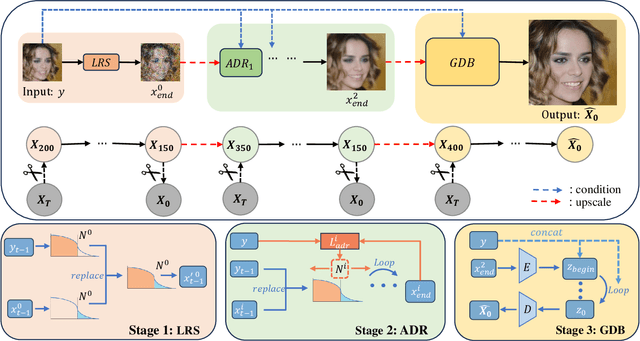
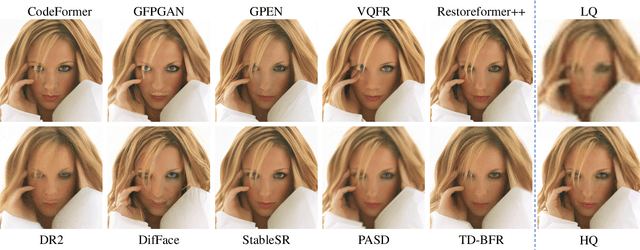
Diffusion-based methodologies have shown significant potential in blind face restoration (BFR), leveraging their robust generative capabilities. However, they are often criticized for two significant problems: 1) slow training and inference speed, and 2) inadequate recovery of fine-grained facial details. To address these problems, we propose a novel Truncated Diffusion model for efficient Blind Face Restoration (TD-BFR), a three-stage paradigm tailored for the progressive resolution of degraded images. Specifically, TD-BFR utilizes an innovative truncated sampling method, starting from low-quality (LQ) images at low resolution to enhance sampling speed, and then introduces an adaptive degradation removal module to handle unknown degradations and connect the generation processes across different resolutions. Additionally, we further adapt the priors of pre-trained diffusion models to recover rich facial details. Our method efficiently restores high-quality images in a coarse-to-fine manner and experimental results demonstrate that TD-BFR is, on average, \textbf{4.75$\times$} faster than current state-of-the-art diffusion-based BFR methods while maintaining competitive quality.
DR2: Diffusion-based Robust Degradation Remover for Blind Face Restoration
Mar 20, 2023Blind face restoration usually synthesizes degraded low-quality data with a pre-defined degradation model for training, while more complex cases could happen in the real world. This gap between the assumed and actual degradation hurts the restoration performance where artifacts are often observed in the output. However, it is expensive and infeasible to include every type of degradation to cover real-world cases in the training data. To tackle this robustness issue, we propose Diffusion-based Robust Degradation Remover (DR2) to first transform the degraded image to a coarse but degradation-invariant prediction, then employ an enhancement module to restore the coarse prediction to a high-quality image. By leveraging a well-performing denoising diffusion probabilistic model, our DR2 diffuses input images to a noisy status where various types of degradation give way to Gaussian noise, and then captures semantic information through iterative denoising steps. As a result, DR2 is robust against common degradation (e.g. blur, resize, noise and compression) and compatible with different designs of enhancement modules. Experiments in various settings show that our framework outperforms state-of-the-art methods on heavily degraded synthetic and real-world datasets.