 Add to Chrome
 Add to Firefox
 Add to Edge
Correlation-Aware and Gaussianity-Preserving Robust Latent Angular Watermarking for Diffusion Models
Jul 24, 2026
Latent domain watermarking for diffusion models embeds watermarks directly into the latent prior, enjoying non-intrusiveness to model parameters and seamless integration with the generation process. However, due to the violation of latent Gaussianity or sensitivity to normal and malicious perturbations during latent inversion, existing methods are prone to watermark detection or removal attacks. A further overlooked problem is the violation of the i.i.d. latent condition after watermarking, which leads to latent correlation degradation and generation fidelity loss. Although this has been externally measured by FID, the internal correlation structure has yet to be rigorously characterized. To address the above issues, and motivated by the rotation-invariant property of isotropic Gaussian, we propose \textit{Latent Angular Watermarking (LAW)}, which encodes watermark bits as antipodal angles ($\pmπ/2$ relative to a reference pair) between disjoint pairs of latent elements while preserving the Gaussianity. The antipodal ($π$-separation) encoding maximizes geometric separation between bit values, and we prove that the decoding angular-error variance is proportional to the norm of the latent pair, i.e., $\operatorname{var}(Δφ) \propto 1/ρ^2$. We further propose a magnitude-driven variant, LAW-M, which anchors watermark bits in the most geometrically stable latent dimensions, yielding additional robustness gains. Theoretically, we provide a rigorous characterization of the induced correlation degradation, deriving in closed form the autocorrelation structure of the watermarked latent and proving that correlations are confined to a sparse, structured set of off-diagonal elements with fixed $\pmπ/4$ values.

Attribute-Prompted Kernel Hashing for Unsupervised Data-Efficient Cross-Modal Retrieval
Jul 01, 2026Unsupervised cross-modal hashing enables efficient retrieval of semantically related instances across different modalities without requiring manual semantic annotation. However, existing unsupervised methods rely heavily on large-scale image-text pairs. Collecting such data can be costly, particularly in scenarios where well-aligned pairs are scarce due to privacy and specialized constraints. More critically, existing methods tend to overfit to seen training data, restricting their generalization performance on unseen categories that the constrained training data cannot cover. To address these limitations, we propose Attribute-Prompted Kernel Hashing (APKH), a novel data-efficient approach that constructs a compact, modality-aligned Hamming space driven by the generalized attribute priors of vision-language foundation models. Specifically, APKH introduces two core modules: Context-optimized Attribute Kernel Mapping (CAKM) and Kernel-Smoothed Contrastive Alignment (KSCA). CAKM formulates cross-modal alignment through hyperspherical Radial Basis Function kernel mapping, optimizing dynamic attribute kernels via prompt learning to capture modality-invariant semantics. Furthermore, KSCA extends conventional point-to-point contrastive learning by modeling limited paired data as continuous kernel distributions. This explicit smoothing of the modality gap alleviates overfitting to sparse pairwise correlations. Extensive experiments demonstrate that APKH outperforms state-of-the-art hashing methods in the challenging cross-modal retrieval tasks from seen to unseen categories under data-constrained scenarios.
Unsupervised Data-Efficient Cross-Modal Retrieval with Global-Neighborhood Alignment Hashing
Jun 30, 2026Compared to supervised cross-modal hashing (CMH), unsupervised CMH reduces the reliance on manual labeling by learning binary codes from unlabeled image-text pairs. However, existing unsupervised CMH methods often rely on large-scale image-text pairs, which are costly to collect. To address this limitation, we propose Global-Neighborhood Alignment Hashing (GNAH), a novel approach that preserves the semantic structure of vision-language foundation models within a compact binary Hamming space using only a limited number of image-text pairs. Specifically, GNAH captures global structural information from the continuous latent space and transfers it into the binary Hamming space through a Prototype-Anchored Global Alignment module. In addition, GNAH extends conventional pairwise contrastive learning by modeling stochastic neighborhood relationships via a Contrastive Stochastic Neighborhood Alignment module, thereby alleviating overfitting to sparse pairwise correlations. Extensive experiments demonstrate that GNAH consistently outperforms existing unsupervised cross-modal retrieval methods under data-constrained settings, offering a practical solution for real-world CMH applications.
One-step Multi-view Clustering With Adaptive Low-rank Anchor-graph Learning
Sep 18, 2025In light of their capability to capture structural information while reducing computing complexity, anchor graph-based multi-view clustering (AGMC) methods have attracted considerable attention in large-scale clustering problems. Nevertheless, existing AGMC methods still face the following two issues: 1) They directly embedded diverse anchor graphs into a consensus anchor graph (CAG), and hence ignore redundant information and numerous noises contained in these anchor graphs, leading to a decrease in clustering effectiveness; 2) They drop effectiveness and efficiency due to independent post-processing to acquire clustering indicators. To overcome the aforementioned issues, we deliver a novel one-step multi-view clustering method with adaptive low-rank anchor-graph learning (OMCAL). To construct a high-quality CAG, OMCAL provides a nuclear norm-based adaptive CAG learning model against information redundancy and noise interference. Then, to boost clustering effectiveness and efficiency substantially, we incorporate category indicator acquisition and CAG learning into a unified framework. Numerous studies conducted on ordinary and large-scale datasets indicate that OMCAL outperforms existing state-of-the-art methods in terms of clustering effectiveness and efficiency.
Accurate Diagnosis of Respiratory Viruses Using an Explainable Machine Learning with Mid-Infrared Biomolecular Fingerprinting of Nasopharyngeal Secretions
Apr 12, 2025Accurate identification of respiratory viruses (RVs) is critical for outbreak control and public health. This study presents a diagnostic system that combines Attenuated Total Reflectance Fourier Transform Infrared Spectroscopy (ATR-FTIR) from nasopharyngeal secretions with an explainable Rotary Position Embedding-Sparse Attention Transformer (RoPE-SAT) model to accurately identify multiple RVs within 10 minutes. Spectral data (4000-00 cm-1) were collected, and the bio-fingerprint region (1800-900 cm-1) was employed for analysis. Standard normal variate (SNV) normalization and second-order derivation were applied to reduce scattering and baseline drift. Gradient-weighted class activation mapping (Grad-CAM) was employed to generate saliency maps, highlighting spectral regions most relevant to classification and enhancing the interpretability of model outputs. Two independent cohorts from Beijing Youan Hospital, processed with different viral transport media (VTMs) and drying methods, were evaluated, with one including influenza B, SARS-CoV-2, and healthy controls, and the other including mycoplasma, SARS-CoV-2, and healthy controls. The model achieved sensitivity and specificity above 94.40% across both cohorts. By correlating model-selected infrared regions with known biomolecular signatures, we verified that the system effectively recognizes virus-specific spectral fingerprints, including lipids, Amide I, Amide II, Amide III, nucleic acids, and carbohydrates, and leverages their weighted contributions for accurate classification.
Graph-Driven Models for Gas Mixture Identification and Concentration Estimation on Heterogeneous Sensor Array Signals
Dec 18, 2024Accurately identifying gas mixtures and estimating their concentrations are crucial across various industrial applications using gas sensor arrays. However, existing models face challenges in generalizing across heterogeneous datasets, which limits their scalability and practical applicability. To address this problem, this study develops two novel deep-learning models that integrate temporal graph structures for enhanced performance: a Graph-Enhanced Capsule Network (GraphCapsNet) employing dynamic routing for gas mixture classification and a Graph-Enhanced Attention Network (GraphANet) leveraging self-attention for concentration estimation. Both models were validated on datasets from the University of California, Irvine (UCI) Machine Learning Repository and a custom dataset, demonstrating superior performance in gas mixture identification and concentration estimation compared to recent models. In classification tasks, GraphCapsNet achieved over 98.00% accuracy across multiple datasets, while in concentration estimation, GraphANet attained an R2 score exceeding 0.96 across various gas components. Both GraphCapsNet and GraphANet exhibited significantly higher accuracy and stability, positioning them as promising solutions for scalable gas analysis in industrial settings.
Analytic Continual Test-Time Adaptation for Multi-Modality Corruption
Oct 29, 2024Test-Time Adaptation (TTA) aims to help pre-trained model bridge the gap between source and target datasets using only the pre-trained model and unlabelled test data. A key objective of TTA is to address domain shifts in test data caused by corruption, such as weather changes, noise, or sensor malfunctions. Multi-Modal Continual Test-Time Adaptation (MM-CTTA), an extension of TTA with better real-world applications, further allows pre-trained models to handle multi-modal inputs and adapt to continuously-changing target domains. MM-CTTA typically faces challenges including error accumulation, catastrophic forgetting, and reliability bias, with few existing approaches effectively addressing these issues in multi-modal corruption scenarios. In this paper, we propose a novel approach, Multi-modality Dynamic Analytic Adapter (MDAA), for MM-CTTA tasks. We innovatively introduce analytic learning into TTA, using the Analytic Classifiers (ACs) to prevent model forgetting. Additionally, we develop Dynamic Selection Mechanism (DSM) and Soft Pseudo-label Strategy (SPS), which enable MDAA to dynamically filter reliable samples and integrate information from different modalities. Extensive experiments demonstrate that MDAA achieves state-of-the-art performance on MM-CTTA tasks while ensuring reliable model adaptation.
On-Site Precise Screening of SARS-CoV-2 Systems Using a Channel-Wise Attention-Based PLS-1D-CNN Model with Limited Infrared Signatures
Oct 26, 2024
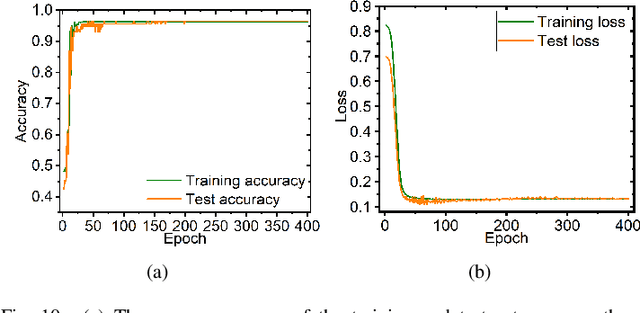

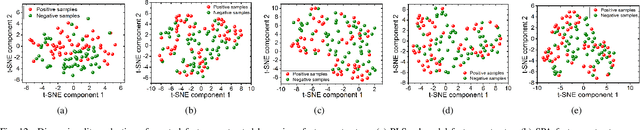
During the early stages of respiratory virus outbreaks, such as severe acute respiratory syndrome coronavirus 2 (SARS-CoV-2), the efficient utilize of limited nasopharyngeal swabs for rapid and accurate screening is crucial for public health. In this study, we present a methodology that integrates attenuated total reflection-Fourier transform infrared spectroscopy (ATR-FTIR) with the adaptive iteratively reweighted penalized least squares (airPLS) preprocessing algorithm and a channel-wise attention-based partial least squares one-dimensional convolutional neural network (PLS-1D-CNN) model, enabling accurate screening of infected individuals within 10 minutes. Two cohorts of nasopharyngeal swab samples, comprising 126 and 112 samples from suspected SARS-CoV-2 Omicron variant cases, were collected at Beijing You'an Hospital for verification. Given that ATR-FTIR spectra are highly sensitive to variations in experimental conditions, which can affect their quality, we propose a biomolecular importance (BMI) evaluation method to assess signal quality across different conditions, validated by comparing BMI with PLS-GBM and PLS-RF results. For the ATR-FTIR signals in cohort 2, which exhibited a higher BMI, airPLS was utilized for signal preprocessing, followed by the application of the channel-wise attention-based PLS-1D-CNN model for screening. The experimental results demonstrate that our model outperforms recently reported methods in the field of respiratory virus spectrum detection, achieving a recognition screening accuracy of 96.48%, a sensitivity of 96.24%, a specificity of 97.14%, an F1-score of 96.12%, and an AUC of 0.99. It meets the World Health Organization (WHO) recommended criteria for an acceptable product: sensitivity of 95.00% or greater and specificity of 97.00% or greater for testing prior SARS-CoV-2 infection in moderate to high volume scenarios.
FACT: Feature Adaptive Continual-learning Tracker for Multiple Object Tracking
Sep 12, 2024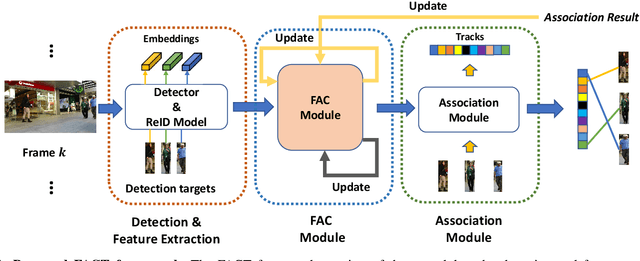

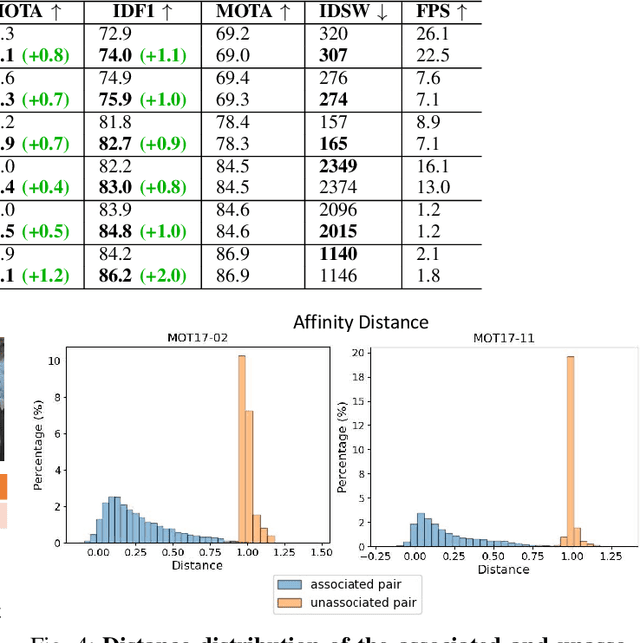
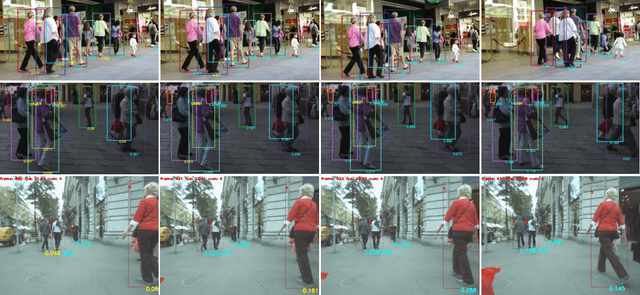
Multiple object tracking (MOT) involves identifying multiple targets and assigning them corresponding IDs within a video sequence, where occlusions are often encountered. Recent methods address occlusions using appearance cues through online learning techniques to improve adaptivity or offline learning techniques to utilize temporal information from videos. However, most existing online learning-based MOT methods are unable to learn from all past tracking information to improve adaptivity on long-term occlusions while maintaining real-time tracking speed. On the other hand, temporal information-based offline learning methods maintain a long-term memory to store past tracking information, but this approach restricts them to use only local past information during tracking. To address these challenges, we propose a new MOT framework called the Feature Adaptive Continual-learning Tracker (FACT), which enables real-time tracking and feature learning for targets by utilizing all past tracking information. We demonstrate that the framework can be integrated with various state-of-the-art feature-based trackers, thereby improving their tracking ability. Specifically, we develop the feature adaptive continual-learning (FAC) module, a neural network that can be trained online to learn features adaptively using all past tracking information during tracking. Moreover, we also introduce a two-stage association module specifically designed for the proposed continual learning-based tracking. Extensive experiment results demonstrate that the proposed method achieves state-of-the-art online tracking performance on MOT17 and MOT20 benchmarks. The code will be released upon acceptance.
Box-Free Model Watermarks Are Prone to Black-Box Removal Attacks
May 16, 2024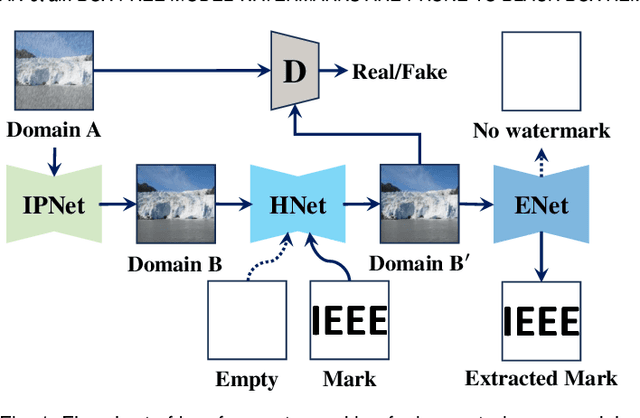
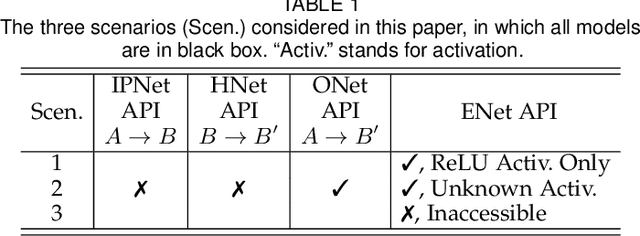

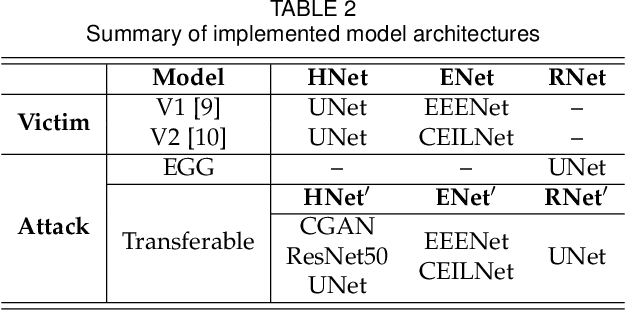
Box-free model watermarking is an emerging technique to safeguard the intellectual property of deep learning models, particularly those for low-level image processing tasks. Existing works have verified and improved its effectiveness in several aspects. However, in this paper, we reveal that box-free model watermarking is prone to removal attacks, even under the real-world threat model such that the protected model and the watermark extractor are in black boxes. Under this setting, we carry out three studies. 1) We develop an extractor-gradient-guided (EGG) remover and show its effectiveness when the extractor uses ReLU activation only. 2) More generally, for an unknown extractor, we leverage adversarial attacks and design the EGG remover based on the estimated gradients. 3) Under the most stringent condition that the extractor is inaccessible, we design a transferable remover based on a set of private proxy models. In all cases, the proposed removers can successfully remove embedded watermarks while preserving the quality of the processed images, and we also demonstrate that the EGG remover can even replace the watermarks. Extensive experimental results verify the effectiveness and generalizability of the proposed attacks, revealing the vulnerabilities of the existing box-free methods and calling for further research.