 Add to Chrome
 Add to Firefox
 Add to Edge
Safety in Self-Evolving LLM Agent Systems: Threats, Amplification, and Case Studies
Jun 22, 2026
Self-evolving LLM agent systems, which autonomously update their model parameters, memory, tools, and architectures, introduce a qualitatively new threat landscape in which adversarial influences become permanently encoded, self-amplify across generations, and propagate through populations without sustained attacker access. We present a systematic security and privacy analysis organized around the Module-Lifecycle Attack Surface (MLAS) matrix, which decomposes the attack surface into five functional modules (Brain, Cognitive Resource, Execution, Self-Design, Collective) $\times$ five lifecycle stages (Bootstrap, Propose, Evaluate, Commit, Serve). Analysis of the resulting 25 cells reveals that 17 face critical threats for which no effective partial mitigation. We identify seven cross-cutting amplification effects that interact synergistically and cannot be addressed by securing individual modules in isolation. Comparative case studies of two open-source frameworks demonstrate that evolution-native design activates $3.5\times$ more attack surface cells and achieves a 100% attack persistence rate (40/40 payloads across all CIA+Privacy categories), while co-located security scanners block only 2.5% of attacks. Our findings establish that self-evolution converts every known attack category from session-bounded to lineage-persistent, gives rise to entirely new attack classes, and renders static defenses structurally inadequate, motivating evolution-aware security frameworks and formal verification for self-modifying systems.

Towards Dynamic Resource Allocation and Client Scheduling in Hierarchical Federated Learning: A Two-Phase Deep Reinforcement Learning Approach
Jun 21, 2024


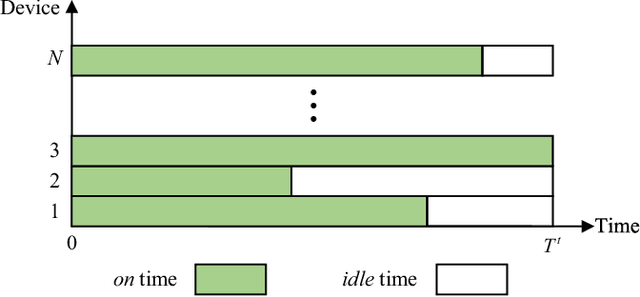
Federated learning (FL) is a viable technique to train a shared machine learning model without sharing data. Hierarchical FL (HFL) system has yet to be studied regrading its multiple levels of energy, computation, communication, and client scheduling, especially when it comes to clients relying on energy harvesting to power their operations. This paper presents a new two-phase deep deterministic policy gradient (DDPG) framework, referred to as ``TP-DDPG'', to balance online the learning delay and model accuracy of an FL process in an energy harvesting-powered HFL system. The key idea is that we divide optimization decisions into two groups, and employ DDPG to learn one group in the first phase, while interpreting the other group as part of the environment to provide rewards for training the DDPG in the second phase. Specifically, the DDPG learns the selection of participating clients, and their CPU configurations and the transmission powers. A new straggler-aware client association and bandwidth allocation (SCABA) algorithm efficiently optimizes the other decisions and evaluates the reward for the DDPG. Experiments demonstrate that with substantially reduced number of learnable parameters, the TP-DDPG can quickly converge to effective polices that can shorten the training time of HFL by 39.4% compared to its benchmarks, when the required test accuracy of HFL is 0.9.