 Add to Chrome
 Add to Firefox
 Add to Edge
Heracles: Bridging Precise Tracking and Generative Synthesis for General Humanoid Control
Mar 31, 2026
Achieving general-purpose humanoid control requires a delicate balance between the precise execution of commanded motions and the flexible, anthropomorphic adaptability needed to recover from unpredictable environmental perturbations. Current general controllers predominantly formulate motion control as a rigid reference-tracking problem. While effective in nominal conditions, these trackers often exhibit brittle, non-anthropomorphic failure modes under severe disturbances, lacking the generative adaptability inherent to human motor control. To overcome this limitation, we propose Heracles, a novel state-conditioned diffusion middleware that bridges precise motion tracking and generative synthesis. Rather than relying on rigid tracking paradigms or complex explicit mode-switching, Heracles operates as an intermediary layer between high-level reference motions and low-level physics trackers. By conditioning on the robot's real-time state, the diffusion model implicitly adapts its behavior: it approximates an identity map when the state closely aligns with the reference, preserving zero-shot tracking fidelity. Conversely, when encountering significant state deviations, it seamlessly transitions into a generative synthesizer to produce natural, anthropomorphic recovery trajectories. Our framework demonstrates that integrating generative priors into the control loop not only significantly enhances robustness against extreme perturbations but also elevates humanoid control from a rigid tracking paradigm to an open-ended, generative general-purpose architecture.

PVBF: A Framework for Mitigating Parameter Variation Imbalance in Online Continual Learning
Feb 25, 2025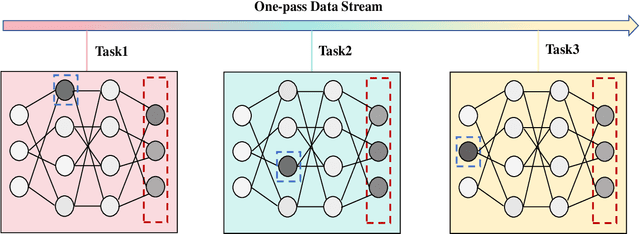
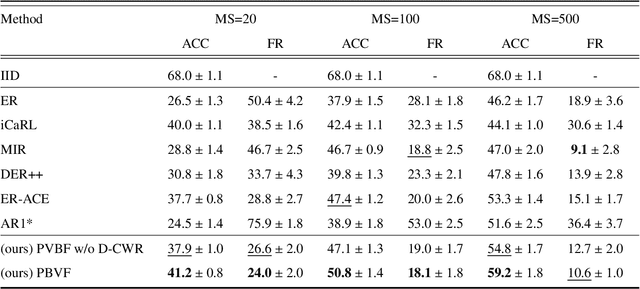
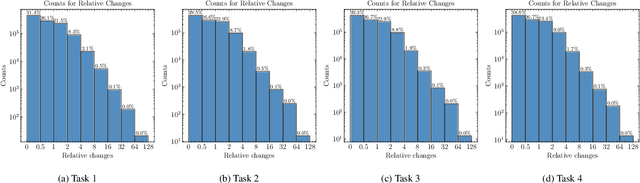
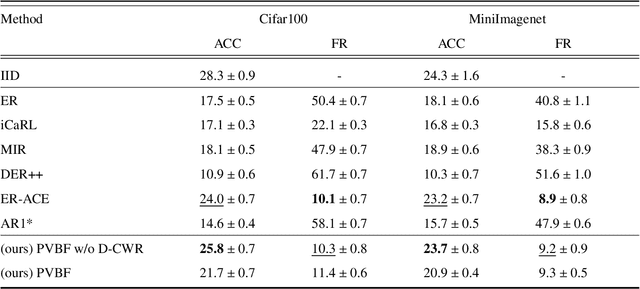
Online continual learning (OCL), which enables AI systems to adaptively learn from non-stationary data streams, is commonly achieved using experience replay (ER)-based methods that retain knowledge by replaying stored past during training. However, these methods face challenges of prediction bias, stemming from deviations in parameter update directions during task transitions. This paper identifies parameter variation imbalance as a critical factor contributing to prediction bias in ER-based OCL. Specifically, using the proposed parameter variation evaluation method, we highlight two types of imbalance: correlation-induced imbalance, where certain parameters are disproportionately updated across tasks, and layer-wise imbalance, where output layer parameters update faster than those in preceding layers. To mitigate the above imbalances, we propose the Parameter Variation Balancing Framework (PVBF), which incorporates: 1) a novel method to compute parameter correlations with previous tasks based on parameter variations, 2) an encourage-and-consolidate (E&C) method utilizing parameter correlations to perform gradient adjustments across all parameters during training, 3) a dual-layer copy weights with reinit (D-CWR) strategy to slowly update output layer parameters for frequently occuring sample categories. Experiments on short and long task sequences demonstrate that PVBF significantly reduces prediction bias and improves OCL performance, achieving up to 47\% higher accuracy compared to existing ER-based methods.