 Add to Chrome
 Add to Firefox
 Add to Edge
LoRM: Learning the Language of Rotating Machinery for Self-Supervised Condition Monitoring
Apr 07, 2026
We present LoRM (Language of Rotating Machinery), a self-supervised framework for multi-modal rotating-machinery signal understanding and real-time condition monitoring. LoRM is built on the idea that rotating-machinery signals can be viewed as a machine language: local signals can be tokenised into discrete symbolic units, and their future evolution can be predicted from observed multi-sensor context. Unlike conventional signal-processing methods that rely on hand-crafted transforms and features, LoRM reformulates multi-modal sensor data as a token-based sequence-prediction problem. For each data window, the observed context segment is retained in continuous form, while the future target segment of each sensing channel is quantised into a discrete token. Then, efficient knowledge transfer is achieved by partially fine-tuning a general-purpose pre-trained language model on industrial signals, avoiding the need to train a large model from scratch. Finally, condition monitoring is performed by tracking token-prediction errors as a health indicator, where increasing errors indicate degradation. In-situ tool condition monitoring (TCM) experiments demonstrate stable real-time tracking and strong cross-tool generalisation, showing that LoRM provides a practical bridge between language modelling and industrial signal analysis. The source code is publicly available at https://github.com/Q159753258/LormPHM.

UnderwaterVLA: Dual-brain Vision-Language-Action architecture for Autonomous Underwater Navigation
Sep 26, 2025This paper presents UnderwaterVLA, a novel framework for autonomous underwater navigation that integrates multimodal foundation models with embodied intelligence systems. Underwater operations remain difficult due to hydrodynamic disturbances, limited communication bandwidth, and degraded sensing in turbid waters. To address these challenges, we introduce three innovations. First, a dual-brain architecture decouples high-level mission reasoning from low-level reactive control, enabling robust operation under communication and computational constraints. Second, we apply Vision-Language-Action(VLA) models to underwater robotics for the first time, incorporating structured chain-of-thought reasoning for interpretable decision-making. Third, a hydrodynamics-informed Model Predictive Control(MPC) scheme compensates for fluid effects in real time without costly task-specific training. Experimental results in field tests show that UnderwaterVLA reduces navigation errors in degraded visual conditions while maintaining higher task completion by 19% to 27% over baseline. By minimizing reliance on underwater-specific training data and improving adaptability across environments, UnderwaterVLA provides a scalable and cost-effective path toward the next generation of intelligent AUVs.
Inverse Design with Dynamic Mode Decomposition
Feb 13, 2025We introduce a computationally efficient method for the automation of inverse design in science and engineering. Based on simple least-square regression, the underlying dynamic mode decomposition algorithm can be used to construct a low-rank subspace spanning multiple experiments in parameter space. The proposed inverse design dynamic mode composition (ID-DMD) algorithm leverages the computed low-dimensional subspace to enable fast digital design and optimization on laptop-level computing, including the potential to prescribe the dynamics themselves. Moreover, the method is robust to noise, physically interpretable, and can provide uncertainty quantification metrics. The architecture can also efficiently scale to large-scale design problems using randomized algorithms in the ID-DMD. The simplicity of the method and its implementation are highly attractive in practice, and the ID-DMD has been demonstrated to be an order of magnitude more accurate than competing methods while simultaneously being 3-5 orders faster on challenging engineering design problems ranging from structural vibrations to fluid dynamics. Due to its speed, robustness, interpretability, and ease-of-use, ID-DMD in comparison with other leading machine learning methods represents a significant advancement in data-driven methods for inverse design and optimization, promising a paradigm shift in how to approach inverse design in practice.
SCKansformer: Fine-Grained Classification of Bone Marrow Cells via Kansformer Backbone and Hierarchical Attention Mechanisms
Jun 14, 2024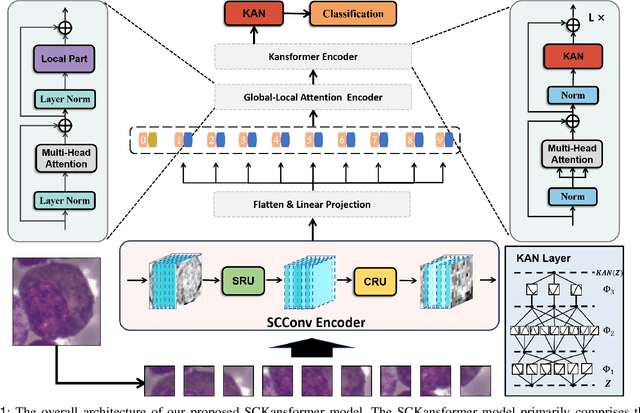
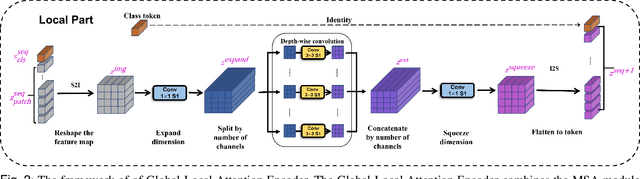

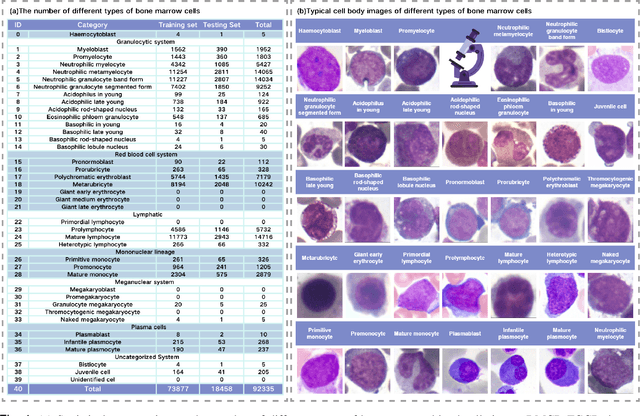
The incidence and mortality rates of malignant tumors, such as acute leukemia, have risen significantly. Clinically, hospitals rely on cytological examination of peripheral blood and bone marrow smears to diagnose malignant tumors, with accurate blood cell counting being crucial. Existing automated methods face challenges such as low feature expression capability, poor interpretability, and redundant feature extraction when processing high-dimensional microimage data. We propose a novel fine-grained classification model, SCKansformer, for bone marrow blood cells, which addresses these challenges and enhances classification accuracy and efficiency. The model integrates the Kansformer Encoder, SCConv Encoder, and Global-Local Attention Encoder. The Kansformer Encoder replaces the traditional MLP layer with the KAN, improving nonlinear feature representation and interpretability. The SCConv Encoder, with its Spatial and Channel Reconstruction Units, enhances feature representation and reduces redundancy. The Global-Local Attention Encoder combines Multi-head Self-Attention with a Local Part module to capture both global and local features. We validated our model using the Bone Marrow Blood Cell Fine-Grained Classification Dataset (BMCD-FGCD), comprising over 10,000 samples and nearly 40 classifications, developed with a partner hospital. Comparative experiments on our private dataset, as well as the publicly available PBC and ALL-IDB datasets, demonstrate that SCKansformer outperforms both typical and advanced microcell classification methods across all datasets. Our source code and private BMCD-FGCD dataset are available at https://github.com/JustlfC03/SCKansformer.