 Add to Chrome
 Add to Firefox
 Add to Edge
Inter-Stance: A Dyadic Multimodal Corpus for Conversational Stance Analysis
Apr 24, 2026
Social interactions dominate our perceptions of the world and shape our daily behavior by attaching social meaning to acts as simple and spontaneous as gestures, facial expressions, voice, and speech. People mimic and otherwise respond to each other's postures, facial expressions, mannerisms, and other verbal and nonverbal behavior, and form appraisals or evaluations in the process. Yet, no publicly-available dataset includes multimodal recordings and self-report measures of multiple persons in social interaction. Dyadic recordings and annotation are lacking. We present a new data corpus of multimodal dyadic interaction (45 dyads, 90 persons) that includes synchronized multi-modality behavior (2D face video, 3D face geometry, thermal spectrum dynamics, voice and speech behavior, physiology (PPG, EDA, heart-rate, blood pressure, and respiration), and self-reported affect of all participants in a communicative interaction scenario. Two types of dyads are included: persons with shared past history and strangers. Annotations include social signals, agreement, disagreement, and neutral stance. With a potent emotion induction, these multimodal data will enable novel modeling of multimodal interpersonal behavior. We present extensive experiments to evaluate multimodal dyadic communication of dyads with and without interpersonal history, and their affect. This new database will make multimodal modeling of social interaction never possible before. The dataset includes 20TB of multimodal data to share with the research community.

MLatom 3: Platform for machine learning-enhanced computational chemistry simulations and workflows
Oct 31, 2023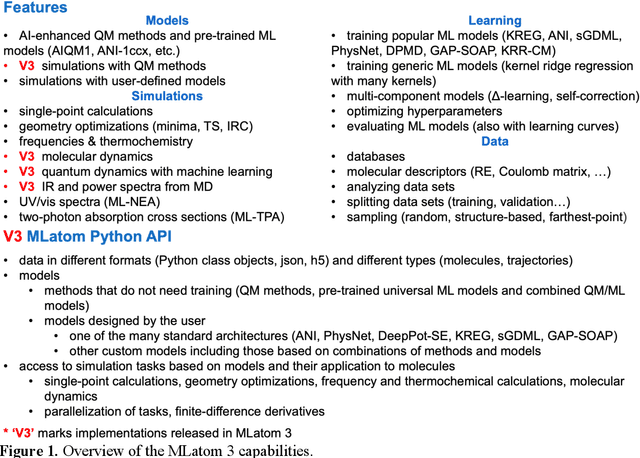
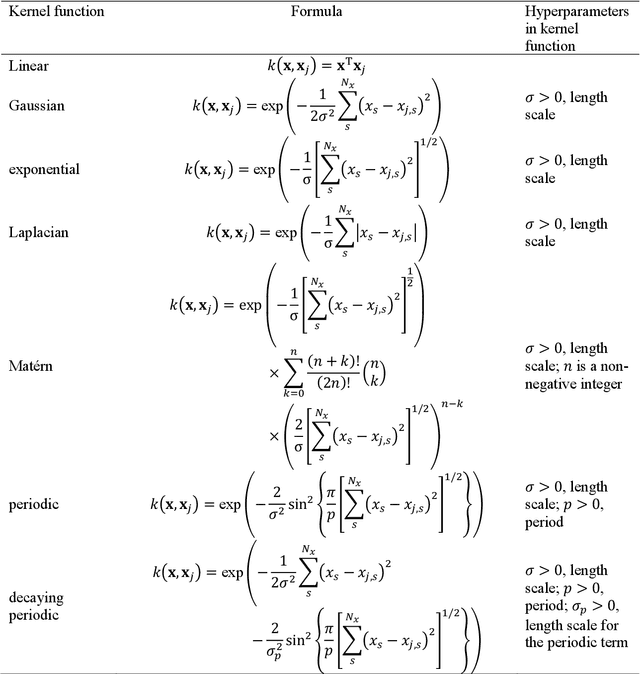
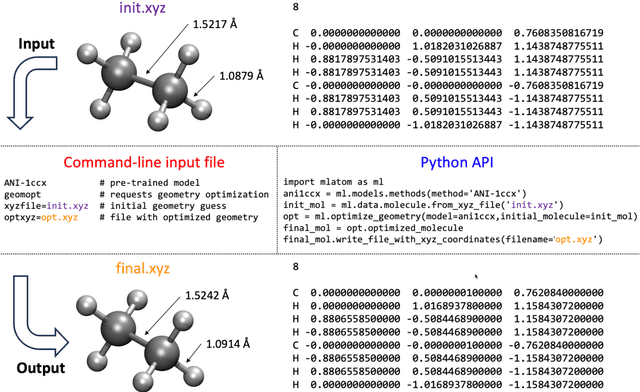
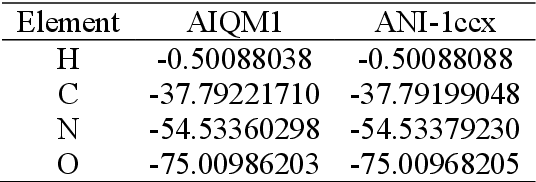
Machine learning (ML) is increasingly becoming a common tool in computational chemistry. At the same time, the rapid development of ML methods requires a flexible software framework for designing custom workflows. MLatom 3 is a program package designed to leverage the power of ML to enhance typical computational chemistry simulations and to create complex workflows. This open-source package provides plenty of choice to the users who can run simulations with the command line options, input files, or with scripts using MLatom as a Python package, both on their computers and on the online XACS cloud computing at XACScloud.com. Computational chemists can calculate energies and thermochemical properties, optimize geometries, run molecular and quantum dynamics, and simulate (ro)vibrational, one-photon UV/vis absorption, and two-photon absorption spectra with ML, quantum mechanical, and combined models. The users can choose from an extensive library of methods containing pre-trained ML models and quantum mechanical approximations such as AIQM1 approaching coupled-cluster accuracy. The developers can build their own models using various ML algorithms. The great flexibility of MLatom is largely due to the extensive use of the interfaces to many state-of-the-art software packages and libraries.
Potential Advantages of Peak Picking Multi-Voltage Threshold Digitizer in Energy Determination in Radiation Measurement
Mar 08, 2021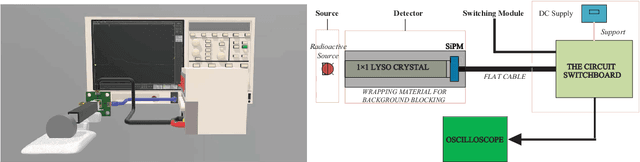
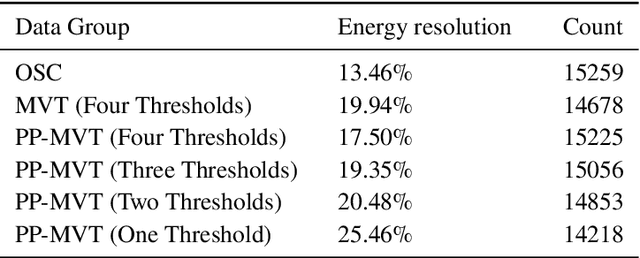
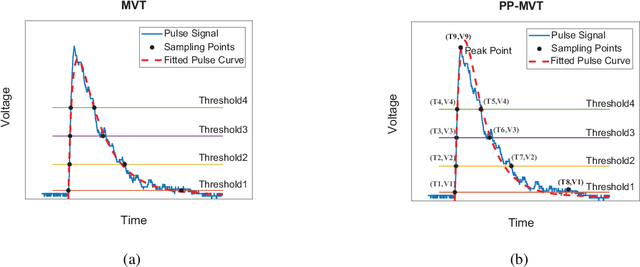
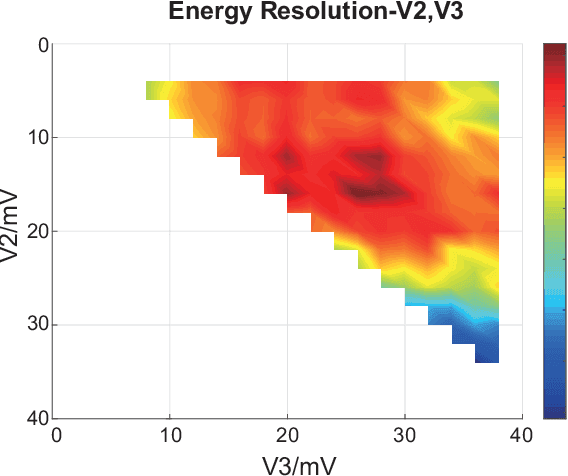
The Multi-voltage Threshold (MVT) method, which samples the signal by certain reference voltages, has been well developed as being adopted in pre-clinical and clinical digital positron emission tomography(PET) system. To improve its energy measurement performance, we propose a Peak Picking MVT(PP-MVT) Digitizer in this paper. Firstly, a sampled Peak Point(the highest point in pulse signal), which carries the values of amplitude feature voltage and amplitude arriving time, is added to traditional MVT with a simple peak sampling circuit. Secondly, an amplitude deviation statistical analysis, which compares the energy deviation of various reconstruction models, is used to select adaptive reconstruction models for signal pulses with different amplitudes. After processing 30,000 randomly-chosen pulses sampled by the oscilloscope with a 22Na point source, our method achieves an energy resolution of 17.50% within a 450-650 KeV energy window, which is 2.44% better than the result of traditional MVT with same thresholds; and we get a count number at 15225 in the same energy window while the result of MVT is at 14678. When the PP-MVT involves less thresholds than traditional MVT, the advantages of better energy resolution and larger count number can still be maintained, which shows the robustness and the flexibility of PP-MVT Digitizer. This improved method indicates that adding feature peak information could improve the performance on signal sampling and reconstruction, which canbe proved by the better performance in energy determination in radiation measurement.