 Add to Chrome
 Add to Firefox
 Add to Edge
D$^3$: Dynamic Directional Graph-Constrained Data Scheduling for LLM Training
May 29, 2026
Training data plays a central role in large language models (LLMs) optimization, motivating extensive research on data scheduling strategies. Most existing approaches concentrate on adjusting the overall data distribution but neglect the underlying interactions between samples during training. However, we argue that such interactions cannot be overlooked, as real-world data samples frequently exhibit directional influences on each other, making the training order crucial. Intuitively, we can prioritize train-units with greater influence to improves learning efficiency. In this work, we propose $D^3$, a Dynamic Directional graph-constrained Data scheduling framework. $D^3$ formulates the complex interactions among train-units as a dynamic influence graph, where edges represent loss-based dependencies. It then solves a constrained optimization problem over this graph to derive the training order, which ensures that the data sequence respects the evolving information flow throughout training. Our approach is theoretically motivated and yields consistent improvements over existing data scheduling methods across both pre-training and post-training phases. Furthermore, for scalability, $D^3$ also employs an efficient approximation algorithm that keeps the additional computational overhead within a manageable range. For future research, the code is available at https://github.com/xuyj233/D3.

Towards Efficient LLMs Annealing with Principled Sample Selection
May 29, 2026The annealing phase is a pivotal convergence stage in LLM pre-training that ultimately determines final model quality. However, effectively selecting training data during this phase remains a key challenge. Current strategies rely on empirical heuristics, such as domain filtering or context extension, which lack a principled grounding in optimization theory. In this work, we characterize the annealing phase through the lens of the loss landscape's spectral geometry. We argue that optimal convergence requires gradient updates to satisfy heterogeneous constraints across different eigen-directions. Building on this insight, we formulate data selection as a problem of satisfying these directional constraints. To this end, we propose DiReCT (Directionally-Restrained Constrained Training), a novel framework that reformulates sample selection in the annealing stage as a constrained optimization problem. By imposing explicit directional constraints on per-sample gradients based on the spectral properties of the Hessian, DiReCT identifies samples that align with the optimal curvature-aware descent path. Extensive experiments across various model scales demonstrate that DiReCT consistently achieves state-of-the-art performance. For future research, code is available at https://github.com/xuyj233/Direct.
Rethinking Data Mixing from the Perspective of Large Language Models
Apr 09, 2026Data mixing strategy is essential for large language model (LLM) training. Empirical evidence shows that inappropriate strategies can significantly reduce generalization. Although recent methods have improved empirical performance, several fundamental questions remain open: what constitutes a domain, whether human and model perceptions of domains are aligned, and how domain weighting influences generalization. We address these questions by establishing formal connections between gradient dynamics and domain distributions, offering a theoretical framework that clarifies the role of domains in training dynamics. Building on this analysis, we introduce DoGraph, a reweighting framework that formulates data scheduling as a graph-constrained optimization problem. Extensive experiments on GPT-2 models of varying scales demonstrate that DoGraph consistently achieves competitive performance.
HGAN-SDEs: Learning Neural Stochastic Differential Equations with Hermite-Guided Adversarial Training
Dec 23, 2025Neural Stochastic Differential Equations (Neural SDEs) provide a principled framework for modeling continuous-time stochastic processes and have been widely adopted in fields ranging from physics to finance. Recent advances suggest that Generative Adversarial Networks (GANs) offer a promising solution to learning the complex path distributions induced by SDEs. However, a critical bottleneck lies in designing a discriminator that faithfully captures temporal dependencies while remaining computationally efficient. Prior works have explored Neural Controlled Differential Equations (CDEs) as discriminators due to their ability to model continuous-time dynamics, but such architectures suffer from high computational costs and exacerbate the instability of adversarial training. To address these limitations, we introduce HGAN-SDEs, a novel GAN-based framework that leverages Neural Hermite functions to construct a structured and efficient discriminator. Hermite functions provide an expressive yet lightweight basis for approximating path-level dynamics, enabling both reduced runtime complexity and improved training stability. We establish the universal approximation property of our framework for a broad class of SDE-driven distributions and theoretically characterize its convergence behavior. Extensive empirical evaluations on synthetic and real-world systems demonstrate that HGAN-SDEs achieve superior sample quality and learning efficiency compared to existing generative models for SDEs
CoCo-Bench: A Comprehensive Code Benchmark For Multi-task Large Language Model Evaluation
Apr 29, 2025Large language models (LLMs) play a crucial role in software engineering, excelling in tasks like code generation and maintenance. However, existing benchmarks are often narrow in scope, focusing on a specific task and lack a comprehensive evaluation framework that reflects real-world applications. To address these gaps, we introduce CoCo-Bench (Comprehensive Code Benchmark), designed to evaluate LLMs across four critical dimensions: code understanding, code generation, code modification, and code review. These dimensions capture essential developer needs, ensuring a more systematic and representative evaluation. CoCo-Bench includes multiple programming languages and varying task difficulties, with rigorous manual review to ensure data quality and accuracy. Empirical results show that CoCo-Bench aligns with existing benchmarks while uncovering significant variations in model performance, effectively highlighting strengths and weaknesses. By offering a holistic and objective evaluation, CoCo-Bench provides valuable insights to guide future research and technological advancements in code-oriented LLMs, establishing a reliable benchmark for the field.
PLUTUS: A Well Pre-trained Large Unified Transformer can Unveil Financial Time Series Regularities
Aug 20, 2024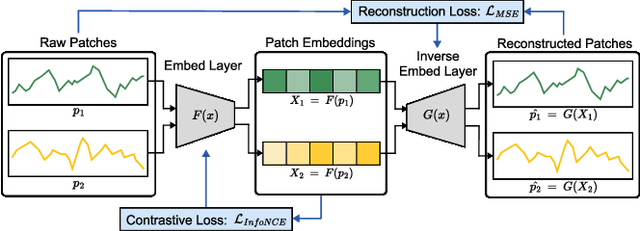
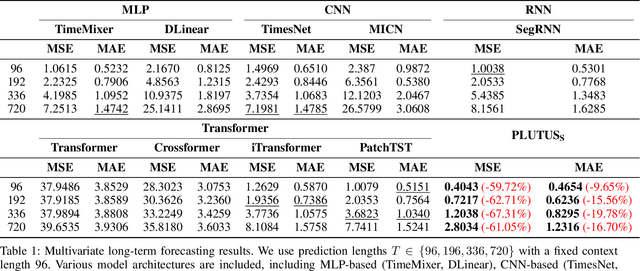
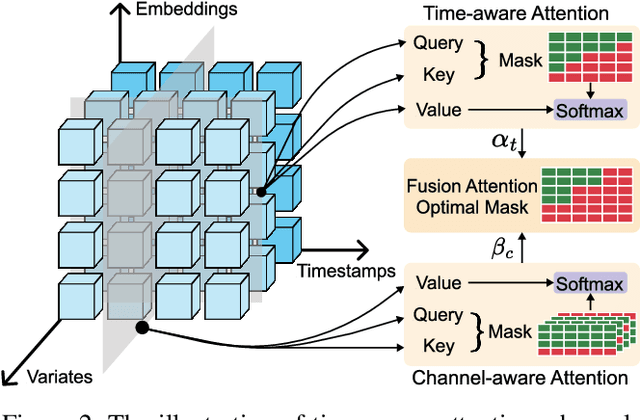
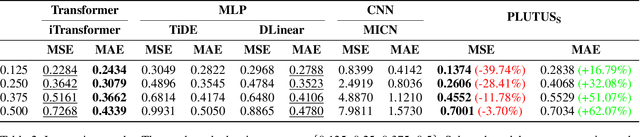
Financial time series modeling is crucial for understanding and predicting market behaviors but faces challenges such as non-linearity, non-stationarity, and high noise levels. Traditional models struggle to capture complex patterns due to these issues, compounded by limitations in computational resources and model capacity. Inspired by the success of large language models in NLP, we introduce $\textbf{PLUTUS}$, a $\textbf{P}$re-trained $\textbf{L}$arge $\textbf{U}$nified $\textbf{T}$ransformer-based model that $\textbf{U}$nveils regularities in financial time $\textbf{S}$eries. PLUTUS uses an invertible embedding module with contrastive learning and autoencoder techniques to create an approximate one-to-one mapping between raw data and patch embeddings. TimeFormer, an attention based architecture, forms the core of PLUTUS, effectively modeling high-noise time series. We incorporate a novel attention mechanisms to capture features across both variable and temporal dimensions. PLUTUS is pre-trained on an unprecedented dataset of 100 billion observations, designed to thrive in noisy financial environments. To our knowledge, PLUTUS is the first open-source, large-scale, pre-trained financial time series model with over one billion parameters. It achieves state-of-the-art performance in various tasks, demonstrating strong transferability and establishing a robust foundational model for finance. Our research provides technical guidance for pre-training financial time series data, setting a new standard in the field.