 Add to Chrome
 Add to Firefox
 Add to Edge
Capability-Aware Heterogeneous Control Barrier Functions for Decentralized Multi-Robot Safe Navigation
Apr 14, 2026
Safe navigation for multi-robot systems requires enforcing safety without sacrificing task efficiency under decentralized decision-making. Existing decentralized methods often assume robot homogeneity, making shared safety requirements non-uniformly interpreted across heterogeneous agents with structurally different dynamics, which could lead to avoidance obligations not physically realizable for some robots and thus cause safety violations or deadlock. In this paper, we propose Capability-Aware Heterogeneous Control Barrier Function (CA-HCBF), a decentralized framework for consistent safety enforcement and capability-aware coordination in heterogeneous robot teams. We derive a canonical second-order control-affine representation that unifies holonomic and nonholonomic robots under acceleration-level control via canonical transformation and backstepping, preserving forward invariance of the safe set while avoiding relative-degree mismatch across heterogeneous dynamics. We further introduce a support-function-based directional capability metric that quantifies each robot's ability to follow its motion intent, deriving a pairwise responsibility allocation that distributes the safety burden proportionally to each robot's motion capability. A feasibility-aware clipping mechanism further constrains the allocation to each agent's physically achievable range, mitigating infeasible constraint assignments common in dense decentralized CBF settings. Simulations with up to 30 heterogeneous robots and a physical multi-robot demonstration show improved safety and task efficiency over baselines, validating real-world applicability across robots with distinct kinematic constraints.

PC-Diffuser: Path-Consistent Capsule CBF Safety Filtering for Diffusion-Based Trajectory Planner
Mar 11, 2026Autonomous driving in complex traffic requires planners that generalize beyond hand-crafted rules, motivating data-driven approaches that learn behavior from expert demonstrations. Diffusion-based trajectory planners have recently shown strong closed-loop performance by iteratively denoising a full-horizon plan, but they remain difficult to certify and can fail catastrophically in rare or out-of-distribution scenarios. To address this challenge, we present PC-Diffuser, a safety augmentation framework that embeds a certifiable, path-consistent barrier-function structure directly into the denoising loop of diffusion planning. The key idea is to make safety an intrinsic part of trajectory generation rather than a post-hoc fix: we enforce forward invariance along the rollout while preserving the diffusion model's intended path geometry. Specifically, PC-Diffuser (i) evaluates collision risk using a capsule-distance barrier function that better reflects vehicle geometry and reduces unnecessary conservativeness, (ii) converts denoised waypoints into dynamically feasible motion under a kinematic bicycle model, and (iii) applies a path-consistent safety filter that eliminates residual constraint violations without geometric distortion, so the corrected plan remains close to the learned distribution. By injecting these safety-consistent corrections at every denoising step and feeding the refined trajectory back into the diffusion process, PC-Diffuser enables iterative, context-aware safeguarding instead of post-hoc repair...
Gaussian Mixture-Based Inverse Perception Contract for Uncertainty-Aware Robot Navigation
Mar 04, 2026Reliable navigation in cluttered environments requires perception outputs that are not only accurate but also equipped with uncertainty sets suitable for safe control. An inverse perception contract (IPC) provides such a connection by mapping perceptual estimates to sets that contain the ground truth with high confidence. Existing IPC formulations, however, instantiate uncertainty as a single ellipsoidal set and rely on deterministic trust scores to guide robot motion. Such a representation cannot capture the multi-modal and irregular structure of fine-grained perception errors, often resulting in over-conservative sets and degraded navigation performance. In this work, we introduce Gaussian Mixture-based Inverse Perception Contract (GM-IPC), which extends IPC to represent uncertainty with unions of ellipsoidal confidence sets derived from Gaussian mixture models. This design moves beyond deterministic single-set abstractions, enabling fine-grained, multi-modal, and non-convex error structures to be captured with formal guarantees. A learning framework is presented that trains GM-IPC to account for probabilistic inclusion, distribution matching, and empty-space penalties, ensuring both validity and compactness of the predicted sets. We further show that the resulting uncertainty characterizations can be leveraged in downstream planning frameworks for real-time safe navigation, enabling less conservative and more adaptive robot motion while preserving safety in a probabilistic manner.
Multimodal Covariance Steering in Belief Space with Active Probing and Influence for Autonomous Driving
Feb 16, 2026Autonomous driving in complex traffic requires reasoning under uncertainty. Common approaches rely on prediction-based planning or risk-aware control, but these are typically treated in isolation, limiting their ability to capture the coupled nature of action and inference in interactive settings. This gap becomes especially critical in uncertain scenarios, where simply reacting to predictions can lead to unsafe maneuvers or overly conservative behavior. Our central insight is that safe interaction requires not only estimating human behavior but also shaping it when ambiguity poses risks. To this end, we introduce a hierarchical belief model that structures human behavior across coarse discrete intents and fine motion modes, updated via Bayesian inference for interpretable multi-resolution reasoning. On top of this, we develop an active probing strategy that identifies when multimodal ambiguity in human predictions may compromise safety and plans disambiguating actions that both reveal intent and gently steer human decisions toward safer outcomes. Finally, a runtime risk-evaluation layer based on Conditional Value-at-Risk (CVaR) ensures that all probing actions remain within human risk tolerance during influence. Our simulations in lane-merging and unsignaled intersection scenarios demonstrate that our approach achieves higher success rates and shorter completion times compared to existing methods. These results highlight the benefit of coupling belief inference, probing, and risk monitoring, yielding a principled and interpretable framework for planning under uncertainty.
Modular Safety Guardrails Are Necessary for Foundation-Model-Enabled Robots in the Real World
Feb 03, 2026The integration of foundation models (FMs) into robotics has accelerated real-world deployment, while introducing new safety challenges arising from open-ended semantic reasoning and embodied physical action. These challenges require safety notions beyond physical constraint satisfaction. In this paper, we characterize FM-enabled robot safety along three dimensions: action safety (physical feasibility and constraint compliance), decision safety (semantic and contextual appropriateness), and human-centered safety (conformance to human intent, norms, and expectations). We argue that existing approaches, including static verification, monolithic controllers, and end-to-end learned policies, are insufficient in settings where tasks, environments, and human expectations are open-ended, long-tailed, and subject to adaptation over time. To address this gap, we propose modular safety guardrails, consisting of monitoring (evaluation) and intervention layers, as an architectural foundation for comprehensive safety across the autonomy stack. Beyond modularity, we highlight possible cross-layer co-design opportunities through representation alignment and conservatism allocation to enable faster, less conservative, and more effective safety enforcement. We call on the community to explore richer guardrail modules and principled co-design strategies to advance safe real-world physical AI deployment.
Learning complete and explainable visual representations from itemized text supervision
Dec 11, 2025Training vision models with language supervision enables general and transferable representations. However, many visual domains, especially non-object-centric domains such as medical imaging and remote sensing, contain itemized text annotations: multiple text items describing distinct and semantically independent findings within a single image. Such supervision differs from standard multi-caption supervision, where captions are redundant or highly overlapping. Here, we introduce ItemizedCLIP, a framework for learning complete and explainable visual representations from itemized text supervision. ItemizedCLIP employs a cross-attention module to produce text item-conditioned visual embeddings and a set of tailored objectives that jointly enforce item independence (distinct regions for distinct items) and representation completeness (coverage of all items). Across four domains with naturally itemized text supervision (brain MRI, head CT, chest CT, remote sensing) and one additional synthetically itemized dataset, ItemizedCLIP achieves substantial improvements in zero-shot performance and fine-grained interpretability over baselines. The resulting ItemizedCLIP representations are semantically grounded, item-differentiable, complete, and visually interpretable. Our code is available at https://github.com/MLNeurosurg/ItemizedCLIP.
Towards Scalable Language-Image Pre-training for 3D Medical Imaging
May 28, 2025Language-image pre-training has demonstrated strong performance in 2D medical imaging, but its success in 3D modalities such as CT and MRI remains limited due to the high computational demands of volumetric data, which pose a significant barrier to training on large-scale, uncurated clinical studies. In this study, we introduce Hierarchical attention for Language-Image Pre-training (HLIP), a scalable pre-training framework for 3D medical imaging. HLIP adopts a lightweight hierarchical attention mechanism inspired by the natural hierarchy of radiology data: slice, scan, and study. This mechanism exhibits strong generalizability, e.g., +4.3% macro AUC on the Rad-ChestCT benchmark when pre-trained on CT-RATE. Moreover, the computational efficiency of HLIP enables direct training on uncurated datasets. Trained on 220K patients with 3.13 million scans for brain MRI and 240K patients with 1.44 million scans for head CT, HLIP achieves state-of-the-art performance, e.g., +32.4% balanced ACC on the proposed publicly available brain MRI benchmark Pub-Brain-5; +1.4% and +6.9% macro AUC on head CT benchmarks RSNA and CQ500, respectively. These results demonstrate that, with HLIP, directly pre-training on uncurated clinical datasets is a scalable and effective direction for language-image pre-training in 3D medical imaging. The code is available at https://github.com/Zch0414/hlip
Integrating Online Learning and Connectivity Maintenance for Communication-Aware Multi-Robot Coordination
Oct 08, 2024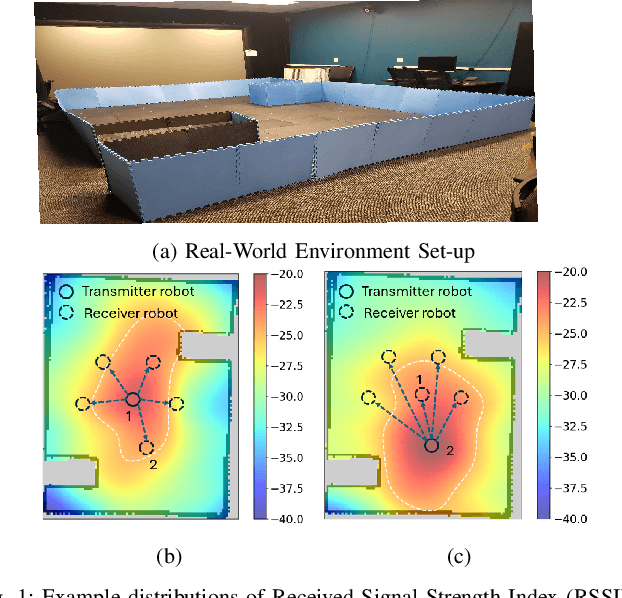
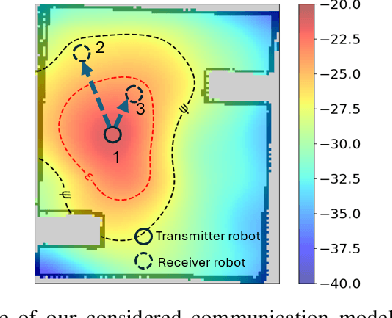
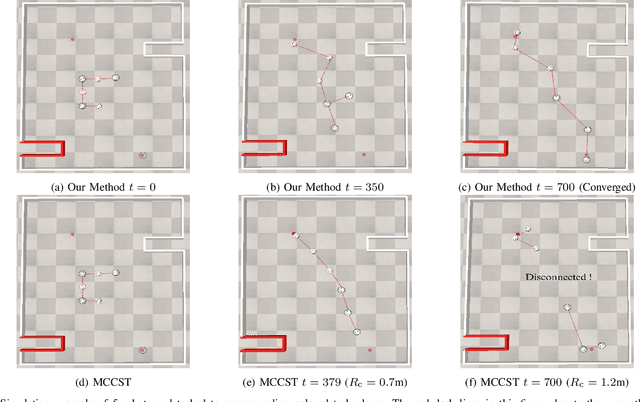
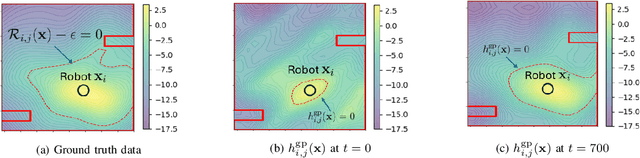
This paper proposes a novel data-driven control strategy for maintaining connectivity in networked multi-robot systems. Existing approaches often rely on a pre-determined communication model specifying whether pairwise robots can communicate given their relative distance to guide the connectivity-aware control design, which may not capture real-world communication conditions. To relax that assumption, we present the concept of Data-driven Connectivity Barrier Certificates, which utilize Control Barrier Functions (CBF) and Gaussian Processes (GP) to characterize the admissible control space for pairwise robots based on communication performance observed online. This allows robots to maintain a satisfying level of pairwise communication quality (measured by the received signal strength) while in motion. Then we propose a Data-driven Connectivity Maintenance (DCM) algorithm that combines (1) online learning of the communication signal strength and (2) a bi-level optimization-based control framework for the robot team to enforce global connectivity of the realistic multi-robot communication graph and minimally deviate from their task-related motions. We provide theoretical proofs to justify the properties of our algorithm and demonstrate its effectiveness through simulations with up to 20 robots.
Courteous MPC for Autonomous Driving with CBF-inspired Risk Assessment
Aug 23, 2024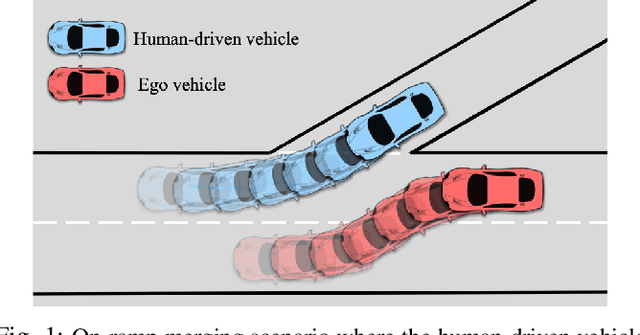
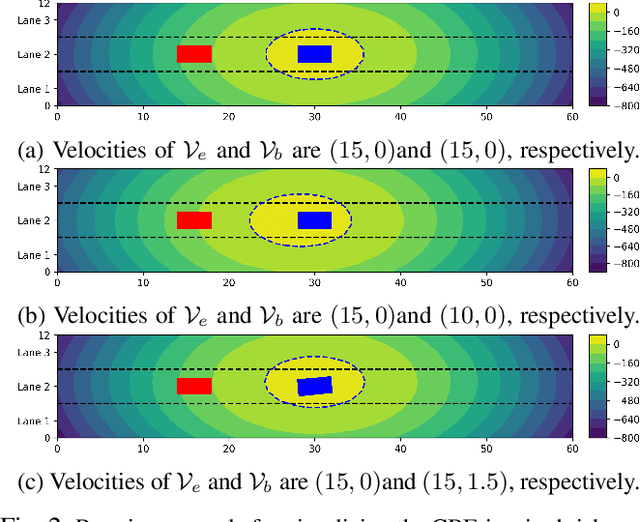
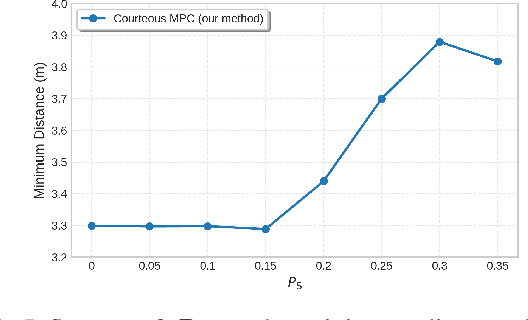
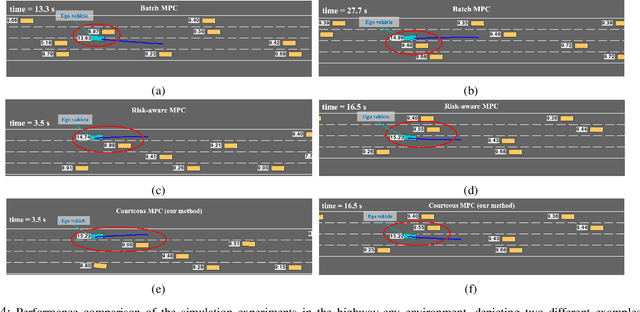
With more autonomous vehicles (AVs) sharing roadways with human-driven vehicles (HVs), ensuring safe and courteous maneuvers that respect HVs' behavior becomes increasingly important. To promote both safety and courtesy in AV's behavior, an extension of Control Barrier Functions (CBFs)-inspired risk evaluation framework is proposed in this paper by considering both noisy observed positions and velocities of surrounding vehicles. The perceived risk by the ego vehicle can be visualized as a risk map that reflects the understanding of the surrounding environment and thus shows the potential for facilitating safe and courteous driving. By incorporating the risk evaluation framework into the Model Predictive Control (MPC) scheme, we propose a Courteous MPC for ego AV to generate courteous behaviors that 1) reduce the overall risk imposed on other vehicles and 2) respect the hard safety constraints and the original objective for efficiency. We demonstrate the performance of the proposed Courteous MPC via theoretical analysis and simulation experiments.
Decentralized Multi-Robot Line-of-Sight Connectivity Maintenance under Uncertainty
Jun 18, 2024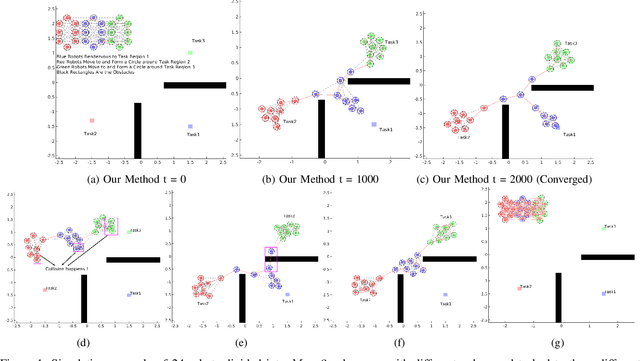
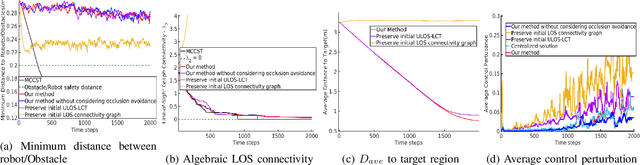
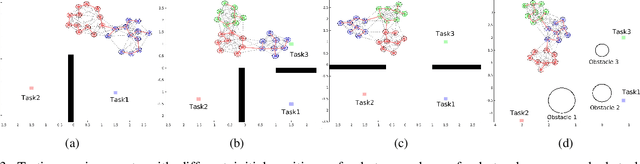
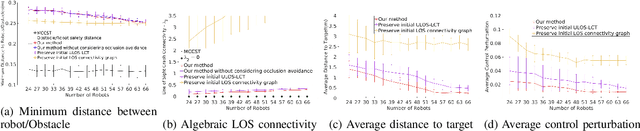
In this paper, we propose a novel decentralized control method to maintain Line-of-Sight connectivity for multi-robot networks in the presence of Guassian-distributed localization uncertainty. In contrast to most existing work that assumes perfect positional information about robots or enforces overly restrictive rigid formation against uncertainty, our method enables robots to preserve Line-of-Sight connectivity with high probability under unbounded Gaussian-like positional noises while remaining minimally intrusive to the original robots' tasks. This is achieved by a motion coordination framework that jointly optimizes the set of existing Line-of-Sight edges to preserve and control revisions to the nominal task-related controllers, subject to the safety constraints and the corresponding composition of uncertainty-aware Line-of-Sight control constraints. Such compositional control constraints, expressed by our novel notion of probabilistic Line-of-Sight connectivity barrier certificates (PrLOS-CBC) for pairwise robots using control barrier functions, explicitly characterize the deterministic admissible control space for the two robots. The resulting motion ensures Line-of-Sight connectedness for the robot team with high probability. Furthermore, we propose a fully decentralized algorithm that decomposes the motion coordination framework by interleaving the composite constraint specification and solving for the resulting optimization-based controllers. The optimality of our approach is justified by the theoretical proofs. Simulation and real-world experiments results are given to demonstrate the effectiveness of our method.