 Add to Chrome
 Add to Firefox
 Add to Edge
Can LLMs Time Travel? Enhancing Temporal Consistency in Legal Agentic Search through Reinforcement Learning
May 25, 2026
While large language models (LLMs) augmented with agentic search capabilities show promise for legal reasoning, they overlook a fundamental constraint that applicable law must match the temporal context of each case, as retroactive application of statutes violates core legal principles and leads to erroneous conclusions. Our observations reveal that current legal LLMs suffer from temporal bias anchored to their training cutoff, while search agents rarely incorporate temporal constraints into queries, and that web search alone cannot provide the precise statute and precedent citations that legal reasoning demands. To address these challenges, we propose LegalSearch-R1, an end-to-end reinforcement learning framework that pairs local statute RAG for precise article matching with online web search for broader legal knowledge, trained on temporally-indexed data spanning multiple amendment periods to enforce temporal consistency. Extensive experiments on our benchmark covering 13 legal tasks demonstrate that our 7B-parameter agent outperforms state-of-the-art deep research frameworks and specialized legal LLMs by 12.9% to 29.8%, surpasses baselines by 57.7% to 80.3% on temporal consistency, and exhibits robust out-of-domain generalization. The code and data are available at https://github.com/AlexFanw/LegalSearch-R1.

Detection of AI Deepfake and Fraud in Online Payments Using GAN-Based Models
Jan 13, 2025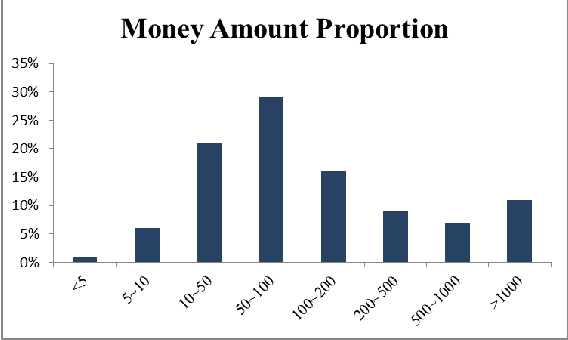
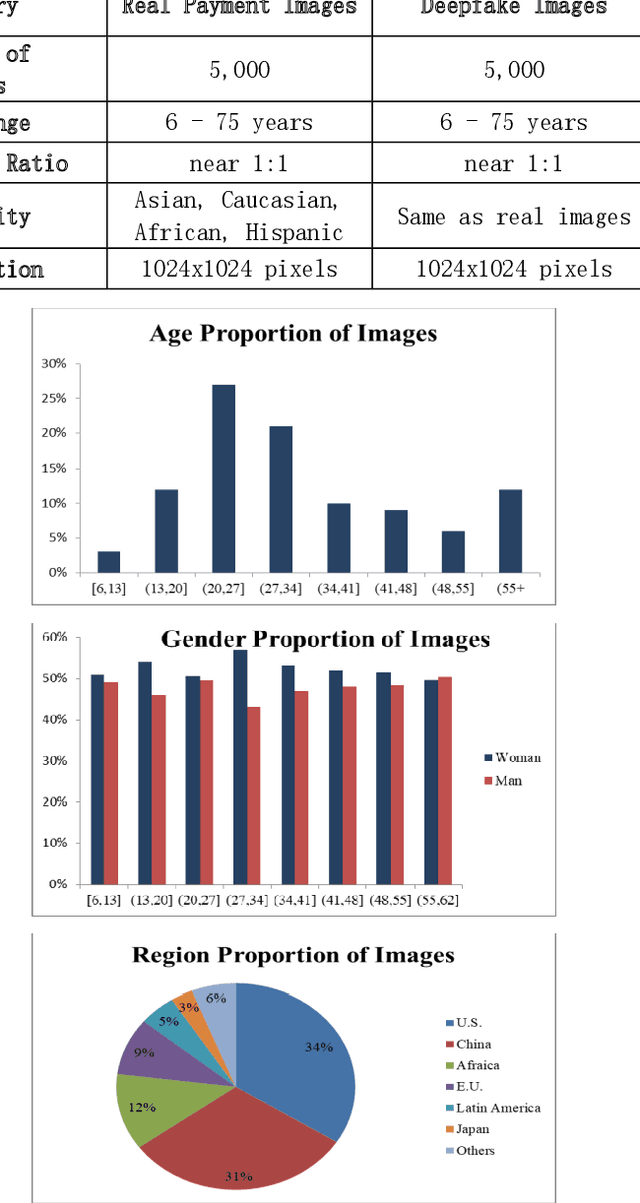
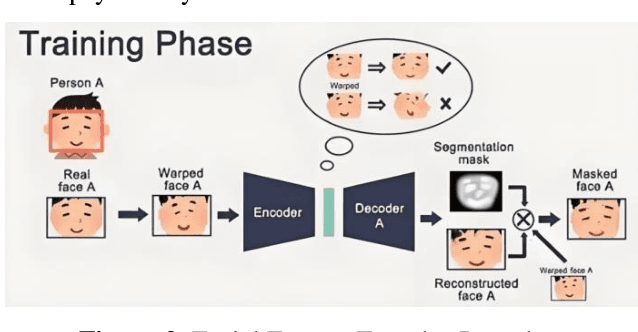
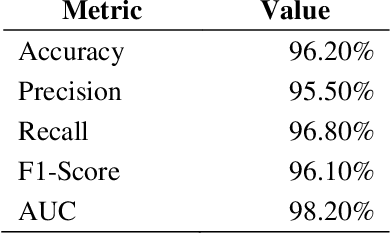
This study explores the use of Generative Adversarial Networks (GANs) to detect AI deepfakes and fraudulent activities in online payment systems. With the growing prevalence of deepfake technology, which can manipulate facial features in images and videos, the potential for fraud in online transactions has escalated. Traditional security systems struggle to identify these sophisticated forms of fraud. This research proposes a novel GAN-based model that enhances online payment security by identifying subtle manipulations in payment images. The model is trained on a dataset consisting of real-world online payment images and deepfake images generated using advanced GAN architectures, such as StyleGAN and DeepFake. The results demonstrate that the proposed model can accurately distinguish between legitimate transactions and deepfakes, achieving a high detection rate above 95%. This approach significantly improves the robustness of payment systems against AI-driven fraud. The paper contributes to the growing field of digital security, offering insights into the application of GANs for fraud detection in financial services. Keywords- Payment Security, Image Recognition, Generative Adversarial Networks, AI Deepfake, Fraudulent Activities
Developing Cryptocurrency Trading Strategy Based on Autoencoder-CNN-GANs Algorithms
Dec 24, 2024
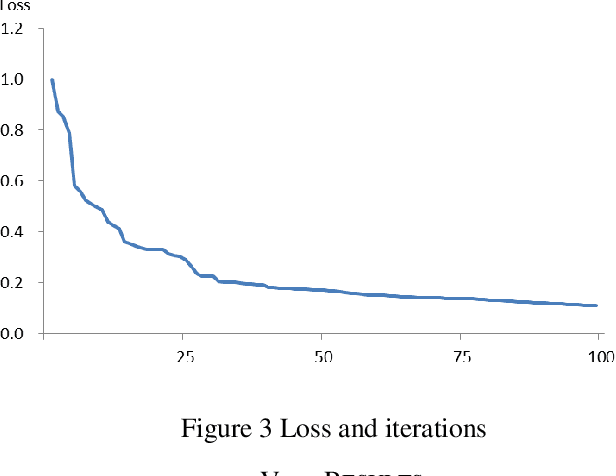
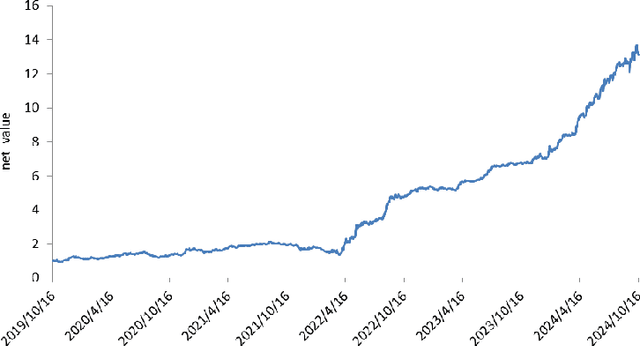
This paper leverages machine learning algorithms to forecast and analyze financial time series. The process begins with a denoising autoencoder to filter out random noise fluctuations from the main contract price data. Then, one-dimensional convolution reduces the dimensionality of the filtered data and extracts key information. The filtered and dimensionality-reduced price data is fed into a GANs network, and its output serve as input of a fully connected network. Through cross-validation, a model is trained to capture features that precede large price fluctuations. The model predicts the likelihood and direction of significant price changes in real-time price sequences, placing trades at moments of high prediction accuracy. Empirical results demonstrate that using autoencoders and convolution to filter and denoise financial data, combined with GANs, achieves a certain level of predictive performance, validating the capabilities of machine learning algorithms to discover underlying patterns in financial sequences. Keywords - CNN;GANs; Cryptocurrency; Prediction.