 Add to Chrome
 Add to Firefox
 Add to Edge
Revisiting Euler-Angle Regression with Kolmogorov-Arnold Networks
Jul 10, 2026
In many real-world systems, including articulated robots and biomechanical models, rotations are defined in joint space and naturally parameterized by Euler angles with bounded ranges. Yet regressing Euler angles remains challenging, as their discontinuities and singularities often destabilize training. In this work, we revisit Euler-angle regression and show that its effectiveness depends critically on the interaction between rotation representation, regression architecture, and domain constraints. We introduce a new framework that combines range-aware Euler modeling with Kolmogorov-Arnold Networks (KAN), which replace fixed node-wise activations with learnable univariate functions on edges. We further provide theoretical analysis indicating that bounded Euler ranges motivate a near-additive structure in the regression function, which favors the additive functional form of KAN, and we confirm this trend empirically. Extensive experiments on controlled rotation regression, object pose estimation, and robotic and human inverse kinematics demonstrate consistent improvements in accuracy, convergence, and efficiency. The code will be publicly available.

Beyond Pixels: Learning Invariant Rewards for Real-World Robotics From a Few Demonstrations
May 21, 2026Designing reward functions that generalize beyond controlled laboratory settings remains a fundamental challenge in reinforcement learning for robotics. In open-world manipulation problems, a single task can appear in numerous variants through different object instances, positions, and camera viewpoints. Recent vision-based reward models tend to memorize specific pixel distributions and fail to generalize beyond their training conditions. To address this, we propose a framework that learns invariant symbolic reward functions from as few as five demonstrations. The insight is to shift from visual feature-fitting to the discovery of behavioral invariants: task-level properties that remain constant across diverse visual instantiations. The framework has two coupled components: a structural reward formulation that encodes task-level strategies and physical constraints while preserving optimal policy invariance, and a hybrid symbolic-numerical procedure that distills these invariants from demonstrations without online interaction. Experiments on eight Meta-World tasks and three Franka manipulation tasks demonstrate that our method achieves stronger process alignment and policy rollout ranking abilities compared to baselines, accelerating downstream policy learning. Three real-world out-of-distribution experiments further show that the same learned reward generalizes zero-shot to position, viewpoint, and object variations, enabling a single reward representation to be reused across diverse task variants in practice.
FNAS: Uncertainty-Aware Fast Neural Architecture Search
May 27, 2021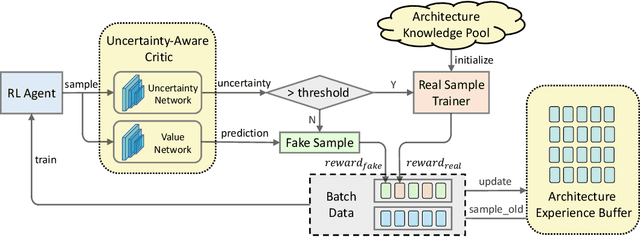
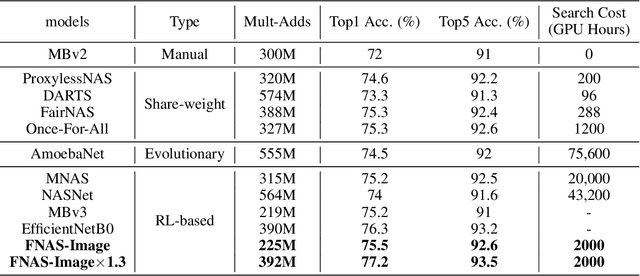
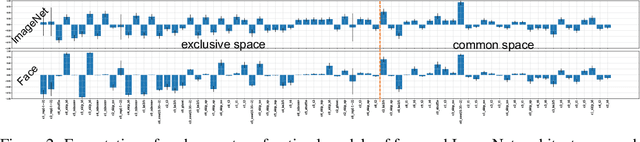
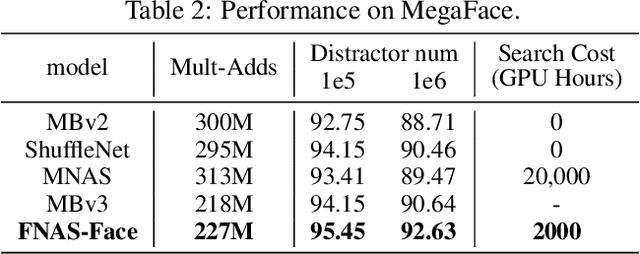
Reinforcement learning (RL)-based neural architecture search (NAS) generally guarantees better convergence yet suffers from the requirement of huge computational resources compared with gradient-based approaches, due to the rollout bottleneck -- exhaustive training for each sampled generation on proxy tasks. In this paper, we propose a general pipeline to accelerate the convergence of the rollout process as well as the RL process in NAS. It is motivated by the interesting observation that both the architecture and the parameter knowledge can be transferred between different experiments and even different tasks. We first introduce an uncertainty-aware critic (value function) in Proximal Policy Optimization (PPO) to utilize the architecture knowledge in previous experiments, which stabilizes the training process and reduces the searching time by 4 times. Further, an architecture knowledge pool together with a block similarity function is proposed to utilize parameter knowledge and reduces the searching time by 2 times. It is the first to introduce block-level weight sharing in RLbased NAS. The block similarity function guarantees a 100% hitting ratio with strict fairness. Besides, we show that a simply designed off-policy correction factor used in "replay buffer" in RL optimization can further reduce half of the searching time. Experiments on the Mobile Neural Architecture Search (MNAS) search space show the proposed Fast Neural Architecture Search (FNAS) accelerates standard RL-based NAS process by ~10x (e.g. ~256 2x2 TPUv2 x days / 20,000 GPU x hour -> 2,000 GPU x hour for MNAS), and guarantees better performance on various vision tasks.