 Add to Chrome
 Add to Firefox
 Add to Edge
HarnessEval-W: Agentifying the Evaluation of Visual Worlds
Aug 17, 2026
A benchmark should deliver more than a scalar score: what makes an evaluation trustworthy is the reasoning that justifies the score. This is especially critical for world models, where judging a rollout requires understanding whether physics, causality, and world state evolve correctly. Humans spot such violations naturally, yet no existing benchmark automates this capability: metrics are computed brute-force, leaving no reasoning chain that can be examined or verified. We introduce HarnessEval-W, an agentified evaluation pipeline that brings the harness paradigm from the LLM ecosystem to world model benchmarking. Rather than applying a fixed rubric, HarnessEval-W interprets the context of each evaluation case, decomposes the evaluation question into measurable subproblems, and spawns specialized sub-agents, each equipped with tailored context and diagnostic tools to reason over its own subproblem. The parent agent then validates the gathered evidence and summarizes it into the final verdict. This hierarchical workflow turns every evaluation into a transparent evidence tree whose complete reasoning chain justifies the result. We apply HarnessEval-W to 18 representative world models over 330 evaluation cases. Its judgments closely align with human preferences while providing verifiable, fine-grained diagnoses of every generated rollout. We open-source the full pipeline as a live benchmark and invite the broad community to contribute to grow new skills and evaluation cases as world models evolve.

State estimations and noise identifications with intermittent corrupted observations via Bayesian variational inference
Apr 03, 2026This paper focuses on the state estimation problem in distributed sensor networks, where intermittent packet dropouts, corrupted observations, and unknown noise covariances coexist. To tackle this challenge, we formulate the joint estimation of system states, noise parameters, and network reliability as a Bayesian variational inference problem, and propose a novel variational Bayesian adaptive Kalman filter (VB-AKF) to approximate the joint posterior probability densities of the latent parameters. Unlike existing AKF that separately handle missing data and measurement outliers, the proposed VB-AKF adopts a dual-mask generative model with two independent Bernoulli random variables, explicitly characterizing both observable communication losses and latent data authenticity. Additionally, the VB-AKF integrates multiple concurrent multiple observations into the adaptive filtering framework, which significantly enhances statistical identifiability. Comprehensive numerical experiments verify the effectiveness and asymptotic optimality of the proposed method, showing that both parameter identification and state estimation asymptotically converge to the theoretical optimal lower bound with the increase in the number of sensors.
Improved Sensitivity of Base Layer on the Performance of Rigid Pavement
Jan 20, 2021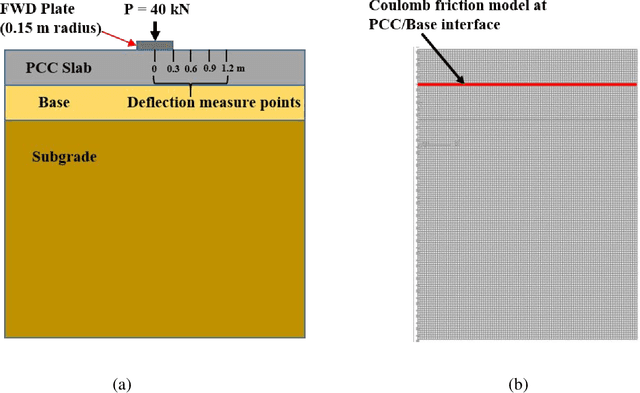
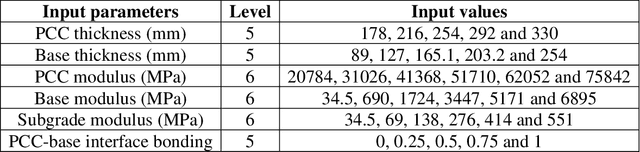
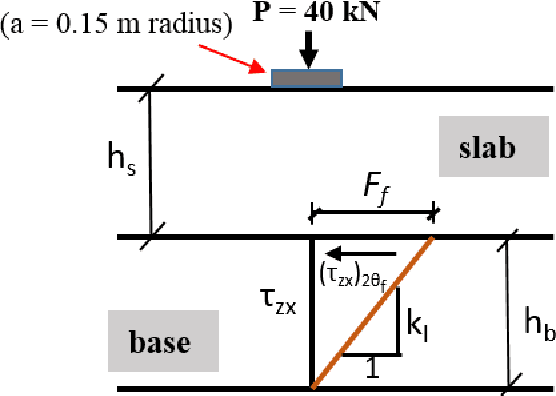
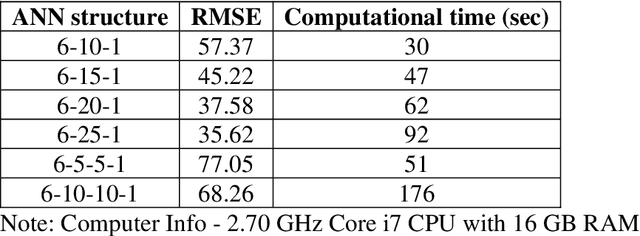
The performance of rigid pavement is greatly affected by the properties of base/subbase as well as subgrade layer. However, the performance predicted by the AASHTOWare Pavement ME design shows low sensitivity to the properties of base and subgrade layers. To improve the sensitivity and better reflect the influence of unbound layers a new set of improved models i.e., resilient modulus (MR) and modulus of subgrade reaction (k-value) are adopted in this study. An Artificial Neural Network (ANN) model is developed to predict the modified k-value based on finite element (FE) analysis. The training and validation datasets in the ANN model consist of 27000 simulation cases with different combinations of pavement layer thickness, layer modulus and slab-base interface bond ratio. To examine the sensitivity of modified MR and k-values on pavement response, eight pavement sections data are collected from the Long-Term Pavement performance (LTPP) database and modeled by using the FE software ISLAB2000. The computational results indicate that the modified MR values have higher sensitivity to water content in base layer on critical stress and deflection response of rigid pavements compared to the results using the Pavement ME design model. It is also observed that the k-values using ANN model has the capability of predicting critical pavement response at any partially bonded conditions whereas the Pavement ME design model can only calculate at two extreme bonding conditions (i.e., fully bonding and no bonding).