 Add to Chrome
 Add to Firefox
 Add to Edge
Bridging Requirements and Architecture: Multi-Agent Orchestration with External Knowledge and Hierarchical Memory
May 31, 2026
Software architecture design is a critical yet inherently complex and knowledge-intensive phase that requires balancing competing quality attributes and adapting to evolving requirements. Traditionally, this process has been time-consuming, labor-intensive, and heavily reliant on architects, often resulting in limited exploration of alternative architectural decompositions and styles, especially under the pressures of agile development. While LLM-based agents have shown promising performance across various software engineering tasks, their application to architecture design remains relatively scarce and requires systematic exploration. To address these challenges, we proposed MAAD (Multi-Agent Architecture Design), a knowledge-driven framework that orchestrates four specialized agents (i.e., Analyst, Modeler, Designer and Evaluator) to autonomously and collaboratively transform requirements specifications into comprehensive, multi-view architectural blueprints with quality attribute assessments. MAAD incorporates RAG to inject recognized architectural standards and patterns into the workflow and leverages a hierarchical memory mechanism that captures design history for iterative refinement. We evaluated MAAD through comparative experiments against MetaGPT, using quantitative architecture-level metrics across 10 case studies and qualitative feedback from industry architects on 10 real-world specifications. Results show that MAAD generates more complete, modular, and traceable architectures than the baseline, and its dedicated Evaluator agent autonomously produces structured quality evaluation reports that significantly reduce manual validation efforts. Furthermore, we found that the quality of the generated architecture heavily depends on the underlying LLM's reasoning capacity, with GPT-5.2 and Qwen3.5 outperforming other models across most evaluation settings.

Using LLMs in Generating Design Rationale for Software Architecture Decisions
Apr 29, 2025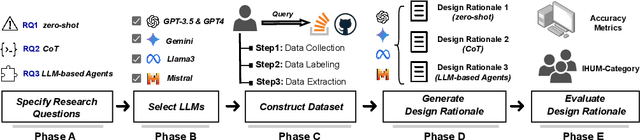
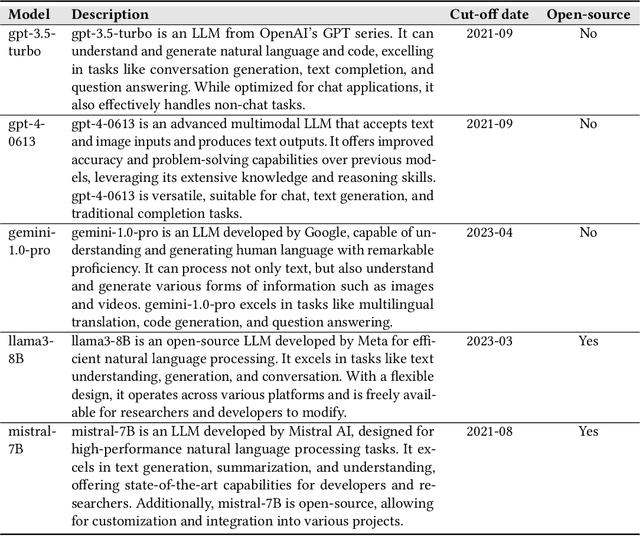
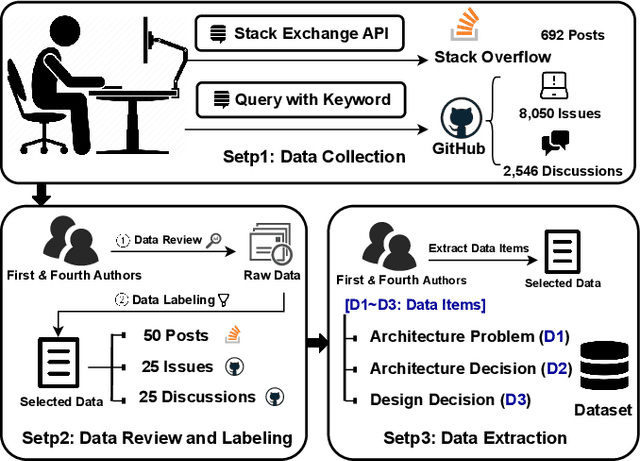
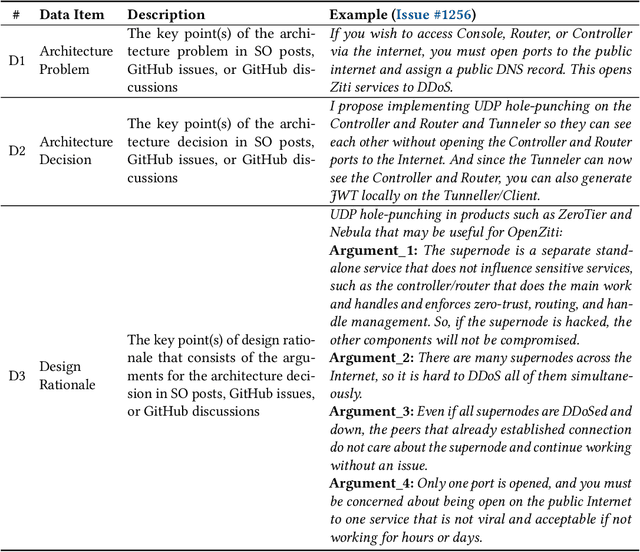
Design Rationale (DR) for software architecture decisions refers to the reasoning underlying architectural choices, which provides valuable insights into the different phases of the architecting process throughout software development. However, in practice, DR is often inadequately documented due to a lack of motivation and effort from developers. With the recent advancements in Large Language Models (LLMs), their capabilities in text comprehension, reasoning, and generation may enable the generation and recovery of DR for architecture decisions. In this study, we evaluated the performance of LLMs in generating DR for architecture decisions. First, we collected 50 Stack Overflow (SO) posts, 25 GitHub issues, and 25 GitHub discussions related to architecture decisions to construct a dataset of 100 architecture-related problems. Then, we selected five LLMs to generate DR for the architecture decisions with three prompting strategies, including zero-shot, chain of thought (CoT), and LLM-based agents. With the DR provided by human experts as ground truth, the Precision of LLM-generated DR with the three prompting strategies ranges from 0.267 to 0.278, Recall from 0.627 to 0.715, and F1-score from 0.351 to 0.389. Additionally, 64.45% to 69.42% of the arguments of DR not mentioned by human experts are also helpful, 4.12% to 4.87% of the arguments have uncertain correctness, and 1.59% to 3.24% of the arguments are potentially misleading. Based on the results, we further discussed the pros and cons of the three prompting strategies and the strengths and limitations of the DR generated by LLMs.