 Add to Chrome
 Add to Firefox
 Add to Edge
UrbanWell: Benchmarking Multimodal Large Language Models for Spatio-Temporal Urban Wellbeing Analytics
Jun 14, 2026
Understanding urban wellbeing from multimodal data requires integrating heterogeneous spatial and temporal signals, posing significant challenges for current multimodal large language models (MLLMs). We introduce UrbanWell, a large-scale benchmark designed to systematically evaluate the spatio-temporal reasoning capabilities of MLLMs for urban wellbeing analytics through joint modeling of satellite and street view imagery. UrbanWell spans 38 cities across multiple years and includes diverse indicators covering (1) environmental conditions (CO$_2$, NO$_2$, PM${2.5}$, and Normalized Difference Vegetation Index), (2) spatial accessibility (minimum distance to supermarkets and restaurants), (3) urban form (road length, road density, and land use), (4) urban vitality (population, economic activity diversity, and land use diversity), and (5) subjective perception attributes (e.g., safety, beauty, liveliness, wealth, and quietness). All indicators are aligned at grid level to enable standardized evaluation. Beyond static prediction, UrbanWell defines temporal reasoning tasks, including future value forecasting from historical observations and temporal trend classification. We benchmark 15 state-of-the-art representative MLLMs in a zero-shot setting, providing a comprehensive comparative evaluation across spatial and temporal dimensions. Experimental results indicate that while MLLMs capture salient spatial and perceptual cues, their performance varies substantially across heterogeneous urban indicators spanning environment and subjective perception. UrbanWell serves as a unified benchmark for evaluating multimodal spatial and temporal reasoning in urban wellbeing analytics, offering a standardized testbed for systematic assessment and future research on multimodal urban intelligence. Our codes and datasets are accessible via https://github.com/axin1301/UrbanWell-Benchmark.

Decoding Pedestrian Crossing Intention from Egocentric Vision via Vision Language Models
Jun 08, 2026Egocentric vision offers a first-person view of human perception and decision making, yet its potential for traffic-safety prediction remains underexplored. In this work, we study the decoding of pedestrian crossing intentions from short egocentric video clips. We approach this by formulating the task as a closed-ended visual question answering (VQA) problem and leveraging vision language models (VLMs) to predict the pedestrians' intent. We first benchmark three families of state-of-the-art VLMs in a zero-shot setting, finding that they achieve moderate gains over random guessing but exhibit limited higher-level traffic reasoning. Motivated by these findings, we further adapt VLMs to the target task using parameter-efficient fine-tuning. Our results show that the fine-tuned models substantially outperform their zero-shot counterparts and achieve a 9\% accuracy improvement over a specialized transformer-based baseline. Finally, we demonstrate that incorporating additional contextual cues, including ego motion, vehicle motion, and eye gaze, further improves predictive performance. In particular, the fine-tuned Qwen3-VL-2B model guided by eye gaze and ego motion achieves a 14.5% accuracy improvement over the transformer baseline, establishing a new state of the art for egocentric pedestrian intent decoding.
FedTSA: A Cluster-based Two-Stage Aggregation Method for Model-heterogeneous Federated Learning
Jul 06, 2024Despite extensive research into data heterogeneity in federated learning (FL), system heterogeneity remains a significant yet often overlooked challenge. Traditional FL approaches typically assume homogeneous hardware resources across FL clients, implying that clients can train a global model within a comparable time. However, in practical FL systems, clients often have heterogeneous resources, which impacts their capacity for training tasks. This discrepancy highlights the significance of exploring model-heterogeneous FL, a paradigm that allows clients to train different models based on their resource capabilities. To address this, we introduce FedTSA, a cluster-based two-stage aggregation method tailored for system heterogeneity in FL. FedTSA starts by clustering clients based on their capabilities, then conducts a two-stage aggregation, i.e., conventional weight averaging for homogeneous models as Stage 1, and deep mutual learning with a diffusion model for aggregating heterogeneous models as Stage 2. Extensive experiments not only show that FedTSA outperforms the baselines, but also explore various factors influencing model performance, thereby validating FedTSA as a promising approach for model-heterogeneous FL.
Mobile Augmented Reality: User Interfaces, Frameworks, and Intelligence
Jun 16, 2021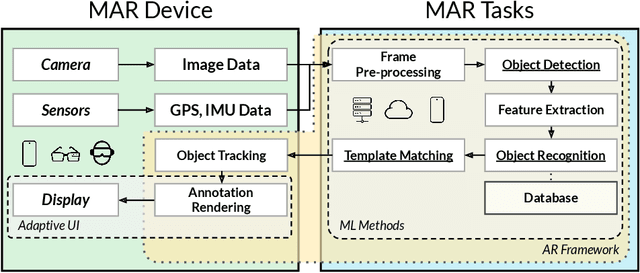
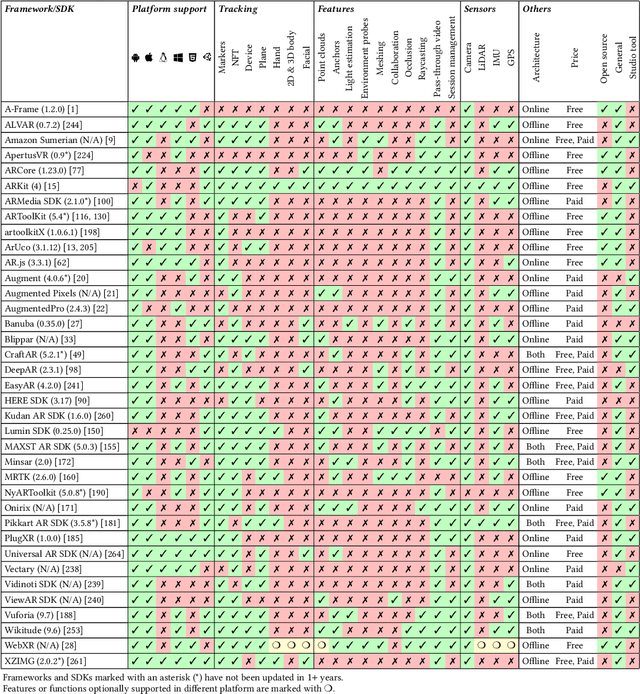
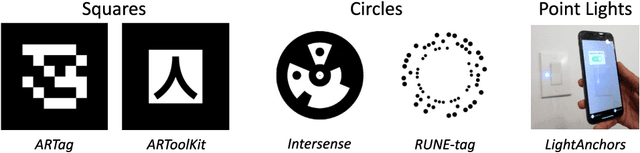
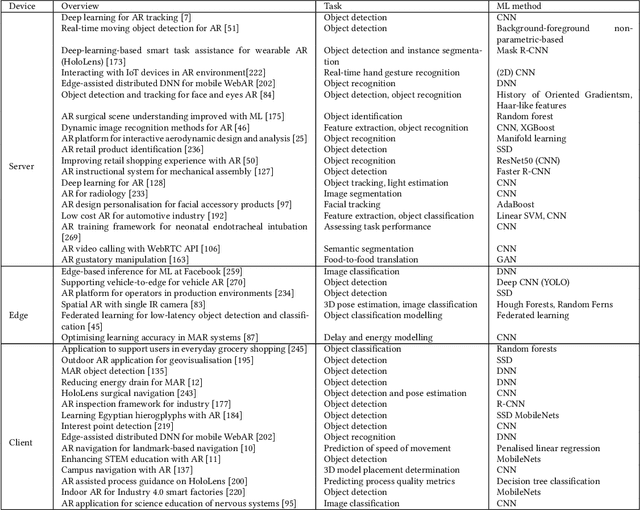
Mobile Augmented Reality (MAR) integrates computer-generated virtual objects with physical environments for mobile devices. MAR systems enable users to interact with MAR devices, such as smartphones and head-worn wearables, and performs seamless transitions from the physical world to a mixed world with digital entities. These MAR systems support user experiences by using MAR devices to provide universal accessibility to digital contents. Over the past 20 years, a number of MAR systems have been developed, however, the studies and design of MAR frameworks have not yet been systematically reviewed from the perspective of user-centric design. This article presents the first effort of surveying existing MAR frameworks (count: 37) and further discusses the latest studies on MAR through a top-down approach: 1) MAR applications; 2) MAR visualisation techniques adaptive to user mobility and contexts; 3) systematic evaluation of MAR frameworks including supported platforms and corresponding features such as tracking, feature extraction plus sensing capabilities; and 4) underlying machine learning approaches supporting intelligent operations within MAR systems. Finally, we summarise the development of emerging research fields, current state-of-the-art, and discuss the important open challenges and possible theoretical and technical directions. This survey aims to benefit both researchers and MAR system developers alike.
A Survey on Edge Intelligence
Mar 26, 2020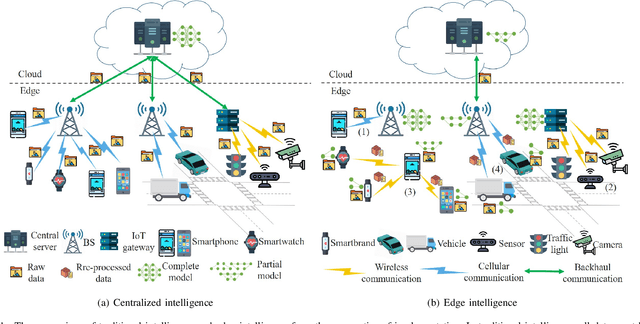
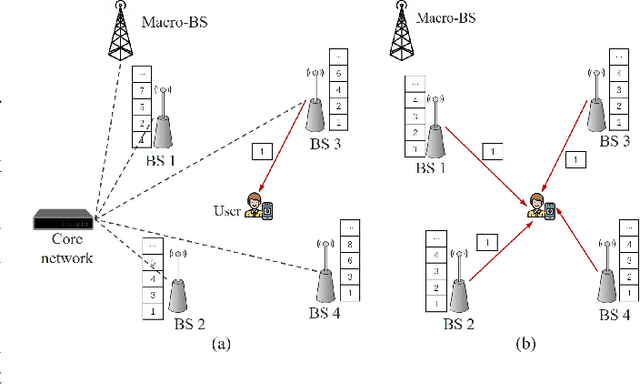
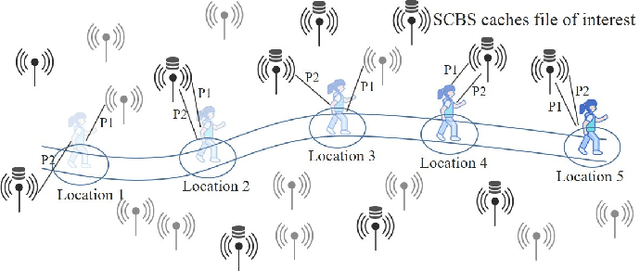
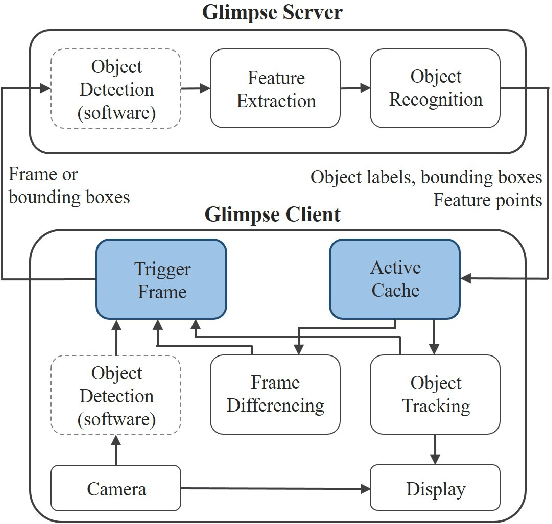
Edge intelligence refers to a set of connected systems and devices for data collection, caching, processing, and analysis in locations close to where data is captured based on artificial intelligence. The aim of edge intelligence is to enhance the quality and speed of data processing and protect the privacy and security of the data. Although recently emerged, spanning the period from 2011 to now, this field of research has shown explosive growth over the past five years. In this paper, we present a thorough and comprehensive survey on the literature surrounding edge intelligence. We first identify four fundamental components of edge intelligence, namely edge caching, edge training, edge inference, and edge offloading, based on theoretical and practical results pertaining to proposed and deployed systems. We then aim for a systematic classification of the state of the solutions by examining research results and observations for each of the four components and present a taxonomy that includes practical problems, adopted techniques, and application goals. For each category, we elaborate, compare and analyse the literature from the perspectives of adopted techniques, objectives, performance, advantages and drawbacks, etc. This survey article provides a comprehensive introduction to edge intelligence and its application areas. In addition, we summarise the development of the emerging research field and the current state-of-the-art and discuss the important open issues and possible theoretical and technical solutions.
Semantic Reasoning for Context-aware Internet of Things Applications
Apr 28, 2016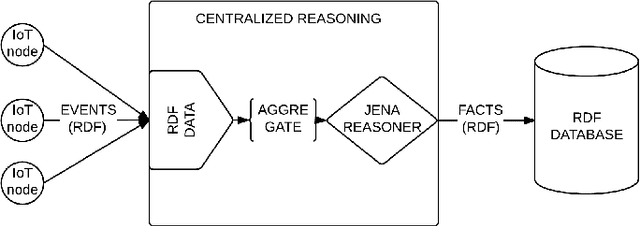
Advances in ICT are bringing into reality the vision of a large number of uniquely identifiable, interconnected objects and things that gather information from diverse physical environments and deliver the information to a variety of innovative applications and services. These sensing objects and things form the Internet of Things (IoT) that can improve energy and cost efficiency and automation in many different industry fields such as transportation and logistics, health care and manufacturing, and facilitate our everyday lives as well. IoT applications rely on real-time context data and allow sending information for driving the behaviors of users in intelligent environments.