 Add to Chrome
 Add to Firefox
 Add to Edge
No-reference based automatic parameter optimization for iterative reconstruction using a novel search space aware crow search algorithm
Apr 06, 2026
Iterative reconstruction technique's ability to reduce radiation exposure by using fewer projections has attracted significant attention. However, these methods typically require a precise tuning of several hyperparameters, which can have a major impact on reconstruction quality. Manually setting these parameters is time-consuming and increases the workload for human operators. In this paper, we introduce a novel fully automatic parameter optimization framework that can be applied to a wide range of Cone-beam computed tomography (CBCT) iterative reconstruction algorithms to determine optimal parameters without requiring a reference reconstruction. The proposed method incorporates a modified crow search algorithm (CSA) featuring a superior set-dependent local search mechanism, a search-space-aware global search strategy, and an objective-driven balance between local and global search. Additionally, to ensure an effective initial population, we propose a chaotic diagonal linear uniform initialization scheme that accelerates algorithm convergence. The performance of the proposed framework was evaluated on three imaging machines and four real datasets, as well as three different iterative reconstruction methods with the highest number of tunable parameters, representing the most challenging senario. The results indicate that the proposed method could outperform manual settings and CSA, with an 4.19% improvement in average fitness and 4.89% and 3.82% improvements on CHILL@UK and RPI_AXIS, respectively, which are two benchmark no-reference learning-based quality metrics. In addition, the qualitative results clearly show the superiority of the proposed method by maintaining fine details sharply. The overall performance of the proposed framework across different comparison scenarios demonstrates its effectiveness and robustness across all cases.

A deep learning pipeline for PAM50 subtype classification using histopathology images and multi-objective patch selection
Apr 02, 2026Breast cancer is a highly heterogeneous disease with diverse molecular profiles. The PAM50 gene signature is widely recognized as a standard for classifying breast cancer into intrinsic subtypes, enabling more personalized treatment strategies. In this study, we introduce a novel optimization-driven deep learning framework that aims to reduce reliance on costly molecular assays by directly predicting PAM50 subtypes from H&E-stained whole-slide images (WSIs). Our method jointly optimizes patch informativeness, spatial diversity, uncertainty, and patch count by combining the non-dominated sorting genetic algorithm II (NSGA-II) with Monte Carlo dropout-based uncertainty estimation. The proposed method can identify a small but highly informative patch subset for classification. We used a ResNet18 backbone for feature extraction and a custom CNN head for classification. For evaluation, we used the internal TCGA-BRCA dataset as the training cohort and the external CPTAC-BRCA dataset as the test cohort. On the internal dataset, an F1-score of 0.8812 and an AUC of 0.9841 using 627 WSIs from the TCGA-BRCA cohort were achieved. The performance of the proposed approach on the external validation dataset showed an F1-score of 0.7952 and an AUC of 0.9512. These findings indicate that the proposed optimization-guided, uncertainty-aware patch selection can achieve high performance and improve the computational efficiency of histopathology-based PAM50 classification compared to existing methods, suggesting a scalable imaging-based replacement that has the potential to support clinical decision-making.
Realistic 3D printed imaging tumor phantoms for validation of image processing algorithms
Nov 27, 2022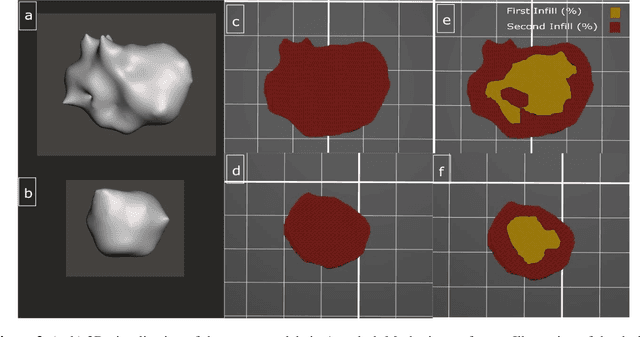

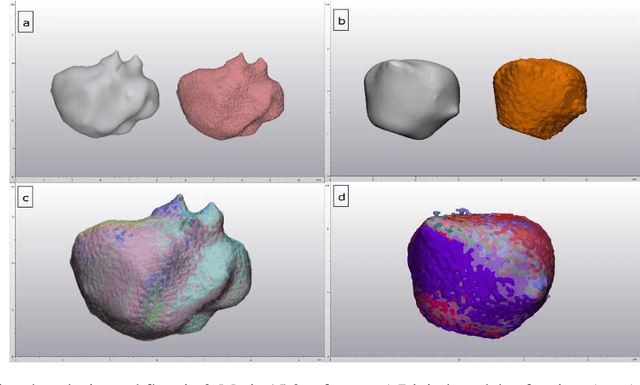

Medical imaging phantoms are widely used for validation and verification of imaging systems and algorithms in surgical guidance and radiation oncology procedures. Especially, for the performance evaluation of new algorithms in the field of medical imaging, manufactured phantoms need to replicate specific properties of the human body, e.g., tissue morphology and radiological properties. Additive manufacturing (AM) technology provides an inexpensive opportunity for accurate anatomical replication with customization capabilities. In this study, we proposed a simple and cheap protocol to manufacture realistic tumor phantoms based on the filament 3D printing technology. Tumor phantoms with both homogenous and heterogenous radiodensity were fabricated. The radiodensity similarity between the printed tumor models and real tumor data from CT images of lung cancer patients was evaluated. Additionally, it was investigated whether a heterogeneity in the 3D printed tumor phantoms as observed in the tumor patient data had an influence on the validation of image registration algorithms. A density range between -217 to 226 HUs was achieved for 3D printed phantoms; this range of radiation attenuation is also observed in the human lung tumor tissue. The resulted HU range could serve as a lookup-table for researchers and phantom manufactures to create realistic CT tumor phantoms with the desired range of radiodensities. The 3D printed tumor phantoms also precisely replicated real lung tumor patient data regarding morphology and could also include life-like heterogeneity of the radiodensity inside the tumor models. An influence of the heterogeneity on accuracy and robustness of the image registration algorithms was not found.