 Add to Chrome
 Add to Firefox
 Add to Edge
A deep learning pipeline for PAM50 subtype classification using histopathology images and multi-objective patch selection
Apr 02, 2026
Breast cancer is a highly heterogeneous disease with diverse molecular profiles. The PAM50 gene signature is widely recognized as a standard for classifying breast cancer into intrinsic subtypes, enabling more personalized treatment strategies. In this study, we introduce a novel optimization-driven deep learning framework that aims to reduce reliance on costly molecular assays by directly predicting PAM50 subtypes from H&E-stained whole-slide images (WSIs). Our method jointly optimizes patch informativeness, spatial diversity, uncertainty, and patch count by combining the non-dominated sorting genetic algorithm II (NSGA-II) with Monte Carlo dropout-based uncertainty estimation. The proposed method can identify a small but highly informative patch subset for classification. We used a ResNet18 backbone for feature extraction and a custom CNN head for classification. For evaluation, we used the internal TCGA-BRCA dataset as the training cohort and the external CPTAC-BRCA dataset as the test cohort. On the internal dataset, an F1-score of 0.8812 and an AUC of 0.9841 using 627 WSIs from the TCGA-BRCA cohort were achieved. The performance of the proposed approach on the external validation dataset showed an F1-score of 0.7952 and an AUC of 0.9512. These findings indicate that the proposed optimization-guided, uncertainty-aware patch selection can achieve high performance and improve the computational efficiency of histopathology-based PAM50 classification compared to existing methods, suggesting a scalable imaging-based replacement that has the potential to support clinical decision-making.

Advanced Hybrid Deep Learning Model for Enhanced Classification of Osteosarcoma Histopathology Images
Oct 29, 2024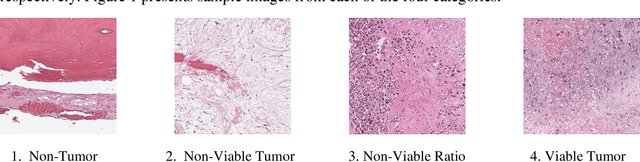
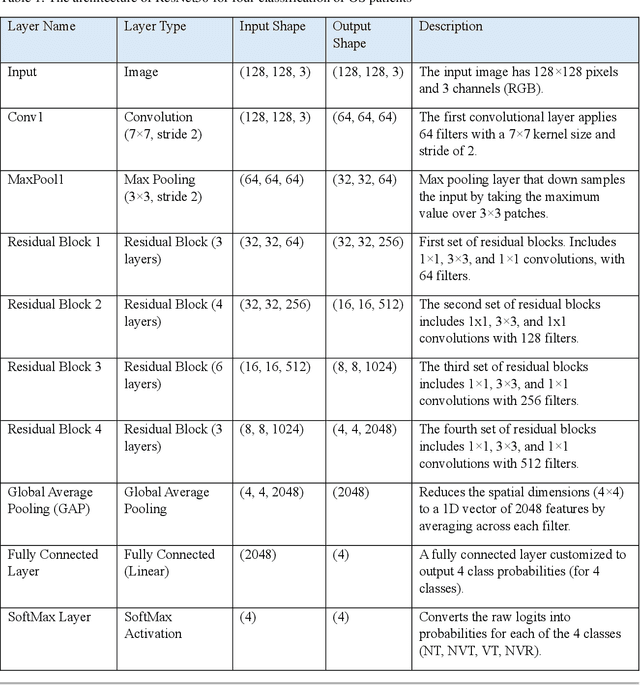
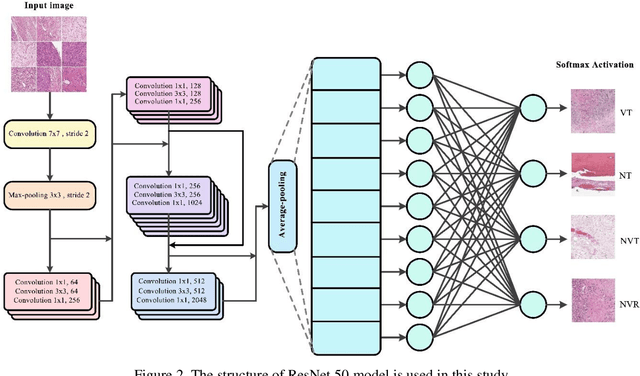
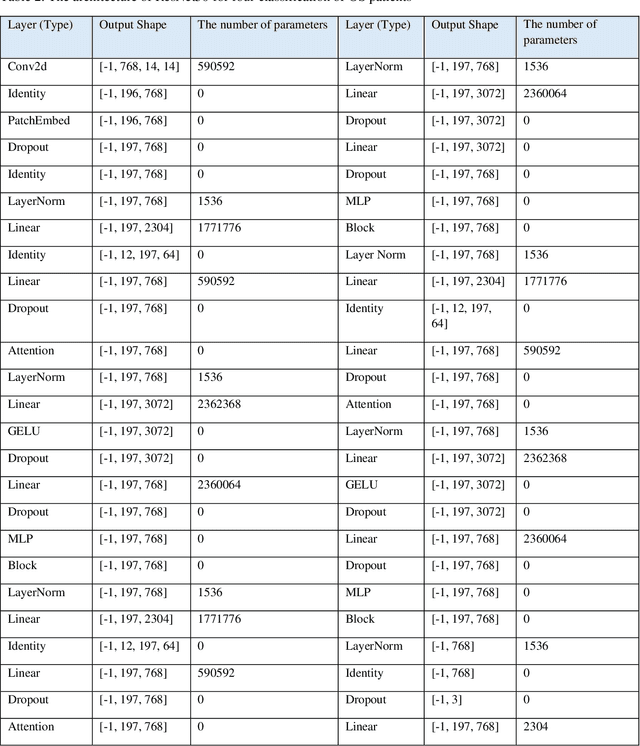
Recent advances in machine learning are transforming medical image analysis, particularly in cancer detection and classification. Techniques such as deep learning, especially convolutional neural networks (CNNs) and vision transformers (ViTs), are now enabling the precise analysis of complex histopathological images, automating detection, and enhancing classification accuracy across various cancer types. This study focuses on osteosarcoma (OS), the most common bone cancer in children and adolescents, which affects the long bones of the arms and legs. Early and accurate detection of OS is essential for improving patient outcomes and reducing mortality. However, the increasing prevalence of cancer and the demand for personalized treatments create challenges in achieving precise diagnoses and customized therapies. We propose a novel hybrid model that combines convolutional neural networks (CNN) and vision transformers (ViT) to improve diagnostic accuracy for OS using hematoxylin and eosin (H&E) stained histopathological images. The CNN model extracts local features, while the ViT captures global patterns from histopathological images. These features are combined and classified using a Multi-Layer Perceptron (MLP) into four categories: non-tumor (NT), non-viable tumor (NVT), viable tumor (VT), and none-viable ratio (NVR). Using the Cancer Imaging Archive (TCIA) dataset, the model achieved an accuracy of 99.08%, precision of 99.10%, recall of 99.28%, and an F1-score of 99.23%. This is the first successful four-class classification using this dataset, setting a new benchmark in OS research and offering promising potential for future diagnostic advancements.