 Add to Chrome
 Add to Firefox
 Add to Edge
Can LLMs Reason Like Automated Theorem Provers for Rust Verification? VCoT-Bench: Evaluating via Verification Chain of Thought
Mar 18, 2026
As Large Language Models (LLMs) increasingly assist secure software development, their ability to meet the rigorous demands of Rust program verification remains unclear. Existing evaluations treat Rust verification as a black box, assessing models only by binary pass or fail outcomes for proof hints. This obscures whether models truly understand the logical deductions required for verifying nontrivial Rust code. To bridge this gap, we introduce VCoT-Lift, a framework that lifts low-level solver reasoning into high-level, human-readable verification steps. By exposing solver-level reasoning as an explicit Verification Chain-of-Thought, VCoT-Lift provides a concrete ground truth for fine-grained evaluation. Leveraging VCoT-Lift, we introduce VCoT-Bench, a comprehensive benchmark of 1,988 VCoT completion tasks for rigorously evaluating LLMs' understanding of the entire verification process. VCoT-Bench measures performance along three orthogonal dimensions: robustness to varying degrees of missing proofs, competence across different proof types, and sensitivity to the proof locations. Evaluation of ten state-of-the-art models reveals severe fragility, indicating that current LLMs fall well short of the reasoning capabilities exhibited by automated theorem provers.

Relevance Feedback in Text-to-Image Diffusion: A Training-Free And Model-Agnostic Interactive Framework
Mar 16, 2026Text-to-image generation using diffusion models has achieved remarkable success. However, users often possess clear visual intents but struggle to express them precisely in language, resulting in ambiguous prompts and misaligned images. Existing methods struggle to bridge this gap, typically relying on high-load textual dialogues, opaque black-box inferences, or expensive fine-tuning. They fail to simultaneously achieve low cognitive load, interpretable preference inference, and remain training-free and model-agnostic. To address this, we propose RFD, an interactive framework that adapts the relevance feedback mechanism from information retrieval to diffusion models. In RFD, users replace explicit textual dialogue with implicit, multi-select visual feedback to minimize cognitive load, easily expressing complex, multi-dimensional preferences. To translate feedback into precise generative guidance, we construct an expert-curated feature repository and introduce an information-theoretic weighted cumulative preference analysis. This white-box method calculates preferences from current-round feedback and incrementally accumulates them, avoiding the concatenation of historical interactions and preventing inference degradation caused by lengthy contexts. Furthermore, RFD employs a probabilistic sampling mechanism for prompt reconstruction to balance exploitation and exploration, preventing output homogenization. Crucially, RFD operates entirely within the external text space, making it strictly training-free and model-agnostic as a universal plug-and-play solution. Extensive experiments demonstrate that RFD effectively captures the user's true visual intent, significantly outperforming baselines in preference alignment.
NeuroComb: Improving SAT Solving with Graph Neural Networks
Oct 28, 2021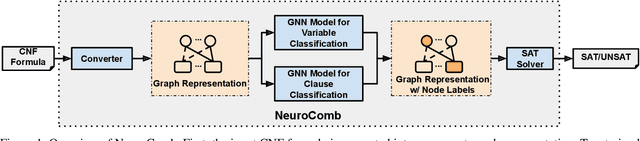
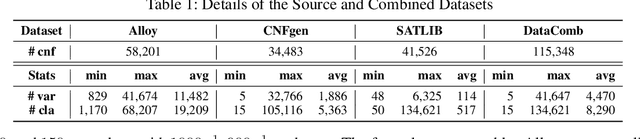
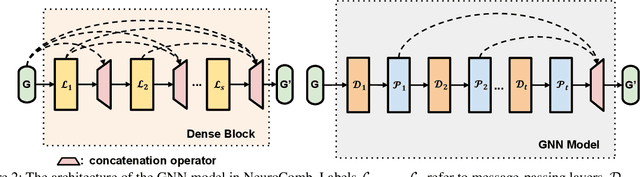
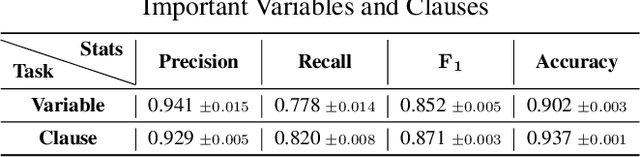
Propositional satisfiability (SAT) is an NP-complete problem that impacts many research fields, such as planning, verification, and security. Despite the remarkable success of modern SAT solvers, scalability still remains a challenge. Main stream modern SAT solvers are based on the Conflict-Driven Clause Learning (CDCL) algorithm. Recent work aimed to enhance CDCL SAT solvers by improving its variable branching heuristics through predictions generated by Graph Neural Networks (GNNs). However, so far this approach either has not made solving more effective, or has required frequent online accesses to substantial GPU resources. Aiming to make GNN improvements practical, this paper proposes an approach called NeuroComb, which builds on two insights: (1) predictions of important variables and clauses can be combined with dynamic branching into a more effective hybrid branching strategy, and (2) it is sufficient to query the neural model only once for the predictions before the SAT solving starts. Implemented as an enhancement to the classic MiniSat solver, NeuroComb allowed it to solve 18.5% more problems on the recent SATCOMP-2020 competition problem set. NeuroComb is therefore a practical approach to improving SAT solving through modern machine learning.
A Survey of Hybrid Human-Artificial Intelligence for Social Computing
Mar 17, 2021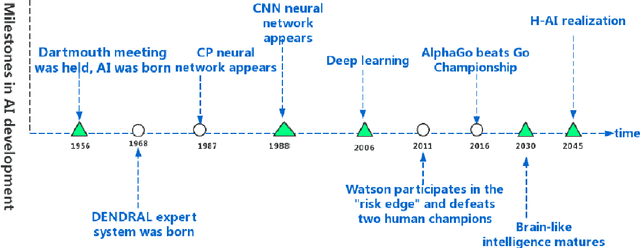
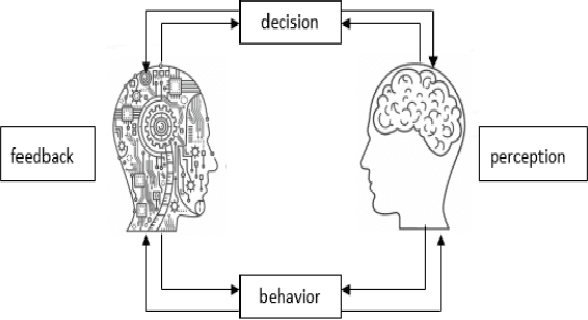
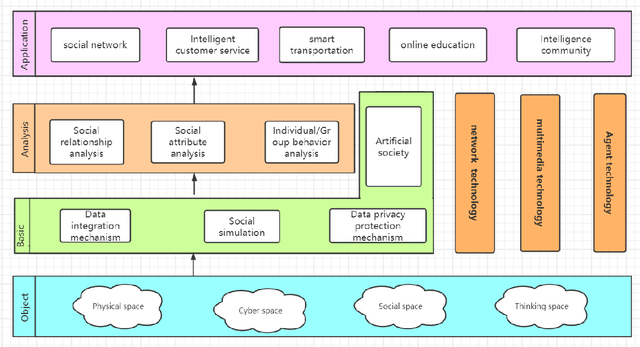
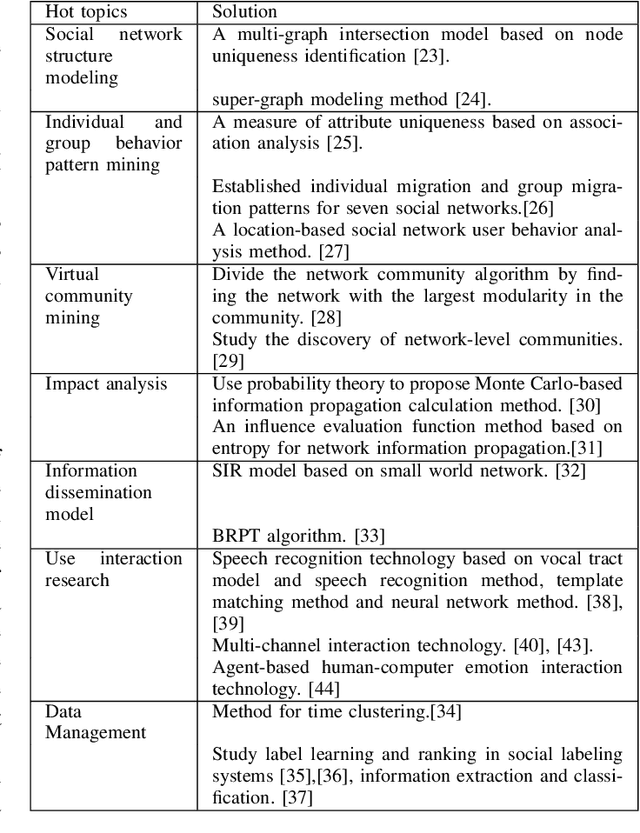
Along with the development of modern computing technology and social sciences, both theoretical research and practical applications of social computing have been continuously extended. In particular with the boom of artificial intelligence (AI), social computing is significantly influenced by AI. However, the conventional technologies of AI have drawbacks in dealing with more complicated and dynamic problems. Such deficiency can be rectified by hybrid human-artificial intelligence (H-AI) which integrates both human intelligence and AI into one unity, forming a new enhanced intelligence. H-AI in dealing with social problems shows the advantages that AI can not surpass. This paper firstly introduces the concept of H-AI. AI is the intelligence in the transition stage of H-AI, so the latest research progresses of AI in social computing are reviewed. Secondly, it summarizes typical challenges faced by AI in social computing, and makes it possible to introduce H-AI to solve these challenges. Finally, the paper proposes a holistic framework of social computing combining with H-AI, which consists of four layers: object layer, base layer, analysis layer, and application layer. It represents H-AI has significant advantages over AI in solving social problems.
A Study of the Learnability of Relational Properties
Dec 25, 2019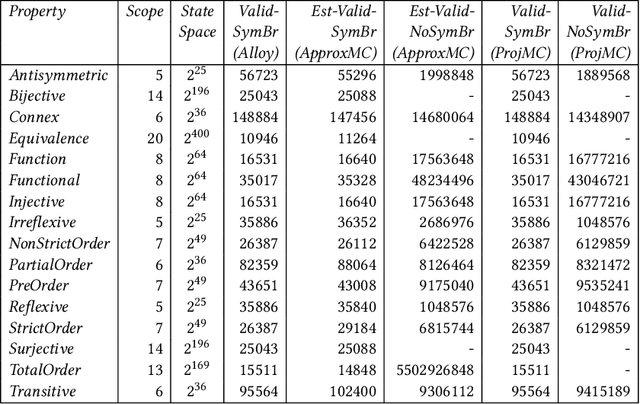
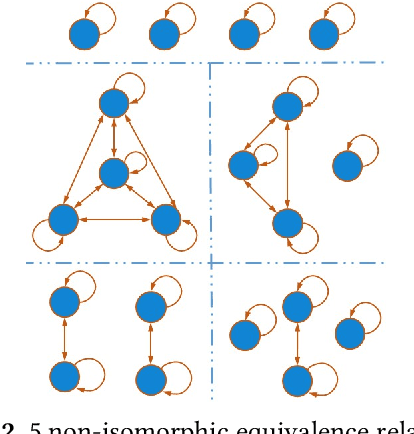
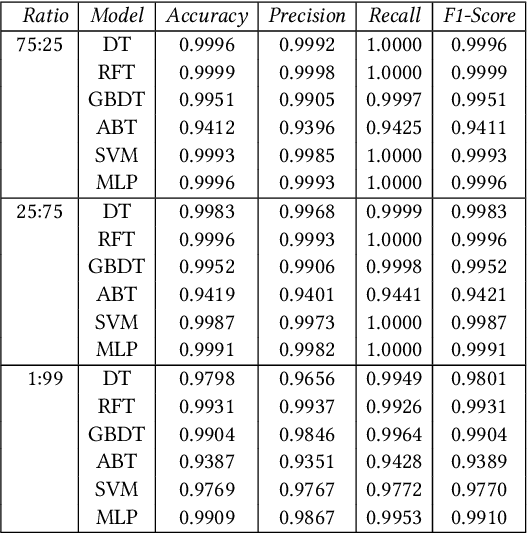
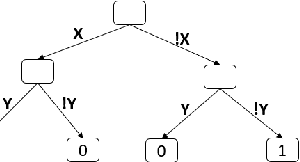
Relational properties, e.g., the connectivity structure of nodes in a distributed system, have many applications in software design and analysis. However, such properties often have to be written manually, which can be costly and error-prone. This paper introduces the MCML approach for empirically studying the learnability of a key class of such properties that can be expressed in the well-known software design language Alloy. A key novelty of MCML is quantification of the performance of and semantic differences among trained machine learning (ML) models, specifically decision trees, with respect to entire input spaces (up to a bound on the input size), and not just for given training and test datasets (as is the common practice). MCML reduces the quantification problems to the classic complexity theory problem of model counting, and employs state-of-the-art approximate and exact model counters for high efficiency. The results show that relatively simple ML models can achieve surprisingly high performance (accuracy and F1 score) at learning relational properties when evaluated in the common setting of using training and test datasets -- even when the training dataset is much smaller than the test dataset -- indicating the seeming simplicity of learning these properties. However, the use of MCML metrics based on model counting shows that the performance can degrade substantially when tested against the whole (bounded) input space, indicating the high complexity of precisely learning these properties, and the usefulness of model counting in quantifying the true accuracy.