 Add to Chrome
 Add to Firefox
 Add to Edge
Auction-Consensus Algorithm with Learned Bidding Scheme for Multi-Robot Systems
May 21, 2026
Multi-Robot Task Allocation (MRTA) is a central challenge in decentralized multi-agent systems, where teams of robots must cooperatively assign and execute tasks under limited communication while optimizing global performance objectives. Auction-consensus algorithms, such as the Consensus-Based Bundle Algorithm (CBBA), provide scalable decentralized coordination with provable convergence, but rely on hand-crafted greedy scoring functions that often lead to suboptimal task allocations. This paper proposes a learning-enhanced auction-consensus framework in which CBBA's deterministic bidding mechanism is replaced by a neural bidding policy trained using reinforcement learning. Under a centralized training and decentralized execution paradigm, agents learn to compute task bids from partial local observations while retaining the standard auction and consensus phases for decentralized coordination. The learned bidding policy is trained using Proximal Policy Optimization with rewards shaped by proximity to globally optimal solutions obtained via mixed-integer linear programming. Multiple neural architectures are evaluated, including a Neural Additive Model, the Long Short-Term Memory (LSTM) model, and the Set Transformer Model. Experimental results across varying swarm sizes demonstrate that learned bidding policies can improve solution quality over classical CBBA while preserving decentralized execution. The proposed approach highlights the effectiveness of integrating reinforcement learning with classical distributed coordination algorithms, offering a scalable pathway toward higher-quality decentralized multi-robot task allocation.

Open Information Extraction from 2007 to 2022 -- A Survey
Aug 18, 2022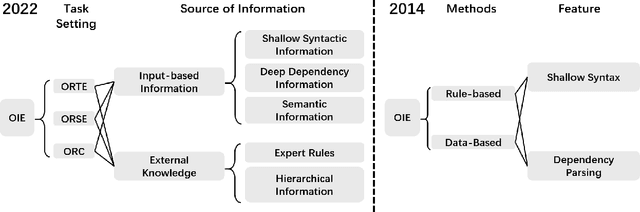
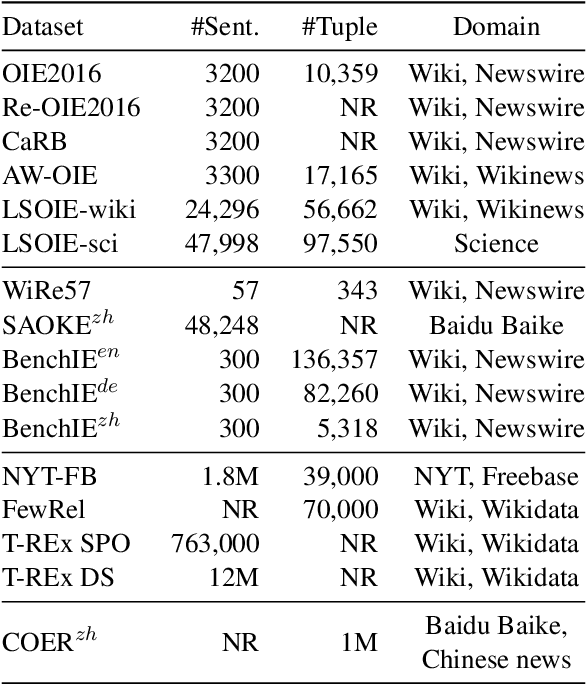
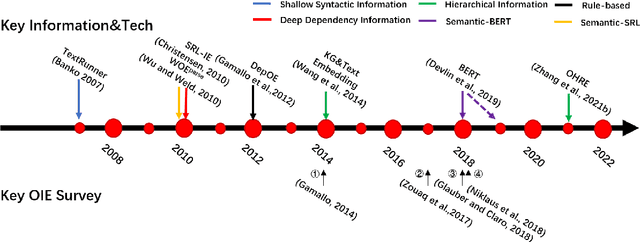
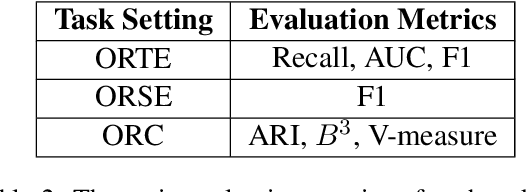
Open information extraction is an important NLP task that targets extracting structured information from unstructured text without limitations on the relation type or the domain of the text. This survey paper covers open information extraction technologies from 2007 to 2022 with a focus on new models not covered by previous surveys. We propose a new categorization method from the source of information perspective to accommodate the development of recent OIE technologies. In addition, we summarize three major approaches based on task settings as well as current popular datasets and model evaluation metrics. Given the comprehensive review, several future directions are shown from datasets, source of information, output form, method, and evaluation metric aspects.
Label-free virtual HER2 immunohistochemical staining of breast tissue using deep learning
Dec 08, 2021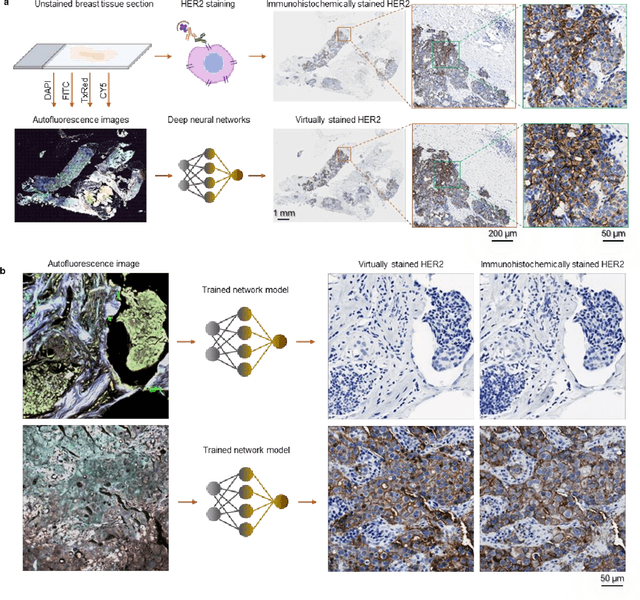
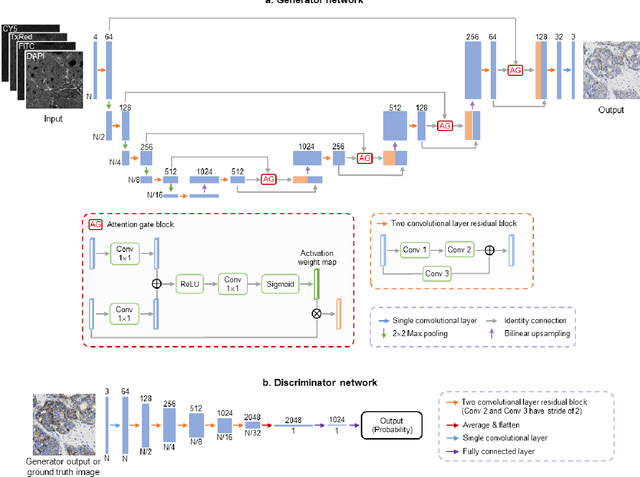
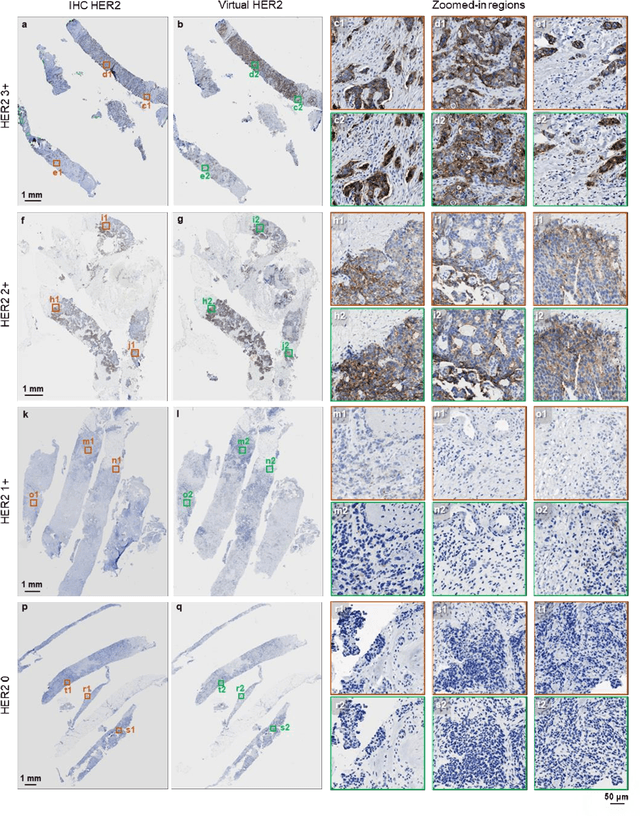
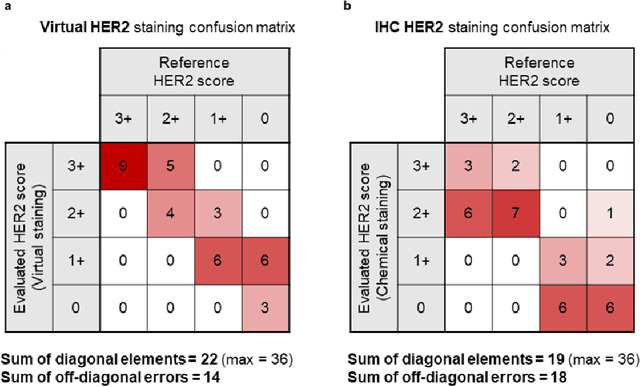
The immunohistochemical (IHC) staining of the human epidermal growth factor receptor 2 (HER2) biomarker is widely practiced in breast tissue analysis, preclinical studies and diagnostic decisions, guiding cancer treatment and investigation of pathogenesis. HER2 staining demands laborious tissue treatment and chemical processing performed by a histotechnologist, which typically takes one day to prepare in a laboratory, increasing analysis time and associated costs. Here, we describe a deep learning-based virtual HER2 IHC staining method using a conditional generative adversarial network that is trained to rapidly transform autofluorescence microscopic images of unlabeled/label-free breast tissue sections into bright-field equivalent microscopic images, matching the standard HER2 IHC staining that is chemically performed on the same tissue sections. The efficacy of this virtual HER2 staining framework was demonstrated by quantitative analysis, in which three board-certified breast pathologists blindly graded the HER2 scores of virtually stained and immunohistochemically stained HER2 whole slide images (WSIs) to reveal that the HER2 scores determined by inspecting virtual IHC images are as accurate as their immunohistochemically stained counterparts. A second quantitative blinded study performed by the same diagnosticians further revealed that the virtually stained HER2 images exhibit a comparable staining quality in the level of nuclear detail, membrane clearness, and absence of staining artifacts with respect to their immunohistochemically stained counterparts. This virtual HER2 staining framework bypasses the costly, laborious, and time-consuming IHC staining procedures in laboratory, and can be extended to other types of biomarkers to accelerate the IHC tissue staining used in life sciences and biomedical workflow.