 Add to Chrome
 Add to Firefox
 Add to Edge
Beyond Gemini-3-Pro: Revisiting LLM Routing and Aggregation at Scale
Jan 04, 2026
Large Language Models (LLMs) have rapidly advanced, with Gemini-3-Pro setting a new performance milestone. In this work, we explore collective intelligence as an alternative to monolithic scaling, and demonstrate that open-source LLMs' collaboration can surpass Gemini-3-Pro. We first revisit LLM routing and aggregation at scale and identify three key bottlenecks: (1) current train-free routers are limited by a query-based paradigm focusing solely on textual similarity; (2) recent aggregation methods remain largely static, failing to select appropriate aggregators for different tasks;(3) the complementarity of routing and aggregation remains underutilized. To address these problems, we introduce JiSi, a novel framework designed to release the full potential of LLMs' collaboration through three innovations: (1) Query-Response Mixed Routing capturing both semantic information and problem difficulty; (2) Support-Set-based Aggregator Selection jointly evaluating the aggregation and domain capacity of aggregators; (3) Adaptive Routing-Aggregation Switch dynamically leveraging the advantages of routing and aggregation. Comprehensive experiments on nine benchmarks demonstrate that JiSi can surpass Gemini-3-Pro with only 47% costs by orchestrating ten open-source LLMs, while outperforming mainstream baselines. It suggests that collective intelligence represents a novel path towards Artificial General Intelligence (AGI).

NovelSeek: When Agent Becomes the Scientist -- Building Closed-Loop System from Hypothesis to Verification
May 22, 2025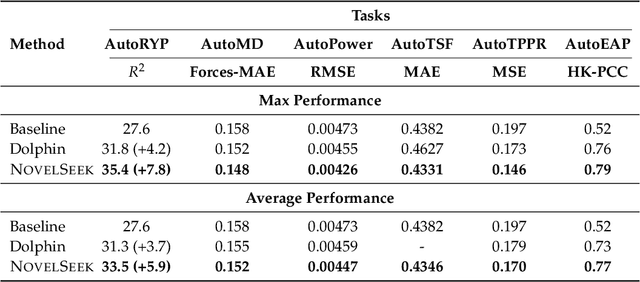
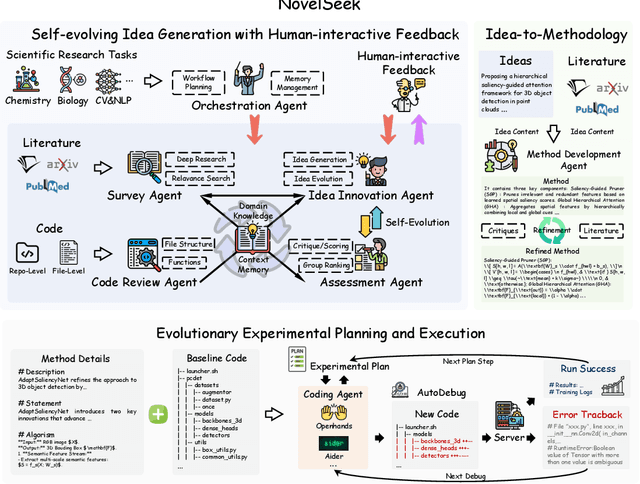
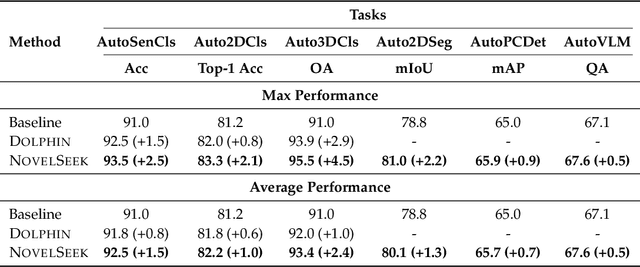
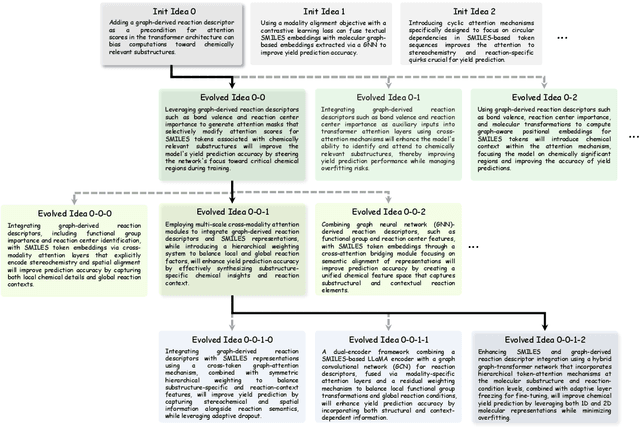
Artificial Intelligence (AI) is accelerating the transformation of scientific research paradigms, not only enhancing research efficiency but also driving innovation. We introduce NovelSeek, a unified closed-loop multi-agent framework to conduct Autonomous Scientific Research (ASR) across various scientific research fields, enabling researchers to tackle complicated problems in these fields with unprecedented speed and precision. NovelSeek highlights three key advantages: 1) Scalability: NovelSeek has demonstrated its versatility across 12 scientific research tasks, capable of generating innovative ideas to enhance the performance of baseline code. 2) Interactivity: NovelSeek provides an interface for human expert feedback and multi-agent interaction in automated end-to-end processes, allowing for the seamless integration of domain expert knowledge. 3) Efficiency: NovelSeek has achieved promising performance gains in several scientific fields with significantly less time cost compared to human efforts. For instance, in reaction yield prediction, it increased from 27.6% to 35.4% in just 12 hours; in enhancer activity prediction, accuracy rose from 0.52 to 0.79 with only 4 hours of processing; and in 2D semantic segmentation, precision advanced from 78.8% to 81.0% in a mere 30 hours.