 Add to Chrome
 Add to Firefox
 Add to Edge
Intermittent Control Is Not Diluted Control: A Switching Effect in Artificial Agency
Jul 19, 2026
Adaptive agents do not always regulate under the same timing conditions. Sometimes stabilization can begin before a disturbance has fully entered the internal state; at other times the agent can only recover after disruption has taken hold. A simple expectation is that an agent moving between these conditions should behave like a weighted average of the two fixed cases: the more time spent in reactive recovery, the greater the regulatory burden. This paper shows that expectation can fail. In a simulated adaptive agent with retained state history, at an operating point where sustained reactive control is more costly than sustained anticipatory control, intermittent access to anticipatory control reduces the mean regulatory burden below the value predicted by a fixed-mode mixture. The effect appears under both periodic and stochastic switching schedules: losing anticipatory access does not simply dilute its benefit, and restoring it intermittently can reorganize the later regulatory burden. High-statistics runs (N = 1000 matched replicates per schedule) resolve a negative nonlinear switching penalty across every tested schedule. The effect is small but consistent: about half a percent of the mean gain, with 63-68% of replicates falling below zero. Late-window diagnostics reveal no unresolved upward accumulation of regulatory burden. The result identifies a design-relevant timing principle. In history-dependent adaptive systems, the burden of remaining organized is not set only by how much time an agent spends in each mode; the order in which disturbance and recovery enter the state can change the subsequent burden. Intermittent anticipatory control may therefore act less like a partial failure of regulation than like a mechanism for reducing the long-term burden of recovery.

When Regulation Has Memory: Hysteresis and Control Burden in Artificial Agency
Jun 29, 2026Adaptive agents are usually judged by what they do, but an agent can appear stable while the internal effort required to keep it stable is increasing. This hidden regulatory burden matters for artificial agents operating under noise, delay, or changing demands: two systems may reach similar internal states while one requires much more corrective control to get there. Here, we study whether that burden depends on history. Using a computational model of adaptive uncertainty regulation, we drive an artificial agent through a continuous change in its uncertainty target and then reverse the change without resetting the agent. This creates a simple test for carryover: does the controller respond only to the current target, or does the path by which the agent reached that target still matter? The simulations show a clear history-dependent effect. The adaptive gain required to regulate the agent forms a reproducible hysteresis loop, meaning that the same target can require different levels of control depending on whether the agent is moving toward or returning from a more demanding regime. The timing of regulation also matters. When stabilization is available before disturbance exposure, the agent generally requires less adaptive gain than when it can only recover after disturbance has already acted. The state-level coherence measure also shows path dependence, but the timing effect is much clearer in regulatory gain. The main difference is therefore not that anticipatory regulation produces a completely different state. Rather, it reaches comparable regulated behavior with lower modeled control demand. These results suggest that adaptive agents should be evaluated not only by whether they remain organized, but by how much regulation they must recruit to do so.
IRAM-Omega-Q: A Computational Architecture for Uncertainty Regulation in Artificial Agents
Mar 16, 2026Artificial agents can achieve strong task performance while remaining opaque with respect to internal regulation, uncertainty management, and stability under stochastic perturbation. We present IRAM-Omega-Q, a computational architecture that models internal regulation as closed-loop control over a quantum-like state representation. The framework uses density matrices instrumentally as abstract state descriptors, enabling direct computation of entropy, purity, and coherence-related metrics without invoking physical quantum processes. A central adaptive gain is updated continuously to maintain a target uncertainty regime under noise. Using systematic parameter sweeps, fixed-seed publication-mode simulations, and susceptibility-based phase-diagram analysis, we identify reproducible critical boundaries in regulation-noise space. We further show that alternative control update orderings, interpreted as perception-first and action-first architectures, induce distinct stability regimes under identical external conditions. These results support uncertainty regulation as a concrete architectural principle for artificial agents and provide a formal setting for studying stability, control, and order effects in cognitively inspired AI systems. The framework is presented as a technical model of adaptive regulation dynamics in artificial agents. It makes no claims regarding phenomenological consciousness, and the quantum-like formalism is used strictly as a mathematical representation for structured uncertainty and state evolution.
Artificial Intelligence and Machine Learning in Nuclear Physics
Dec 04, 2021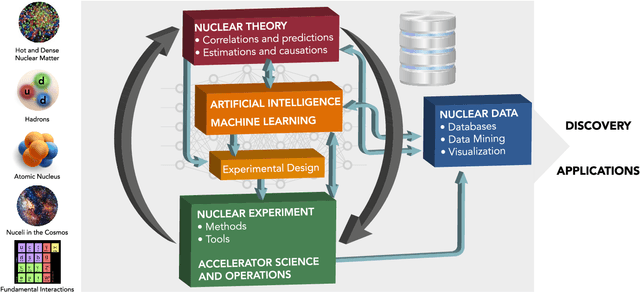
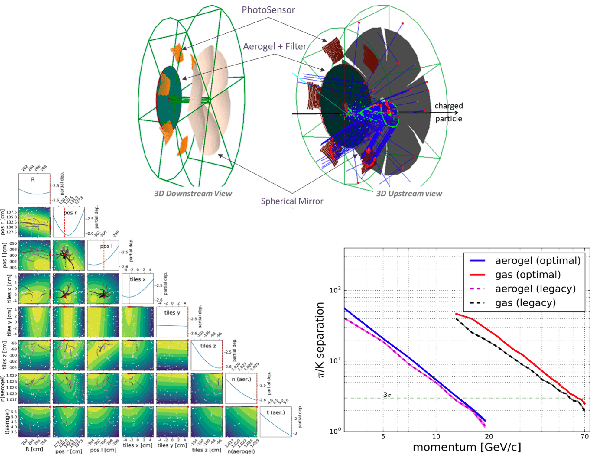
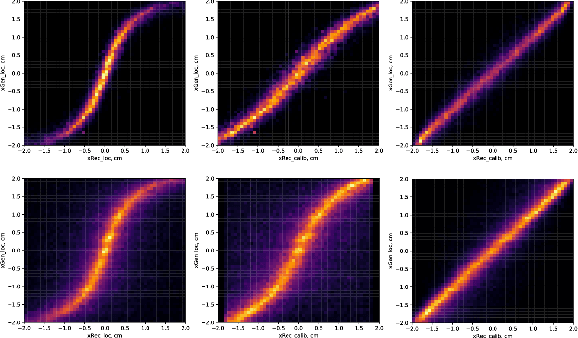
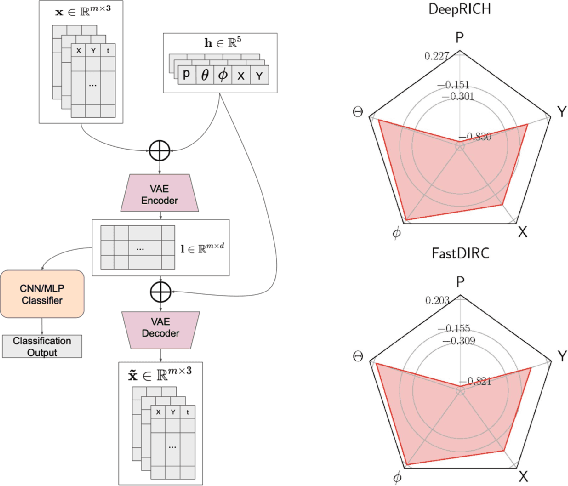
Advances in artificial intelligence/machine learning methods provide tools that have broad applicability in scientific research. These techniques are being applied across the diversity of nuclear physics research topics, leading to advances that will facilitate scientific discoveries and societal applications. This Review gives a snapshot of nuclear physics research which has been transformed by artificial intelligence and machine learning techniques.
Using Artificial Intelligence for Particle Track Identification in CLAS12 Detector
Aug 28, 2020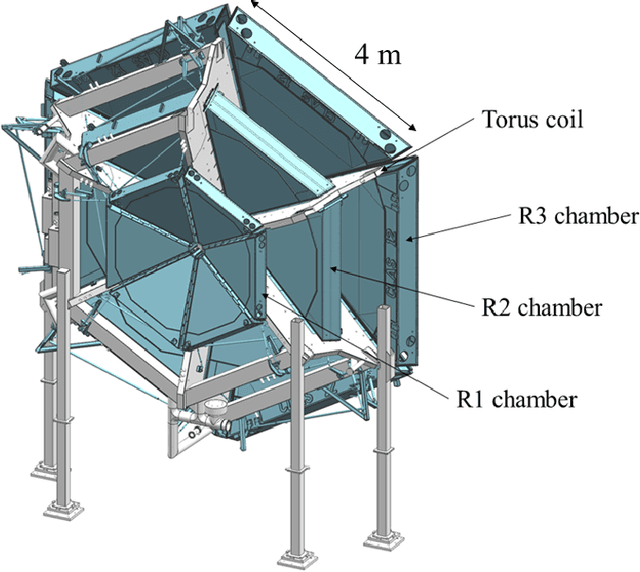
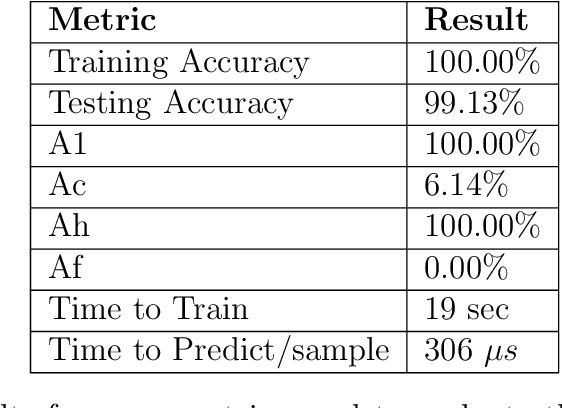
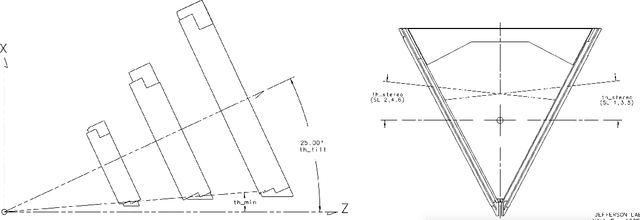

In this article we describe the development of machine learning models to assist the CLAS12 tracking algorithm by identifying the best track candidates from combinatorial track candidates from the hits in drift chambers. Several types of machine learning models were tested, including: Convolutional Neural Networks (CNN), Multi-Layer Perceptron (MLP) and Extremely Randomized Trees (ERT). The final implementation was based on an MLP network and provided an accuracy $>99\%$. The implementation of AI assisted tracking into the CLAS12 reconstruction workflow and provided a 6 times code speedup.