 Add to Chrome
 Add to Firefox
 Add to Edge
A Modular Agentic Framework for Synthetically Constrained Multi-Objective Hit-to-Lead Optimization
Aug 11, 2026
Hit-to-lead optimization requires iterative design of hit analogs across competing potency, selectivity, physicochemical, pharmacokinetic, safety, and synthetic constraints. We present SABLE (Synthetically-accessible Agentic Bayesian Ligand Exploration), an open-source framework that employs natural-language orchestration to guide chemical structure optimization. SABLE uses an LLM to interpret user-defined goals and route tasks, while specialized tools perform reaction-templated analog enumeration, physicochemical and ADMET property prediction, structure-based affinity scoring, and Bayesian optimization. The resulting workflow is a computational twin of the analytical and prioritization stages of the design-make-test-analyze cycle, providing provenance of each numerical output. Across single, and multi-objective optimization studies, SABLE enriches candidate sets for user-defined computational objectives while evaluating only a subset of the enumerated search space. Its modular architecture allows tools and characterization backends to be replaced by editing a simple config file, without modifying operational logic. SABLE provides an extensible decision-support framework for prioritizing synthetically constrained analogs in early-stage drug discovery.

Advancing Intra-operative Precision: Dynamic Data-Driven Non-Rigid Registration for Enhanced Brain Tumor Resection in Image-Guided Neurosurgery
Aug 31, 2023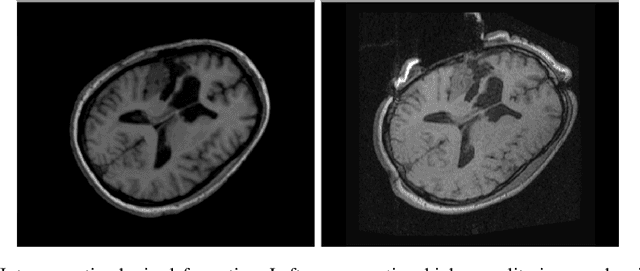
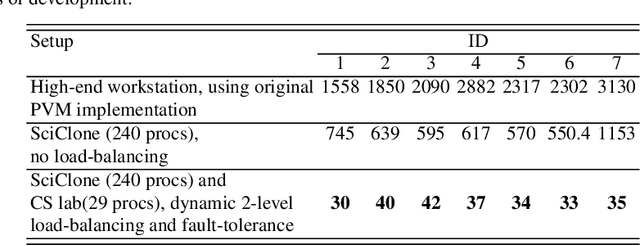
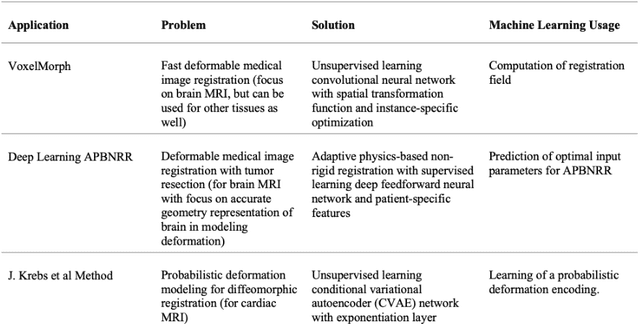

During neurosurgery, medical images of the brain are used to locate tumors and critical structures, but brain tissue shifts make pre-operative images unreliable for accurate removal of tumors. Intra-operative imaging can track these deformations but is not a substitute for pre-operative data. To address this, we use Dynamic Data-Driven Non-Rigid Registration (NRR), a complex and time-consuming image processing operation that adjusts the pre-operative image data to account for intra-operative brain shift. Our review explores a specific NRR method for registering brain MRI during image-guided neurosurgery and examines various strategies for improving the accuracy and speed of the NRR method. We demonstrate that our implementation enables NRR results to be delivered within clinical time constraints while leveraging Distributed Computing and Machine Learning to enhance registration accuracy by identifying optimal parameters for the NRR method. Additionally, we highlight challenges associated with its use in the operating room.
Using Artificial Intelligence for Particle Track Identification in CLAS12 Detector
Aug 28, 2020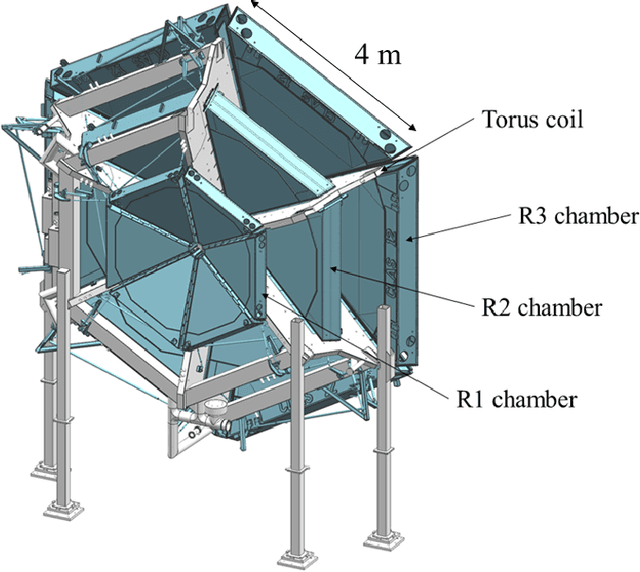
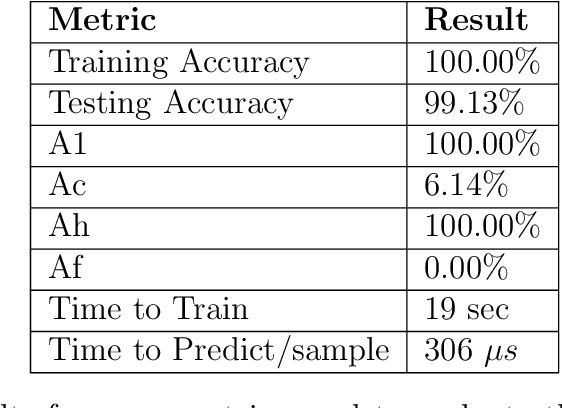


In this article we describe the development of machine learning models to assist the CLAS12 tracking algorithm by identifying the best track candidates from combinatorial track candidates from the hits in drift chambers. Several types of machine learning models were tested, including: Convolutional Neural Networks (CNN), Multi-Layer Perceptron (MLP) and Extremely Randomized Trees (ERT). The final implementation was based on an MLP network and provided an accuracy $>99\%$. The implementation of AI assisted tracking into the CLAS12 reconstruction workflow and provided a 6 times code speedup.