 Add to Chrome
 Add to Firefox
 Add to Edge
An Exploratory Evaluation of LLM-Assisted Rewriting of Moderate-Complexity Financial Sentences for DisCoCat-Based Sentiment Analysis
Aug 07, 2026
Quantum natural language processing (QNLP) provides a grammar-aware framework for text modeling, and Distributional Compositional Categorical (DisCoCat) is one of its theoretically grounded formulations. Prior work on financial sentiment analysis has identified practical limitations of DisCoCat, including parser sensitivity, high simulation cost, and difficulty handling longer sentences. We study an LLM-assisted preprocessing workflow that uses controlled rewriting to compress, simplify, or decompose moderate-complexity financial sentiment sentences into parser-compatible, circuit-efficient variants while preserving sentiment-bearing meaning. We compare prompting strategies, language models, and filtering configurations with the low-complexity-only DisCoCat baseline of Stein et al. At the circuit level, the strongest compression variants reduce average qubit and gate counts by more than 70 percent relative to the raw moderate-complexity subset. Across repeated training runs, GPT-4.1-mini with Prompt B achieves the highest observed mean accuracy, $0.550 \pm 0.035$, compared with $0.521 \pm 0.050$ for the baseline. Larger training splits do not necessarily improve downstream performance; across evaluated configurations, training-split size has a moderately negative association with accuracy (Pearson $r=-0.446$). These results provide exploratory evidence that LLM-assisted rewriting can make some moderate-complexity inputs usable within the evaluated DisCoCat configuration, while highlighting prompt design, filtering, and circuit-aware preprocessing as considerations for more scalable QNLP-based financial sentiment analysis.

Motion-guided sparse correction enables expert-quality point tracking across diverse microscopy regimes
May 28, 2026Tracking the dynamics of non-canonical biological systems in microscopy videos remains a persistent challenge. Both classical and learning-based trackers depend on expert-reviewed data to be evaluated and adapted, yet exhaustive manual annotation rarely scales to the videos where these tools are needed most. We developed RIPPLE (Refinement Interpolation Platform for Point Location Estimation), which recasts annotation as sparse correction: a user clicks a starting point, RIPPLE proposes a full trajectory, and the user intervenes only where the trajectory drifts. We tested RIPPLE on five challenging microscopy datasets from our laboratories, four from the transparent jellyfish Clytia hemisphaerica and one tracking landmarks on rapidly moving sperm. Across these, RIPPLE matched the quality of exhaustive manual annotation while reducing manual clicks by 3 to 25 times across datasets. RIPPLE thereby fills a missing layer between manual annotation and fully automated tracking, enabling immediate quantification of biological dynamics, method benchmarking, and the production of the gold-standard data needed to adapt future automated microscopy trackers.
ITAS: A Multi-Agent Architecture for LLM-Based Intelligent Tutoring
Apr 27, 2026Large language model tutors are easy to build in a notebook and hard to run in a real course. We describe ITAS (Intelligent Teaching Assistant System), a multi-agent tutoring system that a graduate quantum computing course used for a semester at Old Dominion University. The system has three layers. The teaching layer is a Spoke-and-Wheel of three parallel specialist agents (Video, Code, Guidance) followed by a Synthesizer, plus a separate autograder that evaluates both the correctness and the approach of checkpoint submissions. The operational layer is four Cloud Run microservices with session state in Cloud SQL and interaction events streamed through Pub/Sub to BigQuery. The feedback layer is a narrow-scope conversational agent that answers instructor questions over per-lesson pseudonymized event streams, addressing what we call the Blind Instructor Problem: LLM tutors accumulate more data about students than the instructor can reach through routine channels. The architecture is a direct response to specific failures of an earlier prototype, and we describe which of those fixes carried forward and which were dropped for this iteration. We report on a pilot deployment (five students, one course, one semester) interpreted as system-behavior evidence rather than learning-outcome evidence: the teaching layer handled 334 chat turns without the task-boundary hallucinations that domain consolidation would have risked, the operational layer captured 10,628 events across five modules, and the feedback layer surfaced two findings the instructor acted on mid-semester. We do not claim the pilot generalizes. We do claim that the system as described is one workable answer to the question of what an LLM-based ITS needs to look like end-to-end to run in a real course.
From Prototype to Classroom: An Intelligent Tutoring System for Quantum Education
Apr 27, 2026Quantum computing instructors face a compounding problem: the concepts are counterintuitive, the mathematical formalism is dense, and qualified faculty are scarce outside a small number of well-resourced institutions. Our prior work introduced a knowledge-graph-augmented tutoring prototype with two specialized LLM agents: a Teaching Agent for dynamic interaction and a Lesson Planning Agent for lesson generation. Validated on simulated runs rather than in a real course, that prototype left open whether more aggressive agent specialization would be needed to handle the full range of quantum education tasks under real student load. This paper answers the three questions that the prototype could not answer. Can agent specialization solve the reliability problem in a domain as technically demanding as quantum information science? Can the system run in a real course, not a demonstration? Does the instructor gain actionable intelligence from the deployment? We present ITAS (Intelligent Teaching Assistant System), a multi-agent tutoring system built around four contributions: a five-module QIS curriculum grounded in Watrous's information-first framework, a Spoke-and-Wheel teaching architecture with quantum-specialized agents, a cloud infrastructure designed for production use and regulatory compliance, and a conversational analytics layer for instructors and content developers. Piloted in a quantum computing course at Old Dominion University, the system supports all three answers: deployment evidence is consistent with specialization addressing the task-boundary failures observed in the prototype, cloud infrastructure supports classroom-scale concurrency at sub-textbook cost, and the analytics agent surfaces curriculum gaps the instructor could not otherwise see.
Latency and Cost of Multi-Agent Intelligent Tutoring at Scale
Apr 27, 2026Multi-agent LLM tutoring systems improve response quality through agent specialization, but each student query triggers several concurrent API calls whose latencies compound through a parallel-phase maximum effect that single-agent systems do not face. We instrument ITAS, a four-agent tutoring system built on Gemini 2.5 Flash and Google Vertex AI, across three throughput tiers (Standard PayGo, Priority PayGo, and Provisioned Throughput) and eleven concurrency levels up to 50 simultaneous users, producing over 3,000 requests drawn from a live graduate STEM deployment. Priority PayGo maintains flat sub-4-second response times across the full load range; Standard PayGo degrades substantially under classroom-scale concurrency; and Provisioned Throughput delivers the lowest latency at low concurrency but saturates its reserved capacity above approximately 20 concurrent users. Cost analysis places both pay-per-token tiers well below the price of a STEM textbook per student per semester under a worst-case usage ceiling. Provisioned Throughput, expensive under continuous provisioning, becomes cost-competitive for institutions that can predict and concentrate their traffic toward high utilization. These results provide concrete tier-selection guidance across deployment scales from a single seminar to a university-wide rollout.
A Survey of AI Methods for Geometry Preparation and Mesh Generation in Engineering Simulation
Dec 16, 2025Artificial intelligence is beginning to ease long-standing bottlenecks in the CAD-to-mesh pipeline. This survey reviews recent advances where machine learning aids part classification, mesh quality prediction, and defeaturing. We explore methods that improve unstructured and block-structured meshing, support volumetric parameterizations, and accelerate parallel mesh generation. We also examine emerging tools for scripting automation, including reinforcement learning and large language models. Across these efforts, AI acts as an assistive technology, extending the capabilities of traditional geometry and meshing tools. The survey highlights representative methods, practical deployments, and key research challenges that will shape the next generation of data-driven meshing workflows.
Toward Personalizing Quantum Computing Education: An Evolutionary LLM-Powered Approach
Apr 24, 2025Quantum computing education faces significant challenges due to its complexity and the limitations of current tools; this paper introduces a novel Intelligent Teaching Assistant for quantum computing education and details its evolutionary design process. The system combines a knowledge-graph-augmented architecture with two specialized Large Language Model (LLM) agents: a Teaching Agent for dynamic interaction, and a Lesson Planning Agent for lesson plan generation. The system is designed to adapt to individual student needs, with interactions meticulously tracked and stored in a knowledge graph. This graph represents student actions, learning resources, and relationships, aiming to enable reasoning about effective learning pathways. We describe the implementation of the system, highlighting the challenges encountered and the solutions implemented, including introducing a dual-agent architecture where tasks are separated, all coordinated through a central knowledge graph that maintains system awareness, and a user-facing tag system intended to mitigate LLM hallucination and improve user control. Preliminary results illustrate the system's potential to capture rich interaction data, dynamically adapt lesson plans based on student feedback via a tag system in simulation, and facilitate context-aware tutoring through the integrated knowledge graph, though systematic evaluation is required.
Real-Time Dynamic Data Driven Deformable Registration for Image-Guided Neurosurgery: Computational Aspects
Sep 06, 2023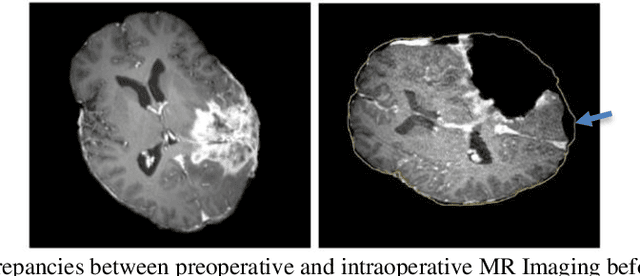
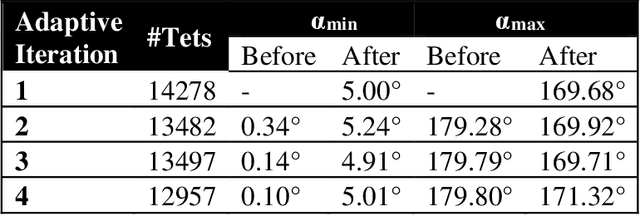
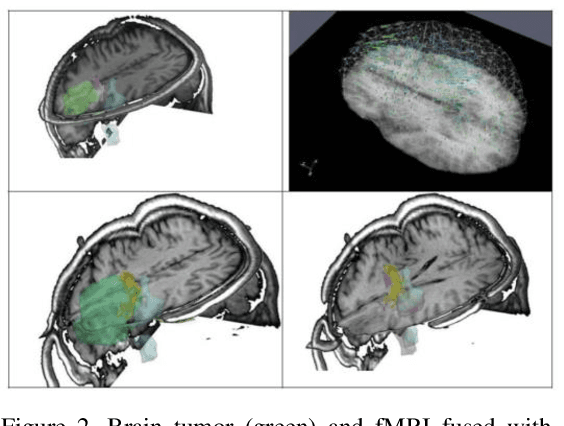
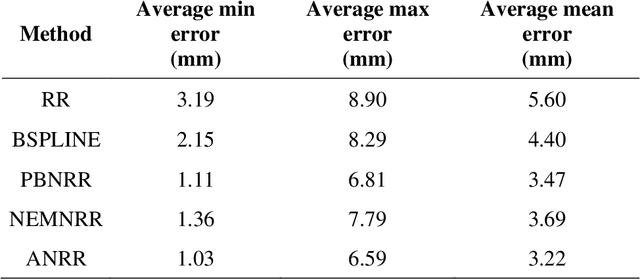
Current neurosurgical procedures utilize medical images of various modalities to enable the precise location of tumors and critical brain structures to plan accurate brain tumor resection. The difficulty of using preoperative images during the surgery is caused by the intra-operative deformation of the brain tissue (brain shift), which introduces discrepancies concerning the preoperative configuration. Intra-operative imaging allows tracking such deformations but cannot fully substitute for the quality of the pre-operative data. Dynamic Data Driven Deformable Non-Rigid Registration (D4NRR) is a complex and time-consuming image processing operation that allows the dynamic adjustment of the pre-operative image data to account for intra-operative brain shift during the surgery. This paper summarizes the computational aspects of a specific adaptive numerical approximation method and its variations for registering brain MRIs. It outlines its evolution over the last 15 years and identifies new directions for the computational aspects of the technique.
Advancing Intra-operative Precision: Dynamic Data-Driven Non-Rigid Registration for Enhanced Brain Tumor Resection in Image-Guided Neurosurgery
Aug 31, 2023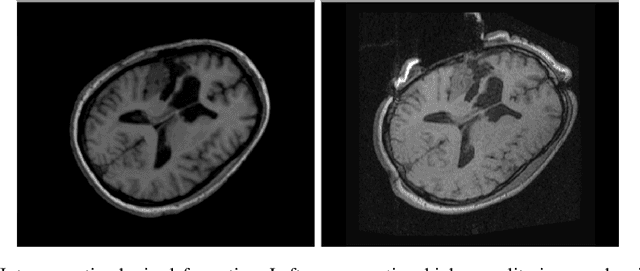
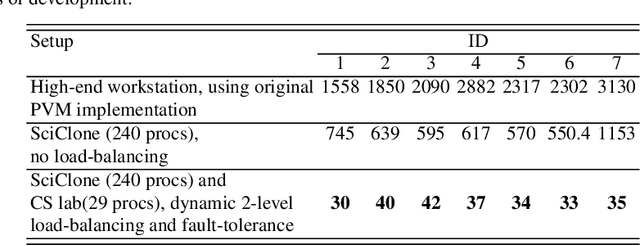
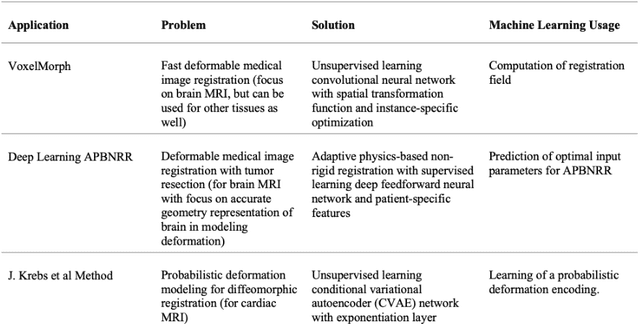

During neurosurgery, medical images of the brain are used to locate tumors and critical structures, but brain tissue shifts make pre-operative images unreliable for accurate removal of tumors. Intra-operative imaging can track these deformations but is not a substitute for pre-operative data. To address this, we use Dynamic Data-Driven Non-Rigid Registration (NRR), a complex and time-consuming image processing operation that adjusts the pre-operative image data to account for intra-operative brain shift. Our review explores a specific NRR method for registering brain MRI during image-guided neurosurgery and examines various strategies for improving the accuracy and speed of the NRR method. We demonstrate that our implementation enables NRR results to be delivered within clinical time constraints while leveraging Distributed Computing and Machine Learning to enhance registration accuracy by identifying optimal parameters for the NRR method. Additionally, we highlight challenges associated with its use in the operating room.
Using Artificial Intelligence for Particle Track Identification in CLAS12 Detector
Aug 28, 2020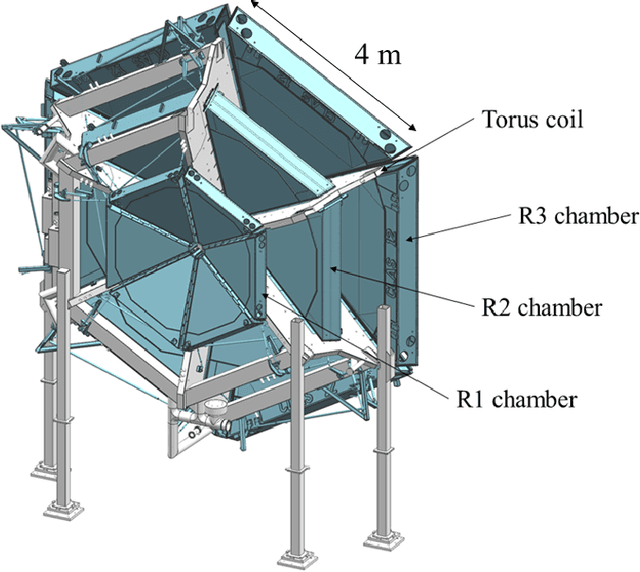
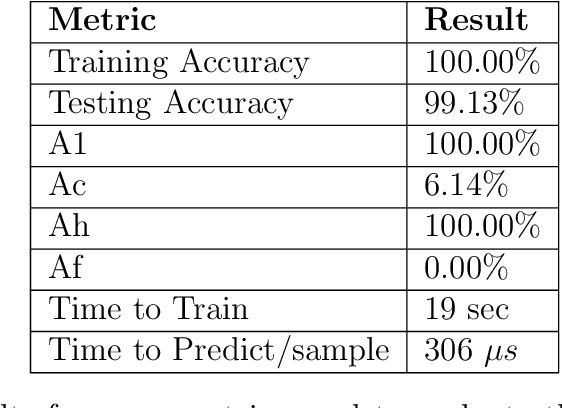


In this article we describe the development of machine learning models to assist the CLAS12 tracking algorithm by identifying the best track candidates from combinatorial track candidates from the hits in drift chambers. Several types of machine learning models were tested, including: Convolutional Neural Networks (CNN), Multi-Layer Perceptron (MLP) and Extremely Randomized Trees (ERT). The final implementation was based on an MLP network and provided an accuracy $>99\%$. The implementation of AI assisted tracking into the CLAS12 reconstruction workflow and provided a 6 times code speedup.