 Add to Chrome
 Add to Firefox
 Add to Edge
FastTPS: An Optimized Method for LLM Token Phase for AI accelerators
Jul 13, 2026
The popularity of large language models (LLMs) escalates an ongoing demand for effective inference. However, due to the sequential processing of tokens during the token phase in decoder-only LLMs inference, the inherent low parallelism leads to reduced throughput and suboptimal utilization of the computing units on artificial intelligence (AI) accelerators, particularly when handling long-sequence inputs that impose significant memory overhead. Recently, many reported methods have been developed as potential solutions, since they emerge with numeric deviation. This paper presents FastTPS, a high performance and low-precision loss method for accelerating the token-phase in LLM inference on general AI accelerators which includes three key components: (1) AI accelerator-enabled reloading-free KV Cache concatenation which decreases memory access overhead as well as enables full fusion of Attention, (2) high-efficiency and high-accuracy 'RoPE' attention based on the tiling optimized FLAT, and (3) highly-fused MLP with fine-grain pipeline scheduling. Our results confirm that FastTPS significantly alleviates memory bottlenecks in the token phase, delivering a 6x speed improvement (compared to none-fusion) on an AMD Ryzen AI 300 series NPU with BF16 precision while sustaining 93% peak memory bandwidth utilization during Phi3-mini-4k-instruct inference.

TIER: Trajectory-Invariant Explanation Regularization for Membership Privacy
Jul 03, 2026Explainability is central to building trustworthy AI, yet explanation interfaces can inadvertently provide adversaries with an expanded privacy-related attack surfaces. Recent studies show that advanced membership-inference attacks succeed by exploiting confidence-drop trajectories, induced through attribution-guided perturbations, as discriminative features, rather than directly using confidence scores or explanation vectors. Existing defenses against membership inference fail to directly mitigate such explanation-driven attacks. In this work, we investigate whether, during training, a model's own gradients can be leveraged as defense signals against such attacks, thereby aligning explanation profiles between members and non-members. To this end, we propose a Trajectory-Invariant Explanation Regularization (TIER) defense that penalizes erratic fluctuations in confidence drops simulated through gradient-guided perturbations and simultaneously minimizes the distributional shifts via KL-divergence. Unlike conventional adversarial training, which emphasizes label robustness, our approach targets explanation robustness by enforcing self-consistency through KL-divergence and reducing the variance of confidence drops between members and non-members. Extensive experiments confirm that our method effectively mitigates these attacks, delivering privacy protection while maintaining model utility and explanation fidelity.
STAG: Spatio-temporal Evolving Structural Representation of Action Units for Micro-expression Recognition
Jun 26, 2026Micro-expression recognition is challenging due to subtle and short-lived facial muscle movements. Existing methods rely heavily on apex-onset frames, overlook fine-grained inter-frame dynamics, and separately model spatial and temporal information, limiting generalization across datasets. To address these challenges, we propose STAG, a dynamic ROI-AU-coupled spatial-temporal network that jointly models motion flow and adaptive facial connectivity. The framework extracts optical flow from discriminative frames using magnitude-based selection and temporal attention. A dual-branch architecture combines an enhanced graph attention network for structured spatial reasoning with a transformer encoder for temporal modeling. A bidirectional cross-attention module enables mutual refinement of spatial and temporal features, while AU-guided dynamic connectivity adapts facial region interactions according to muscle activation patterns. The transformer captures subtle temporal dynamics beyond apex-based approaches, improving semantic consistency and interpretability for explainable micro-expression recognition. The fused representation is optimized using focal loss and evaluated on CASME II, 4DME, DFME, NaME, SAMM, and SMIC-HS. Extensive experiments demonstrate improved robustness, generalization, interpretability, and computational efficiency, confirming the effectiveness of adaptive relational reasoning, AU-guided dynamic connectivity, and deep spatial-temporal feature fusion for accurate cross-dataset micro-expression recognition.
DE-FIVE: Detecting Malicious Image Prompts via Fourier Features and Image Vector Embeddings
Jun 22, 2026Vision language models (VLMs) employ both visual and textual modalities to enable advanced vision-language inference. However, incorporating visual modalities expands the attack surface of VLMs, making them more susceptible to security threats such as adversarial perturbations and indirect prompt injection, wherein crafted malicious image prompts can elicit unintended model outputs. Existing defense methods against malicious image prompts remain insufficient as they typically demand extensive datasets for retraining or the deployment of additional, complex classifiers. Most critically, there is a profound lack of specialized defense mechanisms specifically targeting indirect prompt injections, a gap that serves as a primary motivation for this work. To address these limitations, we introduce DE-FIVE, a novel training-free framework for detecting malicious image prompts by leveraging Fourier features and the hidden state representations of the visual encoder (image vector embeddings) across perturbations. Specifically, we develop a hybrid detection strategy consisting of a black-box detector that operates on Fourier-domain features and a white-box detector that exploits image vector embeddings derived from only a few-shot malicious set. Extensive experiments demonstrate that the proposed framework consistently outperforms state-of-the-art baselines against malicious image prompts.
Visualising the Attractor Landscape of Neural Cellular Automata
Apr 12, 2026As Neural Cellular Automata (NCAs) are increasingly applied outside of the toy models in Artificial Life, there is a pressing need to understand how they behave and to build appropriate routes to interpret what they have learnt. By their very nature, the benefits of training NCAs are balanced with a lack of interpretability: we can engineer emergent behaviour, but have limited ability to understand what has been learnt. In this paper, we apply a variety of techniques to pry open the NCA black box and glean some understanding of what it has learnt to do. We apply techniques from manifold learning (principal components analysis and both dense and sparse autoencoders) along with techniques from topological data analysis (persistent homology) to capture the NCA's underlying behavioural manifold, with varying success. Results show that when analysis is performed at a macroscopic level (i.e. taking the entire NCA state as a single data point), the underlying manifold is often quite simple and can be captured and analysed quite well. When analysis is performed at a microscopic level (i.e. taking the state of individual cells as a single data point), the manifold is highly complex and more complicated techniques are required in order to make sense of it.
Speech and Text-Based Emotion Recognizer
Dec 10, 2023Affective computing is a field of study that focuses on developing systems and technologies that can understand, interpret, and respond to human emotions. Speech Emotion Recognition (SER), in particular, has got a lot of attention from researchers in the recent past. However, in many cases, the publicly available datasets, used for training and evaluation, are scarce and imbalanced across the emotion labels. In this work, we focused on building a balanced corpus from these publicly available datasets by combining these datasets as well as employing various speech data augmentation techniques. Furthermore, we experimented with different architectures for speech emotion recognition. Our best system, a multi-modal speech, and text-based model, provides a performance of UA(Unweighed Accuracy) + WA (Weighed Accuracy) of 157.57 compared to the baseline algorithm performance of 119.66
Steam Recommendation System
May 03, 2023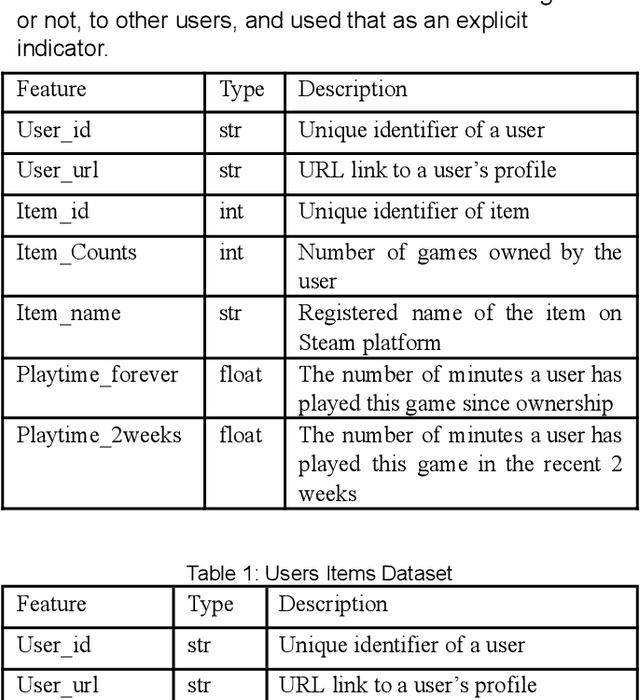
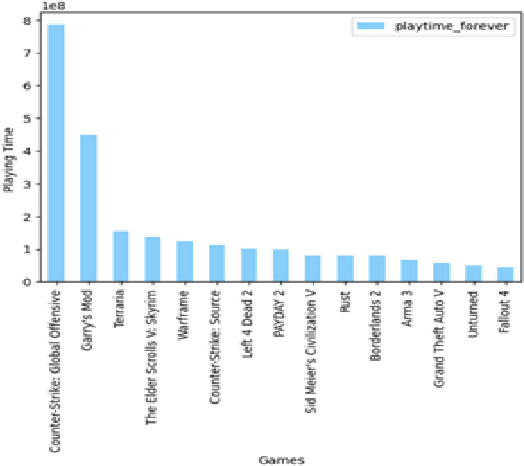
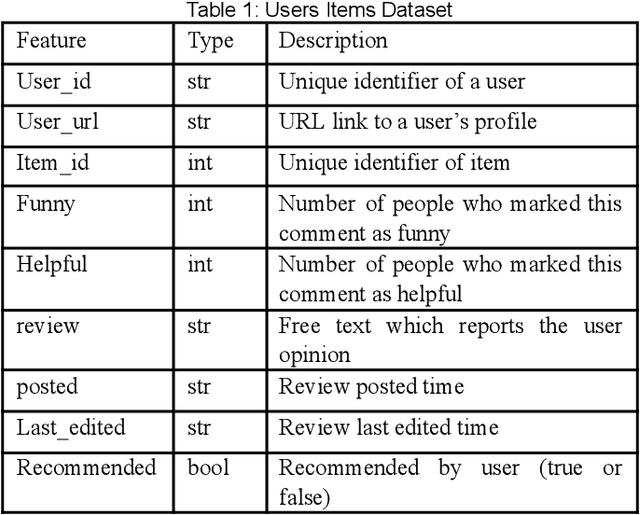
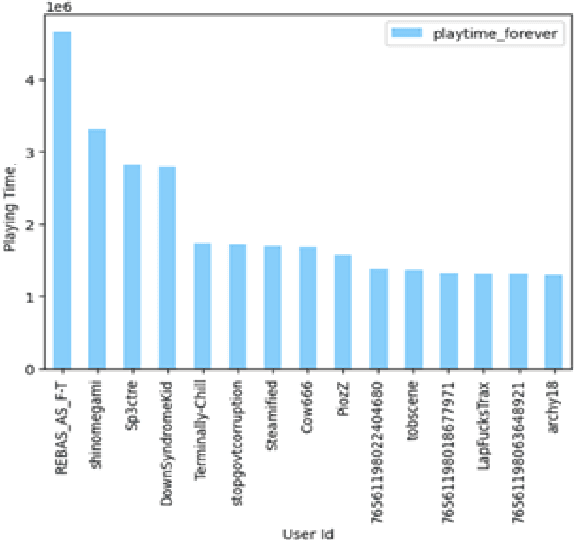
We aim to leverage the interactions between users and items in the Steam community to build a game recommendation system that makes personalized suggestions to players in order to boost Steam's revenue as well as improve the users' gaming experience. The whole project is built on Apache Spark and deals with Big Data. The final output of the project is a recommendation system that gives a list of the top 5 items that the users will possibly like.6
Literature on Hand GESTURE Recognition using Graph based methods
Jul 01, 2022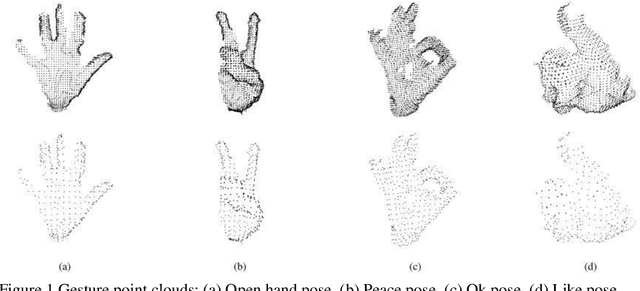
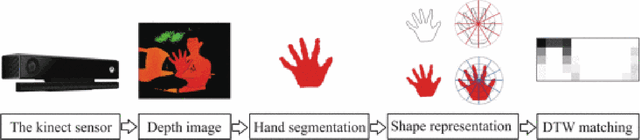
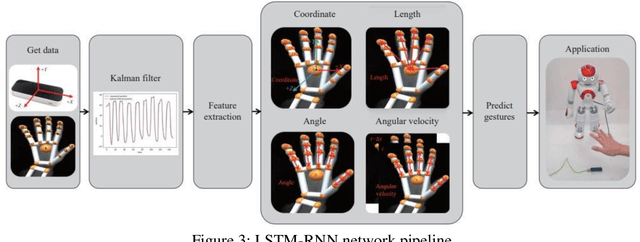
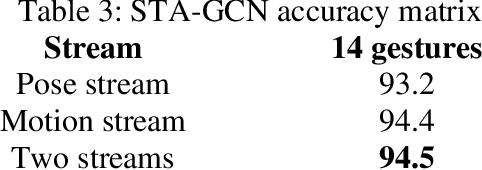
Skeleton based recognition systems are gaining popularity and machine learning models focusing on points or joints in a skeleton have proved to be computationally effective and application in many areas like Robotics. It is easy to track points and thereby preserving spatial and temporal information, which plays an important role in abstracting the required information, classification becomes an easy task. In this paper, we aim to study these points but using a cloud mechanism, where we define a cloud as collection of points. However, when we add temporal information, it may not be possible to retrieve the coordinates of a point in each frame and hence instead of focusing on a single point, we can use k-neighbors to retrieve the state of the point under discussion. Our focus is to gather such information using weight sharing but making sure that when we try to retrieve the information from neighbors, we do not carry noise with it. LSTM which has capability of long-term modelling and can carry both temporal and spatial information. In this article we tried to summarise graph based gesture recognition method.
Fast Intent Classification for Spoken Language Understanding
Dec 03, 2019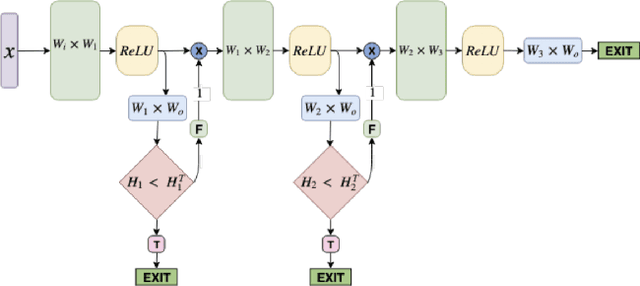
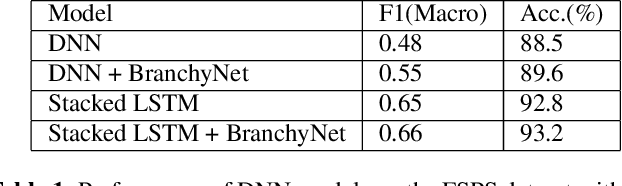
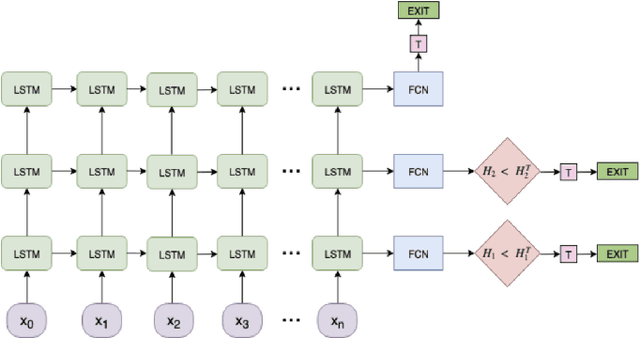
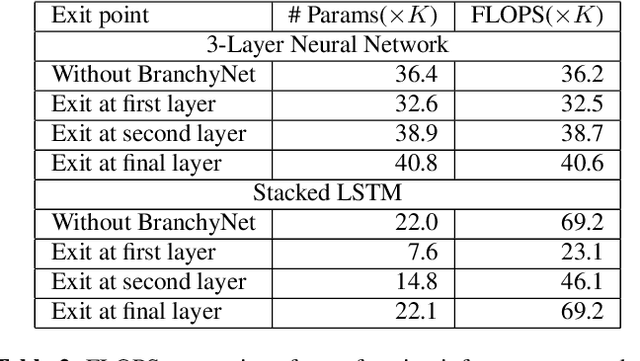
Spoken Language Understanding (SLU) systems consist of several machine learning components operating together (e.g. intent classification, named entity recognition and resolution). Deep learning models have obtained state of the art results on several of these tasks, largely attributed to their better modeling capacity. However, an increase in modeling capacity comes with added costs of higher latency and energy usage, particularly when operating on low complexity devices. To address the latency and computational complexity issues, we explore a BranchyNet scheme on an intent classification scheme within SLU systems. The BranchyNet scheme when applied to a high complexity model, adds exit points at various stages in the model allowing early decision making for a set of queries to the SLU model. We conduct experiments on the Facebook Semantic Parsing dataset with two candidate model architectures for intent classification. Our experiments show that the BranchyNet scheme provides gains in terms of computational complexity without compromising model accuracy. We also conduct analytical studies regarding the improvements in the computational cost, distribution of utterances that egress from various exit points and the impact of adding more complexity to models with the BranchyNet scheme.