 Add to Chrome
 Add to Firefox
 Add to Edge
TIER: Trajectory-Invariant Explanation Regularization for Membership Privacy
Jul 03, 2026
Explainability is central to building trustworthy AI, yet explanation interfaces can inadvertently provide adversaries with an expanded privacy-related attack surfaces. Recent studies show that advanced membership-inference attacks succeed by exploiting confidence-drop trajectories, induced through attribution-guided perturbations, as discriminative features, rather than directly using confidence scores or explanation vectors. Existing defenses against membership inference fail to directly mitigate such explanation-driven attacks. In this work, we investigate whether, during training, a model's own gradients can be leveraged as defense signals against such attacks, thereby aligning explanation profiles between members and non-members. To this end, we propose a Trajectory-Invariant Explanation Regularization (TIER) defense that penalizes erratic fluctuations in confidence drops simulated through gradient-guided perturbations and simultaneously minimizes the distributional shifts via KL-divergence. Unlike conventional adversarial training, which emphasizes label robustness, our approach targets explanation robustness by enforcing self-consistency through KL-divergence and reducing the variance of confidence drops between members and non-members. Extensive experiments confirm that our method effectively mitigates these attacks, delivering privacy protection while maintaining model utility and explanation fidelity.

DE-FIVE: Detecting Malicious Image Prompts via Fourier Features and Image Vector Embeddings
Jun 22, 2026Vision language models (VLMs) employ both visual and textual modalities to enable advanced vision-language inference. However, incorporating visual modalities expands the attack surface of VLMs, making them more susceptible to security threats such as adversarial perturbations and indirect prompt injection, wherein crafted malicious image prompts can elicit unintended model outputs. Existing defense methods against malicious image prompts remain insufficient as they typically demand extensive datasets for retraining or the deployment of additional, complex classifiers. Most critically, there is a profound lack of specialized defense mechanisms specifically targeting indirect prompt injections, a gap that serves as a primary motivation for this work. To address these limitations, we introduce DE-FIVE, a novel training-free framework for detecting malicious image prompts by leveraging Fourier features and the hidden state representations of the visual encoder (image vector embeddings) across perturbations. Specifically, we develop a hybrid detection strategy consisting of a black-box detector that operates on Fourier-domain features and a white-box detector that exploits image vector embeddings derived from only a few-shot malicious set. Extensive experiments demonstrate that the proposed framework consistently outperforms state-of-the-art baselines against malicious image prompts.
Who Pays the Price? Stakeholder-Centric Prompt Injection Benchmarking for Real-world Web Agents
Jun 11, 2026Web agents driven by large language models (LLMs) are increasingly deployed in real-world environments, where they operate over untrusted web content and execute actions with direct consequences. This makes them vulnerable to prompt-injection attacks, in which seemingly benign content embeds adversarial instructions that manipulate agent behaviour. Existing security benchmarks adopt an \textit{attack-centric} perspective, focusing on the technical feasibility of injections while overlooking the nuanced distribution of resulting harms. In practice, however, prompt-injection risk is victim-dependent: a single exploit can produce asymmetric consequences for different stakeholders, and the same attack pattern may exhibit substantially different effectiveness depending on whom it targets. To capture these properties, we introduce \textbf{\sysname}, a \textit{stakeholder-centric} benchmark to systematically categorize and attribute harm in real-world web agent systems. It distinguishes between affected entities (e.g., user, seller, platform), decomposes the attacks into concrete objectives, and evaluates each case with complementary outcome- and process-level metrics. Our results reveal substantial and heterogeneous vulnerabilities: not a single attack objective is reliably resisted by current agents, and failures distribute across qualitatively distinct modes ranging from \emph{stealthy parasitism} (attack succeeds without disrupting the user's delegated task) to \emph{misaligned disruption} (task disrupted without attack success) and \emph{compounded failure} (both adversarial objective and task integrity simultaneously violated). These patterns are missed by conventional evaluation, highlighting the need for stakeholder-aware assessment of LLM-based agents in real-world deployments. Benchmark is available at https://github.com/StakeBench/SBC.
CPE-Identifier: Automated CPE identification and CVE summaries annotation with Deep Learning and NLP
May 22, 2024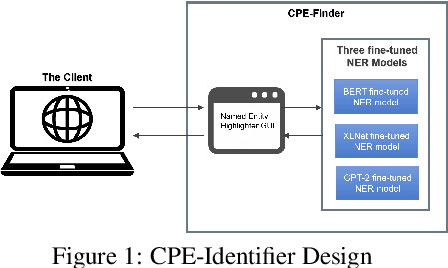
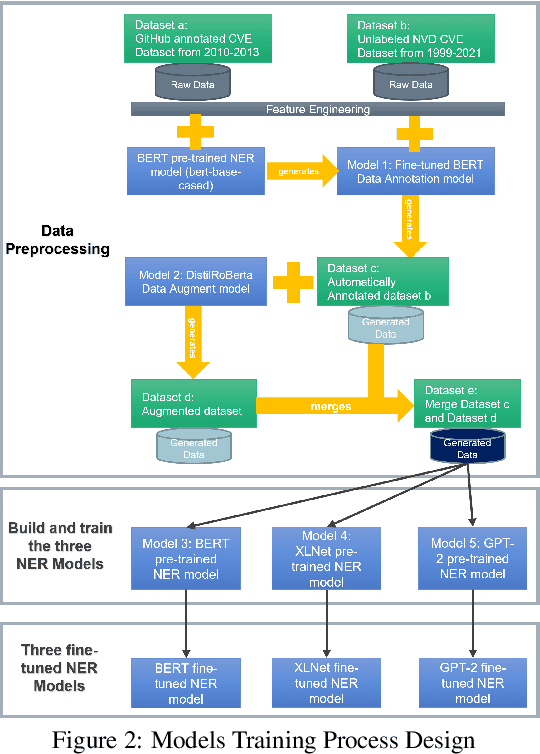
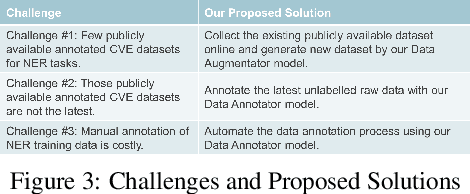
With the drastic increase in the number of new vulnerabilities in the National Vulnerability Database (NVD) every year, the workload for NVD analysts to associate the Common Platform Enumeration (CPE) with the Common Vulnerabilities and Exposures (CVE) summaries becomes increasingly laborious and slow. The delay causes organisations, which depend on NVD for vulnerability management and security measurement, to be more vulnerable to zero-day attacks. Thus, it is essential to come out with a technique and tool to extract the CPEs in the CVE summaries accurately and quickly. In this work, we propose the CPE-Identifier system, an automated CPE annotating and extracting system, from the CVE summaries. The system can be used as a tool to identify CPE entities from new CVE text inputs. Moreover, we also automate the data generating and labeling processes using deep learning models. Due to the complexity of the CVE texts, new technical terminologies appear frequently. To identify novel words in future CVE texts, we apply Natural Language Processing (NLP) Named Entity Recognition (NER), to identify new technical jargons in the text. Our proposed model achieves an F1 score of 95.48%, an accuracy score of 99.13%, a precision of 94.83%, and a recall of 96.14%. We show that it outperforms prior works on automated CVE-CPE labeling by more than 9% on all metrics.
Privacy-Preserving Intrusion Detection using Convolutional Neural Networks
Apr 15, 2024


Privacy-preserving analytics is designed to protect valuable assets. A common service provision involves the input data from the client and the model on the analyst's side. The importance of the privacy preservation is fuelled by legal obligations and intellectual property concerns. We explore the use case of a model owner providing an analytic service on customer's private data. No information about the data shall be revealed to the analyst and no information about the model shall be leaked to the customer. Current methods involve costs: accuracy deterioration and computational complexity. The complexity, in turn, results in a longer processing time, increased requirement on computing resources, and involves data communication between the client and the server. In order to deploy such service architecture, we need to evaluate the optimal setting that fits the constraints. And that is what this paper addresses. In this work, we enhance an attack detection system based on Convolutional Neural Networks with privacy-preserving technology based on PriMIA framework that is initially designed for medical data.
An adversarial attack approach for eXplainable AI evaluation on deepfake detection models
Dec 08, 2023With the rising concern on model interpretability, the application of eXplainable AI (XAI) tools on deepfake detection models has been a topic of interest recently. In image classification tasks, XAI tools highlight pixels influencing the decision given by a model. This helps in troubleshooting the model and determining areas that may require further tuning of parameters. With a wide range of tools available in the market, choosing the right tool for a model becomes necessary as each one may highlight different sets of pixels for a given image. There is a need to evaluate different tools and decide the best performing ones among them. Generic XAI evaluation methods like insertion or removal of salient pixels/segments are applicable for general image classification tasks but may produce less meaningful results when applied on deepfake detection models due to their functionality. In this paper, we perform experiments to show that generic removal/insertion XAI evaluation methods are not suitable for deepfake detection models. We also propose and implement an XAI evaluation approach specifically suited for deepfake detection models.
Enhancing Cyber-Resilience in Self-Healing Cyber-Physical Systems with Implicit Guarantees
May 15, 2023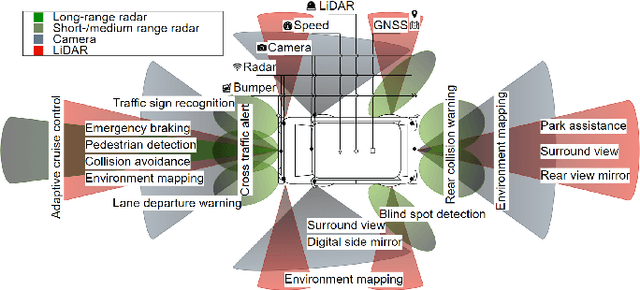
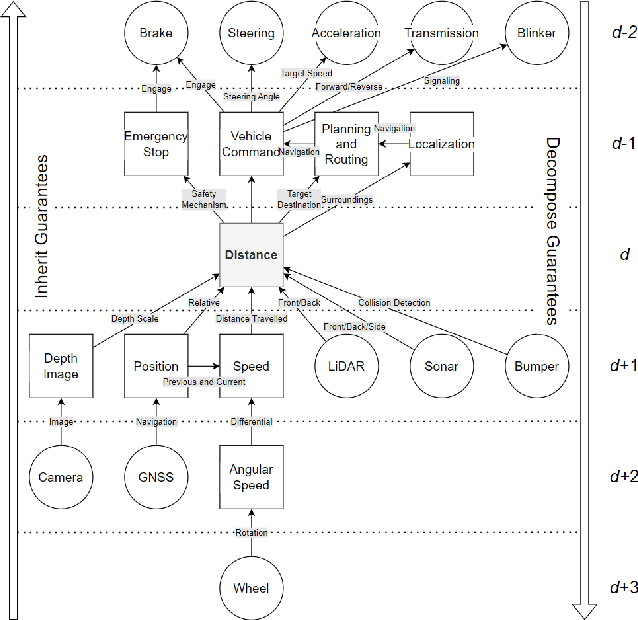
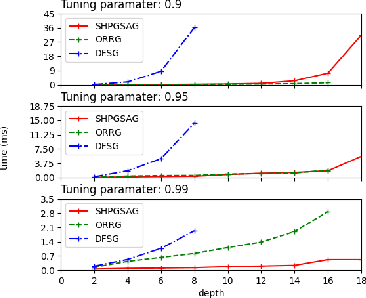
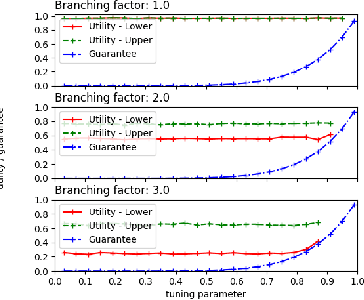
Self-Healing Cyber-Physical Systems (SH-CPS) effectively recover from system perceived failures without human intervention. They ensure a level of resilience and tolerance to unforeseen situations that arise from intrinsic system and component degradation, errors, or malicious attacks. Implicit redundancy can be exploited in SH-CPS to structurally adapt without the need to explicitly duplicate components. However, implicitly redundant components do not guarantee the same level of dependability as the primary component used to provide for a given function. Additional processes are needed to restore critical system functionalities as desired. This work introduces implicit guarantees to ensure the dependability of implicitly redundant components and processes. Implicit guarantees can be obtained through inheritance and decomposition. Therefore, a level of dependability can be guaranteed in SH-CPS after adaptation and recovery while complying with requirements. We demonstrate compliance with the requirement guarantees while ensuring resilience in SH-CPS.
Few-shot Weakly-supervised Cybersecurity Anomaly Detection
Apr 15, 2023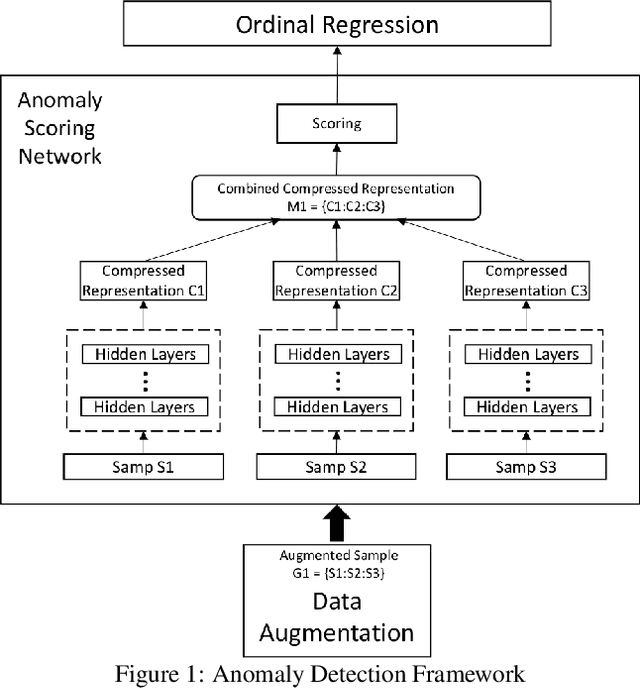
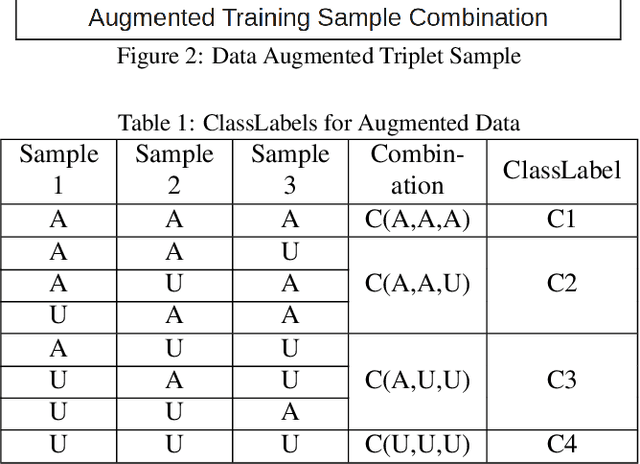
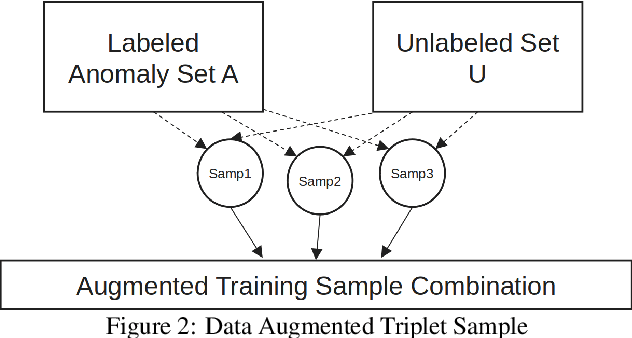
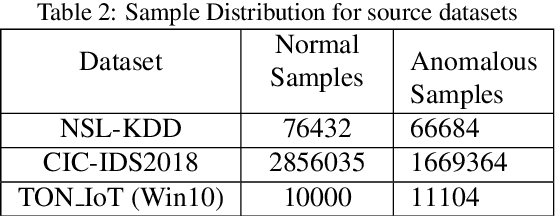
With increased reliance on Internet based technologies, cyberattacks compromising users' sensitive data are becoming more prevalent. The scale and frequency of these attacks are escalating rapidly, affecting systems and devices connected to the Internet. The traditional defense mechanisms may not be sufficiently equipped to handle the complex and ever-changing new threats. The significant breakthroughs in the machine learning methods including deep learning, had attracted interests from the cybersecurity research community for further enhancements in the existing anomaly detection methods. Unfortunately, collecting labelled anomaly data for all new evolving and sophisticated attacks is not practical. Training and tuning the machine learning model for anomaly detection using only a handful of labelled data samples is a pragmatic approach. Therefore, few-shot weakly supervised anomaly detection is an encouraging research direction. In this paper, we propose an enhancement to an existing few-shot weakly-supervised deep learning anomaly detection framework. This framework incorporates data augmentation, representation learning and ordinal regression. We then evaluated and showed the performance of our implemented framework on three benchmark datasets: NSL-KDD, CIC-IDS2018, and TON_IoT.
Deepfake Detection with Deep Learning: Convolutional Neural Networks versus Transformers
Apr 07, 2023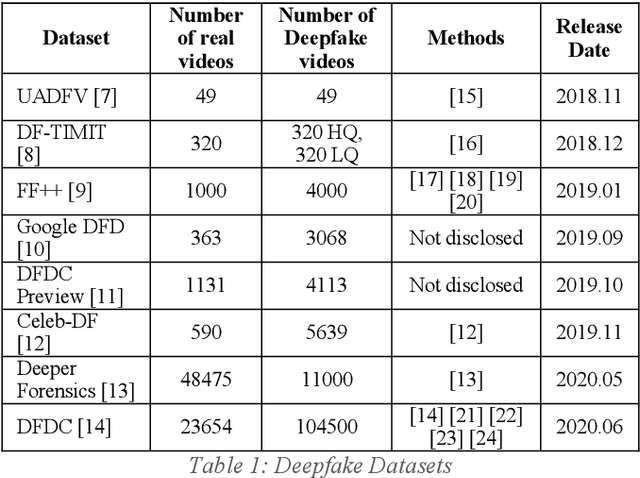
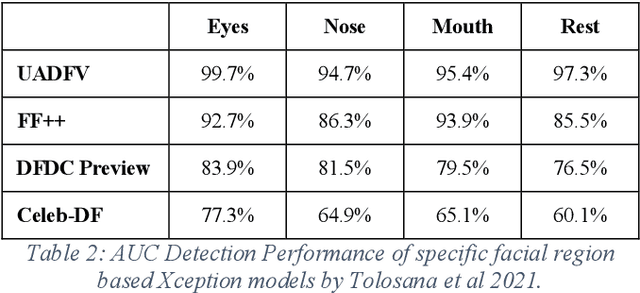
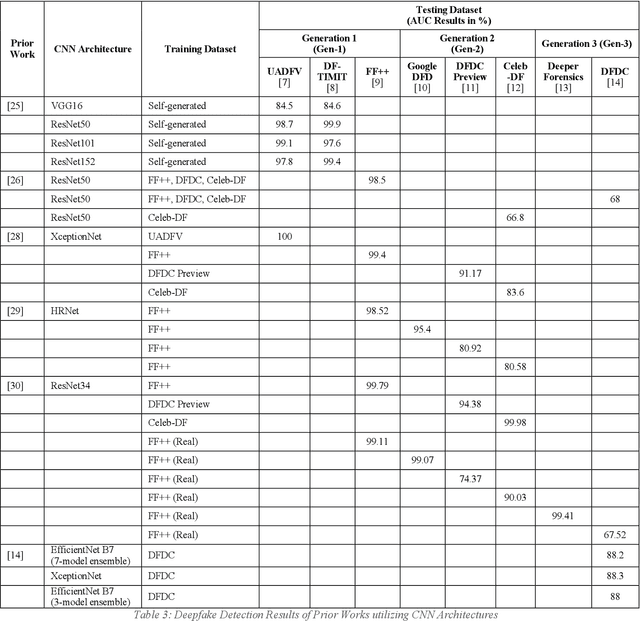
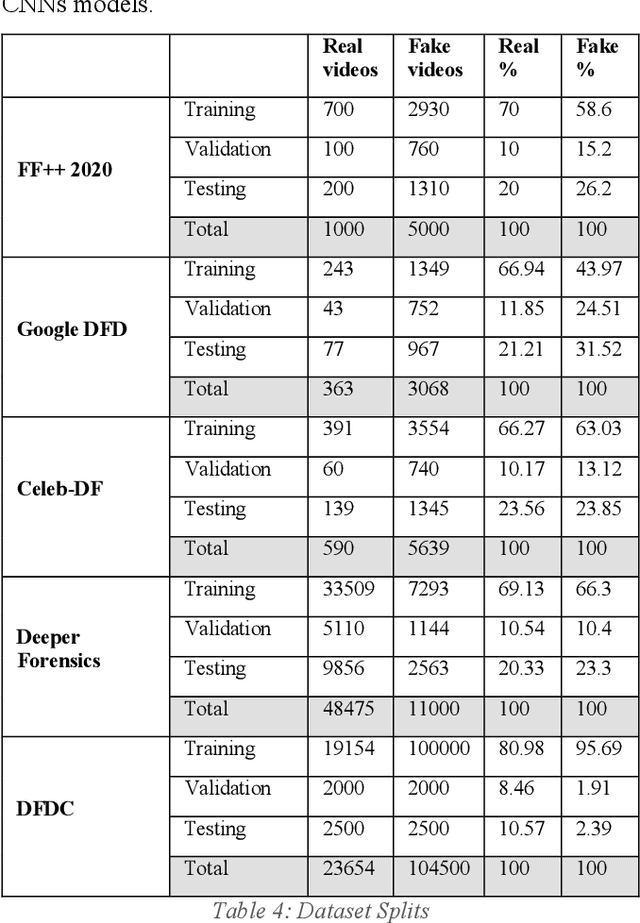
The rapid evolvement of deepfake creation technologies is seriously threating media information trustworthiness. The consequences impacting targeted individuals and institutions can be dire. In this work, we study the evolutions of deep learning architectures, particularly CNNs and Transformers. We identified eight promising deep learning architectures, designed and developed our deepfake detection models and conducted experiments over well-established deepfake datasets. These datasets included the latest second and third generation deepfake datasets. We evaluated the effectiveness of our developed single model detectors in deepfake detection and cross datasets evaluations. We achieved 88.74%, 99.53%, 97.68%, 99.73% and 92.02% accuracy and 99.95%, 100%, 99.88%, 99.99% and 97.61% AUC, in the detection of FF++ 2020, Google DFD, Celeb-DF, Deeper Forensics and DFDC deepfakes, respectively. We also identified and showed the unique strengths of CNNs and Transformers models and analysed the observed relationships among the different deepfake datasets, to aid future developments in this area.
Feature Mining for Encrypted Malicious Traffic Detection with Deep Learning and Other Machine Learning Algorithms
Apr 07, 2023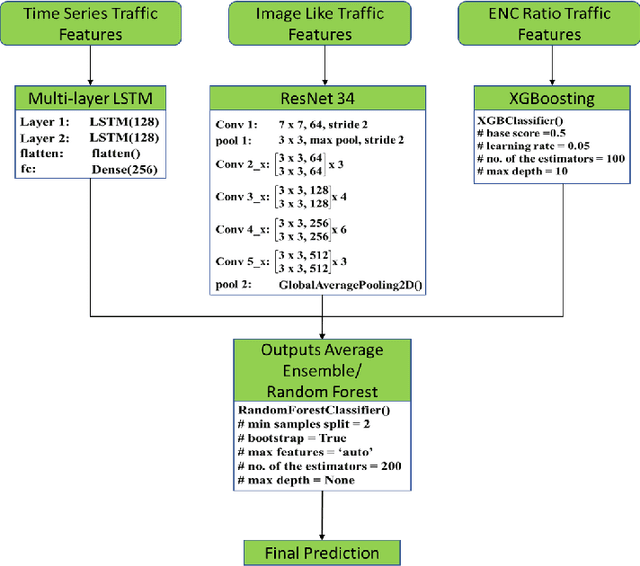
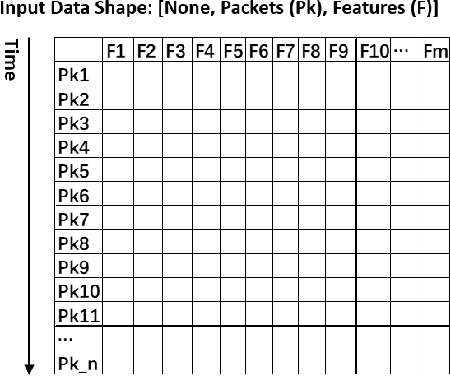
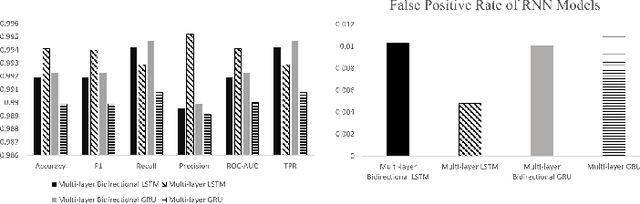
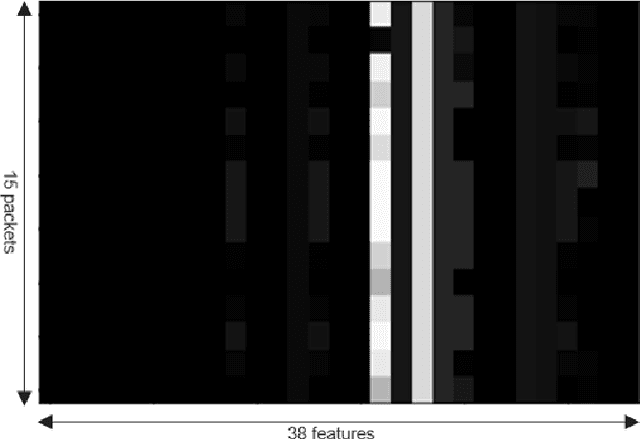
The popularity of encryption mechanisms poses a great challenge to malicious traffic detection. The reason is traditional detection techniques cannot work without the decryption of encrypted traffic. Currently, research on encrypted malicious traffic detection without decryption has focused on feature extraction and the choice of machine learning or deep learning algorithms. In this paper, we first provide an in-depth analysis of traffic features and compare different state-of-the-art traffic feature creation approaches, while proposing a novel concept for encrypted traffic feature which is specifically designed for encrypted malicious traffic analysis. In addition, we propose a framework for encrypted malicious traffic detection. The framework is a two-layer detection framework which consists of both deep learning and traditional machine learning algorithms. Through comparative experiments, it outperforms classical deep learning and traditional machine learning algorithms, such as ResNet and Random Forest. Moreover, to provide sufficient training data for the deep learning model, we also curate a dataset composed entirely of public datasets. The composed dataset is more comprehensive than using any public dataset alone. Lastly, we discuss the future directions of this research.
* Computers & Security, Volume 128, No. 103143, 2023