 Add to Chrome
 Add to Firefox
 Add to Edge
Exploring Post-Training Alignment of Small Language Models for Biomedical Data-to-Text Generation: A Case Study of Medication Leaflet
Jul 15, 2026
Translating complex biomedical data into patient-friendly narratives is central to modern biomedical informatics. This study presents a comparative analysis of training small language models (SLMs) in specialized biomedical datato-text generation tasks. We explore widely adopted post-training methods including supervised fine-tuning (SFT), direct preference optimization (DPO), odds ratio preference optimization (ORPO), and group relative policy optimization (GRPO) with Qwen-based SLMs on a medicine package leaflets dataset. To assess cross-dataset generalizability, we also curated drug label data from openFDA. We evaluate models using both standard lexical overlap metrics like ROUGE as well as semantic similarity measures. Across our experiments, the results show that (1) the aligned SLMs outperform proprietary models like GPT-5; (2) ORPO outperforms the SFTbaselines; (3) GRPO yields the most robust cross-dataset performance among the alignment methods tested as well as GPT-5.

Predicting Heart Failure Readmission from Clinical Notes Using Deep Learning
Dec 21, 2019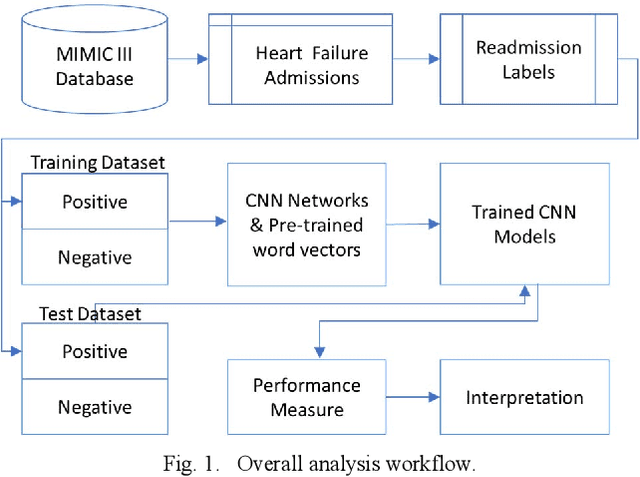
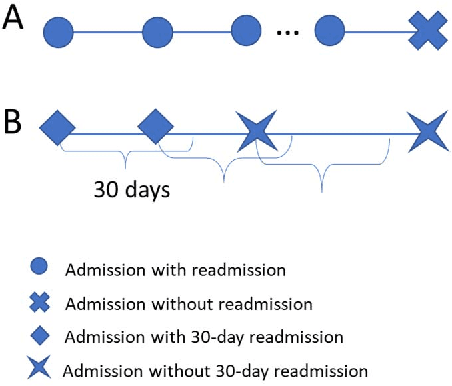
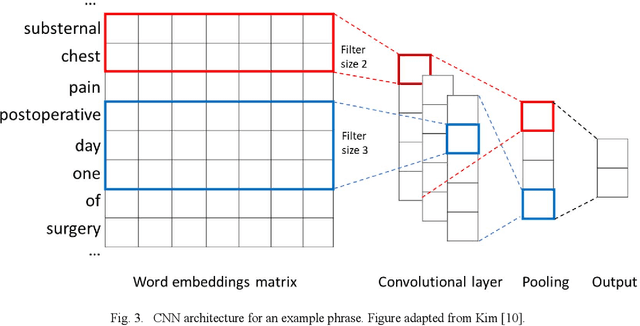
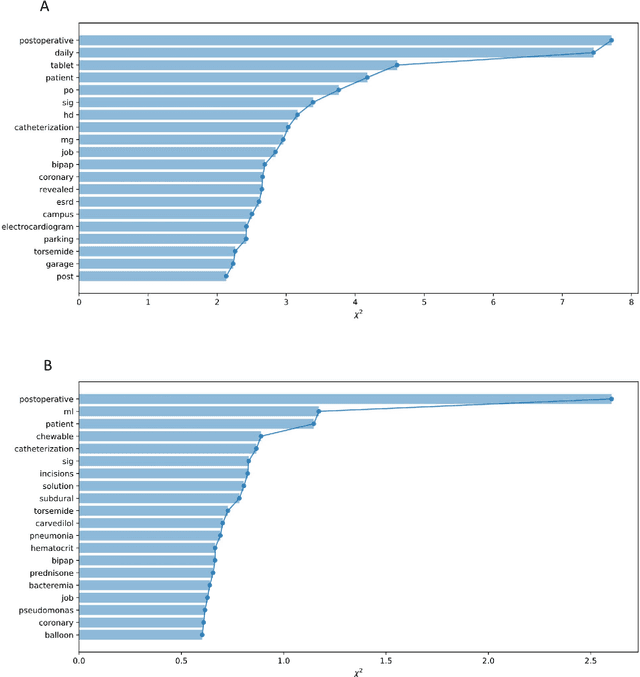
Heart failure hospitalization is a severe burden on healthcare. How to predict and therefore prevent readmission has been a significant challenge in outcomes research. To address this, we propose a deep learning approach to predict readmission from clinical notes. Unlike conventional methods that use structured data for prediction, we leverage the unstructured clinical notes to train deep learning models based on convolutional neural networks (CNN). We then use the trained models to classify and predict potentially high-risk admissions/patients. For evaluation, we trained CNNs using the discharge summary notes in the MIMIC III database. We also trained regular machine learning models based on random forest using the same datasets. The result shows that deep learning models outperform the regular models in prediction tasks. CNN method achieves a F1 score of 0.756 in general readmission prediction and 0.733 in 30-day readmission prediction, while random forest only achieves a F1 score of 0.674 and 0.656 respectively. We also propose a chi-square test based method to interpret key features associated with deep learning predicted readmissions. It reveals clinical insights about readmission embedded in the clinical notes. Collectively, our method can make the human evaluation process more efficient and potentially facilitate the reduction of readmission rates.
* IEEE BIBM 2019