 Add to Chrome
 Add to Firefox
 Add to Edge
Open-H-Embodiment: A Large-Scale Dataset for Enabling Foundation Models in Medical Robotics
Apr 22, 2026
Autonomous medical robots hold promise to improve patient outcomes, reduce provider workload, democratize access to care, and enable superhuman precision. However, autonomous medical robotics has been limited by a fundamental data problem: existing medical robotic datasets are small, single-embodiment, and rarely shared openly, restricting the development of foundation models that the field needs to advance. We introduce Open-H-Embodiment, the largest open dataset of medical robotic video with synchronized kinematics to date, spanning more than 49 institutions and multiple robotic platforms including the CMR Versius, Intuitive Surgical's da Vinci, da Vinci Research Kit (dVRK), Rob Surgical BiTrack, Virtual Incision's MIRA, Moon Surgical Maestro, and a variety of custom systems, spanning surgical manipulation, robotic ultrasound, and endoscopy procedures. We demonstrate the research enabled by this dataset through two foundation models. GR00T-H is the first open foundation vision-language-action model for medical robotics, which is the only evaluated model to achieve full end-to-end task completion on a structured suturing benchmark (25% of trials vs. 0% for all others) and achieves 64% average success across a 29-step ex vivo suturing sequence. We also train Cosmos-H-Surgical-Simulator, the first action-conditioned world model to enable multi-embodiment surgical simulation from a single checkpoint, spanning nine robotic platforms and supporting in silico policy evaluation and synthetic data generation for the medical domain. These results suggest that open, large-scale medical robot data collection can serve as critical infrastructure for the research community, enabling advances in robot learning, world modeling, and beyond.

Operating Room Workflow Analysis via Reasoning Segmentation over Digital Twins
Mar 26, 2025
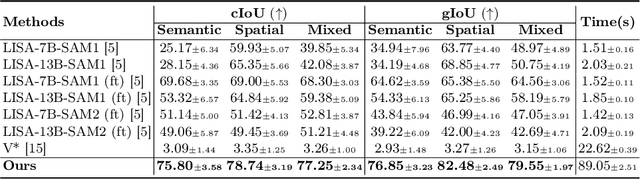
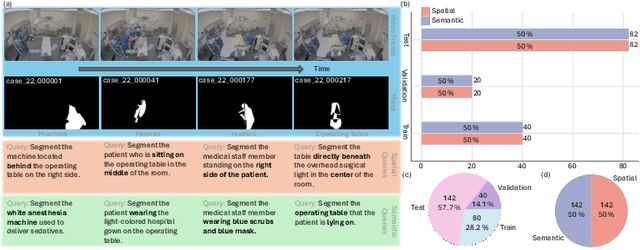
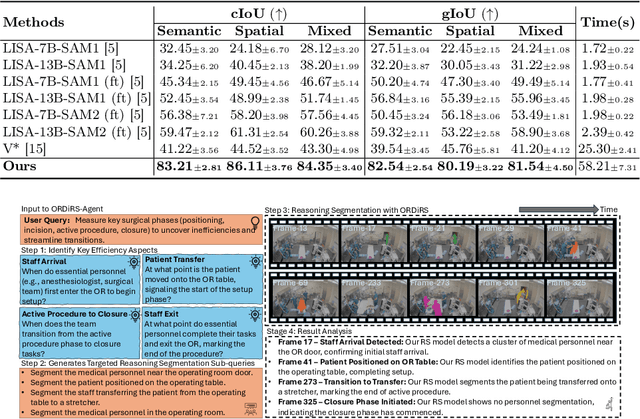
Analyzing operating room (OR) workflows to derive quantitative insights into OR efficiency is important for hospitals to maximize patient care and financial sustainability. Prior work on OR-level workflow analysis has relied on end-to-end deep neural networks. While these approaches work well in constrained settings, they are limited to the conditions specified at development time and do not offer the flexibility necessary to accommodate the OR workflow analysis needs of various OR scenarios (e.g., large academic center vs. rural provider) without data collection, annotation, and retraining. Reasoning segmentation (RS) based on foundation models offers this flexibility by enabling automated analysis of OR workflows from OR video feeds given only an implicit text query related to the objects of interest. Due to the reliance on large language model (LLM) fine-tuning, current RS approaches struggle with reasoning about semantic/spatial relationships and show limited generalization to OR video due to variations in visual characteristics and domain-specific terminology. To address these limitations, we first propose a novel digital twin (DT) representation that preserves both semantic and spatial relationships between the various OR components. Then, building on this foundation, we propose ORDiRS (Operating Room Digital twin representation for Reasoning Segmentation), an LLM-tuning-free RS framework that reformulates RS into a "reason-retrieval-synthesize" paradigm. Finally, we present ORDiRS-Agent, an LLM-based agent that decomposes OR workflow analysis queries into manageable RS sub-queries and generates responses by combining detailed textual explanations with supporting visual evidence from RS. Experimental results on both an in-house and a public OR dataset demonstrate that our ORDiRS achieves a cIoU improvement of 6.12%-9.74% compared to the existing state-of-the-arts.