 Add to Chrome
 Add to Firefox
 Add to Edge
Chess-World-Model: A 10M-Game Benchmark for Exact State Tracking from Chess Move Sequences
May 28, 2026
World models require state tracking, which is the ability to maintain a correct latent state across action sequences. Existing benchmarks are often synthetic or language-based, limiting their value as tests of structured state updates in realistic domains. We introduce Chess-World-Model, a large-scale state-tracking benchmark built from 10 million real chess games, where models predict the exact board state reached after a sequence of legal moves. Alongside a held-out real-game split, we include an out-of-distribution split from uniformly random legal play, which tests whether models learn the transition rules rather than shortcuts from common human positions. Prior theoretical and empirical work has shown that Transformers struggle to state-track, while input-dependent linear RNNs require expressive state-transition matrices to do so. We therefore benchmark a causal Transformer, block-diagonal SLiCE, Mamba-3, and Gated DeltaNet with negative eigenvalues under a matched interface and training protocol. The recurrent models strongly outperform the Transformer at 3 and 8 million parameters. Real-game performance saturates above 18 million parameters, but the random-uniform split remains discriminative up to 40 million, exposing failures otherwise hidden by scale. Additionally, ablations show that less expressive state-transition mechanisms reduce performance on the out-of-distribution split for all three recurrent models. Together, these results establish Chess-World-Model as a practical large-scale benchmark for state tracking that exposes failures model scale would otherwise conceal.

Faithful Embeddings of Irregular and Asynchronous Data for Online Log-NCDEs
May 28, 2026Continuous-time models are a natural choice for irregular and asynchronous data. A central design choice is how to embed discrete observations into continuous time. Interpolation- and imputation-based embeddings reconstruct a continuous observation path, making the model sensitive to the choice of reconstruction. We show that this reconstruction step is unnecessary; under mild conditions, compact-set universality on the model input space transfers to the data space whenever the embedding from data to input is continuous and injective. Guided by this result, and building on the rectilinear control path for Neural Controlled Differential Equations (NCDEs), we introduce a continuous and injective embedding for Log-NCDEs, a universal class of continuous-time models. Our approach records observations as increments and composes them over arbitrary query intervals to directly form log-signatures. This provides interval-level summaries without first interpolating the observed variables, while supporting online computation. Experiments on synthetic controlled dynamics and real-world time-series datasets show that the representation is accurate, efficient, and robust to irregular, asynchronous, and sparse observations.
The Exponentially Weighted Signature
Mar 19, 2026The signature is a canonical representation of a multidimensional path over an interval. However, it treats all historical information uniformly, offering no intrinsic mechanism for contextualising the relevance of the past. To address this, we introduce the Exponentially Weighted Signature (EWS), generalising the Exponentially Fading Memory (EFM) signature from diagonal to general bounded linear operators. These operators enable cross-channel coupling at the level of temporal weighting together with richer memory dynamics including oscillatory, growth, and regime-dependent behaviour, while preserving the algebraic strengths of the classical signature. We show that the EWS is the unique solution to a linear controlled differential equation on the tensor algebra, and that it generalises both state-space models and the Laplace and Fourier transforms of the path. The group-like structure of the EWS enables efficient computation and makes the framework amenable to gradient-based learning, with the full semigroup action parametrised by and learned through its generator. We use this framework to empirically demonstrate the expressivity gap between the EWS and both the signature and EFM on two SDE-based regression tasks.
Seeking SOTA: Time-Series Forecasting Must Adopt Taxonomy-Specific Evaluation to Dispel Illusory Gains
Mar 16, 2026We argue that the current practice of evaluating AI/ML time-series forecasting models, predominantly on benchmarks characterized by strong, persistent periodicities and seasonalities, obscures real progress by overlooking the performance of efficient classical methods. We demonstrate that these "standard" datasets often exhibit dominant autocorrelation patterns and seasonal cycles that can be effectively captured by simpler linear or statistical models, rendering complex deep learning architectures frequently no more performant than their classical counterparts for these specific data characteristics, and raising questions as to whether any marginal improvements justify the significant increase in computational overhead and model complexity. We call on the community to (I) retire or substantially augment current benchmarks with datasets exhibiting a wider spectrum of non-stationarities, such as structural breaks, time-varying volatility, and concept drift, and less predictable dynamics drawn from diverse real-world domains, and (II) require every deep learning submission to include robust classical and simple baselines, appropriately chosen for the specific characteristics of the downstream tasks' time series. By doing so, we will help ensure that reported gains reflect genuine scientific methodological advances rather than artifacts of benchmark selection favoring models adept at learning repetitive patterns.
Path Signatures Enable Model-Free Mapping of RNA Modifications
Nov 12, 2025Detecting chemical modifications on RNA molecules remains a key challenge in epitranscriptomics. Traditional reverse transcription-based sequencing methods introduce enzyme- and sequence-dependent biases and fragment RNA molecules, confounding the accurate mapping of modifications across the transcriptome. Nanopore direct RNA sequencing offers a powerful alternative by preserving native RNA molecules, enabling the detection of modifications at single-molecule resolution. However, current computational tools can identify only a limited subset of modification types within well-characterized sequence contexts for which ample training data exists. Here, we introduce a model-free computational method that reframes modification detection as an anomaly detection problem, requiring only canonical (unmodified) RNA reads without any other annotated data. For each nanopore read, our approach extracts robust, modification-sensitive features from the raw ionic current signal at a site using the signature transform, then computes an anomaly score by comparing the resulting feature vector to its nearest neighbors in an unmodified reference dataset. We convert anomaly scores into statistical p-values to enable anomaly detection at both individual read and site levels. Validation on densely-modified \textit{E. coli} rRNA demonstrates that our approach detects known sites harboring diverse modification types, without prior training on these modifications. We further applyied this framework to dengue virus (DENV) transcripts and mammalian mRNAs. For DENV sfRNA, it led to revealing a novel 2'-O-methylated site, which we validate orthogonally by qRT-PCR assays. These results demonstrate that our model-free approach operates robustly across different types of RNAs and datasets generated with different nanopore sequencing chemistries.
Structured Linear CDEs: Maximally Expressive and Parallel-in-Time Sequence Models
May 23, 2025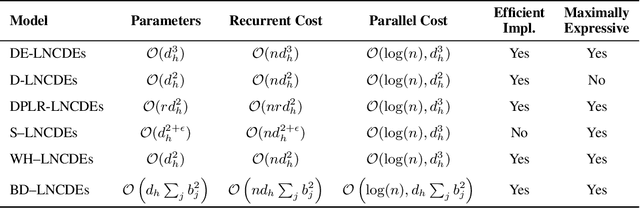
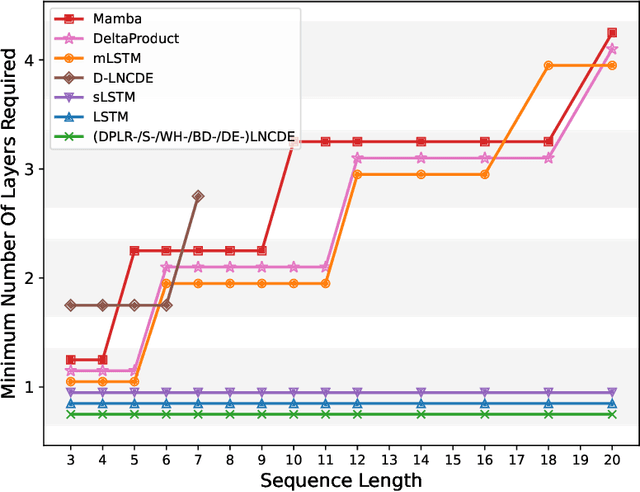
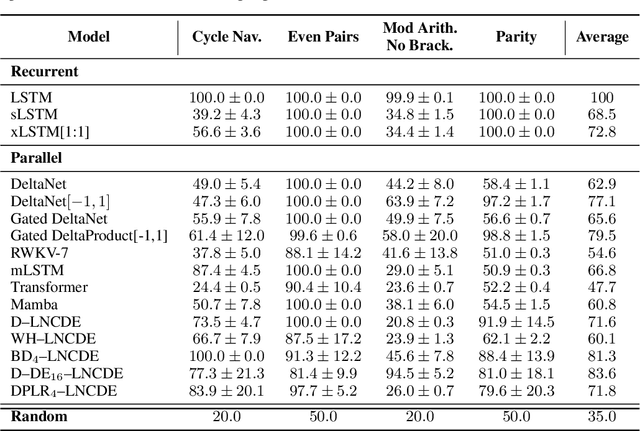
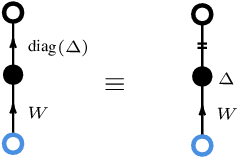
Structured Linear Controlled Differential Equations (SLiCEs) provide a unifying framework for sequence models with structured, input-dependent state-transition matrices that retain the maximal expressivity of dense matrices whilst being cheaper to compute. The framework encompasses existing architectures, such as input-dependent block-diagonal linear recurrent neural networks and DeltaNet's diagonal-plus-low-rank structure, as well as two novel variants based on sparsity and the Walsh--Hadamard transform. We prove that, unlike the diagonal state-transition matrices of S4 and Mamba, SLiCEs employing block-diagonal, sparse, or Walsh--Hadamard matrices match the maximal expressivity of dense matrices. Empirically, SLiCEs solve the $A_5$ state-tracking benchmark with a single layer, achieve best-in-class length generalisation on regular language tasks among parallel-in-time models, and match the state-of-the-art performance of log neural controlled differential equations on six multivariate time-series classification datasets while cutting the average time per training step by a factor of twenty.
Transforming CCTV cameras into NO$_2$ sensors at city scale for adaptive policymaking
Dec 28, 2024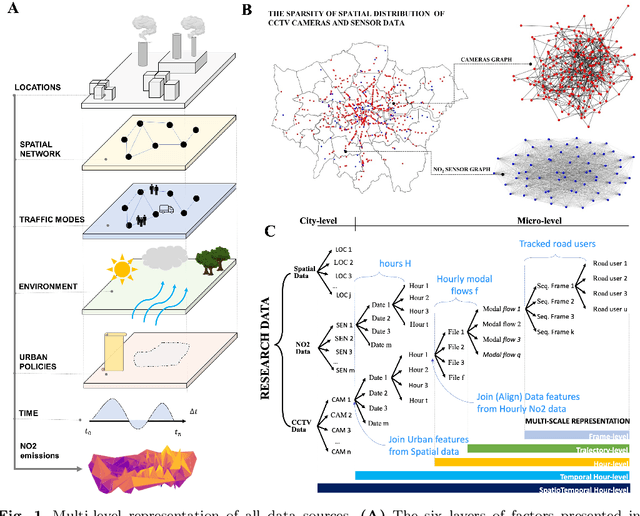
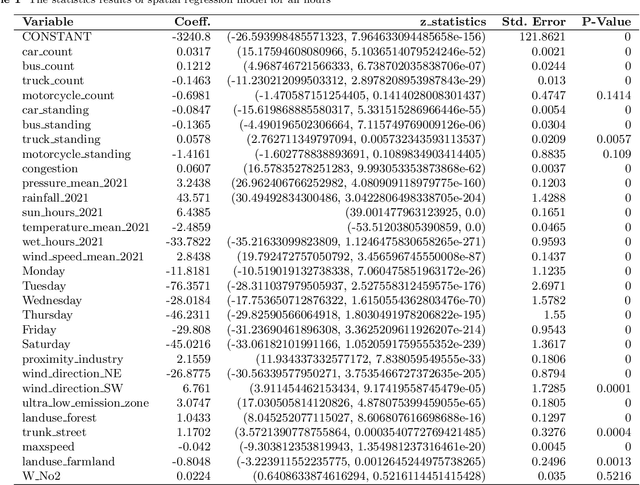
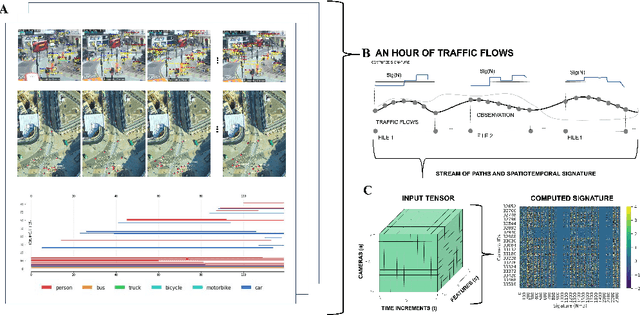
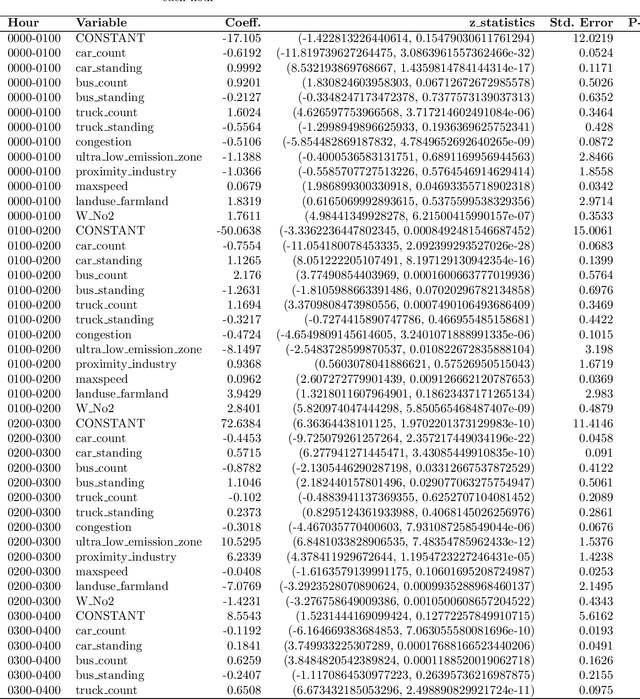
Air pollution in cities, especially NO\textsubscript{2}, is linked to numerous health problems, ranging from mortality to mental health challenges and attention deficits in children. While cities globally have initiated policies to curtail emissions, real-time monitoring remains challenging due to limited environmental sensors and their inconsistent distribution. This gap hinders the creation of adaptive urban policies that respond to the sequence of events and daily activities affecting pollution in cities. Here, we demonstrate how city CCTV cameras can act as a pseudo-NO\textsubscript{2} sensors. Using a predictive graph deep model, we utilised traffic flow from London's cameras in addition to environmental and spatial factors, generating NO\textsubscript{2} predictions from over 133 million frames. Our analysis of London's mobility patterns unveiled critical spatiotemporal connections, showing how specific traffic patterns affect NO\textsubscript{2} levels, sometimes with temporal lags of up to 6 hours. For instance, if trucks only drive at night, their effects on NO\textsubscript{2} levels are most likely to be seen in the morning when people commute. These findings cast doubt on the efficacy of some of the urban policies currently being implemented to reduce pollution. By leveraging existing camera infrastructure and our introduced methods, city planners and policymakers could cost-effectively monitor and mitigate the impact of NO\textsubscript{2} and other pollutants.
Combining Hough Transform and Deep Learning Approaches to Reconstruct ECG Signals From Printouts
Oct 18, 2024This work presents our team's (SignalSavants) winning contribution to the 2024 George B. Moody PhysioNet Challenge. The Challenge had two goals: reconstruct ECG signals from printouts and classify them for cardiac diseases. Our focus was the first task. Despite many ECGs being digitally recorded today, paper ECGs remain common throughout the world. Digitising them could help build more diverse datasets and enable automated analyses. However, the presence of varying recording standards and poor image quality requires a data-centric approach for developing robust models that can generalise effectively. Our approach combines the creation of a diverse training set, Hough transform to rotate images, a U-Net based segmentation model to identify individual signals, and mask vectorisation to reconstruct the signals. We assessed the performance of our models using the 10-fold stratified cross-validation (CV) split of 21,799 recordings proposed by the PTB-XL dataset. On the digitisation task, our model achieved an average CV signal-to-noise ratio of 17.02 and an official Challenge score of 12.15 on the hidden set, securing first place in the competition. Our study shows the challenges of building robust, generalisable, digitisation approaches. Such models require large amounts of resources (data, time, and computational power) but have great potential in diversifying the data available.
Deep Signature: Characterization of Large-Scale Molecular Dynamics
Oct 03, 2024Understanding protein dynamics are essential for deciphering protein functional mechanisms and developing molecular therapies. However, the complex high-dimensional dynamics and interatomic interactions of biological processes pose significant challenge for existing computational techniques. In this paper, we approach this problem for the first time by introducing Deep Signature, a novel computationally tractable framework that characterizes complex dynamics and interatomic interactions based on their evolving trajectories. Specifically, our approach incorporates soft spectral clustering that locally aggregates cooperative dynamics to reduce the size of the system, as well as signature transform that collects iterated integrals to provide a global characterization of the non-smooth interactive dynamics. Theoretical analysis demonstrates that Deep Signature exhibits several desirable properties, including invariance to translation, near invariance to rotation, equivariance to permutation of atomic coordinates, and invariance under time reparameterization. Furthermore, experimental results on three benchmarks of biological processes verify that our approach can achieve superior performance compared to baseline methods.
A High Order Solver for Signature Kernels
Apr 01, 2024Signature kernels are at the core of several machine learning algorithms for analysing multivariate time series. The kernel of two bounded variation paths (such as piecewise linear interpolations of time series data) is typically computed by solving a Goursat problem for a hyperbolic partial differential equation (PDE) in two independent time variables. However, this approach becomes considerably less practical for highly oscillatory input paths, as they have to be resolved at a fine enough scale to accurately recover their signature kernel, resulting in significant time and memory complexities. To mitigate this issue, we first show that the signature kernel of a broader class of paths, known as \emph{smooth rough paths}, also satisfies a PDE, albeit in the form of a system of coupled equations. We then use this result to introduce new algorithms for the numerical approximation of signature kernels. As bounded variation paths (and more generally geometric $p$-rough paths) can be approximated by piecewise smooth rough paths, one can replace the PDE with rapidly varying coefficients in the original Goursat problem by an explicit system of coupled equations with piecewise constant coefficients derived from the first few iterated integrals of the original input paths. While this approach requires solving more equations, they do not require looking back at the complex and fine structure of the initial paths, which significantly reduces the computational complexity associated with the analysis of highly oscillatory time series.