 Add to Chrome
 Add to Firefox
 Add to Edge
DyCon: Dynamic Reasoning Control via Evolving Difficulty Modeling
Jun 05, 2026
Recent advances in Large Reasoning Models (LRMs) demonstrate remarkable performance improvements by iteratively reflecting, exploring, and executing complex tasks, yet suffer from inefficiencies due to redundant reasoning, known as "overthinking". Existing methods to mitigate this issue either rely on static difficulty estimates or require task-specific training, and thus fail to adapt to the dynamic complexity during reasoning. In this work, we empirically show that the problem difficulty evolves dynamically throughout the reasoning process and is linearly encoded in the LRM's step-level embeddings. Building on this insight, we propose DyCon, a training-free framework that leverages latent step-level representations to explicitly model the evolving task difficulty, enabling the dynamic control of reasoning depth to mitigate the overthinking issue. Extensive experiments conducted on four models ranging from 4B to 32B, and across twelve benchmarks in math reasoning, general question answering, and coding tasks demonstrate that DyCon significantly enhances reasoning efficiency by reducing redundant steps without sacrificing accuracy or generalization. Project page and code are available at https://github.com/yu-lin-li/DyCon.

Efficient Reasoning with Balanced Thinking
Mar 19, 2026Large Reasoning Models (LRMs) have shown remarkable reasoning capabilities, yet they often suffer from overthinking, expending redundant computational steps on simple problems, or underthinking, failing to explore sufficient reasoning paths despite inherent capabilities. These issues lead to inefficiencies and potential inaccuracies, limiting practical deployment in resource-constrained settings. Existing methods to mitigate overthinking, such as suppressing reflective keywords or adjusting reasoning length, may inadvertently induce underthinking, compromising accuracy. Therefore, we propose ReBalance, a training-free framework that achieves efficient reasoning with balanced thinking. ReBalance leverages confidence as a continuous indicator of reasoning dynamics, identifying overthinking through high confidence variance and underthinking via consistent overconfidence. By aggregating hidden states from a small-scale dataset into reasoning mode prototypes, we compute a steering vector to guide LRMs' reasoning trajectories. A dynamic control function modulates this vector's strength and direction based on real-time confidence, pruning redundancy during overthinking, and promoting exploration during underthinking. Extensive experiments conducted on four models ranging from 0.5B to 32B, and across nine benchmarks in math reasoning, general question answering, and coding tasks demonstrate that ReBalance effectively reduces output redundancy while improving accuracy, offering a general, training-free, and plug-and-play strategy for efficient and robust LRM deployment. Project page and code are available at https://rebalance-ai.github.io .
Predicting T-Cell Receptor Specificity
Jul 27, 2024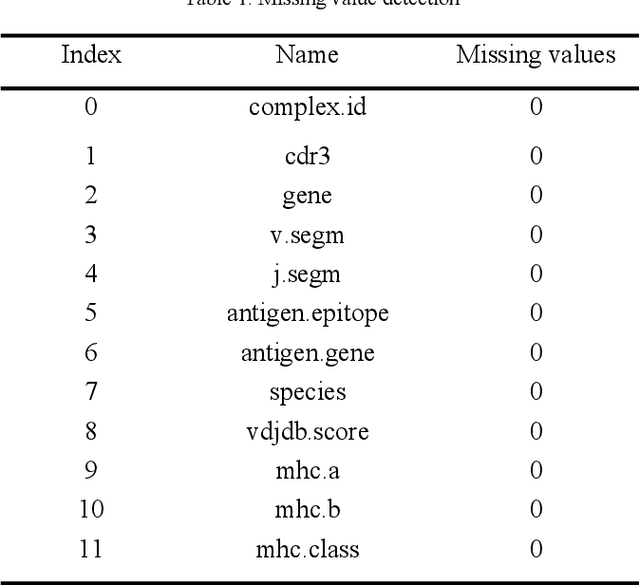
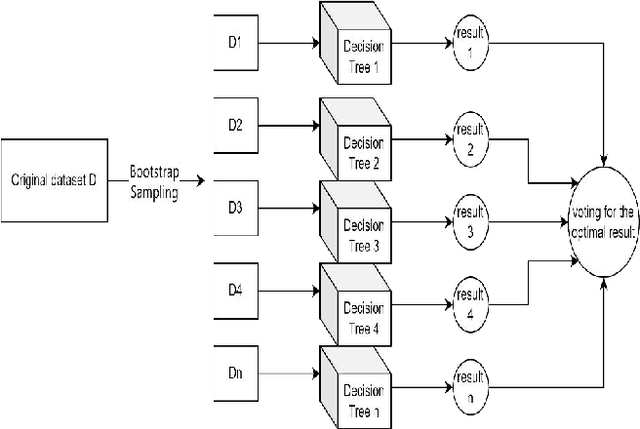
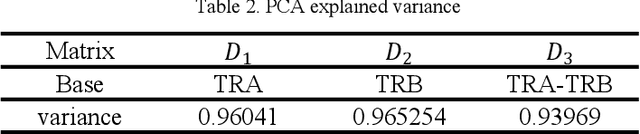
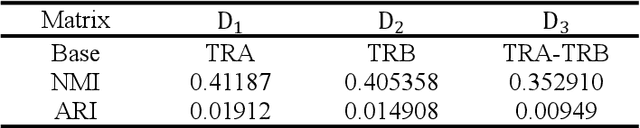
Researching the specificity of TCR contributes to the development of immunotherapy and provides new opportunities and strategies for personalized cancer immunotherapy. Therefore, we established a TCR generative specificity detection framework consisting of an antigen selector and a TCR classifier based on the Random Forest algorithm, aiming to efficiently screen out TCRs and target antigens and achieve TCR specificity prediction. Furthermore, we used the k-fold validation method to compare the performance of our model with ordinary deep learning methods. The result proves that adding a classifier to the model based on the random forest algorithm is very effective, and our model generally outperforms ordinary deep learning methods. Moreover, we put forward feasible optimization suggestions for the shortcomings and challenges of our model found during model implementation.