 Add to Chrome
 Add to Firefox
 Add to Edge
Modeling Spectral Energy Shifts in Spatio-Temporal Graph Anomaly Detection
May 29, 2026
Graph anomaly detection methods aim to distinguish anomalous nodes. While prior methods characterize anomalies through increased variation in the spectral energy distributions, they overlook those that result in decreased variation, i.e., camouflaged anomalies that appear normal. We show that this type of anomaly persists across multiple datasets and remains undetectable by existing spectral approaches. To address this limitation, we propose a node-level spectral energy formulation that is fully compatible with message passing and enables the detection of camouflaged anomalies. Building on this formulation, we introduce an energy-aware graph learning framework that models spectral shifts through energy-driven message passing in both static and time-series graphs. Besides, our unified architecture extends to temporal settings without introducing specialized sequence modules, enabling efficient learning under long sliding windows. Extensive experiments on large-scale benchmarks demonstrate the effectiveness and scalability of our approach.

k-Inductive Neural Barrier Certificates for Unknown Nonlinear Dynamics
May 19, 2026While conventional (k=1) discrete-time barrier certificate conditions impose strict safety constraints by requiring the function to be non-increasing at every step, k-inductive barrier certificates relax this by allowing a temporary increase -- up to k-1 times, each within a threshold $ε$ -- while maintaining overall safety, and improving flexibility. This paper leverages neural networks and constructs k-inductive neural barrier certificates (k-NBCs) for (partially) unknown nonlinear systems. While neural networks offer scalability in the design process, they lack formal guarantees, requiring additional approaches such as counterexample-guided inductive synthesis (CEGIS) with satisfiability modulo theories (SMT) for verification. However, the CEGIS-SMT framework requires knowledge of system dynamics, which is unavailable in practical settings. To address this, we leverage the generalization of the Willems et al.'s fundamental lemma, using a single state trajectory, to construct a data-driven representation of (partially) unknown models for SMT verification without sacrificing accuracy. Additionally, CEGIS-SMT further removes the constraint of restricting barrier certificates to specific function classes, such as sum-of-squares, enabling greater flexibility in their design. We validate our approach on three nonlinear case studies with (partially) unknown dynamics.
Reward Shaping and Action Masking for Compositional Tasks using Behavior Trees and LLMs
May 07, 2026Decomposing complex tasks into a sequence of simpler subtasks can improve learning efficiency for an autonomous agent. Reinforcement learning (RL) can be used to optimize agent policies to complete subtasks, but requires well-defined subtask rewards and benefits from action masking. Recent work uses large language models (LLMs) to automate reward shaping and action masking, however none of them fully address reactivity to subtask failure and modularity to varying objects for compositional tasks. To overcome these challenges, we develop masking reward behavior tree (MRBT), a symbolic structure used as a reactive and modular reward and action mask function. We design an MRBT template and derive logical specifications to construct and verify MRBTs for a sequence of object-interaction subtasks. Further, we develop an automated pipeline that uses an LLM to generate MRBTs robust to varying task objects, an SMT-solver to verify correctness of specifications, and a neurosymbolic RL loop to train agents on compositional tasks. Experiments demonstrate successful generation and refinement of five MRBTs, consistently improving training efficiency and task success rates over baselines and MRBTs without action masking. We further highlight three advantages of MRBTs: transferability, modularity, and verifiability.
Verification and Forward Invariance of Control Barrier Functions for Differential-Algebraic Systems
Mar 13, 2026Differential-algebraic equations (DAEs) arise in power networks, chemical processes, and multibody systems, where algebraic constraints encode physical conservation laws. The safety of such systems is critical, yet safe control is challenging because algebraic constraints restrict allowable state trajectories. Control barrier functions (CBFs) provide computationally efficient safety filters for ordinary differential equation (ODE) systems. However, existing CBF methods are not directly applicable to DAEs due to potential conflicts between the CBF condition and the constraint manifold. This paper introduces DAE-aware CBFs that incorporate the differential-algebraic structure through projected vector fields. We derive conditions that ensure forward invariance of safe sets while preserving algebraic constraints and extend the framework to higher-index DAEs. A systematic verification framework is developed, establishing necessary and sufficient conditions for geometric correctness and feasibility of DAE-aware CBFs. For polynomial systems, sum-of-squares certificates are provided, while for nonpolynomial and neural network candidates, satisfiability modulo theories are used for falsification. The approach is validated on wind turbine and flexible-link manipulator systems.
The 6th International Verification of Neural Networks Competition (VNN-COMP 2025): Summary and Results
Dec 22, 2025This report summarizes the 6th International Verification of Neural Networks Competition (VNN-COMP 2025), held as a part of the 8th International Symposium on AI Verification (SAIV), that was collocated with the 37th International Conference on Computer-Aided Verification (CAV). VNN-COMP is held annually to facilitate the fair and objective comparison of state-of-the-art neural network verification tools, encourage the standardization of tool interfaces, and bring together the neural network verification community. To this end, standardized formats for networks (ONNX) and specification (VNN-LIB) were defined, tools were evaluated on equal-cost hardware (using an automatic evaluation pipeline based on AWS instances), and tool parameters were chosen by the participants before the final test sets were made public. In the 2025 iteration, 8 teams participated on a diverse set of 16 regular and 9 extended benchmarks. This report summarizes the rules, benchmarks, participating tools, results, and lessons learned from this iteration of this competition.
Combining LLMs with Logic-Based Framework to Explain MCTS
May 01, 2025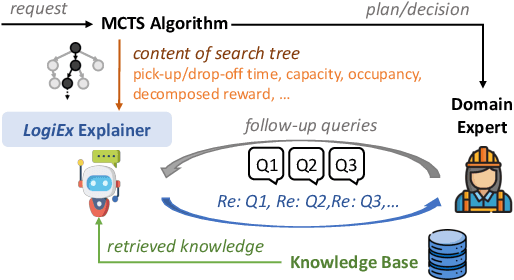
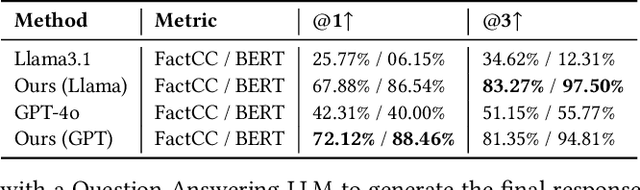
In response to the lack of trust in Artificial Intelligence (AI) for sequential planning, we design a Computational Tree Logic-guided large language model (LLM)-based natural language explanation framework designed for the Monte Carlo Tree Search (MCTS) algorithm. MCTS is often considered challenging to interpret due to the complexity of its search trees, but our framework is flexible enough to handle a wide range of free-form post-hoc queries and knowledge-based inquiries centered around MCTS and the Markov Decision Process (MDP) of the application domain. By transforming user queries into logic and variable statements, our framework ensures that the evidence obtained from the search tree remains factually consistent with the underlying environmental dynamics and any constraints in the actual stochastic control process. We evaluate the framework rigorously through quantitative assessments, where it demonstrates strong performance in terms of accuracy and factual consistency.
Blind Visible Watermark Removal with Morphological Dilation
Feb 04, 2025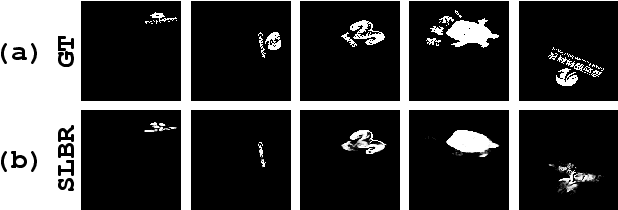
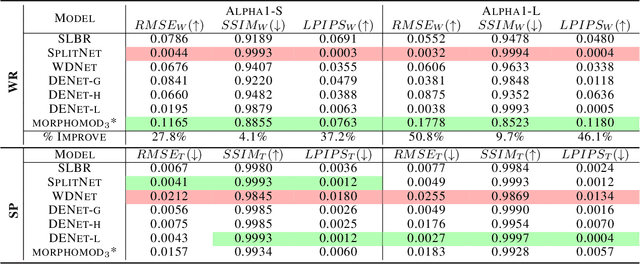
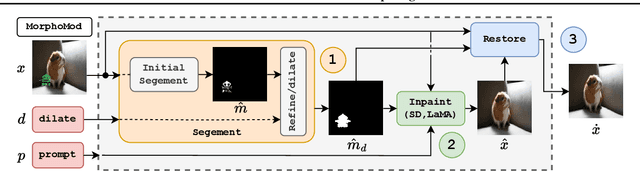
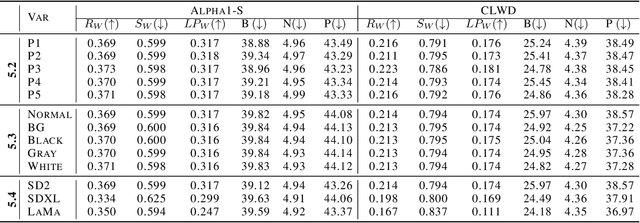
Visible watermarks pose significant challenges for image restoration techniques, especially when the target background is unknown. Toward this end, we present MorphoMod, a novel method for automated visible watermark removal that operates in a blind setting -- without requiring target images. Unlike existing methods, MorphoMod effectively removes opaque and transparent watermarks while preserving semantic content, making it well-suited for real-world applications. Evaluations on benchmark datasets, including the Colored Large-scale Watermark Dataset (CLWD), LOGO-series, and the newly introduced Alpha1 datasets, demonstrate that MorphoMod achieves up to a 50.8% improvement in watermark removal effectiveness compared to state-of-the-art methods. Ablation studies highlight the impact of prompts used for inpainting, pre-removal filling strategies, and inpainting model performance on watermark removal. Additionally, a case study on steganographic disorientation reveals broader applications for watermark removal in disrupting high-level hidden messages. MorphoMod offers a robust, adaptable solution for watermark removal and opens avenues for further advancements in image restoration and adversarial manipulation.
Neural Network Verification is a Programming Language Challenge
Jan 10, 2025
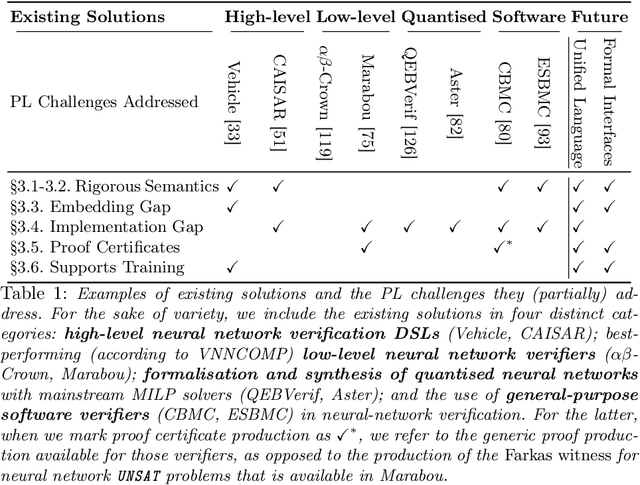

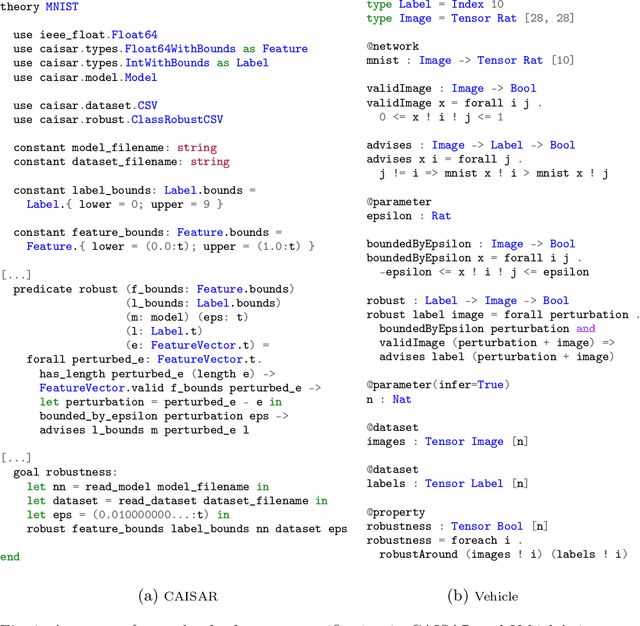
Neural network verification is a new and rapidly developing field of research. So far, the main priority has been establishing efficient verification algorithms and tools, while proper support from the programming language perspective has been considered secondary or unimportant. Yet, there is mounting evidence that insights from the programming language community may make a difference in the future development of this domain. In this paper, we formulate neural network verification challenges as programming language challenges and suggest possible future solutions.
* Accepted at ESOP 2025, European Symposium on Programming Languages
The Fifth International Verification of Neural Networks Competition (VNN-COMP 2024): Summary and Results
Dec 28, 2024

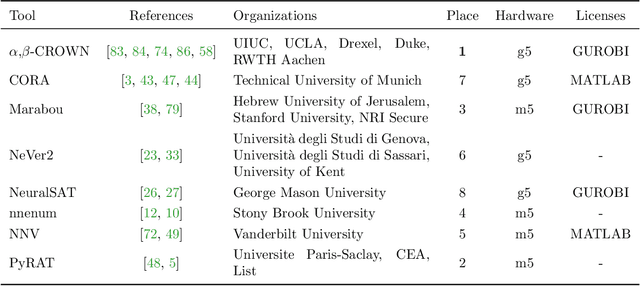

This report summarizes the 5th International Verification of Neural Networks Competition (VNN-COMP 2024), held as a part of the 7th International Symposium on AI Verification (SAIV), that was collocated with the 36th International Conference on Computer-Aided Verification (CAV). VNN-COMP is held annually to facilitate the fair and objective comparison of state-of-the-art neural network verification tools, encourage the standardization of tool interfaces, and bring together the neural network verification community. To this end, standardized formats for networks (ONNX) and specification (VNN-LIB) were defined, tools were evaluated on equal-cost hardware (using an automatic evaluation pipeline based on AWS instances), and tool parameters were chosen by the participants before the final test sets were made public. In the 2024 iteration, 8 teams participated on a diverse set of 12 regular and 8 extended benchmarks. This report summarizes the rules, benchmarks, participating tools, results, and lessons learned from this iteration of this competition.
PBP: Post-training Backdoor Purification for Malware Classifiers
Dec 05, 2024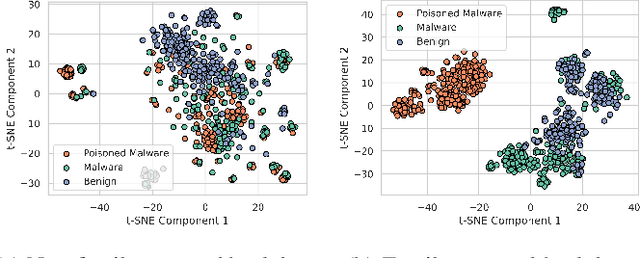


In recent years, the rise of machine learning (ML) in cybersecurity has brought new challenges, including the increasing threat of backdoor poisoning attacks on ML malware classifiers. For instance, adversaries could inject malicious samples into public malware repositories, contaminating the training data and potentially misclassifying malware by the ML model. Current countermeasures predominantly focus on detecting poisoned samples by leveraging disagreements within the outputs of a diverse set of ensemble models on training data points. However, these methods are not suitable for scenarios where Machine Learning-as-a-Service (MLaaS) is used or when users aim to remove backdoors from a model after it has been trained. Addressing this scenario, we introduce PBP, a post-training defense for malware classifiers that mitigates various types of backdoor embeddings without assuming any specific backdoor embedding mechanism. Our method exploits the influence of backdoor attacks on the activation distribution of neural networks, independent of the trigger-embedding method. In the presence of a backdoor attack, the activation distribution of each layer is distorted into a mixture of distributions. By regulating the statistics of the batch normalization layers, we can guide a backdoored model to perform similarly to a clean one. Our method demonstrates substantial advantages over several state-of-the-art methods, as evidenced by experiments on two datasets, two types of backdoor methods, and various attack configurations. Notably, our approach requires only a small portion of the training data -- only 1\% -- to purify the backdoor and reduce the attack success rate from 100\% to almost 0\%, a 100-fold improvement over the baseline methods. Our code is available at \url{https://github.com/judydnguyen/pbp-backdoor-purification-official}.