 Add to Chrome
 Add to Firefox
 Add to Edge
Normalisation-Based Likelihood Ratio Estimation for Forensic Authorship Verification
Jul 10, 2026
Authorship verification (AV) is the task of determining whether two texts were written by the same author. In a forensic context, the strength of AV evidence can be quantified using likelihood ratios. Most AV methods are score-based and deriving well-calibrated likelihood ratios from these scores requires a separate calibration model. This, in turn, requires additional amounts of case-relevant data, which is often time-consuming to obtain and prepare. This study proposes two novel normalisation techniques, the Square Root Correction and the Hapax Correction, for deriving likelihood ratios from the AV method LambdaG without the need of a calibration model (Nini et al. 2026). These corrections are designed to mitigate the overestimation of evidential strength that may result from long or highly repetitive texts. Performance is evaluated against logistic regression calibration across fifteen corpora and a range of text lengths (100-9,500 tokens), using the log-likelihood ratio cost (Cllr). The proposed methods achieve performance comparable to logistic regression calibration, with the Hapax Correction outperforming it in approximately 45% of tests (weighted by corpora). Furthermore, performance was more frequently close (within 5%) when the Hapax Correction was outperformed by logistic regression calibration, compared with the reverse comparison. Eliminating the need to train a calibration model reduces data-requirements, time and complexity, thereby increasing the accessibility and transparency of forensic text comparison. This combination of empirical performance and practical advantages supports the adoption of the proposed methods in forensic settings.

Encrypted Neural Networks without Overflows
May 21, 2026Fully homomorphic encryption (FHE) enables private inference by evaluating neural networks on encrypted data. In this way, we can delegate the computation to a third party server without ever revealing the user's data. Currently, the CKKS scheme is the backbone of most efficient FHE implementations, but it only supports addition, multiplication, and array rotation operations, thus requiring all activation functions of the neural network to be approximated by polynomials within a certain interval, imposing strict design tolerances. In this paper, we demonstrate for the first time that this scheme is vulnerable to overflow attacks, i.e., seemingly benign inputs that can exceed such tolerances of the FHE circuit, thereby causing corrupt and unusable outputs. To avoid them, we propose a formal verification technique that computes certified bounds on the ranges of all neurons in the network. By construction, our method eliminates overflows and, in our experiments, removed observed overflows on all benchmarks, reducing failure rates from up to 47% to 0%. Moreover, our overflow-free solution is compatible with most CKKS-based frameworks, as it allows to simply substitute standard polynomials by polynomials with rigorously designed ranges.
The 6th International Verification of Neural Networks Competition (VNN-COMP 2025): Summary and Results
Dec 22, 2025This report summarizes the 6th International Verification of Neural Networks Competition (VNN-COMP 2025), held as a part of the 8th International Symposium on AI Verification (SAIV), that was collocated with the 37th International Conference on Computer-Aided Verification (CAV). VNN-COMP is held annually to facilitate the fair and objective comparison of state-of-the-art neural network verification tools, encourage the standardization of tool interfaces, and bring together the neural network verification community. To this end, standardized formats for networks (ONNX) and specification (VNN-LIB) were defined, tools were evaluated on equal-cost hardware (using an automatic evaluation pipeline based on AWS instances), and tool parameters were chosen by the participants before the final test sets were made public. In the 2025 iteration, 8 teams participated on a diverse set of 16 regular and 9 extended benchmarks. This report summarizes the rules, benchmarks, participating tools, results, and lessons learned from this iteration of this competition.
GPT, But Backwards: Exactly Inverting Language Model Outputs
Jul 02, 2025While existing auditing techniques attempt to identify potential unwanted behaviours in large language models (LLMs), we address the complementary forensic problem of reconstructing the exact input that led to an existing LLM output - enabling post-incident analysis and potentially the detection of fake output reports. We formalize exact input reconstruction as a discrete optimisation problem with a unique global minimum and introduce SODA, an efficient gradient-based algorithm that operates on a continuous relaxation of the input search space with periodic restarts and parameter decay. Through comprehensive experiments on LLMs ranging in size from 33M to 3B parameters, we demonstrate that SODA significantly outperforms existing approaches. We succeed in fully recovering 79.5% of shorter out-of-distribution inputs from next-token logits, without a single false positive, but struggle to extract private information from the outputs of longer (15+ token) input sequences. This suggests that standard deployment practices may currently provide adequate protection against malicious use of our method. Our code is available at https://doi.org/10.5281/zenodo.15539879.
Neural Network Verification is a Programming Language Challenge
Jan 10, 2025
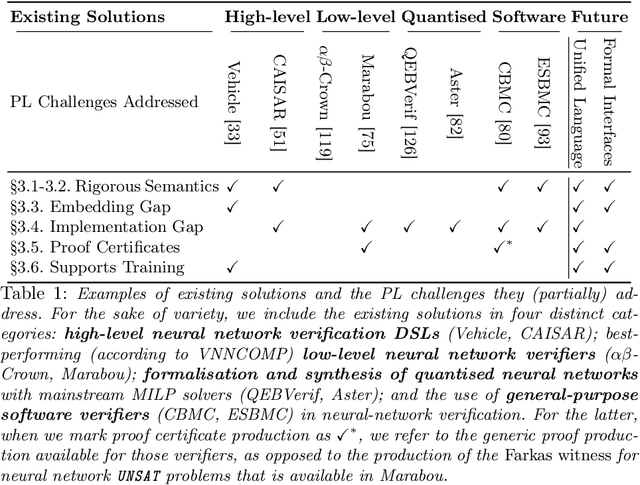

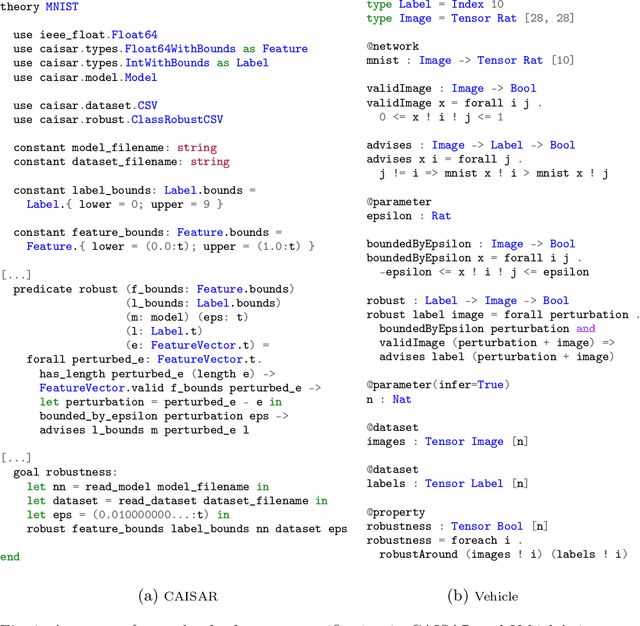
Neural network verification is a new and rapidly developing field of research. So far, the main priority has been establishing efficient verification algorithms and tools, while proper support from the programming language perspective has been considered secondary or unimportant. Yet, there is mounting evidence that insights from the programming language community may make a difference in the future development of this domain. In this paper, we formulate neural network verification challenges as programming language challenges and suggest possible future solutions.
* Accepted at ESOP 2025, European Symposium on Programming Languages
Automated Repair of AI Code with Large Language Models and Formal Verification
May 14, 2024



The next generation of AI systems requires strong safety guarantees. This report looks at the software implementation of neural networks and related memory safety properties, including NULL pointer deference, out-of-bound access, double-free, and memory leaks. Our goal is to detect these vulnerabilities, and automatically repair them with the help of large language models. To this end, we first expand the size of NeuroCodeBench, an existing dataset of neural network code, to about 81k programs via an automated process of program mutation. Then, we verify the memory safety of the mutated neural network implementations with ESBMC, a state-of-the-art software verifier. Whenever ESBMC spots a vulnerability, we invoke a large language model to repair the source code. For the latest task, we compare the performance of various state-of-the-art prompt engineering techniques, and an iterative approach that repeatedly calls the large language model.
NeuroCodeBench: a plain C neural network benchmark for software verification
Sep 07, 2023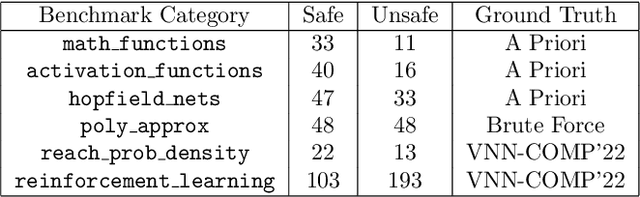


Safety-critical systems with neural network components require strong guarantees. While existing neural network verification techniques have shown great progress towards this goal, they cannot prove the absence of software faults in the network implementation. This paper presents NeuroCodeBench - a verification benchmark for neural network code written in plain C. It contains 32 neural networks with 607 safety properties divided into 6 categories: maths library, activation functions, error-correcting networks, transfer function approximation, probability density estimation and reinforcement learning. Our preliminary evaluation shows that state-of-the-art software verifiers struggle to provide correct verdicts, due to their incomplete support of the standard C mathematical library and the complexity of larger neural networks.
LF-checker: Machine Learning Acceleration of Bounded Model Checking for Concurrency Verification (Competition Contribution)
Jan 22, 2023
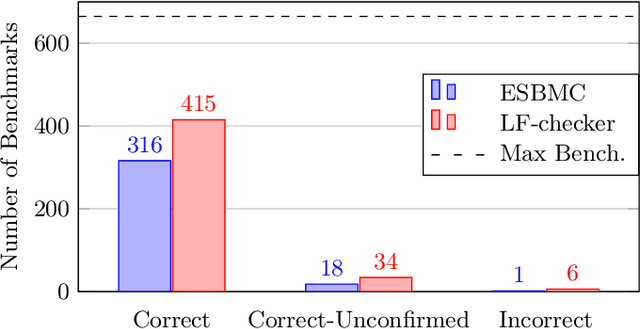
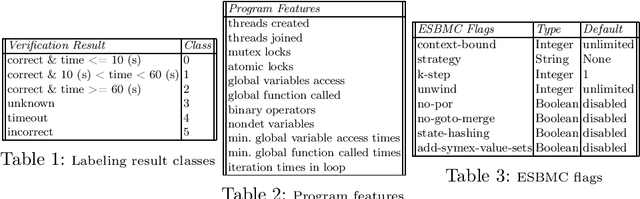
We describe and evaluate LF-checker, a metaverifier tool based on machine learning. It extracts multiple features of the program under test and predicts the optimal configuration (flags) of a bounded model checker with a decision tree. Our current work is specialised in concurrency verification and employs ESBMC as a back-end verification engine. In the paper, we demonstrate that LF-checker achieves better results than the default configuration of the underlying verification engine.
CEG4N: Counter-Example Guided Neural Network Quantization Refinement
Jul 09, 2022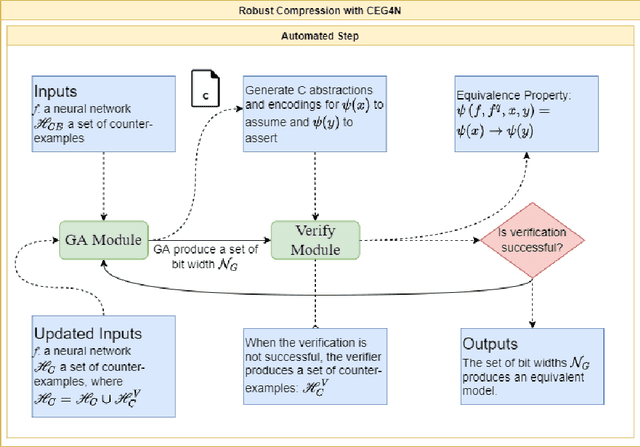
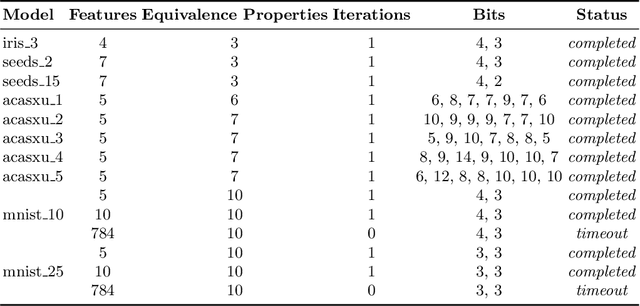
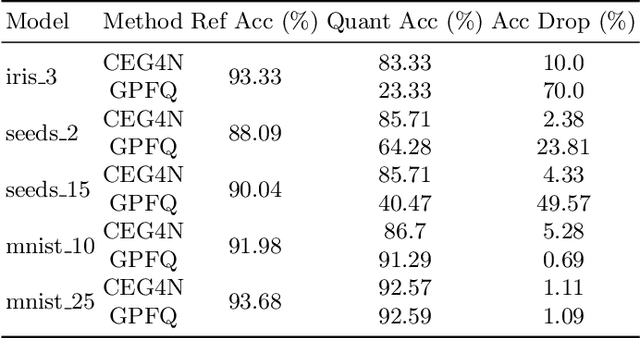
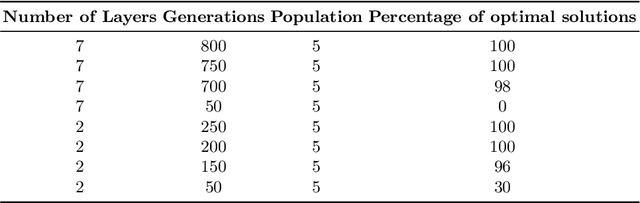
Neural networks are essential components of learning-based software systems. However, their high compute, memory, and power requirements make using them in low resources domains challenging. For this reason, neural networks are often quantized before deployment. Existing quantization techniques tend to degrade the network accuracy. We propose Counter-Example Guided Neural Network Quantization Refinement (CEG4N). This technique combines search-based quantization and equivalence verification: the former minimizes the computational requirements, while the latter guarantees that the network's output does not change after quantization. We evaluate CEG4N~on a diverse set of benchmarks, including large and small networks. Our technique successfully quantizes the networks in our evaluation while producing models with up to 72% better accuracy than state-of-the-art techniques.
Systematicity, Compositionality and Transitivity of Deep NLP Models: a Metamorphic Testing Perspective
Apr 26, 2022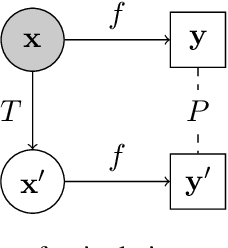
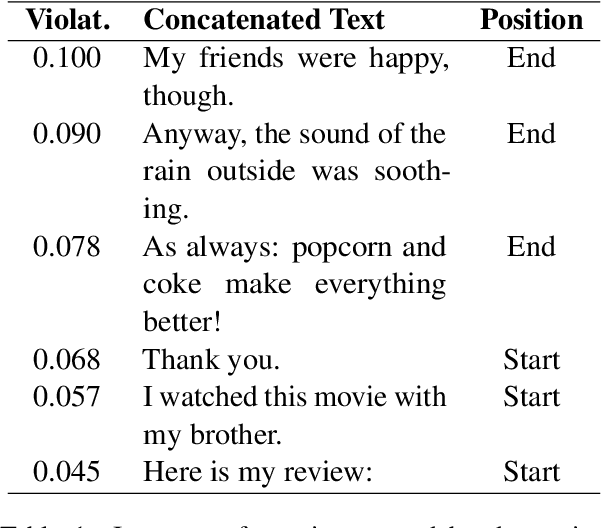
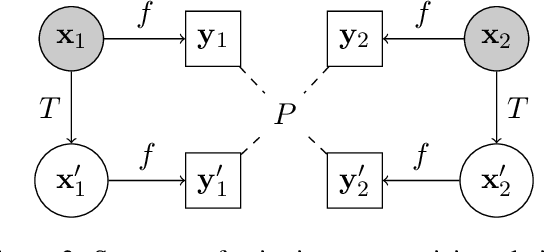
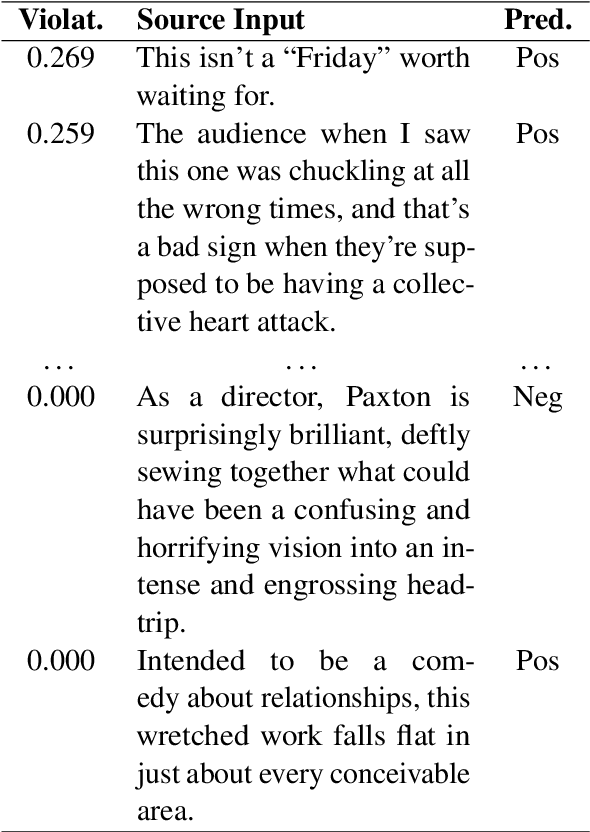
Metamorphic testing has recently been used to check the safety of neural NLP models. Its main advantage is that it does not rely on a ground truth to generate test cases. However, existing studies are mostly concerned with robustness-like metamorphic relations, limiting the scope of linguistic properties they can test. We propose three new classes of metamorphic relations, which address the properties of systematicity, compositionality and transitivity. Unlike robustness, our relations are defined over multiple source inputs, thus increasing the number of test cases that we can produce by a polynomial factor. With them, we test the internal consistency of state-of-the-art NLP models, and show that they do not always behave according to their expected linguistic properties. Lastly, we introduce a novel graphical notation that efficiently summarises the inner structure of metamorphic relations.