 Add to Chrome
 Add to Firefox
 Add to Edge
Partially Adaptive Multichannel Joint Reduction of Ego-noise and Environmental Noise
Mar 27, 2023
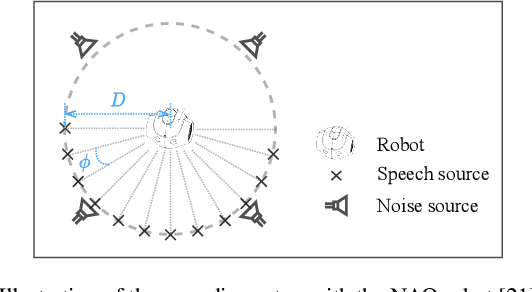
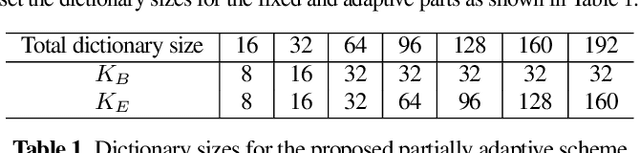
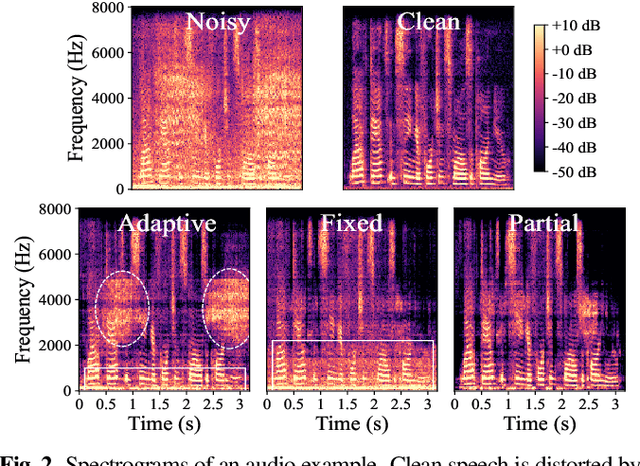
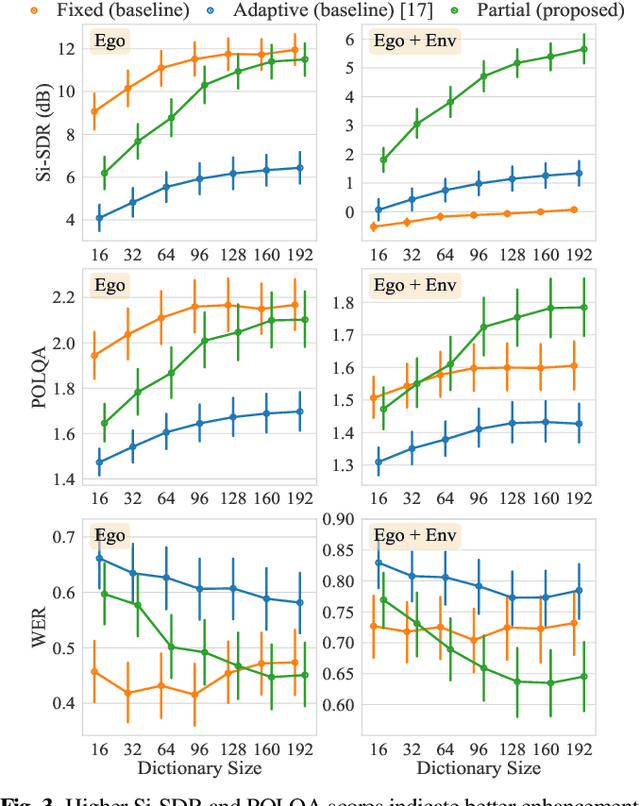
Human-robot interaction relies on a noise-robust audio processing module capable of estimating target speech from audio recordings impacted by environmental noise, as well as self-induced noise, so-called ego-noise. While external ambient noise sources vary from environment to environment, ego-noise is mainly caused by the internal motors and joints of a robot. Ego-noise and environmental noise reduction are often decoupled, i.e., ego-noise reduction is performed without considering environmental noise. Recently, a variational autoencoder (VAE)-based speech model has been combined with a fully adaptive non-negative matrix factorization (NMF) noise model to recover clean speech under different environmental noise disturbances. However, its enhancement performance is limited in adverse acoustic scenarios involving, e.g. ego-noise. In this paper, we propose a multichannel partially adaptive scheme to jointly model ego-noise and environmental noise utilizing the VAE-NMF framework, where we take advantage of spatially and spectrally structured characteristics of ego-noise by pre-training the ego-noise model, while retaining the ability to adapt to unknown environmental noise. Experimental results show that our proposed approach outperforms the methods based on a completely fixed scheme and a fully adaptive scheme when ego-noise and environmental noise are present simultaneously.
* Accepted to the 2023 IEEE International Conference on Acoustics, Speech, and Signal Processing (ICASSP 2023)

The Robot in the Room: Influence of Robot Facial Expressions and Gaze on Human-Human-Robot Collaboration
Mar 24, 2023Robot facial expressions and gaze are important factors for enhancing human-robot interaction (HRI), but their effects on human collaboration and perception are not well understood, for instance, in collaborative game scenarios. In this study, we designed a collaborative triadic HRI game scenario, where two participants worked together to insert objects into a shape sorter. One participant assumed the role of a guide. The guide instructed the other participant, who played the role of an actor, by placing occluded objects into the sorter. A humanoid robot issued instructions, observed the interaction, and displayed social cues to elicit changes in the two participants' behavior. We measured human collaboration as a function of task completion time and the participants' perceptions of the robot by rating its behavior as intelligent or random. Participants also evaluated the robot by filling out the Godspeed questionnaire. We found that human collaboration was higher when the robot displayed a happy facial expression at the beginning of the game compared to a neutral facial expression. We also found that participants perceived the robot as more intelligent when it displayed a positive facial expression at the end of the game. The robot's behavior was also perceived as intelligent when directing its gaze toward the guide at the beginning of the interaction, not the actor. These findings provide insights into how robot facial expressions and gaze influence human behavior and perception in collaboration.
Chat with the Environment: Interactive Multimodal Perception using Large Language Models
Mar 14, 2023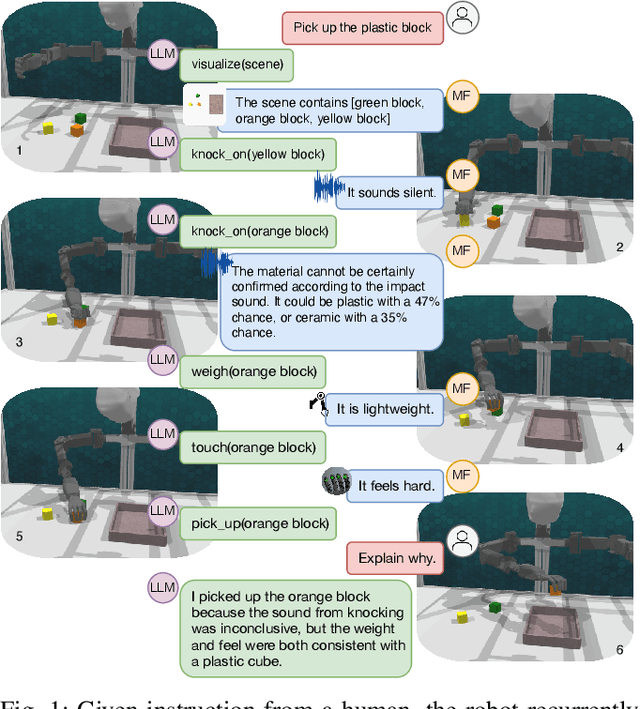
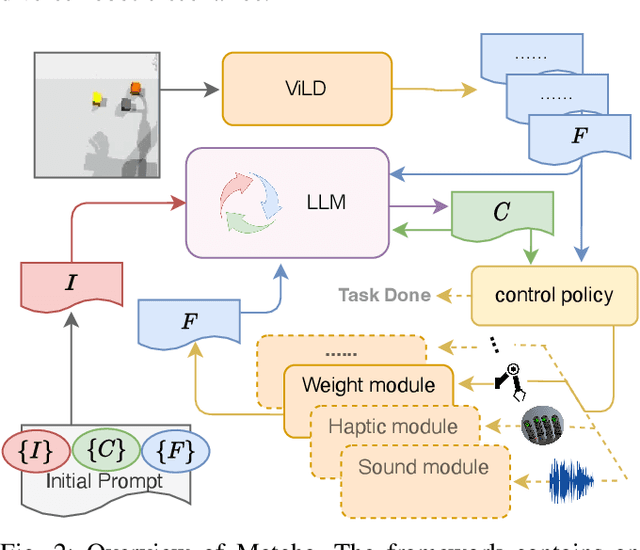
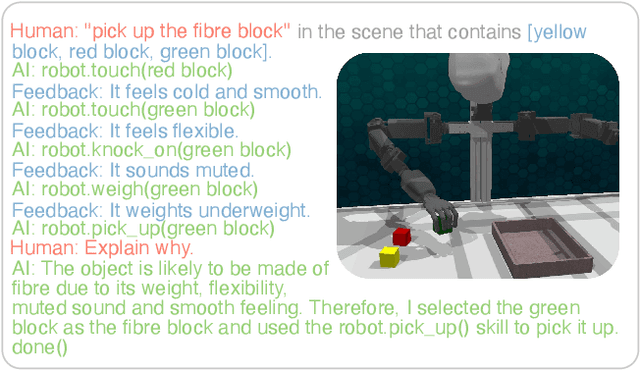
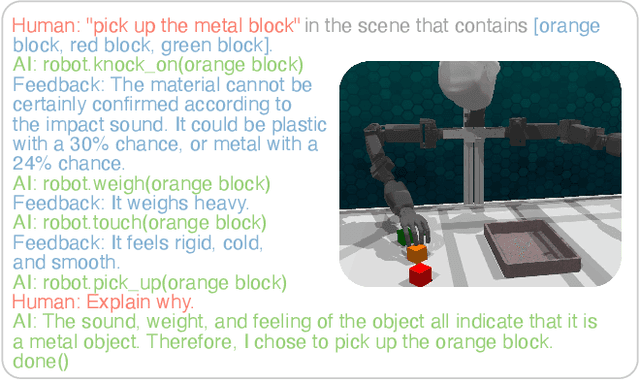
Programming robot behaviour in a complex world faces challenges on multiple levels, from dextrous low-level skills to high-level planning and reasoning. Recent pre-trained Large Language Models (LLMs) have shown remarkable reasoning ability in zero-shot robotic planning. However, it remains challenging to ground LLMs in multimodal sensory input and continuous action output, while enabling a robot to interact with its environment and acquire novel information as its policies unfold. We develop a robot interaction scenario with a partially observable state, which necessitates a robot to decide on a range of epistemic actions in order to sample sensory information among multiple modalities, before being able to execute the task correctly. An interactive perception framework is therefore proposed with an LLM as its backbone, whose ability is exploited to instruct epistemic actions and to reason over the resulting multimodal sensations (vision, sound, haptics, proprioception), as well as to plan an entire task execution based on the interactively acquired information. Our study demonstrates that LLMs can provide high-level planning and reasoning skills and control interactive robot behaviour in a multimodal environment, while multimodal modules with the context of the environmental state help ground the LLMs and extend their processing ability.
Sample-efficient Real-time Planning with Curiosity Cross-Entropy Method and Contrastive Learning
Mar 07, 2023Model-based reinforcement learning (MBRL) with real-time planning has shown great potential in locomotion and manipulation control tasks. However, the existing planning methods, such as the Cross-Entropy Method (CEM), do not scale well to complex high-dimensional environments. One of the key reasons for underperformance is the lack of exploration, as these planning methods only aim to maximize the cumulative extrinsic reward over the planning horizon. Furthermore, planning inside the compact latent space in the absence of observations makes it challenging to use curiosity-based intrinsic motivation. We propose Curiosity CEM (CCEM), an improved version of the CEM algorithm for encouraging exploration via curiosity. Our proposed method maximizes the sum of state-action Q values over the planning horizon, in which these Q values estimate the future extrinsic and intrinsic reward, hence encouraging reaching novel observations. In addition, our model uses contrastive representation learning to efficiently learn latent representations. Experiments on image-based continuous control tasks from the DeepMind Control suite show that CCEM is by a large margin more sample-efficient than previous MBRL algorithms and compares favorably with the best model-free RL methods.
Wrapyfi: A Wrapper for Message-Oriented and Robotics Middleware
Feb 22, 2023
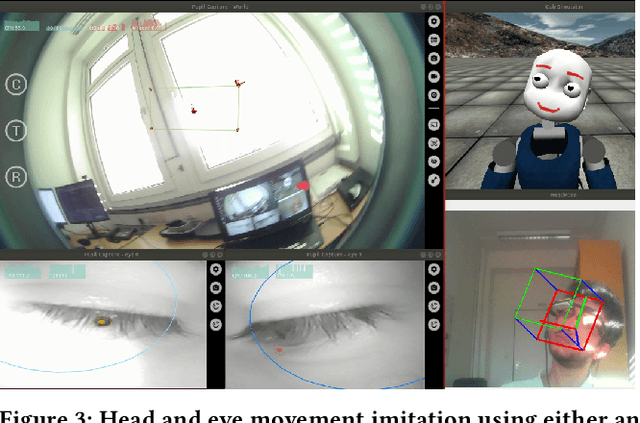
Message-oriented and robotics middleware play an important role in facilitating robot control, abstracting complex functionality and unifying communication patterns across networks of sensors and devices. However, the use of multiple middleware frameworks presents a challenge in integrating different robots within a single system. To address this challenge, we present Wrapyfi, a Python wrapper supporting multiple message-oriented and robotics middleware, including ZeroMQ, YARP, ROS, and ROS 2. Wrapyfi also provides plugins for exchanging deep learning framework data, without additional encoding or preprocessing steps. Using Wrapyfi eases the development of scripts that run on multiple machines, thereby enabling cross-platform communication and workload distribution. We evaluated Wrapyfi in practical settings by conducting two user studies, using multiple sensors transmitting readings to deep learning models, and using robots such as the iCub and Pepper via different middleware. The results demonstrated Wrapyfi's usability in practice allowing for multi-middleware exchanges, and controlled process distribution in a real-world setting. More importantly, we showcase Wrapify's most prominent features by bridging interactions between sensors, deep learning models, and robotic platforms.
Emphasizing Unseen Words: New Vocabulary Acquisition for End-to-End Speech Recognition
Feb 21, 2023Due to the dynamic nature of human language, automatic speech recognition (ASR) systems need to continuously acquire new vocabulary. Out-Of-Vocabulary (OOV) words, such as trending words and new named entities, pose problems to modern ASR systems that require long training times to adapt their large numbers of parameters. Different from most previous research focusing on language model post-processing, we tackle this problem on an earlier processing level and eliminate the bias in acoustic modeling to recognize OOV words acoustically. We propose to generate OOV words using text-to-speech systems and to rescale losses to encourage neural networks to pay more attention to OOV words. Specifically, we enlarge the classification loss used for training neural networks' parameters of utterances containing OOV words (sentence-level), or rescale the gradient used for back-propagation for OOV words (word-level), when fine-tuning a previously trained model on synthetic audio. To overcome catastrophic forgetting, we also explore the combination of loss rescaling and model regularization, i.e. L2 regularization and elastic weight consolidation (EWC). Compared with previous methods that just fine-tune synthetic audio with EWC, the experimental results on the LibriSpeech benchmark reveal that our proposed loss rescaling approach can achieve significant improvement on the recall rate with only a slight decrease on word error rate. Moreover, word-level rescaling is more stable than utterance-level rescaling and leads to higher recall rates and precision on OOV word recognition. Furthermore, our proposed combined loss rescaling and weight consolidation methods can support continual learning of an ASR system.
Internally Rewarded Reinforcement Learning
Feb 01, 2023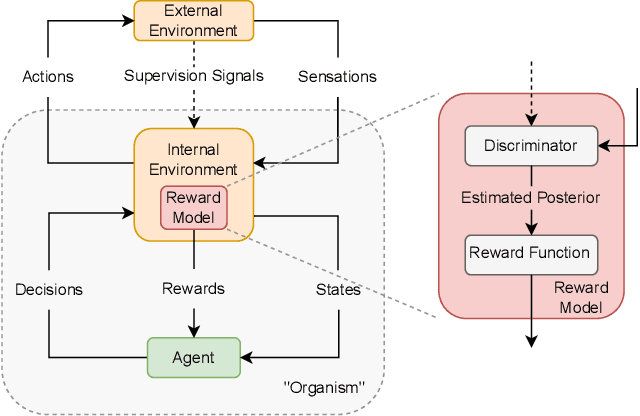
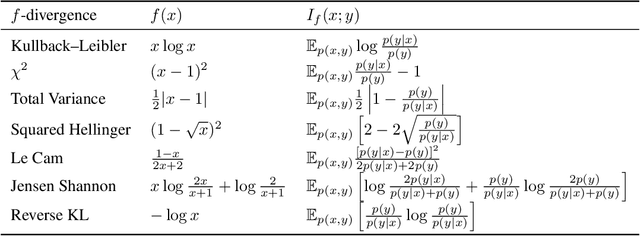
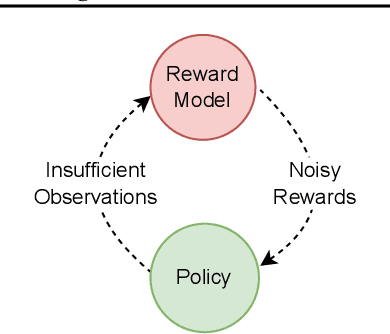
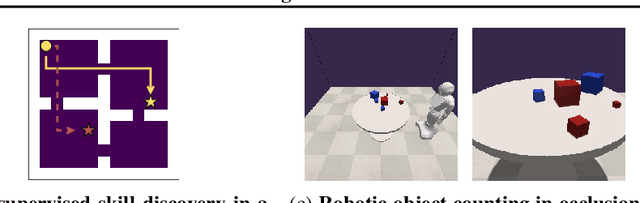
We study a class of reinforcement learning problems where the reward signals for policy learning are generated by a discriminator that is dependent on and jointly optimized with the policy. This interdependence between the policy and the discriminator leads to an unstable learning process because reward signals from an immature discriminator are noisy and impede policy learning, and conversely, an untrained policy impedes discriminator learning. We call this learning setting $\textit{Internally Rewarded Reinforcement Learning}$ (IRRL) as the reward is not provided directly by the environment but $\textit{internally}$ by the discriminator. In this paper, we formally formulate IRRL and present a class of problems that belong to IRRL. We theoretically derive and empirically analyze the effect of the reward function in IRRL and based on these analyses propose the clipped linear reward function. Experimental results show that the proposed reward function can consistently stabilize the training process by reducing the impact of reward noise, which leads to faster convergence and higher performance compared with baselines in diverse tasks.
Learning Bidirectional Action-Language Translation with Limited Supervision and Incongruent Extra Input
Jan 09, 2023Human infant learning happens during exploration of the environment, by interaction with objects, and by listening to and repeating utterances casually, which is analogous to unsupervised learning. Only occasionally, a learning infant would receive a matching verbal description of an action it is committing, which is similar to supervised learning. Such a learning mechanism can be mimicked with deep learning. We model this weakly supervised learning paradigm using our Paired Gated Autoencoders (PGAE) model, which combines an action and a language autoencoder. After observing a performance drop when reducing the proportion of supervised training, we introduce the Paired Transformed Autoencoders (PTAE) model, using Transformer-based crossmodal attention. PTAE achieves significantly higher accuracy in language-to-action and action-to-language translations, particularly in realistic but difficult cases when only few supervised training samples are available. We also test whether the trained model behaves realistically with conflicting multimodal input. In accordance with the concept of incongruence in psychology, conflict deteriorates the model output. Conflicting action input has a more severe impact than conflicting language input, and more conflicting features lead to larger interference. PTAE can be trained on mostly unlabelled data where labeled data is scarce, and it behaves plausibly when tested with incongruent input.
Disentangling Prosody Representations with Unsupervised Speech Reconstruction
Dec 14, 2022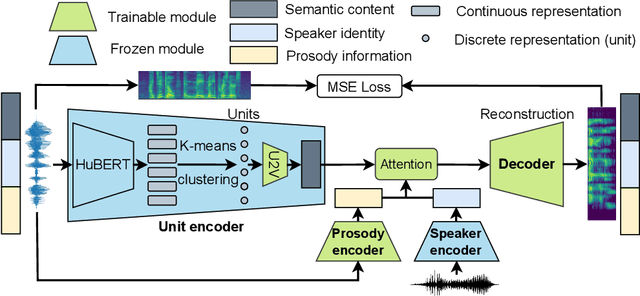
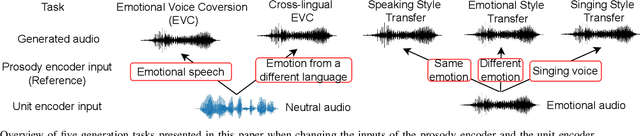
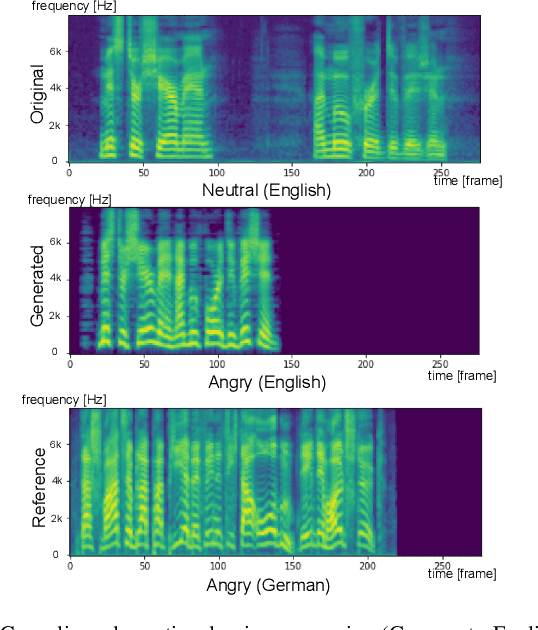
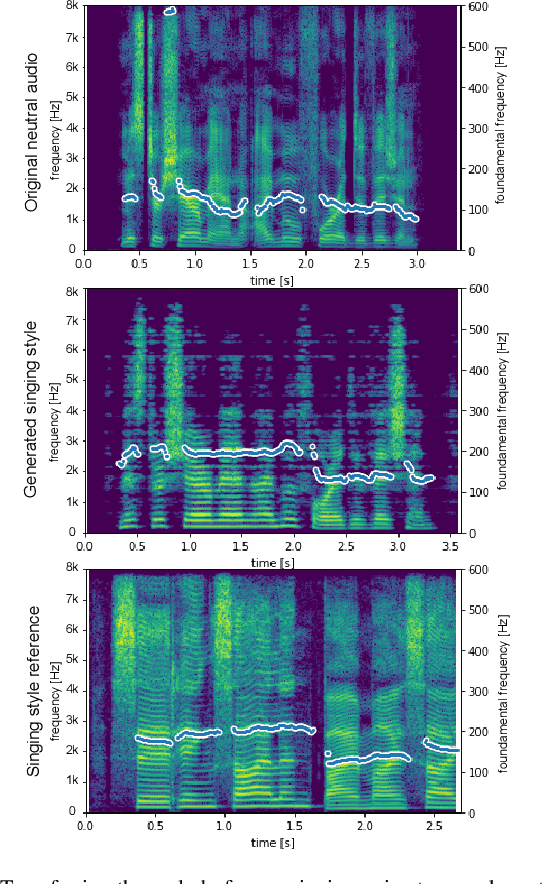
Human speech can be characterized by different components, including semantic content, speaker identity and prosodic information. Significant progress has been made in disentangling representations for semantic content and speaker identity in Automatic Speech Recognition (ASR) and speaker verification tasks respectively. However, it is still an open challenging research question to extract prosodic information because of the intrinsic association of different attributes, such as timbre and rhythm, and because of the need for unsupervised training schemes to achieve robust large-scale and speaker-independent ASR. The aim of this paper is to address the disentanglement of emotional prosody from speech based on unsupervised reconstruction. Specifically, we identify, design, implement and integrate three crucial components in our proposed speech reconstruction model Prosody2Vec: (1) a unit encoder that transforms speech signals into discrete units for semantic content, (2) a pretrained speaker verification model to generate speaker identity embeddings, and (3) a trainable prosody encoder to learn prosody representations. We first pretrain the Prosody2Vec representations on unlabelled emotional speech corpora, then fine-tune the model on specific datasets to perform Speech Emotion Recognition (SER) and Emotional Voice Conversion (EVC) tasks. Both objective and subjective evaluations on the EVC task suggest that Prosody2Vec effectively captures general prosodic features that can be smoothly transferred to other emotional speech. In addition, our SER experiments on the IEMOCAP dataset reveal that the prosody features learned by Prosody2Vec are complementary and beneficial for the performance of widely used speech pretraining models and surpass the state-of-the-art methods when combining Prosody2Vec with HuBERT representations. Some audio samples can be found on our demo website.
Whose Emotion Matters? Speaker Detection without Prior Knowledge
Dec 08, 2022The task of emotion recognition in conversations (ERC) benefits from the availability of multiple modalities, as offered, for example, in the video-based MELD dataset. However, only a few research approaches use both acoustic and visual information from the MELD videos. There are two reasons for this: First, label-to-video alignments in MELD are noisy, making those videos an unreliable source of emotional speech data. Second, conversations can involve several people in the same scene, which requires the detection of the person speaking the utterance. In this paper we demonstrate that by using recent automatic speech recognition and active speaker detection models, we are able to realign the videos of MELD, and capture the facial expressions from uttering speakers in 96.92% of the utterances provided in MELD. Experiments with a self-supervised voice recognition model indicate that the realigned MELD videos more closely match the corresponding utterances offered in the dataset. Finally, we devise a model for emotion recognition in conversations trained on the face and audio information of the MELD realigned videos, which outperforms state-of-the-art models for ERC based on vision alone. This indicates that active speaker detection is indeed effective for extracting facial expressions from the uttering speakers, and that faces provide more informative visual cues than the visual features state-of-the-art models have been using so far.