 Add to Chrome
 Add to Firefox
 Add to Edge
Multi-fidelity surrogates for mechanics of composites: from co-kriging to multi-fidelity neural networks
May 04, 2026
Composite materials exhibit strongly hierarchical and anisotropic properties governed by coupled mechanisms spanning constituents, plies, laminates, structures, and manufacturing history. This intrinsic complexity makes predictive modeling of composites expensive, because repeated experiments and high-fidelity simulations are needed to cover large design spaces of material, structure, and manufacturing. Multi-fidelity surrogate modeling addresses this challenge by combining abundant, less expensive data with limited high-accuracy data to recover reliable high-fidelity predictions. This review presents a structured overview of multi-fidelity modeling for composite mechanics, covering Gaussian-process or Kriging-based methods, including co-Kriging, coregionalization models, autoregressive formulations, nonlinear autoregressive Gaussian processes, multi-fidelity deep Gaussian processes, and multi-fidelity neural networks. Their distinctions are examined in terms of cross-fidelity correlation, discrepancy representation, uncertainty quantification, and scalability. Selected examples of their applications to composites are introduced according to the roles that multi-fidelity surrogates play in engineering problems, including forward prediction for rapid exploration of material design spaces, inverse optimization for composite parameter identification and design search under limited high-fidelity access, and workflow integration, where heterogeneous data sources, constraints, and validation requirements determine model utility. Open question discussions highlight recurring challenges specific to composites, such as regime-dependent fidelity gaps associated with nonlinear damage and manufacturing history, mismatches between simulations and experiments, and uncertainty propagation across multi-fidelity models.

A Large-Scale Dataset for Molecular Structure-Language Description via a Rule-Regularized Method
Feb 02, 2026Molecular function is largely determined by structure. Accurately aligning molecular structure with natural language is therefore essential for enabling large language models (LLMs) to reason about downstream chemical tasks. However, the substantial cost of human annotation makes it infeasible to construct large-scale, high-quality datasets of structure-grounded descriptions. In this work, we propose a fully automated annotation framework for generating precise molecular structure descriptions at scale. Our approach builds upon and extends a rule-based chemical nomenclature parser to interpret IUPAC names and construct enriched, structured XML metadata that explicitly encodes molecular structure. This metadata is then used to guide LLMs in producing accurate natural-language descriptions. Using this framework, we curate a large-scale dataset of approximately $163$k molecule-description pairs. A rigorous validation protocol combining LLM-based and expert human evaluation on a subset of $2,000$ molecules demonstrates a high description precision of $98.6\%$. The resulting dataset provides a reliable foundation for future molecule-language alignment, and the proposed annotation method is readily extensible to larger datasets and broader chemical tasks that rely on structural descriptions.
Probabilistic Predictions of Process-Induced Deformation in Carbon/Epoxy Composites Using a Deep Operator Network
Dec 18, 2025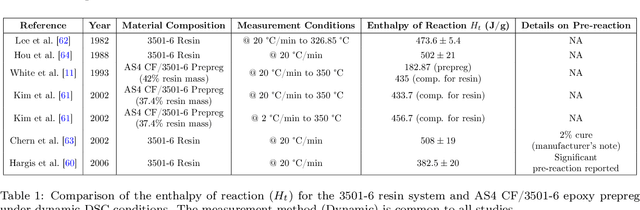
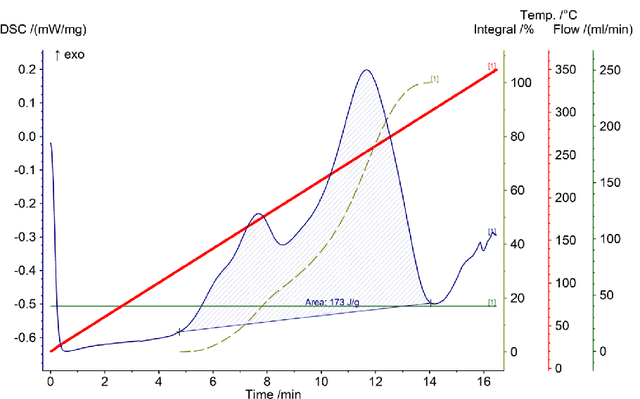


Fiber reinforcement and polymer matrix respond differently to manufacturing conditions due to mismatch in coefficient of thermal expansion and matrix shrinkage during curing of thermosets. These heterogeneities generate residual stresses over multiple length scales, whose partial release leads to process-induced deformation (PID), requiring accurate prediction and mitigation via optimized non-isothermal cure cycles. This study considers a unidirectional AS4 carbon fiber/amine bi-functional epoxy prepreg and models PID using a two-mechanism framework that accounts for thermal expansion/shrinkage and cure shrinkage. The model is validated against manufacturing trials to identify initial and boundary conditions, then used to generate PID responses for a diverse set of non-isothermal cure cycles (time-temperature profiles). Building on this physics-based foundation, we develop a data-driven surrogate based on Deep Operator Networks (DeepONets). A DeepONet is trained on a dataset combining high-fidelity simulations with targeted experimental measurements of PID. We extend this to a Feature-wise Linear Modulation (FiLM) DeepONet, where branch-network features are modulated by external parameters, including the initial degree of cure, enabling prediction of time histories of degree of cure, viscosity, and deformation. Because experimental data are available only at limited time instances (for example, final deformation), we use transfer learning: simulation-trained trunk and branch networks are fixed and only the final layer is updated using measured final deformation. Finally, we augment the framework with Ensemble Kalman Inversion (EKI) to quantify uncertainty under experimental conditions and to support optimization of cure schedules for reduced PID in composites.