 Add to Chrome
 Add to Firefox
 Add to Edge
Linear-LLM-SCM: Benchmarking LLMs for Coefficient Elicitation in Linear-Gaussian Causal Models
Feb 10, 2026
Large language models (LLMs) have shown potential in identifying qualitative causal relations, but their ability to perform quantitative causal reasoning -- estimating effect sizes that parametrize functional relationships -- remains underexplored in continuous domains. We introduce Linear-LLM-SCM, a plug-and-play benchmarking framework for evaluating LLMs on linear Gaussian structural causal model (SCM) parametrization when the DAG is given. The framework decomposes a DAG into local parent-child sets and prompts an LLM to produce a regression-style structural equation per node, which is aggregated and compared against available ground-truth parameters. Our experiments show several challenges in such benchmarking tasks, namely, strong stochasticity in the results in some of the models and susceptibility to DAG misspecification via spurious edges in the continuous domains. Across models, we observe substantial variability in coefficient estimates for some settings and sensitivity to structural and semantic perturbations, highlighting current limitations of LLMs as quantitative causal parameterizers. We also open-sourced the benchmarking framework so that researchers can utilize their DAGs and any off-the-shelf LLMs plug-and-play for evaluation in their domains effortlessly.

Co-Exploration and Co-Exploitation via Shared Structure in Multi-Task Bandits
Dec 14, 2025We propose a novel Bayesian framework for efficient exploration in contextual multi-task multi-armed bandit settings, where the context is only observed partially and dependencies between reward distributions are induced by latent context variables. In order to exploit these structural dependencies, our approach integrates observations across all tasks and learns a global joint distribution, while still allowing personalised inference for new tasks. In this regard, we identify two key sources of epistemic uncertainty, namely structural uncertainty in the latent reward dependencies across arms and tasks, and user-specific uncertainty due to incomplete context and limited interaction history. To put our method into practice, we represent the joint distribution over tasks and rewards using a particle-based approximation of a log-density Gaussian process. This representation enables flexible, data-driven discovery of both inter-arm and inter-task dependencies without prior assumptions on the latent variables. Empirically, we demonstrate that our method outperforms baselines such as hierarchical model bandits, especially in settings with model misspecification or complex latent heterogeneity.
Rethinking Cancer Gene Identification through Graph Anomaly Analysis
Dec 23, 2024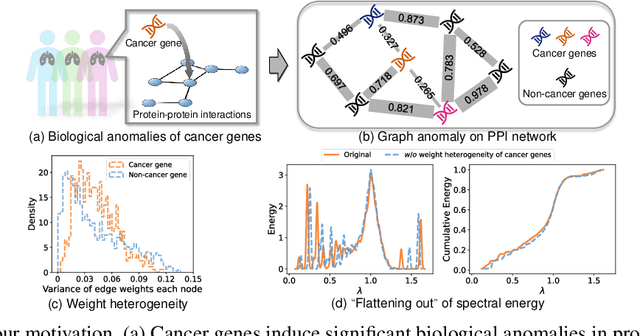
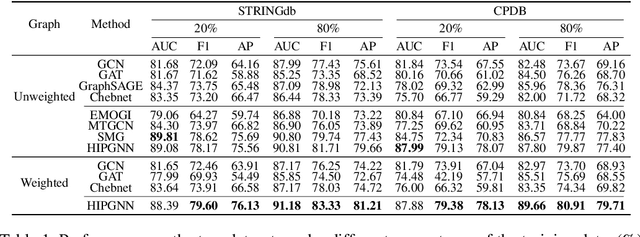
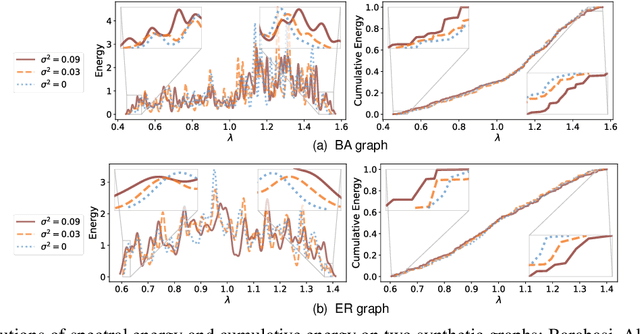
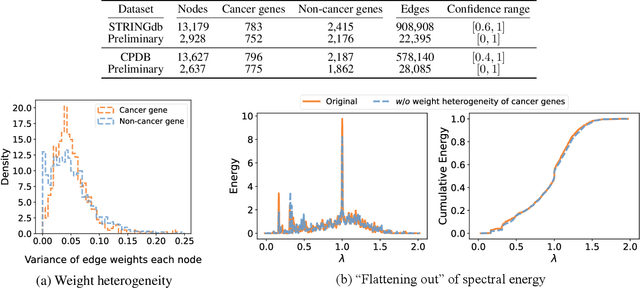
Graph neural networks (GNNs) have shown promise in integrating protein-protein interaction (PPI) networks for identifying cancer genes in recent studies. However, due to the insufficient modeling of the biological information in PPI networks, more faithfully depiction of complex protein interaction patterns for cancer genes within the graph structure remains largely unexplored. This study takes a pioneering step toward bridging biological anomalies in protein interactions caused by cancer genes to statistical graph anomaly. We find a unique graph anomaly exhibited by cancer genes, namely weight heterogeneity, which manifests as significantly higher variance in edge weights of cancer gene nodes within the graph. Additionally, from the spectral perspective, we demonstrate that the weight heterogeneity could lead to the "flattening out" of spectral energy, with a concentration towards the extremes of the spectrum. Building on these insights, we propose the HIerarchical-Perspective Graph Neural Network (HIPGNN) that not only determines spectral energy distribution variations on the spectral perspective, but also perceives detailed protein interaction context on the spatial perspective. Extensive experiments are conducted on two reprocessed datasets STRINGdb and CPDB, and the experimental results demonstrate the superiority of HIPGNN.
Graph Agnostic Causal Bayesian Optimisation
Nov 05, 2024We study the problem of globally optimising a target variable of an unknown causal graph on which a sequence of soft or hard interventions can be performed. The problem of optimising the target variable associated with a causal graph is formalised as Causal Bayesian Optimisation (CBO). We study the CBO problem under the cumulative regret objective with unknown causal graphs for two settings, namely structural causal models with hard interventions and function networks with soft interventions. We propose Graph Agnostic Causal Bayesian Optimisation (GACBO), an algorithm that actively discovers the causal structure that contributes to achieving optimal rewards. GACBO seeks to balance exploiting the actions that give the best rewards against exploring the causal structures and functions. To the best of our knowledge, our work is the first to study causal Bayesian optimization with cumulative regret objectives in scenarios where the graph is unknown or partially known. We show our proposed algorithm outperforms baselines in simulated experiments and real-world applications.